
Odin Name Meaning: Symbolism, Heritage, and Everyday Appeal

Odin is a name that does not enter quietly. Even before its mythology is explained, the sound has a ceremonial simplicity: OH-din, two beats, open at the beginning and firm at the end. It feels ancient without being long, dramatic without being ornate. The name carries the atmosphere of old northern stories, but its modern appeal comes from something more precise than mythic grandeur. Odin is a name about intensity shaped into vision.
The meaning “frenzy; inspiration” is the key to understanding its force. Those two words may seem to pull in opposite directions—one wild, one creative—but together they describe a rare kind of energy: the surge that unsettles ordinary life and produces insight, poetry, courage, or revelation. Historically, Odin belongs to the Scandinavian and Norse imagination as a figure of power, wisdom, war, and the unseen. As a baby name in the United States, Official Social Security Administration (SSA) data shows Odin ranked No. 479 for boys in 2024, making it recognizable but still distinctive. It is not a soft background name. It is a name with weather inside it.
Odin's U.S. popularity rank over time, 1884–2024
Popularity statistics are based on official data from the Social Security Administration baby name records.
Odin: A Majestic and Celestial Mythical Powerhouse
Odin reads as a name with one unmistakable center of gravity, reaching a record peak for boys in 2024. Its rise reflects a naming culture interest in “goddess/god style” names that carry a sense of ancient power and modern aspirational strength.
The absence of crossover usage helps the name maintain a singular and focused public identity. Referring to the Norse god of “frenzy” or “inspiration,” its simple two-syllable structure provides an approachable rhythm that remains fresh.
Odin Begins Where Frenzy and Inspiration Meet
| Key Facts | Information | Quick Insight |
|---|---|---|
| Name | Odin | The name is short and visually clean, but its cultural weight gives it unusual depth. |
| Primary gender usage | Male | Odin reads strongly masculine in current U.S. usage, with no listed girls’ rank in the latest data. |
| Primary origin | Scandinavian | Its Scandinavian profile gives the name a northern, mythic, and historically rooted tone. |
| Meaning | Frenzy; inspiration | The meaning joins wild force with creative insight, making Odin feel intense but not merely aggressive. |
| Pronunciation | OH-din | The long opening vowel gives Odin a clear, resonant sound that is easy to call aloud. |
| IPA | U.S. /ˈoʊdɪn/; U.K. /ˈəʊdɪn/ | The U.S. and U.K. forms differ mainly in the opening vowel’s accent color, while the two-syllable rhythm stays stable. |
| Syllables | 2 | Two syllables keep the name practical, while the open first syllable makes it feel larger than its length. |
| U.S. boys’ rank (2024) | No. 479 | Odin is established enough to be familiar, yet uncommon enough to keep a distinctive edge. |

The Meaning of Odin Is Not Calm Wisdom, but Inspired Voltage
Many strong boy names are built around control: ruler, protector, guardian, king, warrior. Odin is different. Its meaning, “frenzy; inspiration,” does not begin with control. It begins with force. But that force is not empty chaos. The pairing of frenzy with inspiration suggests the moment when energy becomes vision, when emotion becomes insight, when a person is moved by something larger than routine thought.
This gives Odin a more complex emotional profile than names that simply mean “brave” or “strong.” Brave names can feel straightforward. Odin feels charged. It suggests a mind that is awake, a spirit that does not merely sit still, and a personality drawn toward intensity. For parents, that may be the appeal: Odin does not sound passive. It feels alive with thought, movement, and mythic atmosphere.
Why “frenzy” gives Odin its danger and depth
The word “frenzy” can sound too wild at first, but in the context of a name, it does not have to mean recklessness. It can point to ecstatic force, heightened feeling, or the kind of intensity that breaks ordinary boundaries. Odin’s meaning is not polite in the narrow sense. It is restless, vivid, and dramatic.
That makes the name powerful but also demanding. Parents drawn to Odin are often drawn to names with presence. This is not a name that disappears into a crowd or feels deliberately neutral. It carries a strong image, and that image should be welcomed rather than minimized. Odin’s energy is part of the name’s truth.
Why “inspiration” changes the whole reading of Odin
If Odin meant only frenzy, the name might feel too volatile. Inspiration changes everything. It gives the intensity direction. It turns raw force into creative fire, thought, prophecy, imagination, and leadership. This is the difference between motion and meaning. Odin is not just a name of energy; it is a name of energy transformed into insight.
That is why Odin can feel intellectual as well as fierce. Its sound is strong, but its meaning is not purely physical. The name speaks to inner drive, vision, and the strange power of ideas. It belongs to the category of names whose strength is not only in the arm or the sword, but in the mind under pressure.

Odin’s Scandinavian Story Gives the Name Its Immense Backdrop
Odin’s Scandinavian origin gives the name a cultural landscape that is unusually vivid. In Norse mythology, Odin is remembered as the highest of the gods, associated with power, wisdom, war, and Valhalla, the hall connected with warriors after death. This mythological presence gives the name an epic scale. Even parents who are not choosing the name for religious or mythic reasons may feel that older atmosphere around it.
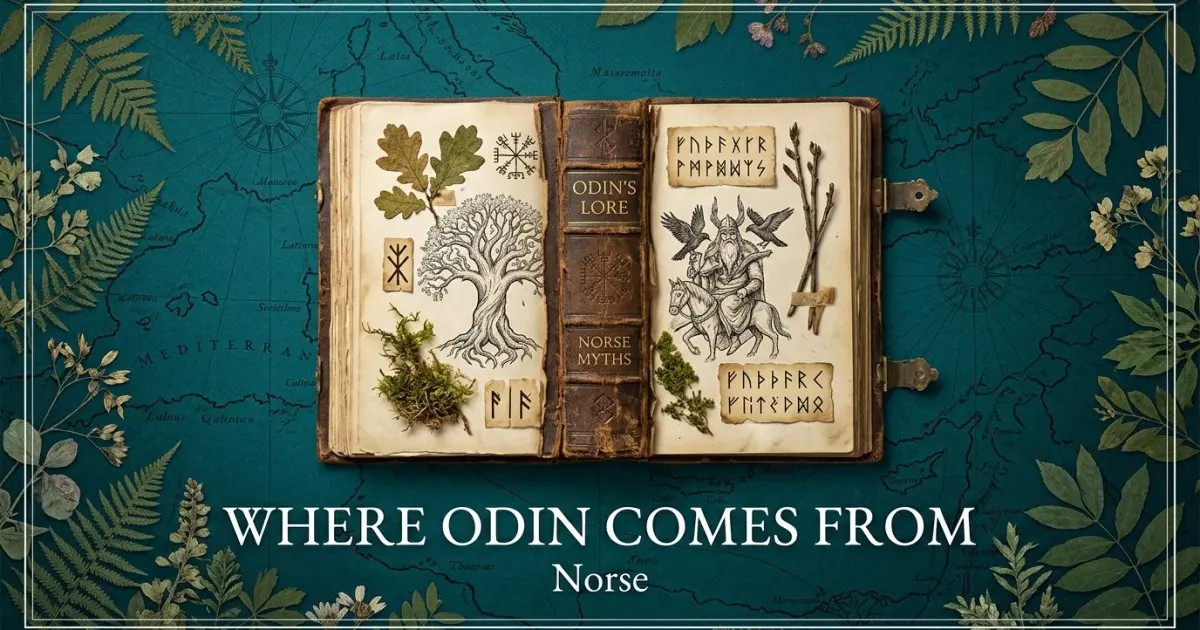
Names from mythology often come with a special challenge. They can be beautiful, but they are rarely blank. Apollo, Athena, Freya, Thor, Orion, and Odin all arrive with stories already attached. Odin is one of the strongest examples because the name is short and direct, yet the cultural association is enormous. The result is a name that feels both minimal and monumental.
The mythic Odin makes the baby name feel older than fashion
Modern parents may choose Odin because it sounds fresh in a contemporary classroom, but the name itself does not feel newly invented. Its old northern background gives it a depth that many modern short names do not have. It has the clarity of a name like Owen or Ronan, but with a mythological voltage all its own.
This is important because many short names can feel lightweight. Odin avoids that. Four letters are enough because the story behind the name is so large. The name’s brevity actually intensifies its effect. It does not need extra syllables to feel complete.
Odin’s mythic weight should be treated as part of the choice
Because Odin is so closely tied to myth, parents should consider whether they want that association to travel with the child. For many families, this is a positive. The name feels bold, literary, ancient, and distinctive. For others, it may feel too loaded. That is not a flaw in the name; it is simply part of its reality.
A name like Odin asks parents to be comfortable with recognition. People may comment on the mythology. Some may think immediately of Norse stories. Others may simply hear a strong Scandinavian name with a modern sound. In either case, Odin is not anonymous. Its background is visible, and that visibility is part of its appeal.
Odin’s 2024 Ranking Shows a Name That Has Entered Real Use Without Becoming Common
Official SSA data places Odin at No. 479 for boys in 2024. That rank tells an important practical story. Odin is not merely an obscure mythological name known only to enthusiasts. It is in active use, recognizable as a modern given name, and present enough that many people will know how to read it.
At the same time, No. 479 keeps Odin outside the heavily crowded zone. It is not a top-tier favorite. A child named Odin is unlikely to share the name with many peers, yet the name is not so rare that it feels untested. This balance can be attractive to parents who want something bold but not confusing, distinctive but not invented.
No. 479 gives Odin a strong-but-manageable profile
Names in this range often have a useful social advantage. They are familiar enough to be accepted, but uncommon enough to feel memorable. Odin benefits from that position. Its mythology gives it depth, while its ranking shows that contemporary parents are already using it in real life.
This matters because some mythological names remain more literary than practical. Odin has crossed further into everyday naming. It can appear on a preschool cubby, a sports roster, a college application, or a professional email signature without feeling impossible. The name’s strength is dramatic, but its structure is simple.
Odin’s absence from the girls’ ranking reinforces its masculine profile
The latest data lists Odin for boys but does not show a girls’ rank. That gives the name a clear contemporary gender profile. Although many short, strong names can migrate across gender lines, Odin remains strongly masculine in current use. For parents looking for a boy’s name with clarity, this may be reassuring. If this is the kind of name you are drawn to, you can explore more in more boy names and meanings.
That masculine profile is shaped not only by usage but also by sound and story. The strong opening vowel, firm ending, and mythological association all contribute to a name that feels bold and traditionally male. Yet Odin is not heavy in syllable count. It remains clean, compact, and surprisingly easy to wear.
Odin Sounds Ancient Because It Is So Simple
The pronunciation of Odin is OH-din, and that simplicity is one of its greatest strengths. The name opens with a long, rounded vowel, then closes with a light second syllable. It does not contain difficult consonant clusters or uncertain spellings. The spelling points clearly to the sound, and the sound is memorable.
In the U.S. IPA form /ˈoʊdɪn/ and the U.K. form /ˈəʊdɪn/, the stress falls on the first syllable. That means Odin begins with emphasis. The name rises immediately, then settles. This gives it a strong call-name quality. It can be spoken across a room without becoming harsh.
The opening “OH” gives Odin resonance
Names that begin with open vowels often feel spacious. Odin begins with O, and that sound gives the name a kind of ceremonial clarity. It is not crowded with consonants at the start. The voice opens first, then moves into the more grounded -din ending.
This opening helps Odin feel larger than its four letters. It also separates it from harder-edged mythological names that begin with strong consonants. Odin is powerful, but its power begins in openness. That gives the name a distinctive tone: bold, but not jagged.
The “-din” ending keeps Odin wearable
The ending -din keeps the name practical. Without it, the opening vowel might feel too abstract or atmospheric. The final syllable gives the name a human landing. It is quick, clear, and familiar to English speakers, appearing in sound neighbors such as Alden, Aidan, and Boden, though Odin has a far older mythic charge.
This balance of open beginning and grounded ending explains why Odin can feel both ancient and modern. It sounds old because of its cultural history, but it functions like a contemporary two-syllable boy name. That makes it easier to use than many mythological names with heavier forms.
Odin’s Style Sits Between Mythic, Minimal, and Modern
Odin does not fit neatly into one baby-name category. It is mythological, but not long or elaborate. It is Scandinavian, but not difficult for English speakers. It is bold, but not visually complicated. It is rare enough to stand out, but ranked enough to feel like part of current naming life.
This combination places Odin near names such as Atlas, Thor, Frey, Orion, Magnus, Leif, Stellan, Soren, and Ronan, though each of those names has a different mood. Atlas feels grand and burdened with scale. Thor feels thunderous and direct. Frey is lighter and softer. Magnus is stately. Soren is smoother and more philosophical. Odin feels darker, sharper, and more visionary.
Odin has more intensity than many soft Scandinavian choices
Some Scandinavian names in modern English use feel gentle, streamlined, or nature-adjacent. Odin belongs to a stronger register. It carries mythic weight and emotional heat. That gives it a more dramatic personality than names chosen mainly for Nordic style or minimalist sound.
For parents, this can be either the reason to choose it or the reason to pause. Odin is not simply a cool two-syllable name. It has atmosphere. It suggests depth, force, and imagination. It is best for families who want a name with a strong center.
Odin feels modern because it is short, clear, and visually striking
Despite its ancient background, Odin looks surprisingly modern. Four-letter boy names are popular because they feel clean and usable: Liam, Noah, Ezra, Luca, Milo, Arlo, Otto. Odin shares that compactness, but with a sharper mythological profile. It is easy to spell, easy to say, and difficult to forget.
The name’s visual form also helps. The initial O gives it distinction on the page. The final n gives it a familiar masculine ending. The result is a name that feels designed without being invented. It is old enough to have roots and simple enough to feel current.
Odin Opens Three Practical Paths for Parents
After the meaning and mythology of Odin come the practical questions. How does it pair with middle names? What nicknames are realistic? Will people say it correctly? Odin performs well in daily use because it is short and phonetically clear, but its strong identity means surrounding choices matter.
Middle names for Odin can soften or dignify the mythic force
Because Odin is so compact and intense, middle names can help shape the full name’s tone. Odin James, Odin Thomas, and Odin Henry make the name feel more grounded. Odin Alexander, Odin Gabriel, and Odin Theodore give it formality and ceremonial balance. Softer middles can make Odin feel warmer; classic middles can make it feel more established. The surname should guide the final rhythm. If you want the full pairing logic behind that contrast, see middle names for Odin.
Nicknames for Odin are optional rather than necessary
Odin is already short, so it does not require a nickname. That may appeal to parents who like full names that stay intact. Still, affectionate forms can develop naturally: Odie, O, Odi, or Din may appear in family or friend circles. Odie is the warmest and most child-friendly, while Odin in full remains the strongest public form. To see how those different moods shorten in real life, explore Odin nicknames.
Pronunciation gives Odin one of its strongest practical advantages
Odin is pronounced OH-din, with two syllables and stress on the first. The name is visually clear and phonetically manageable. The main mistake to avoid is flattening the opening vowel or making the name sound like “odd-in.” The intended sound begins with a long O, giving Odin its full resonance. For the detailed stress pattern, accent notes, and IPA, see Odin pronunciation guide.
Odin Leaves a Child With a Name of Fire and Vision
Odin is not a neutral name, and that is exactly why it works for the right family. Its meaning, “frenzy; inspiration,” gives it a rare inner tension: wild force joined to creative awakening. Its Scandinavian origin gives it an old northern frame. Its mythological history gives it scale. Its 2024 U.S. ranking, No. 479 for boys, shows that it has moved into contemporary use without losing its distinctive power. To find more names with similar historical roots, see names linked to Scandinavian history.
What makes Odin especially compelling is that it carries all this weight in only two syllables. It does not need length to feel important. It does not need ornament to feel memorable. It opens with a resonant O, lands with a clear -din, and leaves behind the impression of a name that is both ancient and alive.
For parents drawn to names with depth, Odin offers a vivid choice: not merely strong, not merely mythological, not merely Scandinavian, but charged with the difficult beauty of inspiration itself. It is a name for intensity shaped into purpose, for imagination that refuses to be small, and for a child whose name begins like a call from far away and ends close enough to be spoken every day.