
Nicknames for Nora: Playful, Pretty, and Memorable Picks
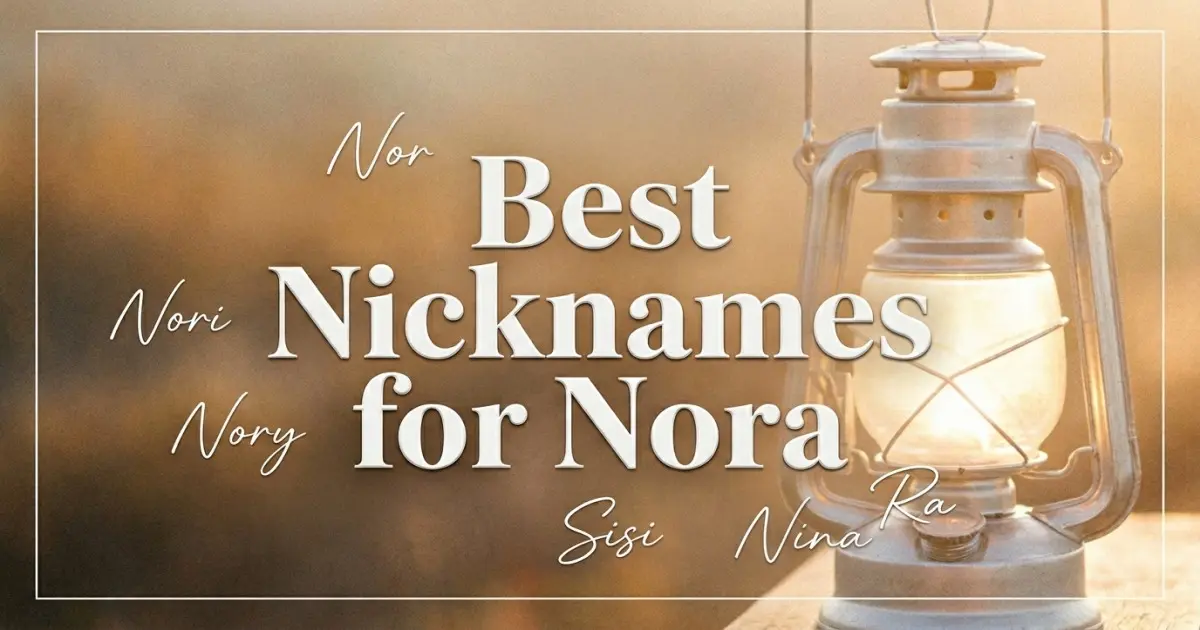
A nickname is not just a smaller version of a name. It is a social signal, a clue about who is allowed closer and what version of a person different circles get to see. Grandparents often use one form, siblings another, school friends another still. Some nicknames sound domestic and tender. Others sound brisk, stylish, or slightly self-invented. That is why a nickname page matters: it shows not only what a name can be shortened to, but what kinds of intimacy and identity the name naturally allows.
Nora is especially interesting in this respect because it is already compact, balanced, and socially complete. Unlike longer names that practically invite cutting, Nora does not need reduction to function beautifully. It arrives sounding finished. That changes the nickname landscape. With Nora, the most believable nicknames do not usually come from dramatic shortening. They come from tone shifts: a softer family echo, a clipped friend-group form, a playful repetition, or a slightly more stylized spin such as Nori. In other words, Nora’s nickname world is less about rescue and more about nuance. Nicknames add personality at the surface, but the deeper weight of the name still sits in Nora meaning.
What the Nickname Landscape Around Nora Really Reveals
| Group | Suggested Nicknames | Persona | Use Context |
|---|---|---|---|
| Classic close-to-the-name forms | Nor, Norrie, Nori | Familiar, warm, lightly traditional | Family life, close friends, everyday informal use |
| Cute home nicknames | Nora-Bee, Nora-Belle, No-No, Nory | Affectionate, playful, child-centered | Baby years, home use, grandparents and siblings |
| Short and modern trims | Nor, No, Nors | Casual, contemporary, slightly cool | Teen years, texting culture, close friend circles |
| Soft sound-shift forms | Ora, Ori, Norie | Gentle, distinctive, lightly creative | Family language, selective personal use, artistic or intimate circles |
| DIY personality nicknames | N, Nono, Rora, Nori-Girl | Playful, self-shaped, private-language energy | Sibling jokes, close friendships, evolving family habits |
Nora Is Already a Nickname-Proof Name
The first thing parents should know is that Nora does not need a nickname in the way longer names often do. That is not a weakness. It is one of the name’s great strengths. Nora is already short, warm, and highly usable. It sounds natural in a nursery, clear on a classroom list, and fully adult in professional life. Because of that, many girls called Nora remain simply Nora in every setting.
That social completeness matters. Research on naming patterns often suggests that the most durable short names are the ones that already feel emotionally accessible without becoming flimsy. Nora fits that description very well. It has two syllables, a soft ending, and a rounded opening sound that makes it friendly, but it also has enough structure not to require trimming for everyday comfort. Parents who choose Nora are often choosing exactly that combination: intimacy without informality.
This means the nickname question with Nora is not “What must this become?” but “Which softer or more playful version might emerge naturally?” That is a more realistic and more useful question. Nora does not splinter into many strong public alternatives. It tends instead to collect a few believable variants around the edges of family life and friendship. Those variants are meaningful not because they replace the name, but because they show how affection reshapes it slightly in use.
How Nora Breaks into Sound Zones
The opening of Nora gives you the cleanest trims
Nora begins with a strong, rounded Nor- sound, and that opening is where the most natural clipped forms come from. Nor is the simplest example. It sounds brisk and close, like the kind of quick name a sibling or best friend might use in passing. Nors is a little more contemporary and friend-group coded, less traditional and more likely to emerge in adolescence or digital conversation.
Because the first syllable is also the stressed syllable, these trims feel solid. They keep the most recognizable part of the name intact. That is why they work better than some more extreme shortenings. They sound like Nora compressed, not Nora abandoned.
The stressed center and the ending make Nora softer
In a short name like Nora, the stressed center and the ending overlap more tightly than they would in a longer name. The second syllable, -ra, is what softens the whole shape. When families want a more affectionate or playful variation, they often either repeat the name’s sounds or round them further. That is where forms like Nory, Norie, or Nono come from. These are not public-facing alternatives so much as home-language versions. They belong to the part of a name that is less about efficiency and more about affection. These nickname choices read more clearly once the spoken shape of the full name is in view, so see Nora pronunciation guide.
The ending also helps explain why Nora resists excessive shortening. Remove too much, and you lose the exact quality that makes the name feel warm and complete in the first place.
The full name remains the strongest “nickname” of all
That may sound paradoxical, but it is true. In many cases, the best everyday form of Nora is still Nora. It is the version that sounds clearest, most balanced, and most socially legible. The nickname world around it is real, but the full name continues to do most of the work.
Why Nori Is Nora’s Most Modern Off-Ramp
If Nora has one nickname that noticeably changes its style profile, it is Nori. Nori feels younger, more stylized, and more contemporary than Nora itself. It keeps the recognizable opening while shifting the ending into something brighter and slightly more fashion-forward. That makes it the strongest option for parents who want to know whether Nora has a more playful or more modern lane available later on.
Nori works especially well because it still sounds acoustically related to Nora. It does not feel random. At the same time, it clearly signals a different vibe. Nora sounds composed and classic. Nori sounds livelier and more informal. In sociolinguistic terms, it is a nickname that changes not the identity of the name but its social register.
The caution is that Nori is more stylized than Nora, and not every family will want that shift. Some will love it because it gives the child a fresh secondary identity. Others will find that it slightly weakens the calm authority they chose Nora to preserve. That is why Nori works best as an optional lane, not as an inevitable one.
Norrie sits nearby but gives a different effect. It feels more old-fashioned and affectionate, with a soft vintage quality that can be charming in family life. Where Nori sounds modern, Norrie sounds inherited. Both are plausible. They simply belong to different emotional worlds.
Nora at Home, Nora at School, Nora in Adult Life
Early-childhood Nora usually gathers add-ons, not drastic changes
In babyhood and early childhood, Nora often attracts affectionate extensions rather than real shortenings. Forms like Nora-Bee, Nora-Belle, Nory, or No-No are believable because they arise from family rhythm, not from structural necessity. A short name often gets bigger at home, not smaller. That is exactly what tends to happen here.
School-age Nora usually stays Nora
Once peer culture takes over, many Noras remain simply Nora. That is one of the clearest social facts about the name. It is already efficient, easy to say, and distinct enough not to require further work. When a short name survives school unchanged, it usually means the name already feels complete in the mouths of other children. Nora passes that test easily.
Still, a few lightly altered forms can appear. Nor may come from close friends. Nors can emerge in text-heavy, teasing social circles. These are believable precisely because they are small deviations, not elaborate inventions.
Adult Nora may choose polish or keep the original
In adulthood, most women named Nora will probably continue to use the full name. It already sounds polished, literary, and grown. But some may adopt a secondary form like Nori among friends, or keep a family-only nickname such as Norrie in private use. The important point is that Nora offers flexibility without pressuring the person to leave the original behind. That is often the sign of a well-made name.
The Nora Nicknames That Feel Most Human in Real Life
The strongest nickname list for Nora is relatively compact, and that is a good thing. The most plausible forms are Nora itself, Nor, Nori, Norrie, Nory, and a handful of affectionate domestic extensions like Nora-Bee or No-No. These all sound like names real people might actually use more than once.
Some more experimental options exist—Ora, Ori, or even Rora—but these feel more selective and personality-dependent. They are not the obvious public nicknames. They belong to the DIY edge of naming, where siblings, best friends, or the person herself may gradually create a form that only makes sense within a particular relationship. That is not a flaw. It is part of how intimate language works. But it is worth distinguishing between a plausible general nickname and a private in-group invention.
The practical caution for parents is simple. If you choose Nora, choose it because you genuinely like Nora as the main everyday identity. The nickname options are real, but they are secondary. This is not a name with a huge branching system the way longer formal names often have. Its nickname culture is narrow, believable, and subtle. For many families, that will be a major advantage. It means the name does not have to be constantly managed. It already knows what it is.