
Mohammed Pronunciation: Syllables Explained in a Simple Way
Mohammed is the kind of name that often reveals its pronunciation in a public moment. A teacher pauses over a class list on the first day of school. A receptionist looks up from a waiting-room screen. A graduation announcer takes a breath before a name that matters enough to deserve care. In those moments, the question is not only whether the name can be read. It is whether it can be spoken with steadiness and respect. Mohammed usually can. Once the rhythm is understood, the name feels structured, dignified, and much easier than a first glance at the spelling may suggest.
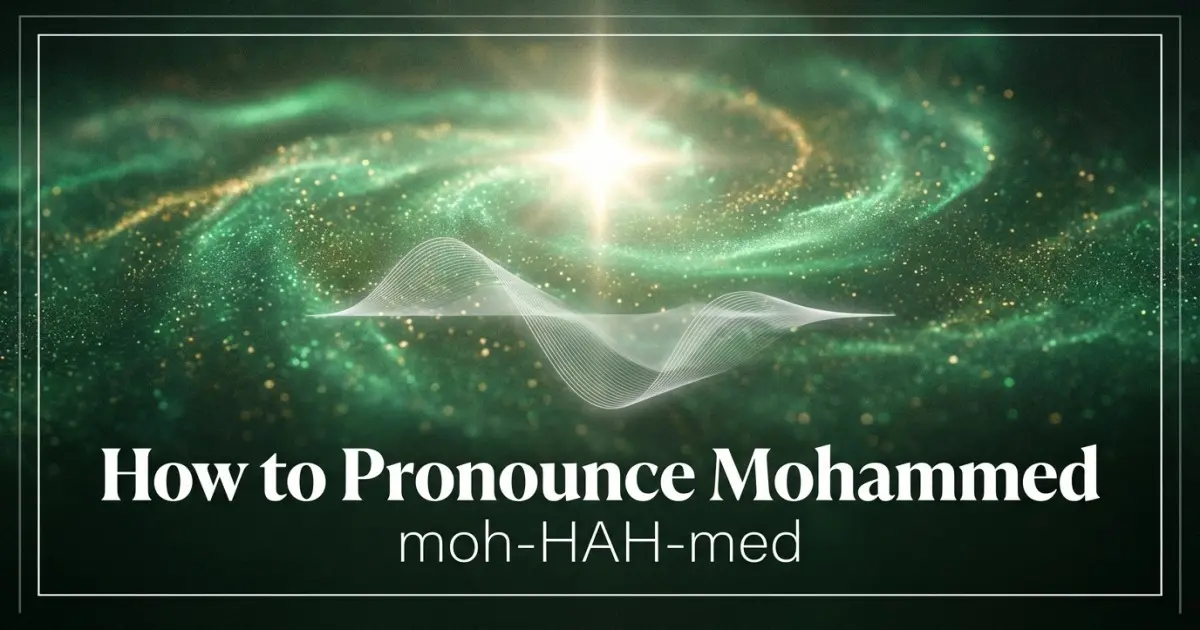
That ease comes from pattern more than from guesswork. Mohammed is commonly said here as moh-HAM-ed, with three syllables and the strongest stress on the middle. That stress placement matters. It gives the name weight without making it rigid. The opening prepares the line, the middle syllable carries the identity, and the ending closes lightly. The result is a name that sounds serious but still moves naturally in everyday speech.
What people are actually clarifying when they learn how Mohammed is said
Before looking at accent differences or common mistakes, it helps to break the name into the parts that make it work. Mohammed is not difficult because of unusual sounds. It is difficult only when the stress or vowel pattern gets misplaced.
| Element | Phonetic Detail | Quick Tip |
|---|---|---|
| Everyday pronunciation | moh-HAM-ed | Keep the first syllable light and let the strongest emphasis land on HAM. |
| Syllable count | 3 syllables | Do not flatten the name into two beats; the middle needs room to carry the stress. |
| Stress pattern | Second syllable stressed | The name’s force sits in the center, not at the beginning or the end. |
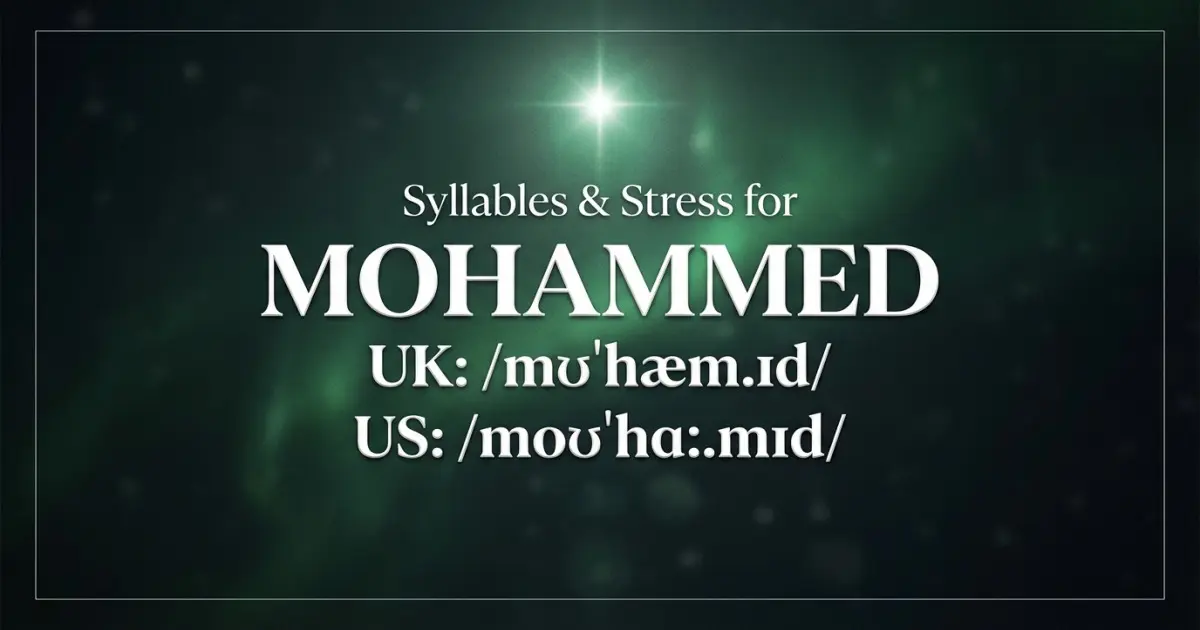
| IPA (US) | /moʊˈhæməd/ | In American English, the opening often sounds like the vowel in “go.” |
| IPA (UK) | /məˈhæməd/ | In British English, the opening is often lighter, closer to a soft neutral vowel. |
| Opening sound | /m/ + rounded vowel | Start gently; the name should enter smoothly, not with a harsh clipped start. |
| Middle shaping | /hæm/ stressed core | This is the identity-bearing part of the name, so it should be the clearest syllable. |
| Ending | Light final /əd/ | Let the last syllable finish softly rather than over-pronouncing it. |
Why Mohammed sounds dignified because the stress sits in the middle
One reason Mohammed feels weightier than many common three-syllable names is that the stress does not arrive immediately. The first syllable opens the name, but the center does the real work. This creates a sense of gathering rather than striking. The line builds, lands, and then releases. That pattern often makes names sound steadier and more formal without making them difficult to say. Pronunciation lands more fully when the name’s roots and history are already in view, so begin with Mohammed meaning.
Where the stress belongs in Mohammed
The stress belongs on the second syllable: moh-HAM-ed. If the stress slides to the first syllable, the name loses its shape and begins to sound either anglicized too heavily or simply misread. If the stress moves too far toward the end, it becomes unnatural and overly theatrical. The middle syllable is the anchor.
This is important because many speakers encountering the name in writing may instinctively give too much weight to the opening. But Mohammed is not front-heavy. It is center-heavy. Once that is understood, the name becomes much more stable in the mouth.
Why the consonants keep Mohammed grounded
The sounds themselves are not exotic to English-speaking ears. The name opens with /m/, a voiced bilabial consonant made by closing the lips and letting the voice resonate. Then comes /h/ in the stressed center, a fricative based on breath. The combination gives Mohammed both warmth and shape. The /m/ sounds solid and human; the /h/ keeps the name from feeling blunt. The final /d/ gives the name a quiet stop, enough to close it without making it severe.
This blend is one reason Mohammed can sound dignified but still usable. The consonants are doing structural work. They keep the name from floating.
Where Mohammed shifts between American and British speech
The biggest difference between American and British pronunciation is usually the opening syllable. In the supplied American IPA, the first syllable is /moʊ/, which often sounds like a rounded moh. In the supplied British IPA, the first syllable is /mə/, which is lighter and more reduced, closer to a soft muh or neutral unstressed sound. The rest of the structure stays largely the same.
What American English does with Mohammed
In American English, Mohammed often begins with a clearer rounded vowel: moh-HAM-ed. That opening gives the name a slightly broader first step before the middle stress arrives. It can make the full pronunciation sound a little more open and a little more immediately audible in public settings.
Even so, the first syllable should not dominate. Its job is to introduce the name, not to carry it. The center still does the real work.
What British English does with Mohammed
In British English, the opening often reduces: mə-HAM-ed. This can make the first syllable feel lighter and the overall line more compressed toward the middle. The practical effect is that the stressed center becomes even more prominent. The name still sounds unmistakably like Mohammed, but the path into the stress is slightly softer.
That difference is normal and should not be treated as a contradiction. It is simply an accent shift in the opening, not a change in the identity of the name.
When Mohammed gets mispronounced, the problem is usually rhythm
Most mistakes with Mohammed are not caused by unfamiliar consonants. They are caused by rhythm, by over-reading the spelling, or by collapsing the name into the nearest pattern a speaker already knows. That is why the most common errors tend to sound slightly off rather than completely different.
When Mohammed gets stressed too early
The most frequent issue is putting too much emphasis on the first syllable. A speaker sees the spelling, guesses quickly, and turns the name into something more front-loaded than it should be. This is especially common when people are reading aloud without having heard the name spoken first. The fix is straightforward: soften the opening and let the second syllable carry the weight.
When Mohammed gets flattened at the end
Another problem is over-flattening the final syllable until the name sounds unfinished. The last syllable should be light, but it should still be present. Mohammed is not just moh-HAM. The final -ed matters because it completes the line and distinguishes the name from shorter forms or rough abbreviations.
At the same time, the ending should not be exaggerated. If every syllable receives equal force, the name can sound stiff and over-enunciated. The goal is balance: clear ending, lighter energy.
Sound neighbors and spelling relatives around Mohammed
Mohammed also lives beside a family of related spellings and pronunciations, including Muhammad, Mohammad, Mohamed, and Muhammed. These are not random look-alikes. They are spelling relatives representing the same broader name tradition through different transliteration habits. In English-speaking settings, that can create small pronunciation shifts, especially in the opening vowel or the final syllable. But this spelling here is well served by moh-HAM-ed, with clear central stress and a light final close. When the stress sits in the center, the nickname logic often follows that same center of gravity, which is why Mohammed nicknames is the natural next step.
That is useful to remember because speakers may not be “wrong” in a broad cultural sense when they use a nearby form. They may simply be following a different transliteration habit. For this spelling, though, the rhythm given above is the clearest guide.
How to practice Mohammed until it sounds natural and respectful
The best way to practice Mohammed is to think in waves rather than isolated blocks. Start lightly, land clearly in the middle, and then let the ending finish the line without dragging. This is a name that rewards rhythm more than force.
Useful practice lines for Mohammed
- Mohammed is here.
- Have you met Mohammed?
- Mohammed called this morning.
- This is Mohammed Ali.
- Mohammed, your table is ready.
These lines help because they place the name at the beginning, in the middle, and in direct address. A strong pronunciation should remain stable in all three situations. The name should not become rushed in ordinary speech, and it should not harden when said carefully.
What to listen for when you say Mohammed aloud
Listen for four things. First, the opening should remain light. Second, the strongest stress should fall on HAM. Third, the breathy h in the middle should stay audible enough to keep the name open and clear. Fourth, the final syllable should remain present but lighter than the center. If those four features are in place, Mohammed will sound natural, respectful, and well formed in most English-speaking settings.
That is the real strength of Mohammed as a spoken name. It carries historical and cultural gravity, but the pronunciation itself is highly workable. Once the stress pattern is understood, the name becomes easy to recognize, easy to repeat, and strong enough to hold its dignity in both formal and ordinary life. In pronunciation terms, Mohammed succeeds because it sounds exactly like what it is: a name with weight, but also with use.