
Martha Pronunciation: Clear Pronunciation Help for Everyday Use
The pronunciation of Martha tends to matter most in the kinds of moments that reveal whether a name truly works in daily life: a teacher pausing at the top of an attendance list, a receptionist calling from behind a desk, a grandparent reading a card aloud for the first time, or a new acquaintance trying to say the name with confidence after seeing it only once. Martha looks familiar, but it carries one feature that still gives some speakers pause: the th. That single consonant cluster can make a classic name feel suddenly more delicate, more formal, or more old-world than people expected when they first saw it on the page.
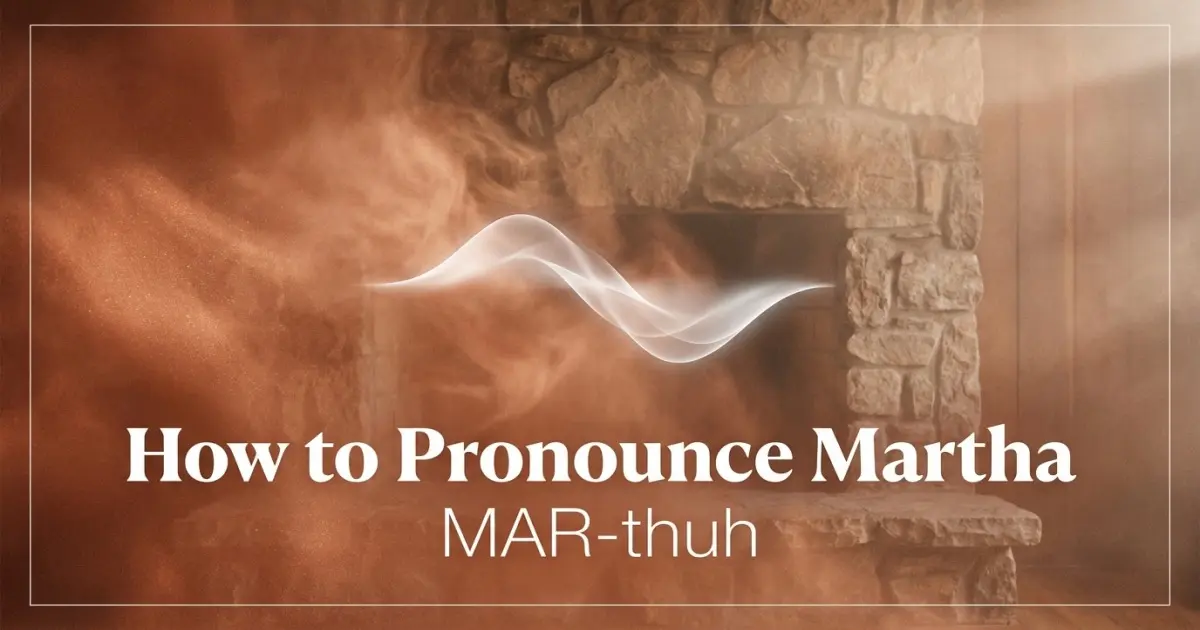
In the pronunciation used here, Martha is MAR-thuh. The first syllable does the main work. It is broad, steady, and unmistakably stressed. The second syllable softens the landing. The result is a name that sounds grounded rather than ornate. Martha does not need to be performed to sound dignified. In fact, it sounds best when said plainly, with a clear opening, a natural th, and a relaxed final syllable. That is what gives the name its enduring authority: it feels composed without ever sounding strained.
What Martha is clarifying every time it is spoken aloud
| Element | Phonetic Detail | Quick Tip |
|---|---|---|
| Everyday Pronunciation | MAR-thuh | Say the first syllable clearly and let the ending soften naturally. |
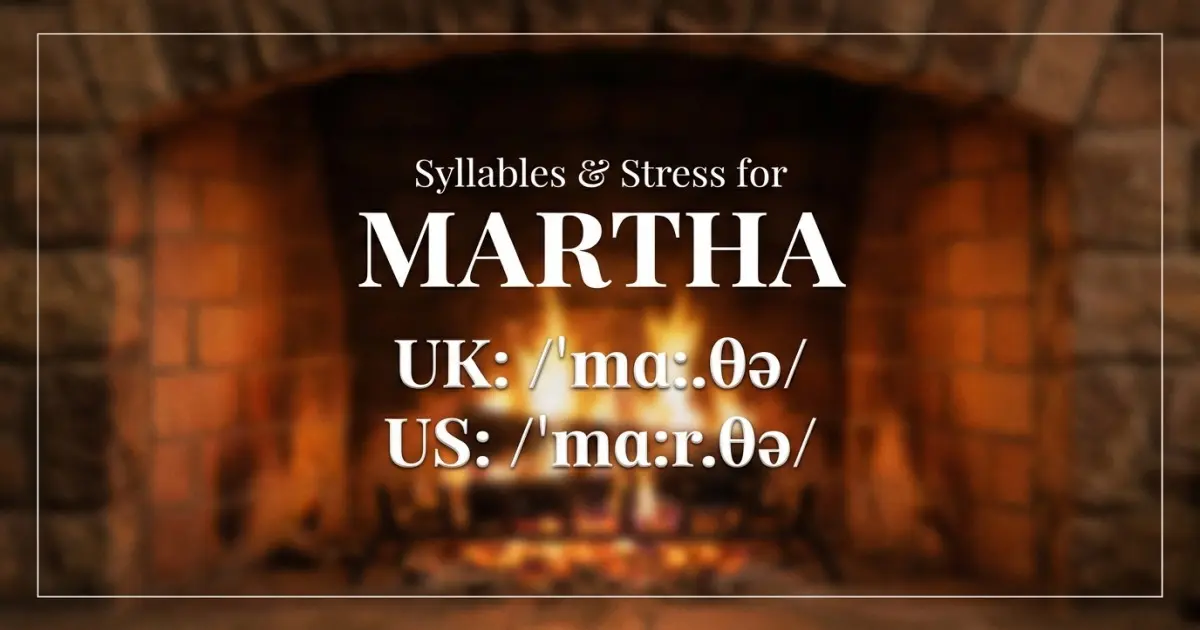
| IPA (US) | /ˈmɑːrθə/ | The American form keeps the r audible before the th. |
| IPA (UK) | /ˈmɑːθə/ | The British form usually drops the pronounced r, but the overall rhythm stays the same. |
| Syllable Count | 2 syllables | Think of the name as Mar + thuh, not a single compressed sound. |
| Primary Stress | First syllable | The first syllable should carry the name’s weight and identity. |
| Signature Consonant | Voiceless th sound | Let the tongue sit lightly between the teeth for the th, rather than replacing it with t, d, or f. |
Why Martha sounds strongest when the first syllable stays broad and settled
The acoustic center of Martha is the opening Mar. In the pronunciation given here, that syllable is broad and calm. In phonetic terms, the main vowel is /ɑː/, the open back vowel heard in words like father for many speakers. That quality matters because it gives Martha its depth. A shorter or flatter vowel would make the name sound thinner, while an overdramatic one would make it sound more theatrical than natural. Pronunciation lands more fully when the name’s roots and history are already in view, so begin with Martha meaning.
This opening is one reason Martha feels so solid in English. The name does not flicker or rush. It lands. Even before the second syllable arrives, the listener already has the identity of the name clearly in hand. That is especially important because the second half contains the more unusual consonant pattern. The broad first syllable stabilizes everything that follows.
Why the opening vowel matters more than people think
Many pronunciation issues with Martha begin not at the th, but at the vowel before it. If that first syllable becomes too narrow, too clipped, or too tentative, the whole name loses its calm authority. Martha should not begin weakly. It should feel grounded from the first sound, with enough breadth that the transition into the th feels natural rather than cramped. Because the strongest energy lands early, the shorter forms often grow from the opening of the name, and that pattern is easier to see in nicknames for Martha.
How the American and British openings differ only slightly
The fact packet gives a useful distinction here. American English keeps the r audible in /ˈmɑːrθə/, while British English usually moves directly from the long vowel into the th in /ˈmɑːθə/. But the emotional effect remains much the same. In both, Martha begins with a long, settled first syllable. The rhythm does not change. Only the texture of the transition does.
What the th in Martha is doing, and why it matters so much
If the first syllable gives Martha its weight, the th gives it its distinctive shape. This is the feature that makes the name sound older, steadier, and slightly more formal than many other two-syllable classics. Linguistically, the sound here is a voiceless dental fricative, the same th heard in words like think or thin. In practical terms, it means the tongue touches lightly at or between the teeth and lets air pass through. It is not a hard stop. It is a controlled breath sound.
This matters because many speakers, especially in fast or casual speech, may be tempted to replace that th with something easier: a t, a d, or even an f-like sound in some accents. But in the pronunciation used here, the th is part of what makes Martha unmistakably Martha. Without it, the name can sound rougher, flatter, or regionally shifted away from the intended form.
Martha is not “Mar-ta” in this pronunciation
One of the most common substitutions is replacing the th with a t sound, especially if the speaker is moving quickly. That turns the center of the name into something much harder and less graceful. In the pronunciation here, Martha should never sound like it has a plain t in the middle. The softness of the fricative is part of the name’s poise.
Martha is also not “Mar-fa” here
Another possible drift in some accents is toward an f-like substitution. Again, that may occur naturally in some regional speech, but it is not the target pronunciation here. The intended sound remains a clear th. It does not need to be exaggerated, only articulated naturally.
How Martha’s final syllable keeps the name from sounding too heavy
The last syllable in Martha is easy to overlook because it is unstressed, but it is essential to the balance of the name. The ending -thuh should not be punched or overenunciated. Its job is to soften the name after the weight of the first syllable. In both the U.S. and U.K. forms, that final vowel is relaxed. It functions as a release, not a second focal point.
This is one reason Martha feels composed rather than severe. A name with a broad opening and a hard ending could sound blunt. Martha avoids that. It opens with authority and ends with calm. The second syllable is not decorative. It is what makes the name humane.
Why the last syllable should stay light
When speakers overpronounce the final syllable, Martha can begin to sound more formal than intended, almost as though each segment is being displayed separately. That is not how the name works best in daily life. The second syllable should be clearly there, but lighter than the first. Think of it as completion, not emphasis.
What a natural Martha should feel like in the mouth
A naturally pronounced Martha should feel like a firm beginning followed by a gentle release. It should not sound clipped, heavy, or overly careful. The beauty of the name lies in its balance: broad first syllable, clear th, soft ending. Once that pattern settles, the name feels completely intuitive.
Where people most often stumble on Martha, and how to fix it quickly
Most pronunciation issues with Martha are small rather than dramatic. The name is familiar enough that people rarely misread it entirely. But they may simplify the middle consonant or shift the vowel texture without realizing it. The good news is that both fixes are simple.
Keep the first syllable broad and calm
If the opening sounds too short or too hurried, slow down very slightly and let the first syllable settle into Mar. That one adjustment often restores the whole balance of the name.
Let the th stay soft, not forceful
If the middle sound feels awkward, many people try to attack it too strongly. That usually makes things worse. The th in Martha should be light and natural, not exaggerated. A gentle tongue placement is more effective than hard emphasis.
How Martha sounds right in real speech
The easiest way to say Martha well is to keep it conversational. Start with a clear Mar, allow the th to pass lightly, and let the final syllable soften the ending. The name should sound like something that belongs equally in a living room, a classroom, and an adult introduction. It should not sound ceremonial or self-conscious.
Practice lines that make Martha feel natural
- “Martha, your turn is next.”
- “Is Martha coming after school?”
- “Martha left her notebook in the car.”
- “Hi, I’m Martha.”
These lines help because names often reveal their true rhythm inside ordinary speech. If Martha sounds smooth and settled in a sentence, the pronunciation is almost certainly right.
Why Martha stays so easy to say once the pattern is known
Martha works phonetically because each part of the name has a clear role. The first syllable gives it dignity. The th gives it distinction. The final syllable softens the close. The American and British forms differ slightly in texture, but not in spirit. That is why the name remains so durable: it is distinctive without being difficult, and formal without ever becoming brittle.
The simplest practical advice is therefore the best: say MAR-thuh, keep the first syllable broad, let the th stay natural, and do not overbuild the ending. Once that rhythm is in place, Martha sounds exactly as it should—clear, composed, and quietly strong.