
Nicknames for Jason: Easy Nickname Ideas That Really Work
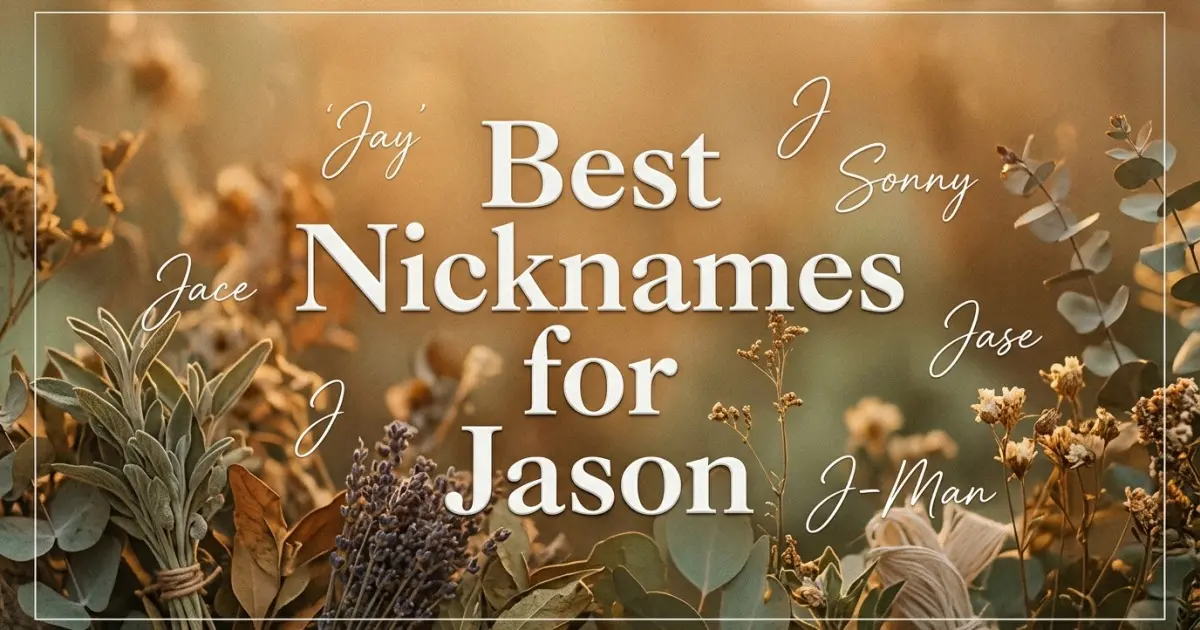
A nickname is never just a shortcut. It is a signal about intimacy, authority, and mood. It tells you who is close enough to trim the formal name, who keeps the full version intact, and what kind of personality is being invited into the room. Parents often choose a first name for its public life, but nicknames emerge in the smaller weather of real relationships: grandparents softening a consonant, siblings clipping a name for speed, teammates sharpening it for the field, friends turning it into a private code. That is where a name becomes social instead of theoretical.
Jason is especially good at this because it already feels complete. It is only two syllables, easy to pronounce, and familiar enough that it does not need help becoming usable. But that same familiarity gives it a flexible nickname life. Jason can remain fully Jason in school, work, and formal settings, while still offering a few strong, believable short forms that feel natural rather than forced. The nickname question here is not whether the name can be shortened. It is which version of Jason best fits the relationship. Before judging which short form feels right, it helps to look again at the full identity of the name in Jason meaning.
What Jason’s nickname landscape really tells you
| Group | Suggested Nicknames | Persona | Use Context |
|---|---|---|---|
| Classic everyday | Jay | Easygoing, familiar, relaxed | The most traditional public short form for family, school, and adult casual life |
| Sleeker modern forms | Jase, Jace | Sharper, younger, more contemporary | Best when the family wants a fresher spoken identity still clearly tied to Jason |
| Soft family forms | Jay-Jay, Jasie | Affectionate, playful, child-centered | Most believable in early childhood and close home life |
| Ending-based nicknames | Sonny, Son | Warm, familial, slightly old-fashioned | Works best in close circles that naturally lean into the “-son” ending |
| Peer and DIY tags | J, J-Man, Jasey | Casual, sporty, improvised | Most likely in friend groups, sports teams, text culture, or short-lived phases |
Jason often stays Jason, and that is part of its strength
The first thing worth saying about Jason is that many boys and men named Jason simply remain Jason most of the time. This is not a failure of nickname potential. It is a sign that the full name is already well scaled for everyday life. Jason is brief, balanced, and socially familiar. It does not feel too formal for childhood or too casual for adulthood. That means the full name can travel well across decades without needing constant abbreviation.
This matters because some names only feel natural once reduced. Jason is not one of them. It already sounds complete. The strong opening syllable gives it energy, and the softer ending keeps it approachable. A teacher can say it. A coach can say it. A colleague can say it. In many cases, that is enough. The nickname becomes optional rather than necessary, which is often a sign of a healthy name.
Why the full form still works in public life
Jason benefits from being recognizable without sounding overcomplicated. The name carries no awkward spelling, no unstable pronunciation, and no social stiffness. That makes it one of those names that can remain whole in official and casual settings alike.
When families may prefer no public nickname
If parents love Jason for its Greek roots, its healer meaning, or its mythic background, they may want the full name heard in the world. In that case, nicknames can remain private or occasional instead of becoming the child’s main spoken identity.
Jason’s opening sound makes Jay the oldest and easiest nickname
The strongest traditional nickname inside Jason is Jay. This is not surprising. Jason is stressed on the first syllable, and that opening syllable already sounds complete. English speakers naturally shorten names to the part that carries the weight, and Jason follows that pattern neatly. One project naming guide explicitly lists Jay among the familiar forms associated with Jason, which confirms what the ear already knows: Jay is a classic, established reduction rather than a modern improvisation. Many short forms only become obvious once the opening sound is clear, which is why how to pronounce Jason belongs naturally here.
Jay works because it is socially simple. It is easy to say, easy to hear, and emotionally neutral enough to fit many kinds of personalities. It can sound friendly, sporty, calm, or grown. That flexibility is one of its greatest strengths. Some nicknames lock a child into a playful or juvenile tone. Jay does not. It moves easily from boyhood to adulthood.
Why Jay still sounds current
Even though Jay is the oldest and most familiar Jason nickname, it does not sound stale. Part of that is its brevity. One-syllable nicknames tend to age well when they are clean and confident. Jay remains highly usable because it does not feel decorative. It feels practical.
When Jay is the best fit
Jay works best for families who want a nickname that is straightforward, low-friction, and recognizable in every setting. It is especially useful if the child may want a public short form later without drifting too far from the original name.
Jason also supports a sharper modern identity in Jase
If Jay is the classic route, Jase is the sleeker one. Project naming references list Jase among the forms tied to Jason, and that makes sense phonetically. Jase keeps the opening Jay- sound but adds a firmer, more tailored finish than Jay alone. The result is a nickname that feels more modern, slightly more stylized, and in some cases more distinctive.
Jase works especially well for families who like Jason but want the spoken name to feel less familiar than Jay. It is still clearly connected to Jason, but it reads as a more deliberate choice. It is also worth noting that Jace and Jayce exist in the same nickname and variant family. They are plausible in relation to Jason, but they often behave more like alternate given names or stylized spellings than simple household short forms. In real life, Jase is usually the most natural of this sharper group if the legal name is Jason.
Why Jase feels younger than Jay
Jay is almost invisible in its familiarity. Jase has more texture. It sounds a little newer, a little more curated, and a little more likely to belong to a child or young adult in the current naming climate. That is not a weakness. It is simply a different social mood.
When Jace belongs more to style than to nickname logic
Jace is undeniably plausible, but it often feels like a parallel modern name rather than the most organic Jason nickname. Families may still use it, especially if they like the spelling, but it usually sounds more intentional and less automatic than Jase or Jay.
The ending of Jason creates softer family nicknames than public ones
Jason is only two syllables, so its sound zones are not as expansive as they are in longer names. The opening and stressed center largely overlap in Jay, which is why so many public nicknames come from the front. But the ending still offers something valuable in family life. Because Jason ends in -son, affectionate forms such as Sonny or even Son can emerge naturally in close circles. These are not the most obvious public nicknames, but they are realistic at home.
These ending-based forms work because they change the mood of the name. Jay and Jase sound public, compact, and socially efficient. Sonny sounds tender, warmer, and more private. That contrast can be useful. It gives the family a softer register without interfering with the fuller public identity.
Why Sonny works better privately than publicly
Sonny is believable because it already exists as an independent nickname in English. But for Jason it usually works best as a family form rather than the child’s main everyday name. It feels less inevitable than Jay and more relationship-specific.
Which cute forms feel most human
Jay-Jay is the most believable toddler-stage affectionate form because repetition is common in early family speech. Jasie can also work in a softer household voice, though it is less established. These forms feel warm precisely because they are not trying to be permanent public brands.
Jason changes nickname style more by setting than by age
One of the most useful ways to understand Jason is that its nicknames tend to be setting-driven rather than strictly age-driven. A child may be Jason on school paperwork, Jay with peers, Jase on a team, Sonny with a grandparent, and J or J-Man in a group chat. That is not inconsistency. It is how names actually function in social life. The full name stays stable, and the nickname tells you which relationship is currently speaking.
This flexibility is part of Jason’s enduring appeal. It can remain fully Jason without strain, but it also offers enough nickname life to feel adaptable and human. The strongest names often do exactly this: they hold steady at the center while allowing other people to soften or sharpen them at the edges.