
Jasmine Pronunciation: Common Slips and How to Avoid Them
Jasmine is the kind of name that often proves itself in public before anyone thinks about phonetics. Picture a teacher reading it from a class list on the first day of school, or a barista calling it over café noise, or a grandmother saying it slowly to a newborn for the first time. Some names look elegant on paper and then become blurry, awkward, or unexpectedly harsh in real speech. Jasmine usually does the opposite. It opens brightly, carries clearly through the middle, and lands softly enough to feel graceful without losing shape. That real-world ease is one of the reasons the name has remained so usable.
Its pronunciation matters because Jasmine lives in sound as much as in meaning. The floral image may attract people first, but the spoken form is what gives the name its polish. The beginning has energy. The middle has texture. The ending softens the line without making it vague. Said correctly, Jasmine sounds poised, warm, and immediately recognizable. It is not hard to pronounce, but it does have a particular balance that makes the name feel more refined when the stress and rhythm are right.
How Jasmine is actually said when real life gets hold of it
Before looking at common mistakes or sound-neighbors, it helps to pin down the pronunciation pattern that makes Jasmine feel so stable in everyday English.
| Element | Phonetic Detail | Quick Tip |
|---|---|---|
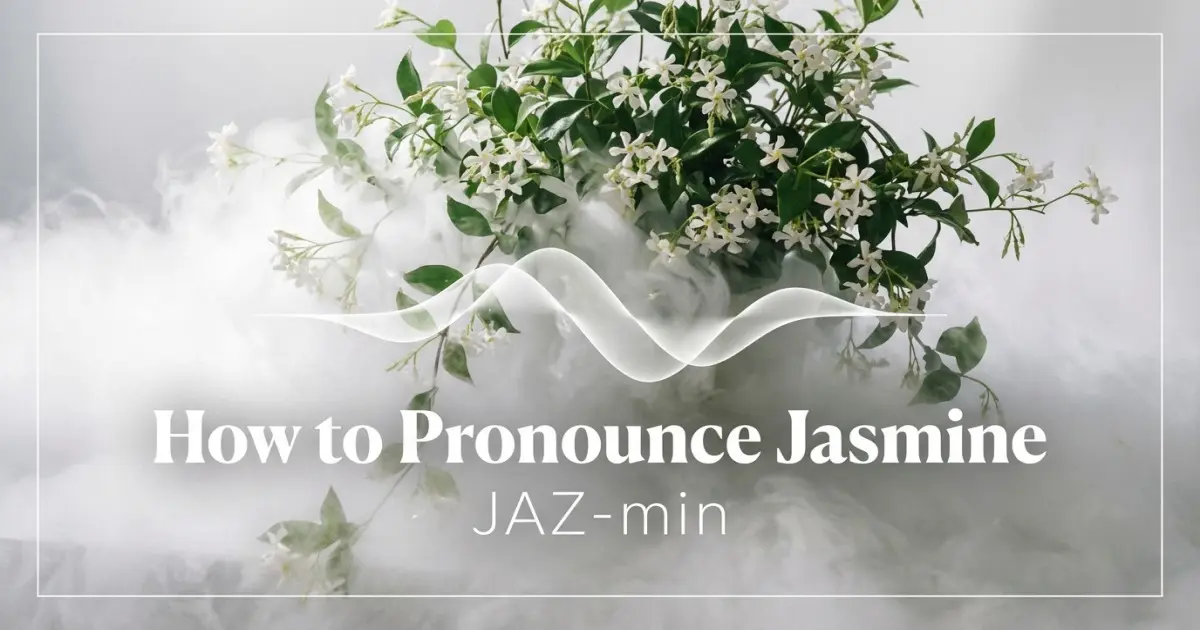
| Common pronunciation | JAZ-min | Say it in two clear beats, with the strongest emphasis on the first syllable. |
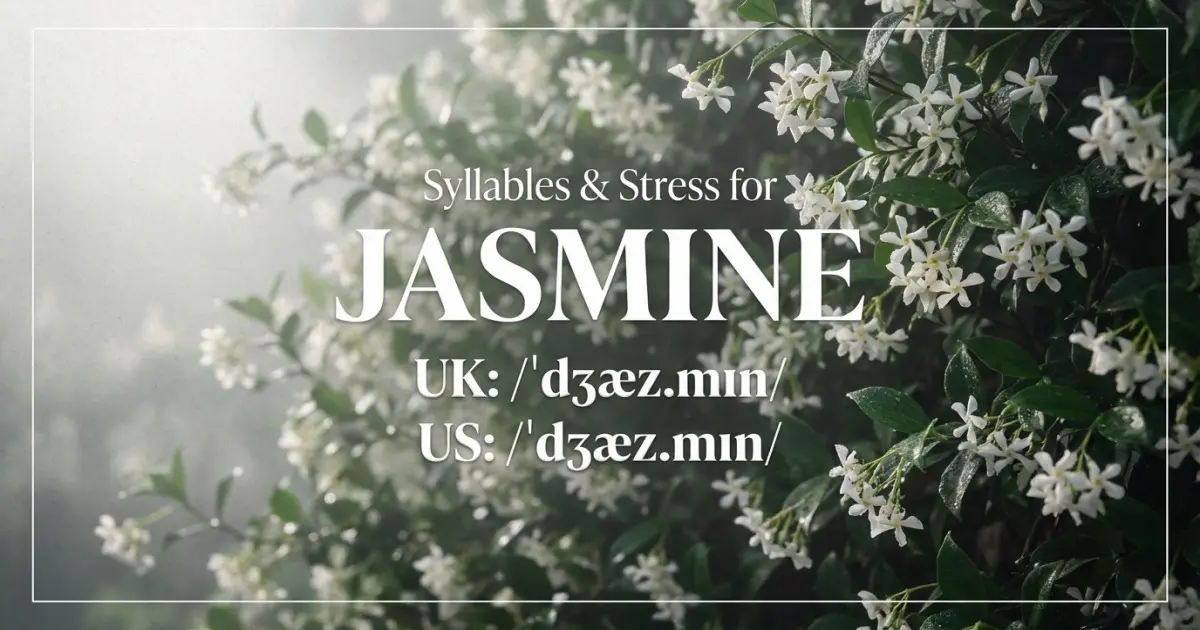
| U.S. IPA | /ˈdʒæzmɪn/ | The opening sounds like the j in “jam,” and the first vowel is the short a in “cat.” |
| U.K. IPA | /ˈdʒæzmɪn/ | The standard British pronunciation is effectively the same, which makes Jasmine easy to carry across accents. |
| Syllable count | 2 syllables | Do not stretch it into something more elaborate. Jasmine sounds strongest when it stays rhythmically compact. |
| Stress pattern | First syllable stressed | The main weight belongs on JAZ, while the second syllable should feel lighter and quicker. |
| Opening sound | /dʒ/ voiced affricate | This is the sound at the start of “judge,” not a softer glide or a French-style zh. |
| Middle texture | /z/ fricative plus short vowel | The z gives the name its brightness. Let it be audible, but not overdone. |
| Ending | /mɪn/ with a light final n | The end should sound soft and neat, not dragged out into “meen” or flattened into “mun.” |
Why Jasmine sounds bright in front and soft at the end
Jasmine works because its two syllables do different jobs. The first syllable gives the name presence. The second syllable makes it feel human and approachable. That balance is what keeps Jasmine from sounding either too sharp or too misty. Pronunciation lands more fully when the name’s roots and history are already in view, so begin with Jasmine meaning.
The first half of Jasmine gives the name its sparkle
The opening sound /dʒ/ is a voiced affricate, which means it begins with a quick stop and releases into friction. In plain terms, it gives Jasmine a clean, lively entrance. That matters because the name could easily have sounded too soft for its own good if it began on a weaker consonant. Instead, it opens with clarity and energy.
Then comes the short /æ/ vowel, the same family of sound heard in “cat” or “glass” in many accents. That short vowel keeps the first syllable firm and immediate. Jasmine does not drift into the ear. It arrives. This is one reason the name feels more polished than some other floral names. It has stronger front-end architecture.
The ending keeps Jasmine graceful rather than hard-edged
The second syllable, -min, softens everything. The /m/ is a nasal consonant, which naturally feels gentler and warmer in the mouth than a hard stop. Then the short /ɪ/ vowel keeps the ending light rather than grand. Finally, the n closes the name neatly without creating a harsh edge. The way the name resolves at the end often decides which short forms feel natural in speech, and that becomes clearer in Jasmine nicknames.
This is why Jasmine sounds elegant without becoming fragile. The first syllable gives it brightness and contour. The second syllable gives it calm. Together, they create a name that feels both stylish and easy to live with.
Where Jasmine stays stable across accents and where small shifts appear
One of Jasmine’s practical strengths is that its U.S. and U.K. pronunciation stays essentially the same. The fact packet gives the same IPA for both: /ˈdʒæzmɪn/. That is a major advantage in real life. It means the name rarely needs explanation when moving between major English-speaking settings.
Why American and British Jasmine sound so close
The core sounds in Jasmine are very stable in English: the opening /dʒ/, the short /æ/, the audible /z/, and the soft -min ending. None of these elements are especially unstable across standard American and British speech. That gives Jasmine a consistent identity. The name sounds like itself almost everywhere.
What can still vary slightly in everyday speech
The most likely variation is not major accent change but tempo. Some speakers clip the second syllable a little more. Others let the first syllable ring longer. In some voices, the z in the middle is more pronounced; in others, it passes more quickly. But these are subtle texture shifts, not identity changes. Jasmine remains highly recognizable and highly stable.
This stability is part of its social ease. Parents often want a name that feels elegant but not high-maintenance, and Jasmine does that very well.
Where Jasmine gets nudged off course in real conversation
Jasmine is not difficult, but there are still a few common ways people can move it away from its most natural form.
Overstretching the second syllable
A frequent issue is turning the ending into something closer to -meen instead of -min. That changes the character of the name. Jasmine should feel compact and balanced, not elongated or overly exoticized. The second syllable is lighter and shorter than that.
Softening the opening too much
Another mistake is weakening the opening consonant so the name loses its brightness. Jasmine should begin with a clear j sound, not a blurred or overly softened start. The strong opening is part of what gives the name its polish.
Letting the middle disappear entirely
Because the name is familiar, some speakers rush through it and nearly swallow the z sound in the center. But that internal fricative is important. It adds the shimmer that makes Jasmine sound like Jasmine. If it disappears completely, the name can feel flatter than intended.
How Jasmine sounds beside Jasmin, Jessamine, and other near-neighbors
One of the easiest ways to hear Jasmine clearly is to place it next to names that look or sound similar but behave differently.
Jasmine and Jasmin are close, but English speech still favors Jasmine’s rhythm
Jasmine vs. Jasmin: in many English-speaking settings, these will sound very close or identical. The difference is often visual rather than auditory. Still, Jasmine tends to feel more familiar and fully settled in English naming culture.
Jasmine and Jessamine show the value of compactness
Jasmine vs. Jessamine: Jessamine is longer, older-feeling, and more literary in shape. Jasmine is tighter and more contemporary in rhythm. That compactness is part of why Jasmine feels so socially effortless.
Jasmine and Jazlyn prove that brightness is not the same as trendiness
Jasmine vs. Jazlyn: both share the bright Jaz- opening, but Jasmine feels more grounded because its second syllable is calmer and more classic. Jazlyn sounds more overtly trend-shaped, while Jasmine sounds more historically settled.
How to practice Jasmine until it sounds natural, not overly careful
Jasmine is easiest to hear correctly in ordinary sentences rather than in isolation. That is where the name’s balance becomes most obvious.
Three useful practice lines for Jasmine
Jasmine is waiting by the car.
I saw Jasmine after class.
Jasmine left her sweater on the chair.
What to listen for in your own voice
Listen for a bright, clear JAZ at the front, an audible but natural z in the middle, and a light -min at the end. The name should feel smooth and balanced rather than stretched or overly emphasized. If it sounds fresh, polished, and easy to repeat, you are very close to the natural pronunciation.
Why Jasmine stays easy to say without losing elegance
Jasmine is a strong example of how a name can sound refined without becoming difficult. Its opening gives it character. Its middle gives it sparkle. Its ending gives it softness. That structure is what allows the name to remain graceful without sounding fragile or fussy.
Said correctly, Jasmine sounds exactly like what many parents want it to be: bright, feminine, and socially effortless. That phonetic balance is a major part of why the name continues to work so well in modern life.
Jasmine Pronunciation FAQ
How do you pronounce Jasmine correctly?
Jasmine is commonly pronounced JAZ-min, with two syllables and the main stress on the first.
What is the IPA pronunciation of Jasmine?
The pronunciation given here is /ˈdʒæzmɪn/ in both U.S. and U.K. English.
How many syllables does Jasmine have?
Jasmine has two syllables. The first carries the main stress, and the second should stay lighter and shorter.
What pronunciation mistake happens most often with Jasmine?
The most common issue is stretching the second syllable too much, turning it into something closer to -meen. Jasmine usually sounds strongest with the shorter ending -min.
Does Jasmine sound different in American and British English?
Very little. The standard pronunciation is effectively the same in both, which is one reason Jasmine remains so easy to use across English-speaking settings.