
Jasmine Name Meaning: Meaning, Heritage, and Gentle Strength

Jasmine is one of the rare flower names that does not float away on beauty alone. It carries fragrance and softness, certainly, but it also carries structure. That is the central tension that gives the name its staying power. On the surface, Jasmine sounds graceful, lyrical, and immediately recognizable. Underneath, it holds a more layered identity: a Persian name, a floral image, and a meaning given here as “gift from God; flower.” Those two halves matter together. One is earthly and sensory, rooted in a real bloom. The other is devotional, almost thankful in tone. Jasmine therefore lives in a powerful middle space between the visible and the given, between something that can be smelled and seen and something received as blessing.
That layered identity helps explain why the name has remained so compelling in modern life. Official Social Security Administration (SSA) data shows Jasmine at No. 199 for girls in the United States in 2024, with a much stronger historical peak at No. 23 in 1993. That arc tells an important story. Jasmine has already passed through a major era of prominence and remained standing. It did not vanish once its peak moment receded. Instead, it settled into a more selective, less crowded form of popularity. That is often where a name becomes most interesting. No longer merely fashionable, but still fully alive, Jasmine now sounds like a choice made with taste rather than momentum. It is a flower name, yes, but it is also a name of composure, brightness, and unusual staying power.
Jasmine's U.S. popularity rank over time, 1906–2024
Popularity statistics are based on official data from the Social Security Administration baby name records.
Jasmine: A Fragrant and Melodic Nature Choice
Jasmine reads as a name with one unmistakable center of gravity, where its visibility is concentrated entirely on the girls’ side. Its peak in the 1990s and continued usage suggests it benefits from a style family parents trust for being distinctive yet usable .
The lack of meaningful crossover usage helps the name maintain a singular public identity. Referring to the fragrant flower, its two-syllable rhythm provides a sense of delicate charm.
What Jasmine says before the history fully arrives
Before its Persian roots, its modern chart story, and its floral atmosphere fully unfold, Jasmine already creates a distinct first impression. It sounds elegant without sounding fragile. It sounds warm without sounding too soft. The facts beneath that first impression explain why the name feels so balanced.
| Key Facts | Information | Quick Insight |
|---|---|---|
| Name | Jasmine | The form feels familiar and polished, which helps the name sound established rather than novelty-driven. |
| Primary origin | Persian | The Persian origin gives Jasmine an older, more international depth than many English floral names carry. |
| Primary meaning | Gift from God; flower | This pairing makes the name feel both botanical and devotional, which is part of its emotional richness. |
| Pronunciation | JAZ-min | The strong opening and softer finish give the name both clarity and warmth in speech. |
| IPA | US: /ˈdʒæzmɪn/ UK: /ˈdʒæzmɪn/ | The identical American and British form helps Jasmine remain stable across English-speaking settings. |
| Syllable count | 2 | Two syllables keep the name graceful but efficient, which helps it feel modern as well as romantic. |
| Usage pattern | Used chiefly for girls in current public life | The feminine impression is clear, but the firmer consonants keep the name from sounding too airy. |
| U.S. girls’ rank (2024) | No. 199 | Jasmine remains recognizable and easy to place, but no longer feels overexposed. |
| Historical high point | Peak rank of No. 23 in 1993 | This shows the name had real mainstream force, then matured into a more selective modern classic. |
Why Jasmine makes a flower name sound grounded
The first thing to notice about Jasmine is that it never behaves like a merely decorative floral name. Some flower names rely almost entirely on sweetness, delicacy, or visual softness. Jasmine has more backbone than that. Its initial consonant gives it a bright, energetic opening, and the z in the middle adds definition. Even if someone knows nothing about the name’s origin, the sound alone suggests more strength than fragility.
Jasmine carries beauty without becoming ornamental
This is one reason the name has held up so well. Jasmine can be read as beautiful immediately, but it does not feel flimsy in the way some floral names can. It has enough structure in the mouth to sound capable. That matters because many parents want a feminine name that remains soft without becoming sentimental. Jasmine answers that need unusually well.
The name’s floral side still matters, of course. A flower name always brings a real sensory anchor with it. But Jasmine’s appeal is not simply botanical. It is tonal. The name sounds as though beauty has been given clearer edges. It is refined, but not fragile. That distinction is one of its greatest assets.
It also helps explain why Jasmine has performed well across decades of changing taste. A flower name that depends only on delicacy may feel locked to one era’s idea of femininity. Jasmine is broader than that. It can sound graceful, worldly, poised, and bright all at once.
Why “gift from God; flower” gives Jasmine unusual depth
The meaning given here brings two emotional registers together. “Flower” makes the name concrete. “Gift from God” makes it intimate and elevated. That combination is more powerful than it first appears. A purely floral meaning can stay visual. A purely spiritual meaning can become abstract. Jasmine carries both. It feels sensory and thankful at the same time.
This duality is one reason the name often feels richer than many names in the same stylistic category. It is not only pretty. It suggests something received, something valued, something both living and treasured. Without leaning into overt symbolism, the meaning still gives Jasmine a texture of gratitude rather than mere attractiveness.
That emotional depth changes how the name lands. Jasmine sounds lovely, yes, but the meaning underneath gives it more interior life than the sound alone would suggest. It is a name of beauty with a deeper center.
How Jasmine moved from Persian root to modern classic
Jasmine’s durability is tied to its origin. Because the name comes from Persian rather than from a newer English invention, it carries a sense of age and travel. It feels as though it has moved through languages and eras before arriving in its current everyday form. That journey matters. It keeps the name from feeling lightweight, even when it is chosen for its immediate beauty.
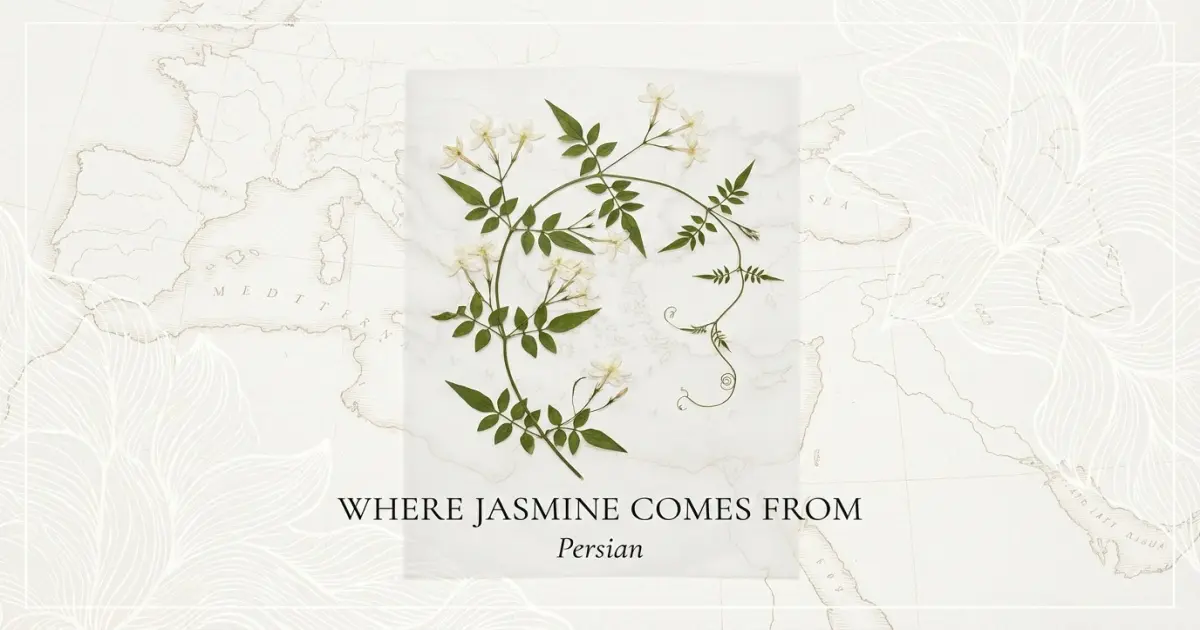
Jasmine sounds international without sounding difficult
That is one of the reasons the name remains so usable. It has an international quality, but it does not ask for constant explanation. Some globally traveled names feel beautiful but cumbersome in one or another language. Jasmine avoids that problem. It feels worldly without being inaccessible. Parents often want that combination, especially when choosing names that sound elegant but still have easy public usability.
This is also where Jasmine differs from many English flower names. It does not feel as though it began in an English garden and stayed there. It feels wider than that, and the Persian root gives it exactly that larger horizon. The name arrives already carrying motion.
Why Jasmine can sound both familiar and distinctive
A name becomes truly durable when it is recognized but not flattened by recognition. Jasmine has reached that stage. It is common enough that most people know how to say and spell it, but selective enough in current use that it does not feel interchangeable. That is a very strong position for a name to occupy.
Its chart history supports this. Official data shows a long public life, a strong mainstream peak, and continued presence. That means Jasmine has already survived the difficult part of popularity. It has been highly visible and then lived through the cooling that often makes names either feel dated or feel newly fresh. Jasmine has chosen the better outcome. It now sounds familiar, but deliberate.
That is often the point at which a name stops being merely fashionable and becomes something more durable. Jasmine is there.
Why Jasmine’s sound is brighter than its softness
Phonetically, Jasmine is beautifully balanced. The opening JAZ- is lively and bright, giving the name real momentum at the front. The final -min softens the landing without weakening the line. This balance is part of what makes the name so memorable. It does not drift. It lands.
Jasmine begins with sparkle, not haze
The j sound at the start and the internal z sound both matter. Together, they give the name a kind of brightness that prevents it from becoming overly dreamy. That brightness is crucial. A name with a floral association could easily turn misty or diffuse in speech. Jasmine does not. It has shape.
This is one reason Jasmine often feels more contemporary than names like Rose or Lily, even though all three have floral associations. Rose is simpler and more classical. Lily is lighter and more immediately sweet. Jasmine has more internal movement. It sounds slightly more urban, more polished, and a little more textural.
The ending keeps Jasmine from sounding too sharp
The second syllable performs a quieter but equally important task. -min softens the name and gives it warmth. Without that ending, Jasmine might sound too brisk. With it, the name keeps grace. The overall rhythm becomes balanced: bright front, gentle close.
This is where Jasmine’s real elegance lives. The name never becomes brittle. Its consonants are noticeable, but the ending lets the whole line remain approachable and human. That makes the name highly workable in daily life, not just attractive in theory.
In style terms, Jasmine sits in an interesting place between classic floral names and later multicultural-modern favorites. It feels equally at home beside names like Lily, Sophia, and Naomi, yet it carries a tonal signature all its own.
Jasmine’s peak in the 1990s still shapes how the name is heard
Official data showing Jasmine at No. 23 in 1993 is more than a historical footnote. It helps explain how the name still lives in public memory. A name that reached that height did not do so by accident. It had broad cultural resonance, cross-family appeal, and enough freshness at the time to feel exciting without sounding unstable.
Jasmine survived its peak because the roots were deeper than trend
This is the crucial point. Some names peak dramatically and then feel trapped inside a decade. Jasmine has avoided the worst of that effect because it had deeper foundations than a single moment. The Persian origin, floral identity, and polished sound gave it enough real texture to remain viable after the high tide of mainstream use. If you want to go deeper into this heritage, visit a wider list of Persian names.
That is why the current rank of No. 199 feels healthy rather than diminished. Jasmine is no longer everywhere, which gives it more breathing room. Yet it is still present enough to remain legible and socially easy. In practical naming terms, that is often an ideal position.
Why Jasmine now sounds more chosen than assumed
When a name sits just outside the busiest tier, it often becomes more interesting. Parents choosing it now are less likely to be following momentum and more likely to be responding to the name’s actual qualities. Jasmine benefits from that shift. It now sounds like a taste-driven classic rather than a chart-driven one.
That makes the name especially appealing in the present moment. It still feels known, but it no longer feels automatic. Its beauty becomes visible again because repetition has eased.
Where Jasmine sits among modern feminine style-neighbors
Jasmine belongs to a larger family of names that combine softness with public polish, but it occupies a very distinct lane inside that group. It is not as plain as Rose, not as airy as Lily, not as overtly antique as Violet, and not as globally streamlined as Zara or Nora. It has more internal texture than all of them. To see how Jasmine fits within this category, browse girls’ names with meanings.
Jasmine feels more lyrical than short clean names
Compared with shorter names, Jasmine gives more movement and more atmosphere. The two syllables contain enough variation to sound sophisticated, but not so much length that the name becomes elaborate. This is one of the reasons it often appeals to parents who want elegance without heaviness.
Jasmine feels more grounded than many floral alternatives
Compared with other flower-linked names, Jasmine often sounds more anchored because of its consonant structure and its Persian root. It is not only visual or seasonal. It has historical and linguistic depth, which gives it greater stability. That stability is part of the reason it can sound mature so easily.
Three ways Jasmine naturally opens into a fuller naming life
One of Jasmine’s practical strengths is that it leaves room around itself. The name is complete, but not closed. It can support further naming decisions without losing its own center.
Middle names that can sharpen or soften Jasmine
Because Jasmine already has a balanced musical shape, it can pair well with middles that either bring crisp contrast or extend its warmth into something more lyrical and full. If you want the full pairing logic behind that contrast, see middle names for Jasmine.
Nicknames that let Jasmine feel closer without losing its elegance
The sound contains natural spaces for shortening and affectionate reshaping, which gives the name a softer family life beneath its polished public face. To see how those different moods shorten in real life, explore Jasmine nicknames.
Why pronunciation keeps Jasmine socially effortless
The sound is stable, intuitive, and easily recognized, which helps Jasmine remain elegant without becoming cumbersome in ordinary speech. If you want the full sound pattern behind that rhythm, read Jasmine pronunciation guide.
Why Jasmine still feels like Jasmine
In the end, Jasmine lasts because all of its parts support one another. The meaning joins gift and flower. The sound joins brightness and softness. The history joins Persian depth with modern readability. The chart story joins former mainstream success with current selective appeal. Very few names carry so many kinds of balance without sounding overcomposed. Jasmine does.
That coherence is what keeps the name from collapsing into mere prettiness. It has beauty, but it also has contour. It has softness, but it also has poise. It has fragrance in its cultural atmosphere, but it also has enough linguistic and historical substance to remain standing after fashion shifts.
For parents, that makes Jasmine unusually dependable. It is recognizable without being overused, graceful without being fragile, and meaningful without sounding overexplained. It can belong to a child, a student, a professional adult, and an older woman without strain. That is not a small achievement. It is the mark of a name that has moved beyond momentary charm.
That is why Jasmine still works. Not only because it is beautiful, though it is, and not only because it is floral, though that matters, but because it turns beauty into structure and gratitude into form. Once a name can do that, it becomes more than fashionable. It becomes lasting. Jasmine is lasting.