
How to Pronounce Jase: How the Name Is Usually Said
The real pronunciation test for Jase usually happens in a place where nobody pauses to study a name. A teacher scans the first-day attendance sheet and has one second to decide whether this is Jace, Jason, or something more unusual. A receptionist says it from a doorway. A coach calls it across a field where the wind steals the last sound. Jase is short enough to look simple, but names this compact depend on precision. There is no extra syllable to rescue the rhythm if the first attempt goes wrong.
That is why Jase is worth hearing carefully. In everyday use, it is pronounced JAYSS. It is one clean syllable with a bright long vowel in the middle, a smooth j sound at the front, and a crisp s at the end. Official data shows Jase remains in current use in the United States, which helps keep its spoken form familiar, but short names often invite overconfidence. People assume they know them instantly. Jase sounds best when it is said simply, clearly, and without trying to turn it into anything heavier or more elaborate than it is.
How Jase is actually said when the sound lands right
| Element | Phonetic Detail | Quick Tip |
|---|---|---|
| Everyday pronunciation | JAYSS | Think of the word lace with a j at the beginning instead of an l. |
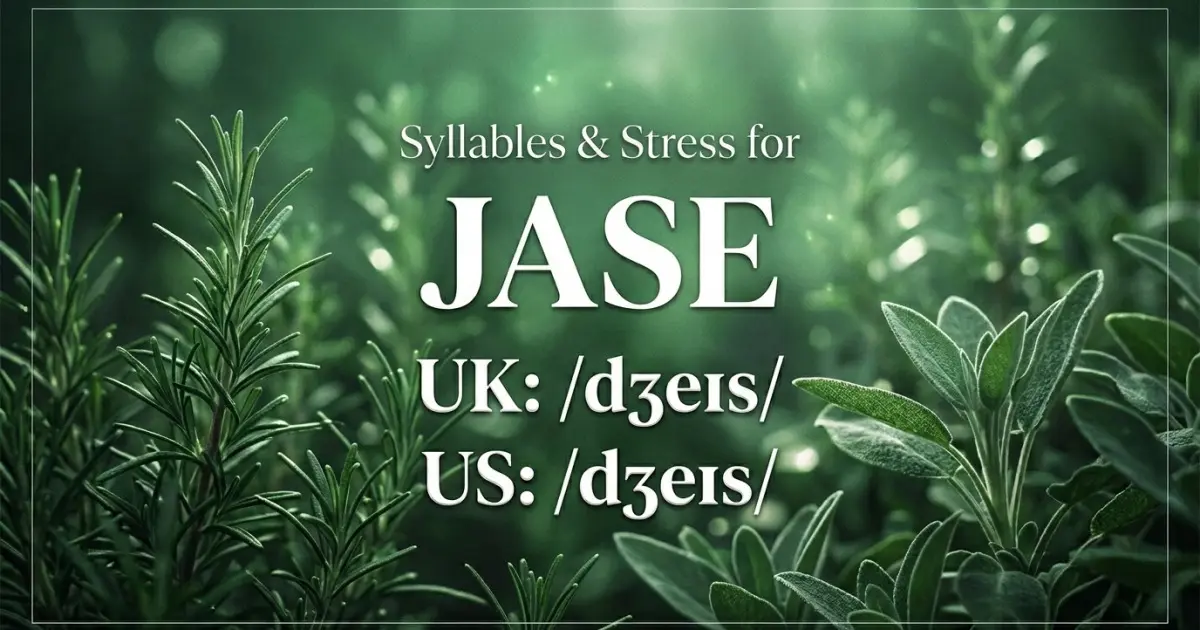
| IPA (U.S.) | /dʒeɪs/ | The middle uses the long “a” sound heard in day or the letter name A. |
| IPA (U.K.) | /dʒeɪs/ | The standard British form matches the American one, so the name travels easily across accents. |
| Syllable count | 1 syllable | Say the whole name in one beat rather than stretching it into two parts. |
| Stress pattern | Full stress on the only syllable | Because Jase is one syllable, the entire sound needs to feel clear and centered. |
| Opening sound | /dʒ/ | Begin with the same sound heard in jam or joy, not a hard g. |
| Ending sound | /s/ | Let the final s finish cleanly without over-hissing or fading away. |
Why Jase sounds modern because every sound is doing real work
Short names often look easy on paper, but that can be misleading. With a longer name, rhythm and extra syllables help carry the listener along. With Jase, every sound matters because there is nowhere to hide. The opening, the vowel, and the ending all have to cooperate in a single beat. When they do, the name sounds polished and highly usable. When one part slips, the whole impression changes quickly. Before focusing only on syllables and stress, it helps to step back into the fuller frame of Jase meaning.
Why the opening gives Jase its smooth confidence
Jase begins with the sound /dʒ/, the same opening heard in words like jump and gentle. Linguistically, it is an affricate, a sound that begins with a brief stop and then releases into friction. In more ordinary language, it starts firmly but not harshly. That is a big reason the name feels so approachable. Jase does not bang its way into a room. It arrives with shape and ease.
This opening also helps explain why the name sounds friendlier than some other one-syllable boys’ names. It has clarity without bluntness. That makes it feel modern and social rather than severe.
Why the long vowel gives Jase its brightness
The center of the name is the long a sound, /eɪ/. This is what gives Jase its lift. Without that bright vowel, the name would sound flatter and heavier. With it, the name opens in the middle and feels more alive in the mouth. This matters because Jase carries meanings like “healer” and “the Lord is salvation.” A dull or muddy vowel would weigh the name down. The bright vowel keeps it clear, light, and socially open.
That bright center is also one reason Jase sounds so easy to repeat. The ear catches it quickly. The name does not have to be unpacked twice.
Why the final S keeps Jase feeling finished
The last sound in Jase is /s/, a voiceless fricative. In everyday terms, that means the sound is made by air moving through a narrow space without vocal cord vibration. It gives the name a clean edge. That edge matters. Without it, Jase would sound incomplete. With it, the name feels finished and modern.
Still, the ending should not be exaggerated. A speaker who hisses the final s too much can make the name sound showy. Jase sounds best when the ending is present, crisp, and controlled.
Jase in American and British speech stays strikingly stable
Some names shift noticeably between major English accents, but Jase is unusually stable. The supplied American and British IPA are identical: /dʒeɪs/. That means the broad pronunciation pattern remains the same across standard U.S. and U.K. speech. For parents, this is a real practical advantage. The name crosses borders without needing a new stress pattern, a new vowel family, or a different social explanation.
What stays the same everywhere
The opening j sound stays smooth and recognizable. The long a stays bright. The final s stays clean. These three elements are the whole architecture of the name, and they remain intact in both accents. That makes Jase highly portable and easy for English speakers to receive correctly.
What may vary only a little in natural speech
Accent can still change the texture at the edges. Some speakers may make the vowel slightly tighter or looser, and some may release the final s more softly than others. But these are very small differences of color, not meaningfully different pronunciations. Jase stays itself almost everywhere it goes.
Where Jase usually goes wrong, and how to hear it cleanly
Because the name is short, most pronunciation mistakes are not dramatic misreadings. They are small distortions that change the tone. A name with only one syllable magnifies those distortions more than a longer name would.
The “Jason without the on” mistake
One common issue is treating Jase as though it were merely a clipped version of Jason and letting the sound drift toward something less exact. But Jase should not sound like a fragment. It is its own complete name. The fix is to remember that the final sound is a clear s, not a softened fade into another syllable.
The too-hard opening mistake
Some speakers accidentally harden the opening, almost nudging it toward a g-like sound. That changes the whole character of the name. Jase needs the smoother j opening. That is what keeps the name sounding bright and easy rather than harsh.
The over-hissed ending mistake
Because the name ends on s, some people overemphasize the last sound, as if they are spelling the name in the air rather than saying it naturally. The ending should be audible, but not theatrical. Jase works best when the last consonant finishes the line cleanly and then lets go.
How Jase becomes effortless once you hear its sound neighbors
A useful way to master a short name is to place it beside familiar words. Jase benefits from that approach because its sound pattern is very recognizable once the ear catches it. The name belongs to a simple rhyme family, and that makes practice easy. Once the sound pattern is clear, some shortenings stop feeling optional and start feeling natural, and the clearest map is in nicknames for Jase.
Words and names that help Jase click
The easiest comparison is lace with a j sound at the front. It also sits near names like Jace, though spelling habits may differ, and near words like base and case in pure sound structure. What matters is hearing the one-beat pattern: smooth opening, bright vowel, clean finish.
Practice lines that make Jase sound natural
These short lines help settle the pronunciation into everyday speech:
“Jase is here.”
“I met Jase today.”
“This is Jase.”
“Jase called earlier.”
“Jay is short for Jase in some families.”
Said aloud at normal speed, these lines make the structure obvious. Jase should sound like one clean arc from beginning to end, not a clipped abbreviation and not an over-careful performance. Once the ear hears that arc, the name becomes very easy to carry.