
Jase Name Meaning: Meaning, Legacy, and Style

Jase is a small name carrying unusually large moral language. Its meanings, “healer” and “the Lord is salvation,” do not point toward image, style, or sheer force. They point toward restoration. That is the central interpretive thread inside Jase: it is a modern, brisk, American-sounding name that quietly carries old human hopes about mending, rescue, and staying power. The form is short enough to feel quick and contemporary. The meaning is deep enough to suggest that what matters most is not speed or spectacle, but what a person helps restore in the lives around him.
That is why Jase feels more substantial than its single syllable first implies. Many one-syllable modern names earn attention through sharpness, coolness, or compact masculine energy. Jase does have some of that clarity, but its real weight comes from elsewhere. “Healer” is a relational meaning. “The Lord is salvation” is a meaning of deliverance and trust. Together, they make Jase feel like a name built around usefulness rather than display. It is not a name of conquest. It is a name of repair. And because the sound is so clean and contemporary, that moral seriousness arrives without heaviness.
Jase's U.S. popularity rank over time, 1967–2024
Popularity statistics are based on official data from the Social Security Administration baby name records.
Jase: A Short and Spirited Lyrical Discovery
Jase functions as a name with one unmistakable center of gravity, reaching a significant peak for boys in 2013. This “short and sweet” choice fits a style family parents trust for being both friendly and independent, offering a sense of approachable charm.
The absence of crossover usage reinforced a focused masculine profile. Associated with “healing,” its simple single-syllable punch provides a texture of refined charm that remains current.
What Jase already says before the story widens
| Key Facts | Information | Quick Insight |
|---|---|---|
| Name | Jase | The form is lean and modern, but the meaning gives it more depth than a purely trend-driven short name. |
| Primary gender usage | Male | Current use remains clearly male, though the sound is open and socially easy rather than over-armored. |
| Origin | American | The American origin places Jase firmly in modern naming culture, where brevity and clarity matter, but meaning still shapes appeal. |
| Meaning | Healer; the Lord is salvation | These meanings join care and rescue, making Jase feel more restorative than self-assertive. |
| Pronunciation | JAYSS | The sound is bright and direct, which helps a serious meaning stay approachable in daily life. |
| IPA (U.S.) | /dʒeɪs/ | The clean one-syllable shape gives Jase modern ease and strong public usability. |
| IPA (U.K.) | /dʒeɪs/ | The matching British form makes Jase highly portable across English-speaking settings. |
| Syllable count | 1 | Its one-beat form keeps the name efficient, but the meanings keep it from feeling emotionally thin. |
| U.S. boys’ rank (2024) | No. 637 | Official data shows Jase remains in active use without sitting in the most crowded or overexposed part of the chart. |
| Latest U.S. year | 2024 | The current ranking confirms Jase is still part of modern naming life rather than a passing memory of one trend cycle. |

Why Jase makes healing sound modern rather than old-fashioned
Healing is one of the oldest naming ideas in the world, but it can sometimes sound distant in modern form, too solemn, too scriptural, or too explicitly medicinal. Jase avoids that problem through shape. The name is short, clear, and socially current. It sounds like it belongs in the present, and that present-tense voice changes how the meaning lands. “Healer” in Jase does not sound ceremonial. It sounds practical. It suggests someone who helps, steadies, restores, or brings people back to themselves without needing to announce that role too loudly.
Jase carries care without sounding soft-edged
This balance is one of the name’s best qualities. Some caring names risk feeling too delicate or too overtly gentle in a culture that still reads many boys’ names through the lens of force. Jase manages something subtler. It sounds masculine through clarity rather than hardness. The firm opening consonant and clean ending give it backbone. The meaning gives it tenderness. The result is a name that can signal compassion without surrendering structure. To compare tone, familiarity, and fit across similar names, explore boy baby names.
That matters because many parents want exactly this combination. They want a boy’s name that sounds current and straightforward, but they do not want emotional emptiness underneath it. Jase offers a kind of usable grace: modern in form, restorative in meaning, and free of ornament.
Why “the Lord is salvation” deepens the name beyond style
The second meaning, “the Lord is salvation,” changes the atmosphere again. It brings in not only healing, but rescue, deliverance, and spiritual trust. This gives Jase a wider moral horizon than the name’s one-syllable frame first suggests. The name is no longer only about mending what hurts. It is about hope when something larger than human effort is needed. Even for families who respond more to the emotional idea than to formal theology, this is a powerful layer. It makes Jase feel anchored rather than merely fashionable.
Taken together, the two meanings complement one another beautifully. One speaks of healing in immediate human terms. The other speaks of salvation in a larger, faith-oriented frame. Jase becomes a name that can feel intimate and expansive at once.
Jase belongs to modern American naming, but its meanings reach far older ground
Its stated origin is American, and that should be taken seriously. Jase sounds like it belongs to a naming world that values clarity, brevity, and easy speech. It fits easily beside other compact contemporary boys’ names. Yet project naming references also place Jase in the broader family of Jason-related forms, and that helps explain how a very modern-looking name can carry an older healing tradition so convincingly. Jase may be modern in the way it stands on the page, but it is not emotionally rootless.
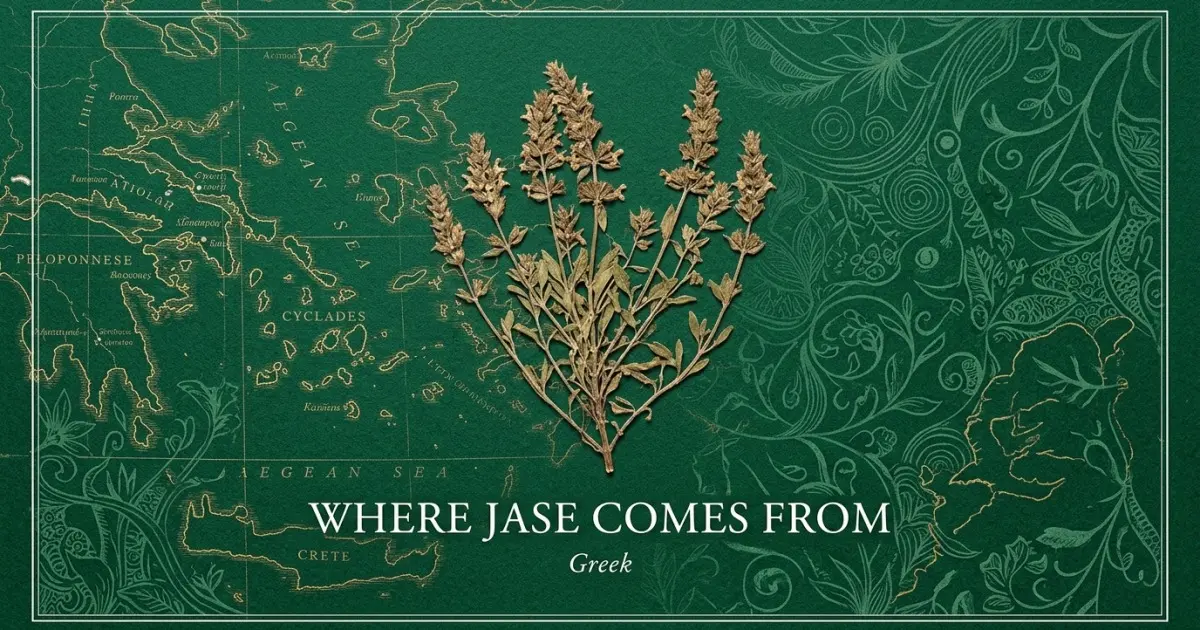
How Jase feels modern without feeling invented for effect
Many contemporary names struggle with a credibility problem. They may sound good, but listeners are not always sure whether they will hold up beyond one era. Jase avoids much of that because its sound is so settled. It is easy to spell, easy to hear, and easy to say. Nothing in it feels unstable. That matters. Modern names often last when they feel inevitable rather than assembled.
Jase succeeds here. It is American in style, but not flimsy. It feels like a name that arrived through real use, through shortening, adaptation, and the natural pressure of speech, rather than through mere novelty. That gives it a practical durability.
Why a modern origin can still carry historical seriousness
There is no contradiction in a name being modern in form and old in moral atmosphere. In fact, that combination is often why names survive. Jase sounds as though it belongs to the present, yet the meanings connect it to enduring human concerns: healing, rescue, faith, and restoration. Those themes are older than any naming trend. They give the name a center of gravity that pure sound alone cannot supply. If you want to go deeper into this heritage, visit more names with similar roots.
This is one reason Jase feels more grounded than some other short contemporary names. It may look streamlined, but it carries inherited depth. The name can participate in current style without being emptied by it.
How the sound of Jase helps the meaning stay believable
Phonetically, Jase is doing something very useful. It is one syllable long, but it does not sound abrupt in the harsh sense. The opening j sound is voiced and familiar, which makes the name enter speech smoothly. The long vowel in the center gives it brightness and lift. The final s closes it cleanly without making it overly heavy. This combination lets the name feel contemporary and efficient while still carrying meanings as large as healing and salvation.
The long vowel gives Jase its openness
The central vowel, the same broad sound heard in words like day and names like Jace, is crucial. Without it, Jase would sound much tighter and more abrupt. With it, the name opens in the middle. That openness is one reason the name feels socially accessible. It sounds bright rather than closed off. This helps the deeper meanings land gently instead of sounding overburdened.
The ending keeps Jase from sounding unfinished
The final s matters too. It gives the name a clean finish and keeps it from dissolving too quickly in speech. A lot of one-syllable names live or die by their endings. Jase’s ending gives it enough definition to sound complete. That completeness is important. A name this short must feel like a finished thought. Jase does.
The phonetics, then, support the meanings well. The name is easy to say, easy to hear, and emotionally open enough to carry themes of care without sounding fragile.
Jase in modern use: present, familiar, and still selective
Official Social Security Administration (SSA) data places Jase at No. 637 for boys in 2024. That is a useful position for the name. It means Jase is visible and active, but not heavily saturated. The name remains current enough to feel recognizable, yet uncommon enough to feel chosen rather than automatic. This suits Jase well. A name built on healing and salvation does not need a loud public profile to do its work. In some ways, a quieter level of use fits its atmosphere better.
Why the current rank works in Jase’s favor
If Jase were far more common, it might begin to feel like pure sound pattern. If it were much rarer, it might feel more fragile in the culture than it really is. At No. 637, it sits in an interesting middle space: known, usable, but still distinct. That allows the name’s meaning and tone to remain visible. It feels modern without becoming generic.
For many parents, that is an ideal balance. The child will not be carrying an unfamiliar name, but he also will not disappear into a crowd of identical choices. Jase stays legible and personal at the same time.
How Jase differs from other short modern boys’ names
Placed beside neighbors like Jace, Cade, Zane, or Chase, Jase becomes clearer. It shares their speed and crispness, but its meanings make it feel less performative than some of them. It is not built around velocity or image. It is built around restoration. That distinction may be invisible at first glance, but it affects the name’s whole emotional atmosphere. Jase feels less like a pose and more like a steady hand.
What Jase opens next
A strong meaning page should naturally point toward the rest of the naming decision, and Jase does that especially well because its compact modern form can be steered in several directions.
Middle names that give Jase extra depth or steadiness
Because Jase is only one syllable, the right middle name can broaden it, add classical weight, or deepen its spiritual atmosphere without disturbing its modern ease. If you want the full pairing logic behind that contrast, see Jase middle names.
Nicknames that show Jase’s more private warmth
The name is already short, but even short names attract affectionate forms, and those forms can make Jase sound more playful, softer, or more family-centered. To see how those different moods shorten in real life, explore Jase nicknames.
Pronunciation choices that keep Jase sounding clean
The whole effect of Jase depends on its bright vowel and clean ending. That is where the name’s modern clarity lives. If you want the full sound pattern behind that rhythm, read Jase pronunciation guide.
Why Jase remains Jase
In the end, Jase lasts because it compresses mercy into a modern line. It looks contemporary, quick, and socially easy. Yet the meanings inside it, “healer” and “the Lord is salvation,” belong to some of the deepest human hopes people have ever attached to names. That contrast is not a weakness. It is the name’s real achievement. Jase proves that a short American name can still carry old moral seriousness without sounding burdened by it.
That is why the name continues to feel alive. It is not ornate, but it is not hollow. It is not ancient in form, but it is not emotionally shallow. Jase sounds like the kind of name that can move easily through modern life while still holding something steadier underneath: help, repair, rescue, companionship, and faith that broken things can be restored. In a culture full of sharp surfaces, Jase offers a cleaner, quieter strength. It does not shout what it means. It simply carries it well.