
Jacob Name Meaning: Why It Still Feels Fresh and Timeless
Jacob is one of those names that becomes more interesting the closer you get to it. On the surface, it looks settled: biblical, familiar, masculine, long trusted, and still highly visible in modern classrooms. But the meaning most often attached to Jacob is supplanter, and that word immediately complicates the picture. A supplanter is not merely a quiet inheritor. He is the one who comes after, takes the place of another, steps into a role through pressure, cunning, timing, or transformation. Jacob, then, is not a static name. It is a name about movement between positions. It is a name of succession, tension, and becoming.
That is the central thread that gives Jacob its unusual durability. Many names offer stability. Jacob offers change with structure. In older interpretation, the name reaches back to the biblical image of the younger twin grasping his brother’s heel at birth, and later to a life marked by displacement, inheritance, and eventual transformation. One naming reference expands the meaning beyond “supplanter” into ideas such as replace, change, transform, and successor. That widening matters. It helps explain why Jacob has remained so persuasive to parents for generations. Official Social Security Administration (SSA) data shows it ranked No. 41 for boys in the United States in 2024, and earlier decade lists placed Jacob at the very top of American boys’ naming in both 2000 and 2010. That is not the profile of a name people merely respect from history. It is the profile of a name that still feels alive because it holds one of the deepest human stories of all: the struggle to become someone new.
Jacob's U.S. popularity rank over time, 1880–2024
Popularity statistics are based on official data from the Social Security Administration baby name records.
Jacob: A Durable Biblical Anchor with Stable Reach
Jacob functions as a name with one unmistakable center of gravity, sustained by a deep biblical tradition that has anchored it as a primary choice for boys across generations. Its long-term durability in the top tier of names often reflects a preference for “strong biblical classics” that offer a sense of “rest and comfort” while remaining readable and easy to stress .
While the girls’ lane shows occasional low-count movement, it behaves more like experimentation than a genuine shift toward shared use. The name’s historical range provides a sense of “venerable classic” energy that keeps it feeling stable even as naming fashions evolve.
Jacob’s plain facts point toward a far more dramatic inner story
| Key Facts | Information | Quick Insight |
|---|---|---|
| Name | Jacob | The form is familiar and steady, but the narrative inside it is restless, charged, and unusually full of change. |
| Primary gender usage | Male | Modern use is strongly masculine, though the name’s real force comes from succession and transformation rather than hardness alone. |
| Origin | Hebrew | The Hebrew root keeps Jacob close to one of the foundational storytelling traditions of Western naming. |
| Meaning | Supplanter | This can sound severe at first, but it also points toward replacement, change, inheritance, and the uneasy process of becoming the next one. |
| Pronunciation | JAY-kəb | The sound is calm and familiar, which softens the tension built into the meaning. |
| IPA | /ˈdʒeɪkəb/ | The bright opening gives Jacob clarity, while the relaxed second syllable keeps it grounded and highly usable. |
| Syllable count | 2 | Two syllables help Jacob feel balanced: substantial enough for adulthood, easy enough for daily life. |
| U.S. boys’ rank (2024) | No. 41 | Official data shows Jacob remains deeply established, even after its years at the very top of the charts. |
| Modern naming history | Leading American boys’ name in 2000 and 2010 decade lists | Jacob did not merely trend. It helped define an era of modern boys’ naming. |

Jacob turns succession into identity
There are names that feel content with inheritance and names that feel marked by struggle. Jacob belongs decisively to the second category. The traditional meaning, supplanter, has always carried some friction. It suggests replacement, taking another’s place, rising by displacement rather than by smooth appointment. That can make the name sound morally uneasy if read too narrowly. But names survive not because their dictionary meanings remain frozen, but because culture keeps interpreting them. In Jacob’s case, the older idea of supplanting has broadened into something deeper and more human: change under pressure, succession through conflict, and the complicated formation of character.
This is why Jacob still feels rich rather than merely severe. It is not a name of simple triumph. It is a name of contested becoming. Historically, it belongs to one of the most psychologically charged stories in the biblical imagination: the younger twin, the grasping hand, the displaced elder, the blessing, the new name, the altered destiny. Even when modern parents are not consciously tracing all those scenes, they often feel the weight of the pattern. Jacob sounds like a name that has been tested.
That testing is part of its masculine appeal. Some boys’ names signal strength through blunt force, conquest, or rule. Jacob signals it through endurance, cunning, moral difficulty, and eventual transformation. It offers a more narrative form of strength. The bearer is not imagined as someone who was born already fixed in his role. He is imagined as someone who wrestles his way into it. To see how Jacob fits within this category, browse familiar and rare boy names.
There is also something culturally durable about that pattern. Modern parents often want names with substance, but they do not always want names that sound rigid or grandiose. Jacob solves that problem elegantly. The full meaning is serious, even turbulent, yet the spoken form is approachable. It is biblical without feeling overly formal, traditional without sounding museum-like, strong without requiring loudness. That balance helps explain why it keeps returning.
How Jacob’s Hebrew root became a lifelong story of change
Jacob comes from the Hebrew Yaakov, and naming references attached to the project consistently preserve the older interpretive field around it: the heel, the replacing of one by another, the successor, the transformed one. One source makes this especially explicit, noting that Jacob literally carries the sense of “one that takes by the heel” and by extension “replace with another.” Another expands that into a broader framework of change and transformation, arguing that the life of biblical Jacob made the name signify more than mere cunning. It became a name about being remade.

Jacob at birth: the heel as image and destiny
The original image is unforgettable because it is so physical. Jacob’s meaning is tied to the biblical story of his birth as the second twin, emerging while holding Esau’s heel. That image has survived for centuries because it is more than picturesque. It provides a whole interpretive pattern in miniature. Jacob is the second one, the one attached to the first, the one already reaching while entering the world. The story encodes rivalry, proximity, dependence, and ambition all at once. If you want to go deeper into this heritage, visit more Hebrew names.
That is why the name’s older meaning never feels merely abstract. The idea of the supplanter is not born out of political theory or moral philosophy. It is born out of family drama. It belongs to birth order, inheritance, blessing, and the question of who becomes the chosen heir. That intimacy gives the name its lasting charge. Jacob is not about anonymous replacement. It is about what happens when destiny moves through a household.
Jacob the younger twin, Jacob the heir, Jacob remade
Project sources also preserve the next layer of the story: Jacob taking the place of his brother as the father’s chosen heir, and later the transformation of Jacob himself through divine encounter and renaming. This is where the name becomes much richer than “supplanter” alone. One naming guide makes the interpretive leap very clearly, emphasizing not only replacement but change, transform, and the idea that Jacob was made new in name, character, and purpose during his lifetime.
That broader reading is crucial for a modern article. Without it, Jacob might sound morally narrow or overly burdened by deception. With it, the name becomes one of the great transformation names. It suggests not just the taking of place, but the painful remaking of the self. The younger twin becomes more than the younger twin. The heir becomes more than the trickster. The old identity gives way to another one with greater depth and consequence.
This is one of the reasons Jacob remains so psychologically compelling. Very few classic names carry such a vivid before-and-after structure. Many biblical names are anchored in faith, blessing, praise, or divine action. Jacob is anchored in change. It is a name for someone who is not finished when the story begins.
Jacob sounds steadier than its meaning, and that is part of the magic
If the meaning alone determined a name’s fate, Jacob might have become too fraught for broad modern use. But sound has always been part of its survival. Say it aloud: JAY-kəb. The first syllable is bright, open, and clear. The second relaxes. Nothing in the name sounds aggressively severe. In fact, Jacob is one of those names whose phonetics do important moral editing. The meaning may be tense. The sound is calm.
This matters enormously in daily life. Names are lived by ear long before they are studied by etymology. Jacob sounds approachable, intelligent, and grounded. It does not sound scheming, dangerous, or dramatic, even though its root story includes all kinds of tension. That gap between sound and meaning is part of what makes the name so wearable. It gives the name narrative depth without forcing the bearer to sound burdened by it.
The two-syllable structure also helps. Jacob is substantial enough to feel like a full traditional name, but brief enough to be easy in the mouth. It travels well from nursery to workplace, from sports roster to formal document. The first syllable gives it brightness and recognition. The second syllable prevents it from sounding too sharp. The overall effect is balanced, which is exactly what a transformational name needs. Too much softness, and the narrative weight would disappear. Too much severity, and the name would feel exhausting. Jacob lands in the middle.
This balance likely contributed to its long modern success. Parents often choose names not only for meaning or style but for livability. Jacob has excellent livability. It is hard to misspell, hard to mispronounce, easy to pair with surnames, and rich in familiar nickname possibilities. Those practical strengths allowed the deeper story inside the name to remain an asset rather than a complication.
Jacob defined a generation before becoming a steady classic
Official naming data and project reference charts show just how large Jacob’s modern cultural footprint has been. In American decade lists included in the project materials, Jacob stands at No. 1 for boys in both 2000 and 2010, and it still appears among the leading names in lists for 2013. That kind of dominance changes how a name lives in the culture. Jacob was not simply popular. It was one of the defining boys’ names of a whole era.
What Jacob’s long popularity says about the name
Names reach the top for different reasons. Some rise on novelty and fall as quickly as they came. Jacob’s peak was different. It rose because it solved a great many parental desires at once. It was biblical but not heavy. Traditional but not stiff. Masculine but not hard-edged. Serious enough for adulthood, warm enough for childhood. That combination is rare, and it explains why Jacob dominated for so long.
Project commentary even notes a more recent popular-culture boost through a well-known fictional Jacob, but that is better understood as reinforcement than explanation. Jacob did not need pop culture to exist. It already had centuries of authority. What modern culture did was refresh public attention to a name whose foundations were already exceptionally strong.
Why Jacob still works after the peak
Official SSA data placing Jacob at No. 41 in 2024 suggests a name that has moved out of its absolute peak without losing social trust. That is often a healthy place for a classic to land. The most saturated years are behind it, but the name remains fully legible and broadly liked. Parents who once may have avoided Jacob because it felt too omnipresent can now hear it again with fresher ears.
In fact, a former top name often gains a second life once it steps back from ubiquity. Freed from the pressure of constant repetition, the deeper qualities begin to stand out again. With Jacob, those deeper qualities are substantial: the biblical lineage, the transformation narrative, the clean sound, and the excellent balance between formality and warmth.
Among style neighbors such as Joshua, Ethan, Noah, Benjamin, and Samuel, Jacob occupies a particularly useful place. It is more psychologically tense than Ethan, less overtly gentle than Noah, less stately than Benjamin, and less overtly devotional in sound than Samuel. What it offers instead is story. Jacob sounds like a boy with a past and a future.
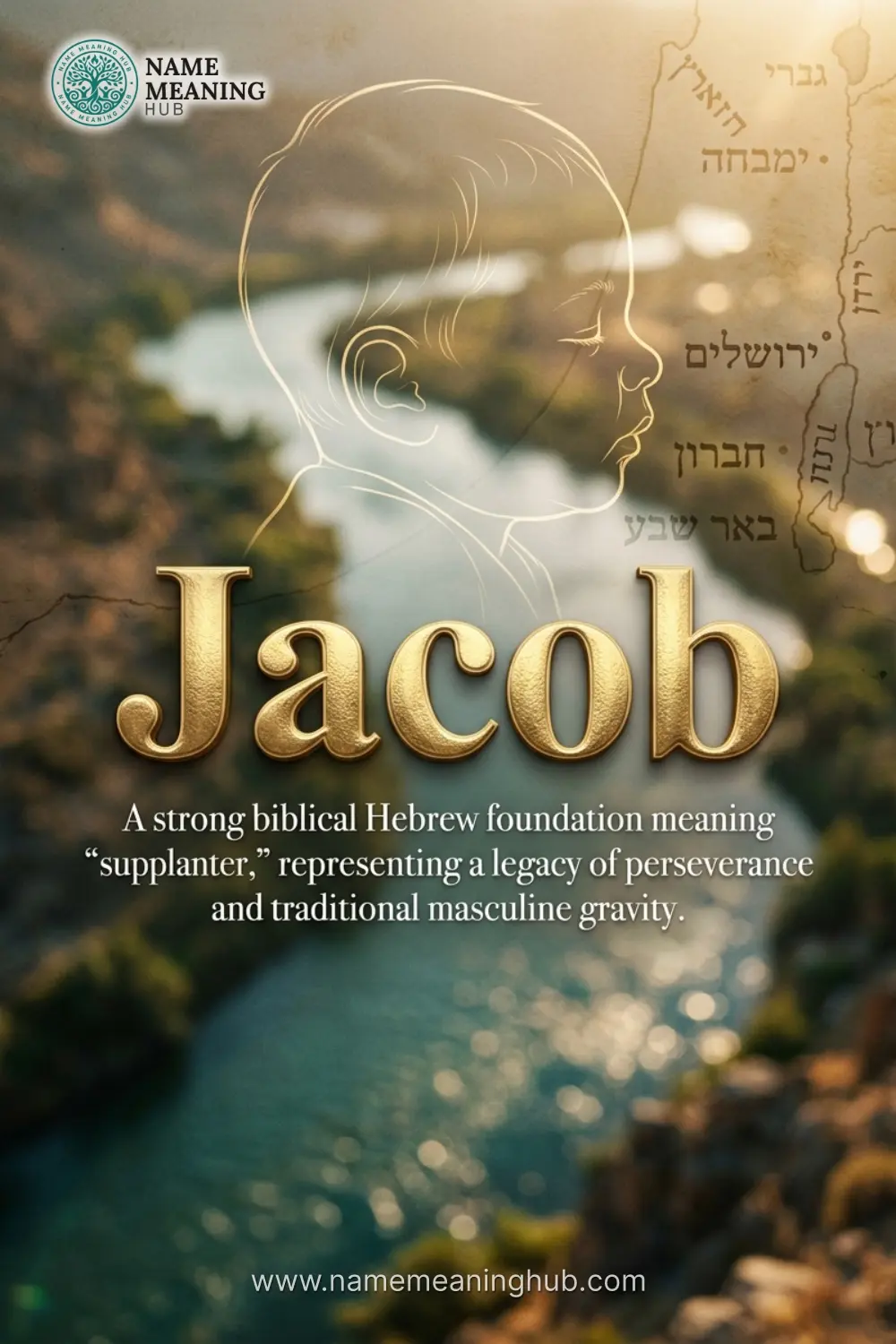
If Jacob is already on your shortlist, the next details become more revealing
Middle names for Jacob usually decide whether the full name feels more biblical, more polished, or more modern
Because Jacob is so balanced in form, the middle name becomes an unusually strong stylistic lever. A classic or scriptural middle deepens the heritage, while a cleaner modern choice can make the full name feel sharper and more current. If you want the full pairing logic behind that contrast, see Jacob middle names.
Nicknames for Jacob show whether a family wants to preserve the full gravity or lean into the everyday warmth
Jacob has long produced familiar shortened forms that make it sound more playful, more intimate, or more casual. Those nickname choices often reveal whether the family loves the name more for its stability or its friendliness. To see how those different moods shorten in real life, explore nicknames for Jacob.
Jacob’s pronunciation helps explain why such a loaded meaning still feels easy to live with
The bright first syllable and relaxed second syllable make Jacob sound approachable and steady. That phonetic calm is one reason the name has remained so broadly usable despite its intense older narrative. For the detailed stress pattern, accent notes, and IPA, see how to pronounce Jacob.
Why Jacob still feels like a name in motion
Jacob endures because it offers one of the deepest story structures available in a mainstream boys’ name. It begins in tension and reaches toward change. It holds rivalry, inheritance, transformation, and eventual remaking without ever sounding theatrically burdened. The meaning supplanter is real, but it is only the first door into the name. Beyond it lies succession, struggle, identity, and the possibility of becoming more than one first was.
That is why Jacob feels larger than the charts it once topped. It is a name that can sound stable on the surface while carrying a whole inward drama of change. For parents who want a boys’ name that is traditional without being static, biblical without being stiff, and psychologically rich without becoming obscure, Jacob remains one of the strongest choices in the language. Jacob does not merely inherit a story. Jacob is a story about inheritance itself.
The Deeper Meaning of Jacob: FAQ
Does Jacob’s meaning make the name sound too harsh?
Usually not. While “supplanter” can sound severe in isolation, the wider interpretive tradition around Jacob often expands it into succession, change, and transformation. The name’s calm sound also softens the sharper edge of the meaning.
Is Jacob still too common to feel distinctive?
Official data shows Jacob remains very familiar, but it is no longer at the absolute peak it once occupied. That can actually help the name feel stronger again, since its depth and biblical structure have more room to be noticed.
How is Jacob different from other biblical boys’ names like Joshua or Noah?
Jacob tends to feel more narrative and psychologically charged. Joshua often feels more straightforwardly strong, and Noah more gentle or peaceful. Jacob carries a particularly vivid story of struggle, succession, and remaking.
Does Jacob age well from childhood into adulthood?
Yes. The name is easy and warm enough for a child, but serious and historically grounded enough for an adult. Its two-syllable balance is a large part of why it remains so versatile.