
Nicknames for Jace: Nicknames That Sound Warm and Effortless
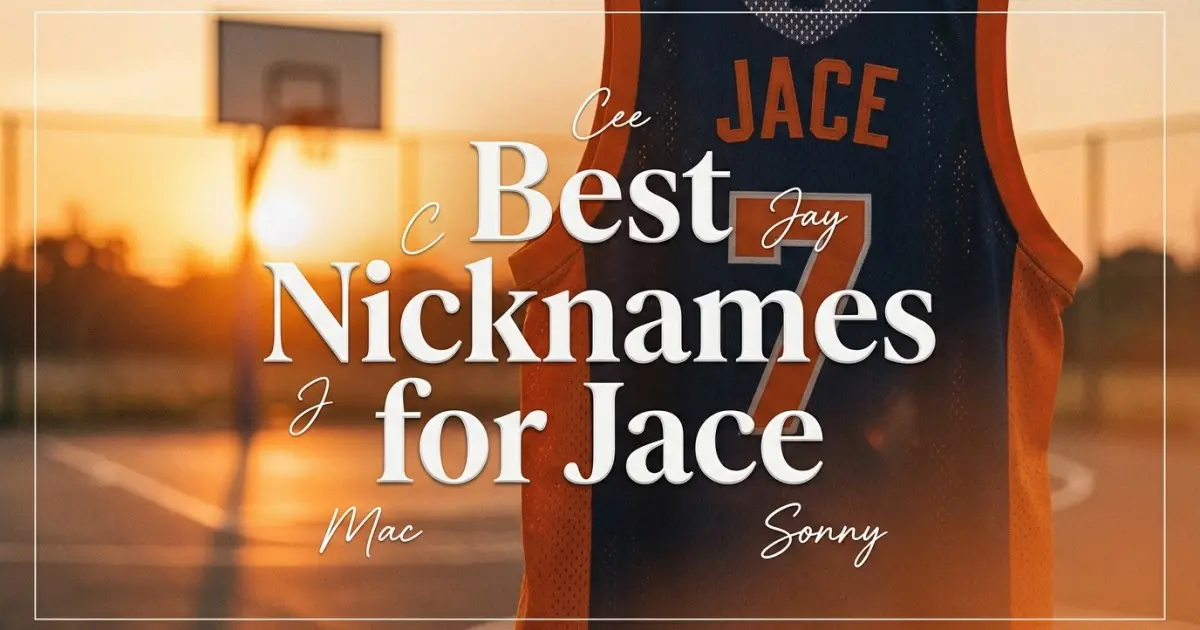
Nicknames matter most when a name is already short enough not to need one. With longer names, shortening can feel practical. With a name like Jace, shortening is almost never about necessity. It is about relationship. The formal name belongs to the outside world: the attendance sheet, the camp roster, the doctor’s clipboard, the first introduction. The nickname belongs to the people who know the child’s private weather. It belongs to the parent calling from across the house, the sibling trying to be funny, the teammate trying to be fast, the friend group building its own small language around one person. That is why nicknames are not trivial. They are social signals of closeness, tone, and identity.
Jace is especially revealing here because the full name is already one clean beat. It is quick, contemporary, and highly usable in public exactly as it is. That means any nickname attached to Jace is doing emotional work, not mechanical work. A nickname can make Jace softer, more playful, more insider-coded, or more specific to one family’s rhythm. But it rarely replaces the name. It usually just changes its temperature. The full form says speed and clarity. The nickname says who is speaking, and from how close. Before judging which short form feels right, it helps to look again at the full identity of the name in Jace meaning.
What the nickname world around Jace is really showing
| Group | Suggested Nicknames | Persona | Use Context |
|---|---|---|---|
| Classic short forms | J, Jay, Jacey | Relaxed, familiar, socially easy | Home use, texting, school, close friends, quick everyday speech |
| Warm childhood forms | Jacey, Jace-Bear, Jacey-Bug | Affectionate, playful, young | Parents, grandparents, early childhood, private family speech |
| Peer-group forms | J, J.C., Ace | Casual, sporty, contemporary | Friends, teammates, adolescence, group chats, social handles |
| Ending-based forms | Ace, Acey | Confident, charismatic, slightly bolder | Public-friendly shortening, peer use, sometimes chosen by the bearer himself |
| Playful full-name spins | Jace-Man, J-Bug, Jacey-Wacey | Comic, warm, personality-led | Home life, sibling inventions, temporary pet-name phases |
| DIY identity forms | J-Star, Jayce, J-Man | Inventive, individual, style-aware | Nicknames that grow from one child’s personality or friend circle rather than tradition |
Jace is already so short that the nickname becomes tone, not reduction
One of the most important truths about Jace is that it does not need to be cut down. It is already concise, clear, and easy to carry through public life. Research and naming guidance often note that one-syllable names do not usually develop formal diminutives in the same way longer names do. Instead, they gather nicknames through intimacy, speed, team culture, or private family humor. Jace fits that pattern almost perfectly.
That is why the nickname possibilities around Jace are not especially numerous, but they are revealing. A short name does not offer endless structural routes. What it offers instead is flexibility of mood. The child may remain Jace in nearly every formal and semi-formal setting. At home he may become something softer. Among friends he may become something quicker or cooler. In other words, Jace does not transform much. It tilts.
This is actually a strength. Names with too many obvious diminutives can splinter into different identities too easily. Jace tends to stay itself. Even when it changes shape, the nickname usually feels like a slight shift in angle rather than a completely new public self.
The front of Jace gives the most natural everyday nicknames
The opening zone: J and Jay
Because Jace is only one syllable, the opening sound carries almost the entire identity of the name. That makes J one of the most believable nicknames it can have. This is the sort of form that often appears not because a family planned it, but because life made it convenient. A sibling uses it in a hurry. A friend writes it in a text. A coach shouts it from the sideline. It is minimal, but that very minimalism feels natural for a name already this short.
Jay works slightly differently. It is not just an initial. It is a full sound with its own long history in English nickname culture. That gives it more warmth and more public ease than a single-letter form. Jay can be used affectionately at home, casually among friends, and comfortably in semi-public settings without sounding too thin. For some families, Jay may become the most natural private everyday version of Jace because it keeps the bright front of the name while making it a little softer.
Why front-based Jace nicknames feel so effortless
With longer names, shortening from the front can sometimes leave you with something incomplete. Jace does not have that problem. The opening already sounds like enough. That is why J and Jay feel plausible. They preserve the name’s energy without needing extra explanation. In daily life, that matters more than cleverness. A believable nickname is one people can say without thinking about it.
Jace is one of those rare names whose ending matters as much as its beginning
The stressed center and the whole name are almost the same thing
Because Jace is only one stressed syllable, there is no hidden interior zone where a different family of nicknames can easily develop. The opening, the stress, and the public identity all sit in the same place. That usually limits the number of traditional diminutives, but it also makes the nicknames that do emerge feel clean and memorable. These nickname choices read more clearly once the spoken shape of the full name is in view, so see Jace pronunciation guide.
This is one reason one-syllable names often pick up nontraditional nicknames from stories, initials, or group culture. The structure does not hand you much. People create the rest themselves. That is exactly how Jace behaves.
Why peers often create their own Jace forms
In adolescence, names like Jace often gain social nicknames rather than formal shortenings. J.C. can appear if initials support it. J-Man can emerge in friend groups or sports teams. J-Star or similar forms may appear in joking or affectionate circles. These are not classic diminutives. They are peer-made identities, and that is how many short names live once the child moves beyond the family.
The end of Jace creates the boldest nickname possibility
The ending zone: Ace is the strongest alternate identity
If there is one nickname for Jace that genuinely feels like a second public self rather than a mere softening, it is Ace. This is the most important ending-based possibility inside the name. Ace feels confident, bright, and slightly more performative than Jace itself. It is also highly memorable. That makes it one of the most plausible nicknames a child named Jace might either receive from others or choose for himself.
What makes Ace so compelling is that it does not feel accidental. It feels discovered. The letters are already there, and the sound has enough social familiarity to stand on its own. Unlike some playful derivations that only work in a single household, Ace can move comfortably in public. It sounds sporty, charismatic, and self-assured, which means it may appeal especially in adolescence or among peers.
Acey as the softer extension
Acey is a warmer, more affectionate extension of Ace. It is less likely to become the dominant public nickname, but it is believable in family use or in playful childhood contexts. It keeps the charm of the ending-based route while softening the edge slightly. That makes it useful for parents who like Ace but want something that feels more domestic and less overtly high-energy.
Jace changes shape by age more than by formality
Early childhood
In the toddler and preschool years, families often want more softness than the crisp full name naturally provides. That is where forms like Jacey, Jace-Bear, Jacey-Bug, or even Jacey-Wacey can feel natural. These are not meant to sound adult. They are meant to fit the emotional scale of a very small child. That alone makes them believable. Many affectionate nicknames are temporary by design.
School age and public life
Once the child is in broader public life, the nickname often tightens or disappears. Many boys named Jace will remain simply Jace everywhere outside the home. Others may be J or Jay among close friends. This is also the age when Ace may begin to feel especially attractive, because it is easy, memorable, and socially recognizable in its own right.
Adolescence and adulthood
In adolescence and adulthood, the most likely enduring forms are usually Jace itself, Jay, or Ace. That is one of the name’s practical strengths. It does not force the child into a nickname he will later have to outgrow. The full form already sounds modern and adult-capable. Any nickname remains optional rather than necessary.
Which Jace nicknames feel most real, and which need a story
The strongest nicknames for Jace are the ones that sound like real life would naturally produce them. By that standard, the core group is quite clear: J, Jay, Ace, and then a warmer family layer built around Jacey or affectionate pet forms. These nicknames make sense because they come directly from the sound, shape, or social behavior surrounding a one-syllable name.
The more decorative forms—Jace-Man, J-Bug, J-Star, Jacey-Wacey—are also possible, but they need biography behind them. They work best when they belong to one child’s personality, one sibling culture, or one family’s humor. They are not default forms. They are personal inventions, and that is often how the best private nicknames work.
That is what makes Jace so interesting in the nickname world. The formal name is already so efficient that nothing needs to be done to it. Every nickname is therefore a choice of intimacy. The name stays quick and modern in public, while private life decides whether it should also sound softer, bolder, or more playful behind closed doors.