
Best Middle Names for Harmony: Names That Fit by Sound, Mood, and Shape
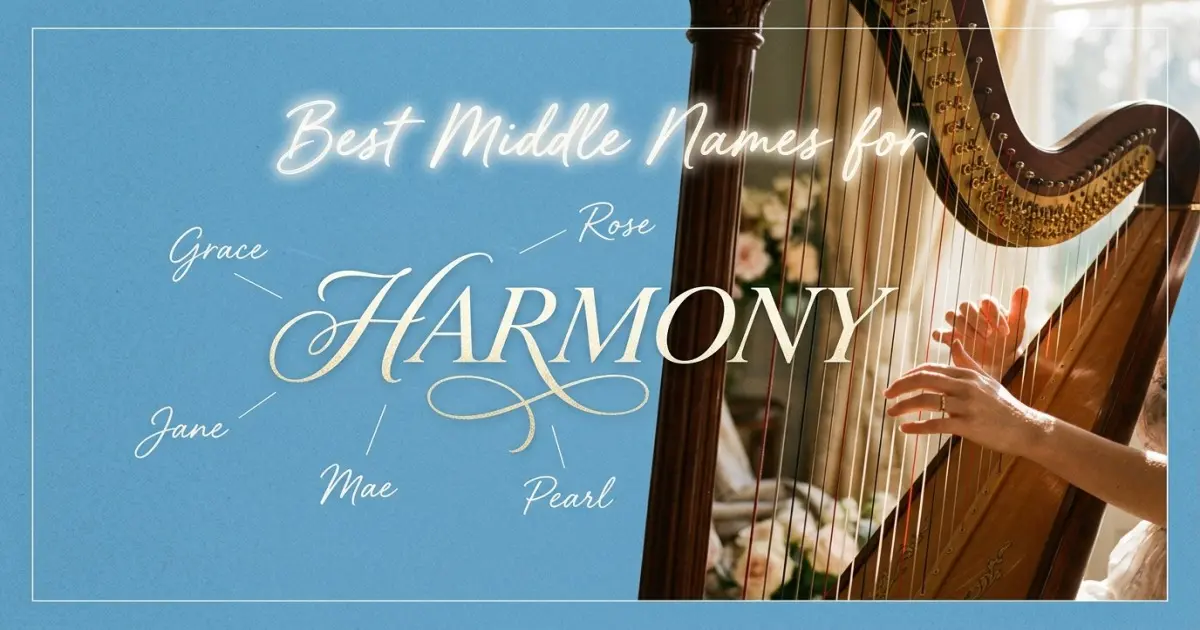
A middle name often does the work that a striking first name cannot do by itself. The first name must live in public: on school rosters, on introductions, on certificates, on the first line of an email, on the sound of a parent calling across a room. The middle name lives more quietly, but that quiet is exactly where its power sits. It can steady a name that feels airy, soften a name that sounds too sharp, carry family memory without handing the child a fully inherited identity, or create a rhythm that turns a good first name into a memorable full one. In practice, the middle name is where parents often stop choosing only what they love and start choosing what the whole name needs.
That matters enormously with Harmony. Harmony is already a concept name, a music-adjacent name, and a value name all at once. It enters the room carrying meaning before anyone asks what it means. That is one of its strengths, but it also means the middle name beside it must do real balancing work. The right middle can make Harmony feel grounded, elegant, modern, devotional, literary, or quietly strong. The wrong middle is rarely ugly on its own. It is simply too much of the same thing: too much softness, too much atmosphere, too much abstraction, too much lyricism stacked on top of a name that already sings. Choosing a middle for Harmony is therefore less about adding beauty and more about deciding what kind of structure should follow beauty. The combination works best when the emotional color of the first name stays intact, which is easier to judge once you revisit Harmony meaning.
What Harmony needs from the name that follows it
| Style | Recommended Names | Why it works with Harmony |
|---|---|---|
| Crisp classic | Jane, Claire, Ruth, Grace | These short middles give Harmony a clear landing and prevent the full name from becoming too soft or overly decorative. |
| Softly elegant | Louise, Simone, Noelle, Elise | These names preserve Harmony’s gentleness while adding polish and a more mature second movement. |
| Modern restraint | Blair, Quinn, Wren, Sloane | These middles sharpen Harmony’s outline and keep the full combination feeling current rather than overly dreamy. |
| Faith and calm | Faith, Hope, Anne, Joy | Because Harmony already means concord, these middles create a coherent atmosphere of inner balance without sounding repetitive. |
| Literary depth | Catherine, Beatrice, Eleanor, Margot | These pairings give Harmony historical weight and help the full name feel more substantial in formal settings. |
| Nature-light | June, Pearl, Hazel, Iris | These names warm Harmony with image and texture while keeping the whole combination grounded and human. |
Harmony sounds strongest when the middle name changes the tempo
Why short middles often give Harmony the best finish
Harmony is a three-syllable word name with a clear internal rhythm and a soft ending. That means it often benefits from a middle name that arrives with more firmness than flourish. Harmony Jane, Harmony Claire, Harmony Ruth, and Harmony Grace all succeed because they let the first name carry the music and the second name supply the stop. The effect is not abrupt. It is architectural. Harmony opens the line with warmth and motion; the middle closes it with shape.
This matters more than parents sometimes expect. A concept name like Harmony already has emotional atmosphere attached to it. If the middle name is equally airy, equally abstract, or equally lyrical, the full combination can begin to sound less like a person and more like a phrase. Short classic middles solve that problem beautifully. They give the ear somewhere firm to land after the openness of Harmony.
When two syllables make Harmony more polished instead of softer
Two-syllable middles can also work very well with Harmony, but they need discipline. Harmony Louise, Harmony Simone, Harmony Noelle, and Harmony Elise all preserve the grace of the first name while making the full combination feel more grown and composed. These middles extend the line instead of stopping it sharply, but because they have enough internal structure, they do not let the name dissolve into sweetness.
The best question here is what kind of second movement you want. One-syllable middles make Harmony sound more grounded and classically balanced. Two-syllable middles make it sound more polished and socially refined. Both can work. The difference is mood, not correctness.
Harmony with classic middles keeps the name from floating away
If the goal is timelessness, classic middles are often Harmony’s strongest companions. Harmony Jane, Harmony Claire, Harmony Anne, Harmony Ruth, and Harmony Catherine all help the first name feel more anchored in the broad tradition of English-speaking naming. This is especially valuable because Harmony, as a word name, can otherwise tilt toward the atmospheric. A classic middle pulls it back toward human proportion.
That does not mean the combination becomes dull. In fact, the contrast is what gives it life. Harmony Jane sounds memorable because one half is expressive and the other is restrained. Harmony Anne sounds gentle but not vague. Harmony Catherine adds real formal depth without trying to outsing the first name. These are the pairings for parents who love the value and musicality of Harmony but want the whole name to remain sturdy on adult documents, professional introductions, and public milestones.
There is another reason classic middles work well here: they let Harmony remain the expressive part of the full identity. The middle does not compete. It supports. With a strong concept name, that is often the wisest design choice.
Harmony can also take lyrical, modern, or devotional middles—if the balance stays clear
Harmony with lyrical middles becomes more romantic
There is a more flowing version of Harmony available when it is paired with names like Louise, Noelle, Elise, or Celeste. These combinations can be beautiful, especially for families who want the full name to feel soft, elegant, and almost musical in its arc. Harmony Elise and Harmony Noelle, for example, both keep the first name’s sense of concord while giving it a more polished, less overtly word-name finish.
The caution is excess. Harmony is already lyrical. It does not need another airy name unless that second name also brings structure. The best lyrical middles for Harmony are the ones that add refinement, not mist.

Harmony with modern middles sounds cleaner and more contemporary
Harmony Quinn, Harmony Blair, Harmony Wren, and Harmony Sloane move the name into a more edited, present-day register. These pairings are especially useful for parents who love Harmony’s meaning but worry that the name might otherwise feel too soft-focus. A short modern middle provides edge. It tells the ear that Harmony is intentional, not sentimental.
This can be an excellent strategy when the surname is older, heavier, or highly traditional. The modern middle becomes a hinge between Harmony’s expressive first-name energy and the steadiness of the family name. The result can feel very current without sacrificing the core beauty of the first name.
Harmony with faith-linked middles deepens what is already there
Because Harmony means agreement and concord, middles like Faith, Hope, Anne, and Joy can sound especially coherent beside it. These pairings do not force spirituality into the name. They simply extend the atmosphere that is already present. Harmony Faith sounds calm and sincere. Harmony Hope feels bright without being naive. Harmony Anne is quieter and more rooted. These combinations work best for families who hear in Harmony not only music, but also moral or spiritual order.
They are especially effective when parents want the name to express inward balance rather than just aesthetic beauty. Harmony is already a word about parts fitting together. A faith-linked middle can make that meaning feel more personal and enduring.
Harmony and surname harmony matter more than the first impression suggests
Harmony with short surnames has room for fuller middles
If the surname is short, Harmony can comfortably take a richer middle. Harmony Eleanor Shaw, Harmony Louise Brooks, or Harmony Catherine Tate all have enough room to sound elegant rather than crowded. The short surname restores compression at the end, which means the middle can contribute more sophistication without overwhelming the whole structure.
Harmony with long surnames usually benefits from restraint
If the surname is long, the middle often needs to work harder by doing less. Harmony Jane Villanueva will usually move more cleanly than Harmony Eleanor Villanueva. Harmony Ruth Hollingsworth is often stronger than Harmony Celeste Hollingsworth. This is not because longer middles are less beautiful. It is because Harmony already carries meaning, sound, and softness. The middle does not need to crowd that line further when the surname is also substantial. Pairing is not just visual; it is rhythmic, and the next useful step is Harmony pronunciation guide.
Initials, alliteration, and thematic overload deserve a real test
With a word name like Harmony, initials and sound repetition deserve more attention than usual. Parents should also listen for thematic overload. Harmony Melody, Harmony Lyric, or similarly doubled arts language may look charming at first and feel too designed after a few repetitions. The same is true of heavy alliteration with the surname. One of the best final checks is to say the full name warmly, formally, and sharply: Harmony Jane. Harmony Quinn. Harmony Louise. The right middle should sound believable in every mood, not only in the dreamy one where the shortlist was made.
Harmony takes grounding middles especially well
One of the best middle-name strategies for Harmony is to choose something grounding: a family honor name, a short classic, or a simple faith-linked middle. That works because Harmony already brings concept, ideal, and atmosphere. The full name often becomes most persuasive when the middle supplies lineage, structure, or plain human weight. Harmony Elizabeth, Harmony Anne, Harmony Ruth, or Harmony Claire all feel more durable because the first name and the middle are doing different kinds of work.
This is psychologically useful too. The first name can express aspiration and beauty. The middle can express belonging. Together they form a name that feels less like an abstract wish and more like a real person with both values and roots.
What to avoid when pairing a middle with Harmony
The first caution is overmatching. Because Harmony is already a musical and conceptual name, pairing it with another heavily expressive or abstract middle can make the full combination feel more slogan-like than personal. The second caution is over-softening. Too many breathy syllables in a row can make the name feel less stable than it should. The third caution is artificial cleverness. Harmony is strongest when it sounds sincere. Middlename choices that feel too curated for effect can undercut that sincerity.
The best question is not simply what sounds pretty after Harmony. It is what Harmony needs: grounding, edge, faith, lineage, or a touch more polish. Once that answer is clear, the strongest middle name usually becomes obvious very quickly.