
How to Pronounce Grace: How to Hear the Stress More Clearly
The real pronunciation test for a name does not happen in a quiet study with a dictionary open. It happens when a teacher pauses over the class list on the first day of school, when a pediatric nurse calls the next child from the waiting room, or when a graduation announcer reads a name into a microphone with a room full of relatives listening. Grace tends to do very well in those rooms. It is short, familiar, and visually transparent. Most English speakers see it and know almost immediately how to say it: GRAYS.
That apparent simplicity is part of the name’s power, but it can also hide how much sound work the name is doing. Official data shows Grace ranked No. 40 for girls in the United States in 2024, and names that remain this visible usually survive because they function well in real speech, not just because they look elegant on paper. Grace does. It is one syllable, but it does not sound thin. It is gentle in meaning, yet structurally firm in the mouth. That balance is exactly what makes its pronunciation worth a closer look.
How Grace is actually said when people meet it on the page
Before getting into accent texture and common mistake patterns, it helps to pin down the spoken form most English speakers are aiming for when they say Grace aloud.
| Element | Phonetic Detail | Quick Tip |
|---|---|---|
| Everyday pronunciation | GRAYS | Say it as one clear beat, with a clean beginning and a crisp final s. |
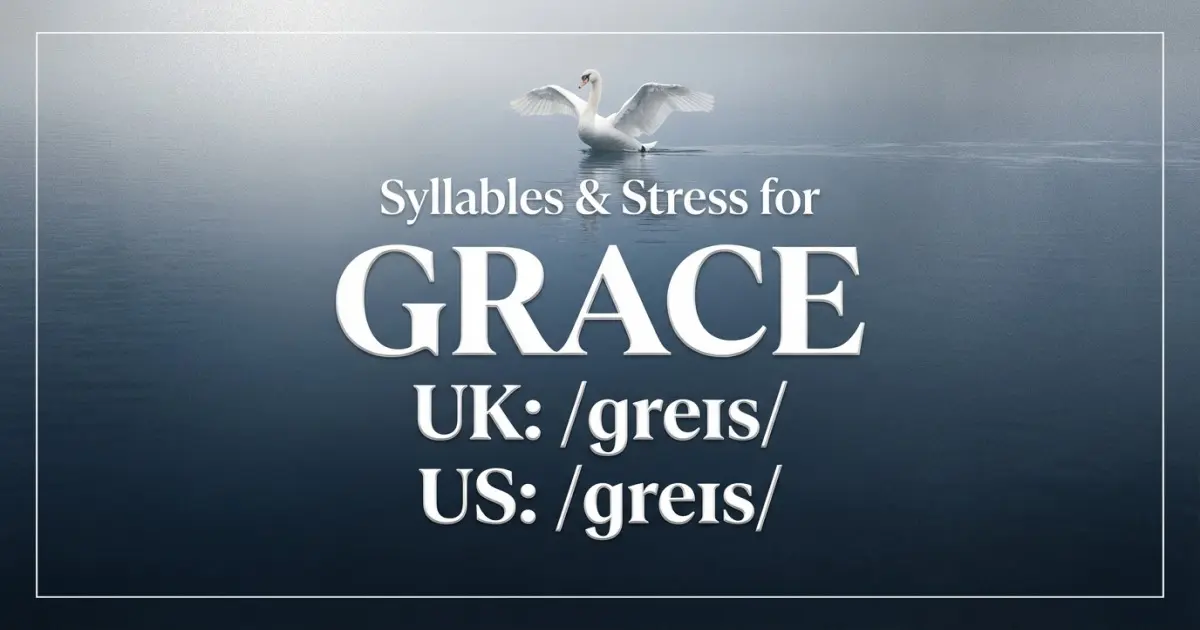
| US IPA | /ɡreɪs/ | The vowel glides from a short opening into the long ay sound heard in day. |
| UK IPA | /ɡreɪs/ | The standard reference form is the same, which makes Grace unusually stable across major English accents. |
| Syllable count | 1 syllable | Do not stretch Grace into two beats. Its elegance depends partly on its compression. |
| Stress pattern | Single stressed syllable | Because the name has only one syllable, the entire word carries the emphasis naturally. |
| Key sound frame | gr opening + long vowel + final s | The strong consonant opening and crisp ending keep Grace from sounding too airy or fragile. |
Why Grace sounds stronger than its meaning first suggests
Grace begins with a consonant cluster, not a whisper
The opening of Grace matters more than people often notice. The name starts with the gr cluster, which gives it an immediate sense of structure. This is not a breathy opening like a name beginning with only a vowel sound, and it is not as soft as many floral or lyrical girls’ names. Instead, the mouth has to shape two consonant elements quickly before releasing into the vowel. That makes Grace sound firmer than its meaning might lead some people to expect. The sound matters more once you know what the name is meant to carry, which is why the wider frame starts in Grace meaning.
This is part of why Grace feels poised rather than decorative. A name associated with favor and blessing could easily have drifted toward something softer or more diffuse in sound. Grace does not. The pronunciation gives it spine. That is one reason it works equally well on a child, a teenager, and an adult. The name may carry moral and spiritual gentleness, but the sound itself is not flimsy.
The long vowel gives Grace its lift
After the opening consonants, the vowel does the next major piece of work. In both US and UK IPA, Grace uses the /eɪ/ sound, the same long vowel heard in words like day or face. That glide opens the middle of the name and stops it from becoming harsh. Without it, the consonant frame would make Grace much blunter. With it, the name has both clarity and ease.
The practical result is that Grace sounds polished without sounding cold. The vowel gives the name brightness, which is important in everyday speech. When someone says Grace across a room, the name is easy to catch because the sound is both open and contained.
The final s is what makes Grace feel finished
The closing s may seem minor, but it is one of the most important reasons the pronunciation feels complete. The name does not simply trail off after the vowel. It closes. That closure gives Grace a clean edge. It also keeps the name from sounding overly soft in contexts where clarity matters, such as introductions, announcements, or legal reading of full names.
This is why Grace is one of those one-syllable names that can still sound refined rather than bare. It has beginning, center, and finish all packed into a single beat.
Where Grace changes across accents without really changing at all
Grace is unusually stable in English
One of the most reassuring things about Grace is that the standard US and UK IPA forms are the same here: /ɡreɪs/. In practical terms, that means the core pronunciation does not require a major adjustment when the name crosses from American to British English. Many names pick up visible vowel changes, stress shifts, or softer consonants between accents. Grace mostly does not. Its structure is so compact and familiar that English speakers tend to preserve it very consistently.
This makes Grace highly portable. A child with this name is unlikely to spend much time correcting pronunciation in English-speaking settings. That everyday ease is part of the reason the name remains so durable across generations.
What small differences you may still hear
Even when the reference pronunciation is identical, real accents are never perfectly identical in use. Some speakers may make the opening consonants slightly harder or lighter. Others may narrow or widen the vowel a little depending on regional speech patterns. But these are textural differences rather than true pronunciation conflicts. The identity of the name remains stable.
That stability matters socially. It means Grace sounds dependable in public life. It does not become another name depending on who says it. Instead, it keeps its outline and simply absorbs the natural color of the speaker’s accent.
The Grace mistakes that usually come from overthinking it
Do not turn Grace into two syllables
The most important rule is simple: Grace is one syllable. Because the spelling is so familiar, this mistake is not common, but it can happen when someone over-enunciates or slows the name down unnaturally. Grace should not be stretched into something like “gray-iss.” The elegance of the name depends on its compactness.
Do not soften the ending so much that the name loses shape
Another small issue can appear when the final s disappears into the air. Grace needs that ending. If the speaker weakens it too much, the name can sound incomplete or overly vague. The final consonant does not need to be exaggerated, but it should be audible enough to close the word cleanly.
Watch the sound neighbors around Grace
Grace sits close to a few other familiar sound patterns, especially names and words beginning with the same Gr- frame, such as Gray or Gracie. That can occasionally lead people to assume the longer nickname form when they see the shorter one in a warm family context. But the base name itself is very clear. Grace is not Gray, and it is not automatically Gracie. It stands on its own as a full, finished name. Once the sound pattern is clear, some shortenings stop feeling optional and start feeling natural, and the clearest map is in Grace nicknames.
This is another reason pronunciation matters. The crisp final s helps preserve the distinction between Grace and neighboring forms.
How to practice Grace until it sounds effortless in a real voice
Use short real-life lines
If you want to hear the pronunciation clearly, it helps to say Grace in ordinary phrases rather than as an isolated word:
Grace is here.
This is Grace Eleanor.
Grace, your turn.
Grace won the prize.
In each case, the same shape should hold: one strong syllable, open vowel, crisp finish. The name should feel clear and settled, not clipped in a harsh way and not over-stretched in a precious one.
Think of Grace as one clean arc
The easiest mental guide is visual rather than technical. Grace moves in one clean arc. It begins with structure, opens at the center, and closes neatly. That is why the name sounds so composed. It does not wobble, and it does not need extra sound to justify itself.
That may be the most useful thing to remember about Grace as a spoken name. It looks simple because it is simple, but it sounds strong because its sound design is so efficient. Say GRAYS clearly, keep it to one beat, and let the ending close with confidence. When spoken that way, Grace sounds exactly as it should: lucid, poised, and complete.
Common Questions About Pronunciation Tips for Grace
Is Grace pronounced differently in the US and the UK?
In standard reference forms, no. Both use /ɡreɪs/, so the name is unusually stable across major English accents.
How many syllables are in Grace?
Grace has one syllable. Its compactness is one of the reasons the name sounds so clear and elegant.
What is the most common pronunciation mistake with Grace?
The most common issue is softening the final s too much or over-enunciating the name as though it had two syllables. Grace sounds best as one clean, finished beat.
Is Grace easy for strangers to say correctly?
Yes. Grace is one of the most immediately recognizable and consistently pronounced English names, which is part of its enduring appeal.