
How to Pronounce Georgia: Syllables, Stress, and Common Mistakes
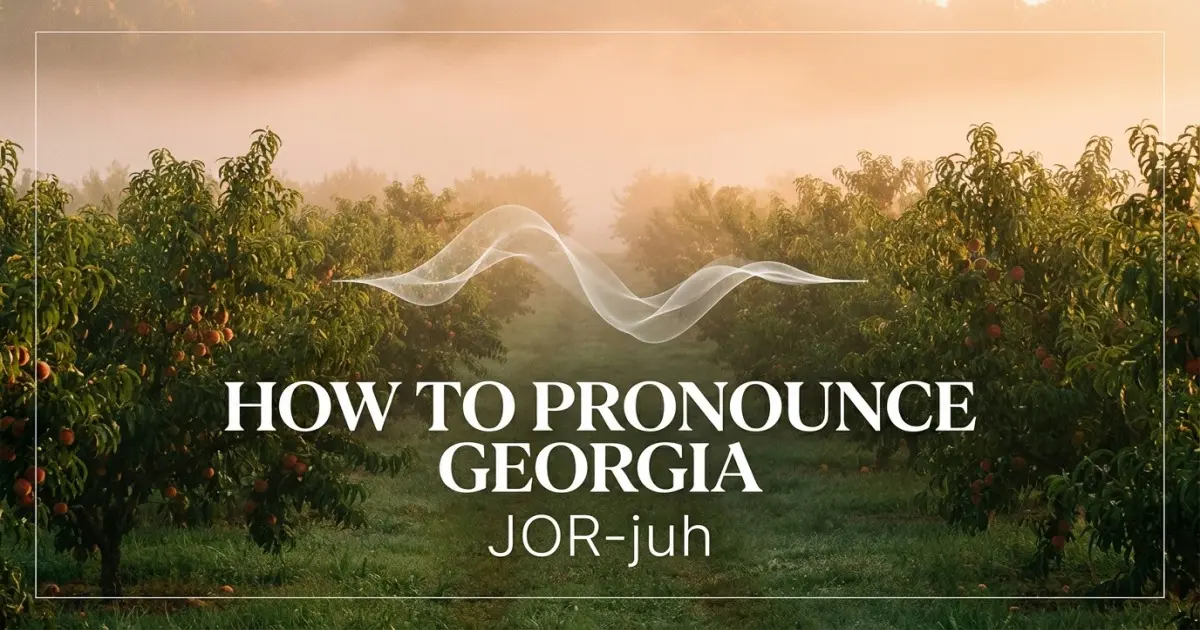
Georgia is the kind of name that gets tested in public long before anyone ever thinks about its etymology. You hear it in a school corridor during attendance, in a clinic waiting room when a receptionist reads from a screen, in an airport queue when one person calls to another over rolling suitcases and background noise. In those moments, a name either lands cleanly or it starts collecting hesitations. Georgia usually lands. That is part of its appeal. It looks elegant on paper, but in real speech it tends to arrive more simply and more firmly than people expect.
That small surprise matters. At first glance, some readers assume Georgia must be long or multi-stepped because of the spelling. But in everyday English it is usually compact: JOR-juh. The name has only two syllables, with the stress placed on the first. That means Georgia behaves less like a sprawling decorative classic and more like a well-balanced spoken name. Its pronunciation is one reason it feels so usable. The eye sees history and breadth; the ear hears rhythm and ease.
What Georgia is actually doing when people say it aloud
Before looking at accent differences or common misreadings, it helps to pin down the structure of the name as it is usually spoken. Georgia is clearer once you notice that its spelling looks fuller than its actual sound.
| Element | Phonetic Detail | Quick Tip |
|---|---|---|
| Everyday pronunciation | JOR-juh | Say it in two beats, with the first syllable carrying the main weight. |
| Syllable count | 2 syllables | Do not force an extra middle syllable just because the spelling looks longer. |
| Stress pattern | First syllable stressed | The emphasis belongs on JOR-, not on the ending. |
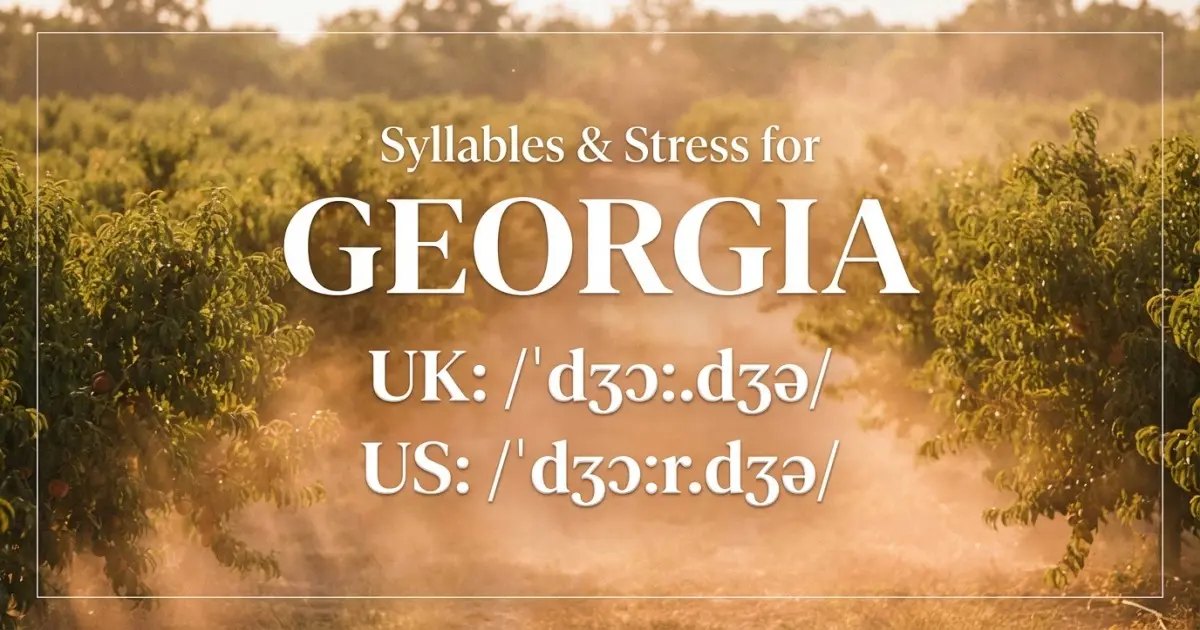
| IPA (US) | /ˈdʒɔːrdʒə/ | In many American accents, the middle includes an audible r sound. |
| IPA (UK) | /ˈdʒɔːdʒə/ | In many British accents, the r is not pronounced, so the middle sounds smoother. |
| Opening sound | /dʒ/ voiced affricate | Begin with the same sound you hear at the start of “joy.” |
| Middle shaping | US often keeps /r/; UK often drops it | This is the main accent difference, not the number of syllables. |
| Ending | Soft schwa /ə/ | Let the final syllable relax into -juh, not a crisp -jee-ah. |
Why Georgia sounds shorter than it looks
Georgia is a good example of the difference between spelling logic and speech logic. On the page, the letters may tempt some people to over-pronounce the name, almost as if every vowel needs its own place. In natural use, though, English compresses the line. The result is JOR-juh, not a carefully separated three-part sequence. That compression is one reason the name feels easier in real life than some first-time readers expect. The sound matters more once you know what the name is meant to carry, which is why the wider frame starts in Georgia meaning.
Where the stress belongs in Georgia
The stress belongs on the first syllable. Say JOR-juh, not jor-JEE-ah and not jor-JAY-ah. The first syllable carries the name’s identity. Once that first beat is secure, the rest of the name falls into place much more naturally. This front-loaded stress is part of what makes Georgia feel grounded. It opens with confidence and then softens as it closes.
That pattern is also why Georgia remains highly usable in everyday contexts. English speakers are comfortable with names that begin strongly and end lightly. The rhythm makes the name easy to catch over background noise, easy to repeat, and easy to remember after hearing it only once.
Why the ending should stay relaxed
The second syllable is not supposed to carry the same weight as the first. It usually falls into a soft schwa, the neutral vowel sound heard at the end of many common English words and names. That is why the final part of Georgia sounds more like -juh than a fully articulated -gee-ah. If you make the ending too crisp, the name starts to sound overexplained. Because the strongest energy lands early, the shorter forms often grow from the opening of the name, and that pattern is easier to see in nicknames for Georgia.
This does not mean the second syllable should disappear. It still needs to be audible. But it should feel light and natural, as though the name is settling rather than climbing toward another stressed peak.
Where Georgia changes between American and British speech
The biggest difference between American and British pronunciation is not the first syllable. It is the treatment of the r in the middle. In the supplied American IPA, Georgia appears as /ˈdʒɔːrdʒə/, which includes an audible /r/. In the supplied British IPA, it appears as /ˈdʒɔːdʒə/, where that r is not pronounced. This is a classic accent distinction rather than a disagreement about the name itself.
What American English does with Georgia
In many American accents, the middle of Georgia includes a clear r sound. Linguistically, that r is a liquid consonant, meaning it flows rather than stops the air completely. In practical terms, it gives the name a little extra weight and shape at the center. JOR-rjuh can sound slightly denser and more textured in American speech, even when speakers do not consciously notice they are pronouncing the r.
That extra middle texture can make the name feel a touch sturdier. It also helps separate Georgia from names that rely only on open vowels and soft endings.
What British English does with Georgia
In many British accents, especially non-rhotic ones, the r is not voiced in this position. The name moves more smoothly from the first syllable into the final -juh. That often makes Georgia sound slightly more streamlined and flowing. The identity of the name does not change. Its contour simply becomes less textured in the middle.
For most listeners, both versions are instantly recognizable. The accent difference is real, but it is not disruptive. Georgia remains Georgia on both sides of the Atlantic.
The Georgia mistakes that tend to happen in real life
Because Georgia is familiar, most errors are minor. People usually recognize the name. The trouble comes from spelling pressure, over-articulation, or confusing the full name with nearby sound neighbors.
When Georgia gets stretched into too many syllables
The most common issue is adding too much shape to the written vowels. Some speakers, especially when seeing the name for the first time, may drift toward something closer to JOR-jee-ah. That is understandable from the spelling, but it is not the usual everyday rendering here. The simplest correction is to remember the name’s spoken compactness: two syllables, strong first beat, soft ending.
When Georgia gets confused with nearby names
Georgia sits near several related names and spellings: Georgina, Georgiana, Jorja, and Georgie. Those names share the same family resemblance, but they do not share the same rhythm. Georgina pushes the stress later and opens into three syllables. Georgiana stretches even further. Jorja usually points back toward the same spoken shape as Georgia, but with a more phonetic spelling. If you keep Georgia firmly in its two-syllable pattern, it is much less likely to blur into those relatives.
It can also be momentarily confused with the place name rather than the personal name, but in speech that is usually not a real problem. The pronunciation remains the same general sound world. Context does the rest.
When the opening consonant gets dulled
The first sound in Georgia is /dʒ/, a voiced affricate, the sound heard at the beginning of “joy.” If that opening becomes too weak or too soft, the name can lose some of its crispness. A clear start matters because Georgia’s ending is already relaxed. The name needs a firm opening to keep the overall shape balanced.
How to practice Georgia until it feels natural in speech
The best way to practice Georgia is not to overwork it. This is a name that should sound lived-in. Start with the two-beat pattern and then place it in ordinary lines of speech. If it sounds smooth in real contexts, you are saying it correctly.
Useful practice lines for Georgia
- Georgia is here.
- Have you met Georgia?
- Georgia called this morning.
- This is Georgia Lane.
- Georgia, your table is ready.
These lines matter because they place the name at the beginning, middle, and end of natural phrases. A strong pronunciation of Georgia should survive all of them without becoming too careful or too loose.
What to listen for when you say Georgia aloud
Listen for three things. First, the opening should sound like the start of “joy,” not like a hard g. Second, the stress should sit on JOR-. Third, the ending should relax into -juh rather than splitting into an extra syllable. If those three features are present, the name will sound natural in most English-speaking settings.
That balance is what makes Georgia so effective as a spoken name. It looks elegant, but it does not demand ceremony. It carries history, but the pronunciation is direct. It can sound polished on an introduction card and completely ordinary when called across a playground. In pronunciation terms, that is often the sign of a name with real staying power: it holds its shape without needing to be explained every time it is heard.