
Nicknames for Fatima: Everyday Nicknames with Real Charm
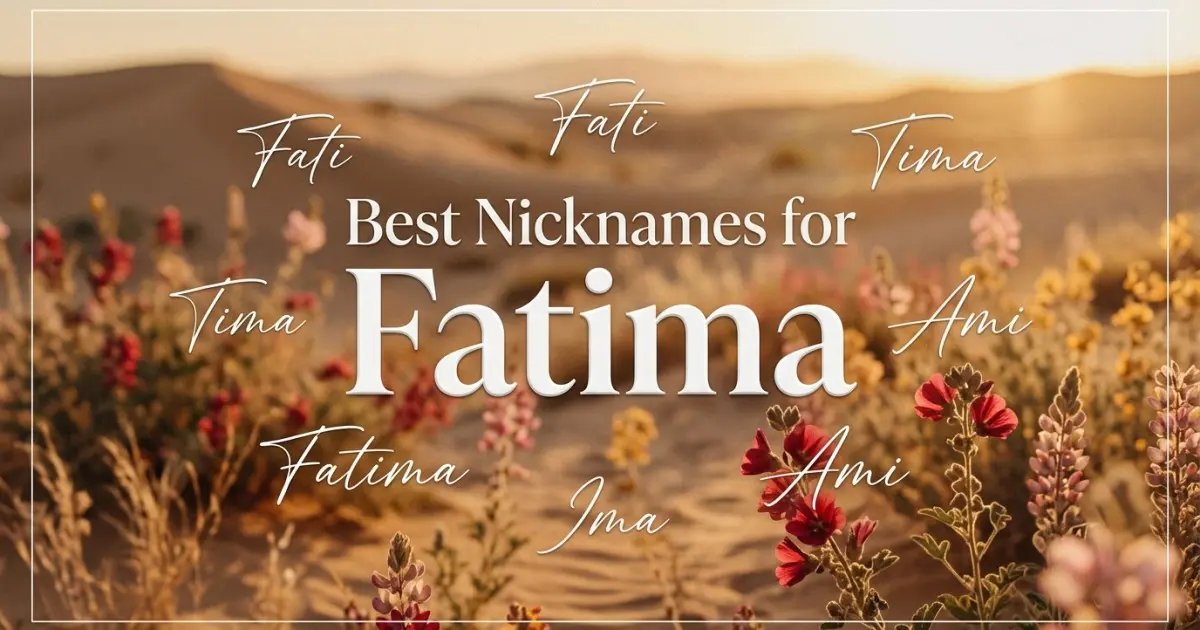
Nicknames are not just shorter sounds. They are social permissions. They show who is allowed to come close, who speaks from inside the family circle, who has turned a formal name into daily language, and when a child begins editing her own identity in public. A nickname can sound playful, reverent, brisk, affectionate, or self-fashioned, and those differences matter. They tell you whether a name is being handled as heritage, as intimacy, as convenience, or as style.
Fatima is especially revealing here because it is already compact, clear, and complete. Pronounced FAT-ee-muh, it does not need shortening in the way a longer name might. That changes the nickname conversation entirely. With Fatima, a nickname is usually not a practical necessity. It is a relationship choice. Families keep the full name when they want its dignity and wholeness to remain visible. They shorten it when they want more softness, speed, or play. That makes the nickname field smaller than it would be for a name like Angelina or Adelyn, but also more meaningful. Every nickname for Fatima changes the emotional temperature of the name quite noticeably. If these shorter forms feel natural, it is usually because the full name is already doing something strong and clear, which you can see in Fatima meaning.
What Fatima’s nickname map says about closeness and style
| Group | Suggested Nicknames | Persona | Use Context |
|---|---|---|---|
| Full-name loyalists | Fatima | Dignified, complete, self-possessed | Formal settings, multicultural environments, families who prefer the name to remain whole |
| Classic compact forms | Fati, Faty | Warm, familiar, socially easy | Family use, friend groups, bilingual or heritage-aware settings |
| Middle-cut forms | Ti, Tee | Light, modern, slightly more playful | Teen years, sibling speech, texting culture, casual circles |
| Ending-led forms | Tima, Ima | Soft, intimate, less expected | Close family use, home language, nickname styles that feel more private than public |
| Playful home forms | Fati-Bee, Timi, Mimi | Childlike, affectionate, relationship-specific | Toddler years, grandparents, siblings, private family language rather than formal use |
Fatima is one of those names that often works best left whole
Before getting into sound zones, it is worth saying something simple and important: Fatima does not need a nickname to become usable. That alone makes it different from many fashionable three- and four-syllable names in current English-speaking use. Fatima is short enough to speak easily, stable enough to be recognized quickly, and balanced enough to feel warm without help. For many families, that means the strongest nickname strategy is no strategy at all. The name remains Fatima in most settings because the full form already carries the right amount of intimacy and seriousness.
This is not a weakness in nickname potential. It is a strength in name design. Names that remain intact often do so because they already feel socially complete. Fatima has that quality. It sounds equally natural in a classroom, in professional life, in family speech, and across different cultural settings. Research on naming habits often shows that some names invite shortening because people need to make them feel more manageable. Fatima rarely creates that pressure.
Why keeping Fatima whole can feel more affectionate, not less
Sometimes parents worry that using the full name will sound too formal. With Fatima, that is usually not the case. Because the pronunciation is compact and the ending is soft, the full form already carries warmth. Saying Fatima in full does not sound stiff. It sounds respectful. That can be especially appealing for families who want the name’s cultural and historical dignity to remain visible in everyday use.
In that sense, using the full name can actually be the most intimate choice. It says that nothing needs to be trimmed away to make the child feel close. The name is already enough.
Fatima’s opening sound gives the most natural public nickname options
If a nickname does emerge, the opening of Fatima usually provides the strongest route. The name begins with the stressed syllable Fat, and in nickname logic stress matters. People tend to shorten names by keeping the part the ear remembers best. For Fatima, that often leads to Fati or Faty in writing.
Why Fati is the likeliest everyday short form
Fati is the most natural compact nickname because it keeps the beginning of the name and softens it into something quick and affectionate. It feels familiar rather than invented. In many families and communities, this kind of clipped two-syllable form is exactly how a respected full name becomes casual without becoming trivial. Fati preserves the identity of Fatima while lowering the social formality a notch.
It also has practical advantages. It is fast to say, easy to text, and intuitive once heard. That makes it a strong candidate for sibling speech, close friends, and households where the full name is used with love but shortened in motion. Importantly, Fati still sounds recognizably tied to Fatima. It does not erase the source.
Why the opening can be tricky in English-speaking settings
The one caution with opening-based nicknames is that English speakers may hear the first syllable visually before they hear it relationally. That means a nickname built too bluntly from the opening can feel more delicate to manage in some settings. This is another reason why Fati tends to work better than a harsher one-syllable cut. It rounds the name back into warmth. The extra vowel makes a difference.
Families choosing an opening nickname for Fatima are usually choosing familiarity, not edge. That distinction helps keep the nickname usable.
Fatima’s middle and ending create the softer, more private nickname world
The middle and ending of Fatima are where the more intimate and less obvious nickname options live. These forms are usually not the ones strangers invent first. They tend to arise inside the home, inside sibling speech, or later through a child’s own experimentation with identity. That makes them especially interesting, because they reveal a different side of the name: not its public steadiness, but its private flexibility.
The stressed center gives you Ti and Tee
The middle syllable tee is not stressed as strongly as the opening, but it is still clear enough to become a nickname seed. Ti or Tee feels lighter, more modern, and more informal than Fati. It also sounds more self-edited, the kind of nickname a teenager or close friend might use rather than the kind a teacher would guess from a roster. Nicknames often grow from the stressed part of a name rather than from spelling alone, so the next useful step is how to pronounce Fatima.
That makes Ti an interesting option for families who want something minimal without losing the emotional warmth of the original. It does not carry the full cultural weight of Fatima, but it does preserve the brightness of the middle sound. In practice, this kind of nickname often lives in messages, among peers, or during the years when a person wants a slightly leaner social version of herself.
The ending lets Fatima become Tima or Ima
Ending-led nicknames usually sound more intimate because they preserve the softer part of a name rather than the stressed first beat. With Fatima, that creates options like Tima and Ima. Neither is likely to become the universal public nickname, but both are plausible within family language. Tima feels especially natural because it keeps two syllables and retains much of the full name’s music. Ima is gentler and more unusual, which makes it more obviously private.
These are the kinds of nicknames that often develop through repetition rather than planning. Someone in the family says them once, then again, then often enough that they become household truth. Their strength lies less in public obviousness and more in emotional fit.
Fatima changes social tone depending on who is shortening it
One of the most useful things about Fatima is that its nickname range is not huge, but the tonal differences between forms are clear. The full name sounds dignified and complete. Fati sounds familial and socially open. Ti sounds younger, quicker, and a little more style-aware. Tima sounds softer and more inward. That means the nickname choice is less about raw possibility and more about deciding what kind of intimacy the family wants to signal.
How childhood usually shapes Fatima’s nickname life
In early childhood, nicknames tend to come from ease and repetition. That makes Fati the likeliest public-facing shortening, especially if siblings or cousins use it first. Inside the home, more playful forms can appear: Timi, Mimi, or doubled pet forms like Fati-Bee. These are not meant to replace the formal name. They are the language of affection, the sort of speech that belongs to kitchens, bedtime, and inside jokes.
What matters is that these forms remain plausible and human. A good playful nickname still sounds like something real people might actually say to a beloved child. Fatima encourages that kind of small-scale creativity because the full name is so stable underneath it.
How adolescence and adulthood may pull back toward Fatima itself
As children grow, they often move away from overtly cute nicknames and either keep a compact familiar form or return to the full name. Fatima is especially likely to support that return because the formal name already feels approachable. A teenager may use Ti among friends and still remain Fatima everywhere else. An adult may decide that the full form expresses exactly the balance of dignity and warmth she wants. That is a sign of good name architecture: the nickname remains optional rather than mandatory.
For many people, the best long-term nickname plan for Fatima is flexibility. Let the family forms arise naturally, but do not assume the full name needs to be displaced.
Sometimes the smartest nickname decision for Fatima is simply to wait
Parents often try to decide everything at once: full name, nickname, spelling, and emotional tone before the child even arrives. But some names reveal their best nickname only in use, and Fatima is one of them. Because the full name is already socially strong, there is no pressure to choose a diminutive immediately. A child can be called Fatima from the start and let the affectionate forms appear over time in the relationships that make sense.
That usually produces better nickname culture anyway. A nickname chosen too early can feel imposed. A nickname that emerges from family music tends to feel earned. With Fatima, that might mean the child stays Fatima almost everywhere, becomes Fati in the home, or ends up with a completely relational pet form that only one grandparent uses. All of those outcomes are valid. What matters is that the nickname sounds like the same child from closer range.
Short Forms FAQ for Fatima
Does Fatima need a nickname at all?
No. Fatima is already short, clear, and socially complete. Many families use the full name in daily life because it sounds warm and dignified without needing to be shortened.
What is the most natural nickname for Fatima?
Fati is often the most natural compact form because it keeps the opening of the name, stays recognizably connected to Fatima, and feels affectionate rather than forced.
Can Ti or Tima work as nicknames for Fatima?
Yes. Ti feels lighter and more modern, while Tima feels softer and more private. These forms usually arise in close family or friend settings rather than as immediate public nicknames.
Are playful pet names realistic for Fatima?
Absolutely. Home-only forms such as Timi, Mimi, or Fati-Bee can feel very natural in early childhood and family life, even if the child continues to use Fatima in public.