
How to Pronounce Esme: How to Say It Clearly and Naturally
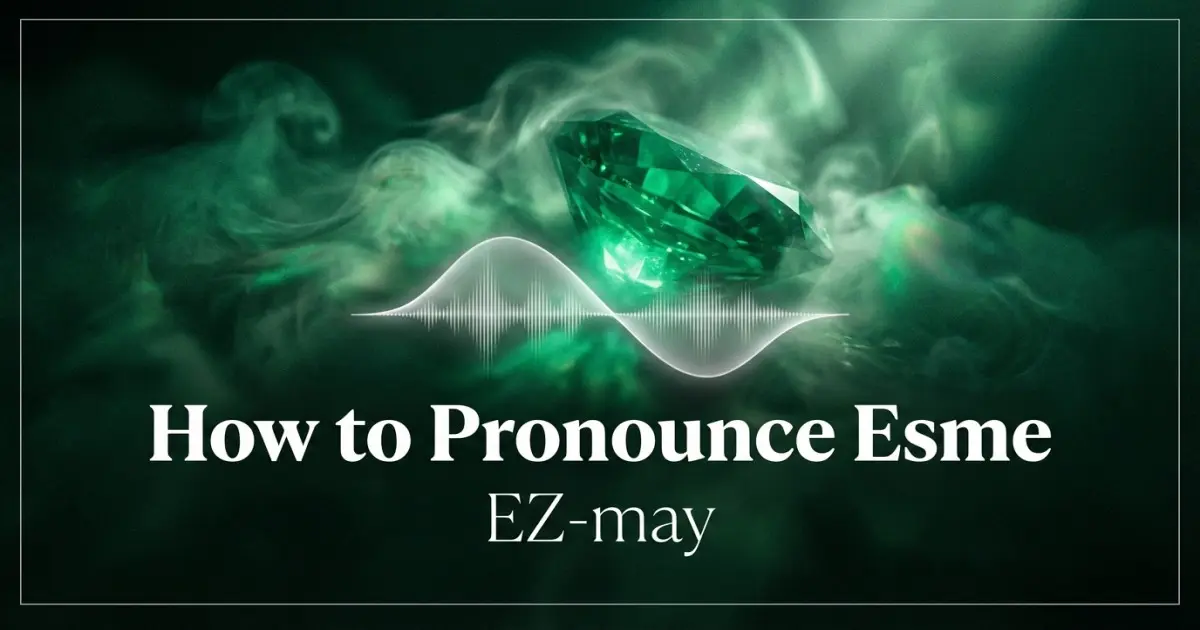
The clearest way to understand how Esme is pronounced is to picture the moment a teacher reaches the name on the first day of school. She has a class list full of familiar spellings and a few that make her pause. Esme is one of those names that can look quieter and older on the page than it sounds in real life. Then she says it aloud—EZ-may—and the name suddenly becomes light, elegant, and easy. That little shift from the eye to the ear is important. Esme is not difficult, but it does ask to be heard rather than guessed at.
That is why pronunciation matters so much here. Esme is short, polished, and beautifully compact, yet many people who meet it first in writing are tempted toward a softer or flatter reading. In actual use, though, the name is usually more precise than that. Official pronunciation guidance points to EZ-may, and once that pattern is clear, the name becomes very stable. It has two syllables, a strong first beat, and a bright ending that keeps it from sounding heavy. The result is one of the name’s quiet strengths: Esme looks refined, but it speaks cleanly.
What the spelling of Esme is really asking you to say
| Element | Phonetic Detail | Quick Tip |
|---|---|---|
| Everyday Pronunciation | EZ-may | Say it in two parts: Ez first, then may. |
| IPA (US) | /ˈɛzmeɪ/ | The stress mark shows the first syllable is stronger. |
| IPA (UK) | /ˈɛzmeɪ/ | American and British pronunciation are effectively the same here. |
| Syllable Count | 2 syllables | Think of it as one firm beat followed by one lighter, brighter beat. |
| Stress Pattern | First syllable stressed | Put the emphasis on EZ, not on the ending. |
| Opening Sound | /ɛz/ | The first part sounds like “Ez,” not “Es” with a flat hiss. |
| Final Syllable | /meɪ/ | The ending rhymes with “may,” not “mee.” |
| Middle Consonant Quality | Voiced /z/ fricative | Let the middle sound buzz lightly, like the z in “easy.” |

Esme has two syllables, but only one strong beat
Esme is a two-syllable name, but the first syllable does most of the structural work. That is why the natural rhythm is EZ-may, not ez-MAY and not ESS-mee. The first syllable is stressed, which gives the name its footing. Without that stress, Esme starts to sound uncertain or over-softened. Pronunciation lands more fully when the name’s roots and history are already in view, so begin with Esme meaning.
The IPA spelling /ˈɛzmeɪ/ helps make this visible. The symbol /ɛ/ is the short vowel heard in words like “bed” or “dress.” After that comes /z/, a voiced fricative. A fricative is a consonant made by letting air pass through a narrow space, creating friction. In this case, it is the voiced kind, so it has a light buzzing quality rather than a dry hiss. That matters, because the name does not begin with a plain s sound. It begins with a softer, more fluid z-like sound: Ez.
The second syllable, /meɪ/, is simple and bright. It rhymes with “may.” Once you hear that, the whole name locks into place. Esme does not trail off. It resolves cleanly. That clean ending is one of the reasons the name sounds elegant rather than fussy. It finishes with light.
Why the voiced middle matters in Esme
The difference between Ez and Ess may look small on paper, but it changes the character of the name. Ez keeps Esme warm and fluid. Ess makes it sound flatter and more abrupt. Because the name is so short, even a small shift in one consonant changes the whole impression.
Why the ending must stay “may”
The second syllable should sound like the word “may.” That rising, open ending is part of what gives Esme its polish. If the final syllable turns into mee, the name begins to sound like a different pattern entirely. The elegance of Esme lies in that final lift: EZ-may. Once the sound pattern is clear, some shortenings stop feeling optional and start feeling natural, and the clearest map is in nicknames for Esme.
The places where Esme gets misread most often
Esme is not a hard name, but it is one that invites a few predictable mistakes when people meet it first in writing. The most common is ESS-mee. This happens because English readers often see the final e and default to a soft, familiar ending like the one in names such as Amy, Emmy, or Esmé-like approximations they have half-heard before. But in the standard pronunciation given here, that is not the target. The name should open with Ez and end with may.
Another mistake is to over-flatten the first syllable and say something closer to EZ-muh or ESS-muh. That usually happens when the speaker is trying to simplify the name too quickly. Esme does not want simplification. It wants precision. Fortunately, the precision is easy once heard: EZ-may.
Sound-neighbors that can blur the name
Esme sits near several names in the ear: Esma, Essie, Esmeralda, and even Aimee or Emme in fast or distracted reading. That is why speakers sometimes substitute one of those patterns when guessing. The best defense against confusion is to remember the name as two clean pieces: Ez plus may.
How to avoid over-romanticizing Esme
Because Esme looks delicate and French, some speakers are tempted to add extra softness or extra theatricality to it. The best pronunciation is actually simpler than that. Say it clearly. Let the z hum lightly. Finish on may. The name already has elegance built in. It does not need embellishment from the speaker.
How Esme stays steady across American and British speech
One of the useful things about Esme is that the pronunciation remains quite stable across major English accents. In both American and British English, the IPA is given as /ˈɛzmeɪ/. That means the core structure does not really shift. The same first-syllable stress remains. The same short e vowel remains. The same voiced z remains. The same may ending remains.
Of course, accents still add color. A British speaker may keep the first vowel a touch crisper or shorter. An American speaker may soften the edges very slightly in connected speech. But these are differences of flavor, not changes of identity. The name is recognizably the same on both sides of the Atlantic.
Why Esme travels well in spoken English
This stability is part of the name’s appeal. Some names shift dramatically across accents and therefore gather multiple competing pronunciations. Esme does not seem to do that very much in contemporary English. Once the standard form is known, the name tends to hold.
That makes it highly usable in ordinary life. It can move across classrooms, travel, introductions, and even multilingual settings with relatively little friction. For parents, that is a real practical advantage. A name can be elegant without being fragile, and Esme is a strong example of that balance.
Practice lines that make Esme sound natural immediately
If you want the pronunciation to settle in your mouth, the easiest method is to say Esme in real-life phrases rather than repeating it in isolation. Names tend to feel natural once they are embedded in ordinary speech.
Simple practice lines for Esme
- Esme, it’s your turn.
- This is Esme.
- Esme starts school on Monday.
- Can Esme come with us?
- Esme Claire sounds lovely.
As you say those lines, keep the pattern the same each time: EZ-may. Let the first syllable be slightly stronger, and let the second syllable open cleanly like the word “may.” Once that rhythm is established, the name tends to stay beautifully stable.
That is one of Esme’s quiet gifts. It may look as if it needs explanation, but it rarely does once heard. The pronunciation is elegant, concise, and memorable. In other words, it sounds exactly the way the name looks once the page and the ear finally agree.