
Nicknames for Esme: Easy Nickname Ideas That Really Work
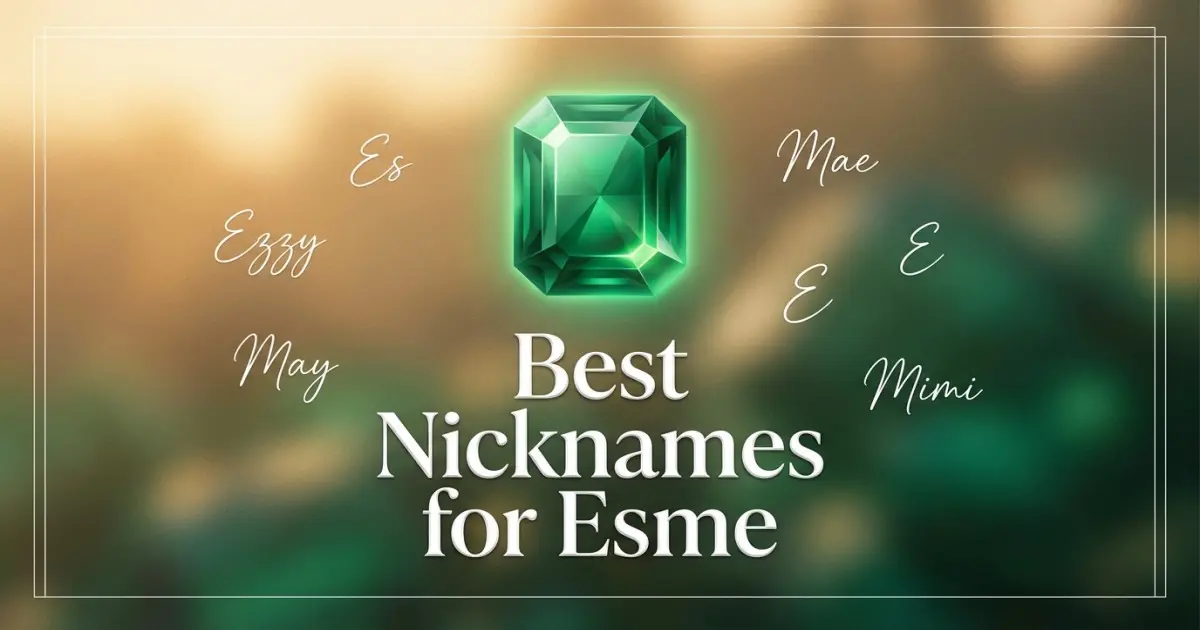
A nickname is not just a shorter name. It is a social signal about closeness, mood, and permission. The full name belongs to the outer world: school lists, formal introductions, medical forms, travel documents, the clear voice a parent uses when calling across a playground. The nickname belongs to the inner weather of a life. It tells you who gets the softened version, who gets the teasing version, who prefers elegance, and who is allowed to turn a polished name into something private. That is why nicknames matter even when a name is already short. They are less about efficiency than about relationship.
Esme is especially revealing in this way because it already arrives sounding complete. Official data shows it is familiar enough to be recognized, yet still selective enough to feel chosen, and that gives the name a particular kind of nickname culture. Esme does not need to be cut down in order to function. It is already concise, stylish, and socially easy. So when nicknames happen, they are usually signs of intimacy or personality rather than necessity. The best ones grow from the name’s sound zones: the opening E/Es, the stressed center Ez, and the ending May. Each creates a different emotional effect. Some feel clean and modern. Some feel childlike and cozy. Some belong almost entirely to family. Nicknames add personality at the surface, but the deeper weight of the name still sits in Esme meaning.
What Esme’s nickname landscape really reveals
| Group | Suggested Nicknames | Persona | Use Context |
|---|---|---|---|
| Clean everyday forms | Ez, Es, E | Relaxed, confident, lightly modern | Friends, siblings, texting, quick social shorthand |
| Cute home-circle forms | Ezzy, Ezzie, May-May, Esmie | Affectionate, playful, warm | Parents, grandparents, early childhood, bedtime names |
| Ending-based soft forms | May, Mae, May-May | Gentle, intimate, slightly sweeter in tone | Close family, cousins, later romantic use, private circles |
| Spelling-led classic variants | Essie, Esmé, Esmie | Vintage, graceful, slightly more ornamental | Families who respond to the look of the name as much as the sound |
| DIY modern forms | E.Z., Ems, Ez-May | Self-styled, youthful, digitally fluent | Usernames, teen years, close friend groups, playful online identity |
Esme’s opening sound creates the most public nicknames
The beginning of Esme does most of the social work. That is common in English nickname culture: people usually grab the first audible unit of the name and turn it into something fast, casual, and repeatable. With Esme, the opening is slightly unusual because the spelling suggests one thing while the spoken sound gives another. On paper, the name begins with Es-. In speech, it opens more like Ez-. That is why Esme can produce two different types of short forms depending on whether a family is responding to the written name or the spoken one.
Ez is the strongest spoken nickname
Ez is the most natural nickname if you are following actual pronunciation. It comes straight out of EZ-may and sounds crisp, modern, and surprisingly cool beside a name as polished as Esme. This is the kind of nickname that works well among siblings, teammates, and close friends because it feels quick and unforced. It keeps the name’s elegance, but strips away some of the formality.
Its strength is that it sounds real in ordinary speech. You can imagine someone saying, “Ask Ez,” or “Ez is on her way,” without effort. That plausibility matters. Good nicknames are not just possible; they feel usable. Ez does.
Es belongs more to the page than the ear
Es is also plausible, but it is a nickname shaped more by spelling than by sound. Families who love the visual neatness of Esme may naturally shorten it to Es in texts, on labels, or in private shorthand. In spoken English, however, Es can feel slightly more deliberate than Ez, since it does not track the pronunciation as closely. That does not make it wrong. It simply means it is a more graphic nickname than an instinctive one.
That kind of nickname can still work very well, especially in writing-heavy relationships. Some names live differently on the phone than they do in conversation, and Esme is one of them.
Esme’s stressed center is where the warmest nicknames live
The first syllable of Esme carries the stress, and because that syllable sounds like Ez, it naturally produces the most affectionate expansions. This is where the name becomes softer, more playful, and more obviously family-bound. These are the nicknames that feel less like social shorthand and more like household language. Nicknames often grow from the stressed part of a name rather than from spelling alone, so the next useful step is Esme pronunciation guide.
Ezzy and Ezzie are the most believable pet forms
Ezzy and Ezzie are probably the strongest classic pet forms for Esme because they follow the spoken shape of the name while adding the familiar affectionate -y ending that English nicknaming loves. They feel believable on a toddler, easy in a family, and still possible among playful friends later on. Ezzy is especially likely to emerge if a parent wants something warmer than the already-finished Esme without leaving the sound world of the original name.
These forms work because they sound like natural spoken evolution, not like clever inventions. They are intimate, but not too strange. That is a very useful middle ground.
Ezzie feels more domestic than public
Among the two, Ezzie is slightly softer and a little more obviously child-centered, while Ezzy reads a touch quicker and more modern. In real life, the difference is small, but tone matters. Ezzie is the nickname grandparents and parents may keep longer. Ezzy feels a bit more transferable into school-age life or teenage affection.
Either way, these are names of closeness. Most people named Esme will not use Ezzy as their public professional form, but that is not the point. These are names for love, not administration.
Esme’s ending opens the more private and sweeter nickname zone
The second syllable of Esme, may, creates a completely different emotional lane. Nicknames from the ending are softer, more traditionally feminine in feel, and a little more intimate. They often sound less sleek than the opening-based forms and more obviously affectionate.
May or Mae is the cleanest ending-based option
May or Mae is one of the most realistic private nicknames for Esme. It works because the ending is already clear and independent in sound. Unlike some ending-based nicknames that feel arbitrary, this one has a built-in logic. It also changes the personality of the name. Esme feels polished and French-inflected. May feels gentler, simpler, more domestic, and more traditionally sweet.
That tonal shift can be very attractive in family life. A parent may use Esme in public and May at home, allowing the child to move between two very slightly different emotional versions of herself without ever leaving the core of the original name.
May-May belongs to affection, not necessity
May-May is firmly in the affectionate zone. It works especially well in early childhood, when repetition is one of the most common ways adults soften names. This is not the kind of nickname that usually survives unchanged into every stage of life, but that is part of its charm. It belongs to the years when a child is little and language is full of play.
For families who like warmer, more obviously loving nicknames, May-May can feel more intuitive than something built from the opening sound. It is less sharp, more cuddly, and more clearly private.
Esme can also produce spelling-led nicknames that feel older or softer
Because Esme is visually distinctive, some families will respond to the written form as much as the pronunciation. That creates a second set of nickname possibilities—slightly more vintage, slightly more ornamental, and sometimes a little less directly tied to the spoken sound.
Essie works from the letters more than the voice
Essie is the clearest example. It does not follow the EZ sound perfectly, but it grows naturally from the spelling and from older nickname traditions. It feels sweeter, more Edwardian, and slightly more decorative than Ezzy. For some families, that will be exactly the attraction. Essie softens Esme further and makes it feel almost heirloom-like.
Still, Essie is best understood as a style choice rather than the most instinctive sound-based nickname. It works, but it comes from the eye as much as the ear.
Esmie is more like a parallel pet form than a true shortening
Esmie keeps the whole emotional shape of Esme while making it more obviously cute. It is less a reduction than a gentle expansion. This makes it especially plausible for parents who do not want to move very far away from the original name but still want a softer home form. Esmie feels almost like a whispered version of Esme rather than a separate identity.
Esme’s nickname style changes by age more than by structure
Because Esme is already compact, the name does not produce a huge nickname catalogue. What changes instead is tone. In early childhood, families may use Ezzy, Ezzie, Esmie, or May-May. In school years, Ez or E may become more practical. In teenage or adult life, some people may keep Esme almost all the time and reserve nicknames for very close circles.
Early childhood favors warmth and repetition
When the child is small, the sweetest forms tend to dominate. Ezzy, Ezzie, May-May, and Esmie all fit naturally into that stage. They sound playful and reassuring, and they suit the kind of emotional speech adults often use with very young children.
Later years often return to Esme itself
One of Esme’s quiet strengths is that the full name rarely feels too formal to use every day. That means many girls named Esme may not need a permanent everyday nickname at all. The short forms remain available, but the full name is already elegant, brief, and socially easy. In this sense, Esme behaves less like a name in need of shortening and more like a finished form that occasionally allows private variations.
Esme works best when the nickname feels earned
The main caution with Esme is the temptation to force creativity onto a name that does not need it. Because Esme is already so concise, a nickname has to justify itself emotionally. It should reveal intimacy, family speech, humor, or personality. It should not exist just because the parent thinks every name needs one.
- Use Ez when you want the cleanest and most speech-natural short form.
- Use Es when the family responds more to the spelling than the sound.
- Use Ezzy or Ezzie when the goal is warmth, softness, and everyday affection.
- Use May or Mae when you want a gentler, sweeter, more private alternative.
- Use Essie or Esmie when the family likes vintage softness or visual continuity with the written name.
That is the real nickname logic of Esme. It is not a name that demands shortening in order to live. It is already poised and complete. The nicknames that work are the ones that show who is close enough to tilt that poised little name into something more playful, more tender, or more entirely theirs.