
Nicknames for Ellie: Sweet Short Forms for Everyday Use
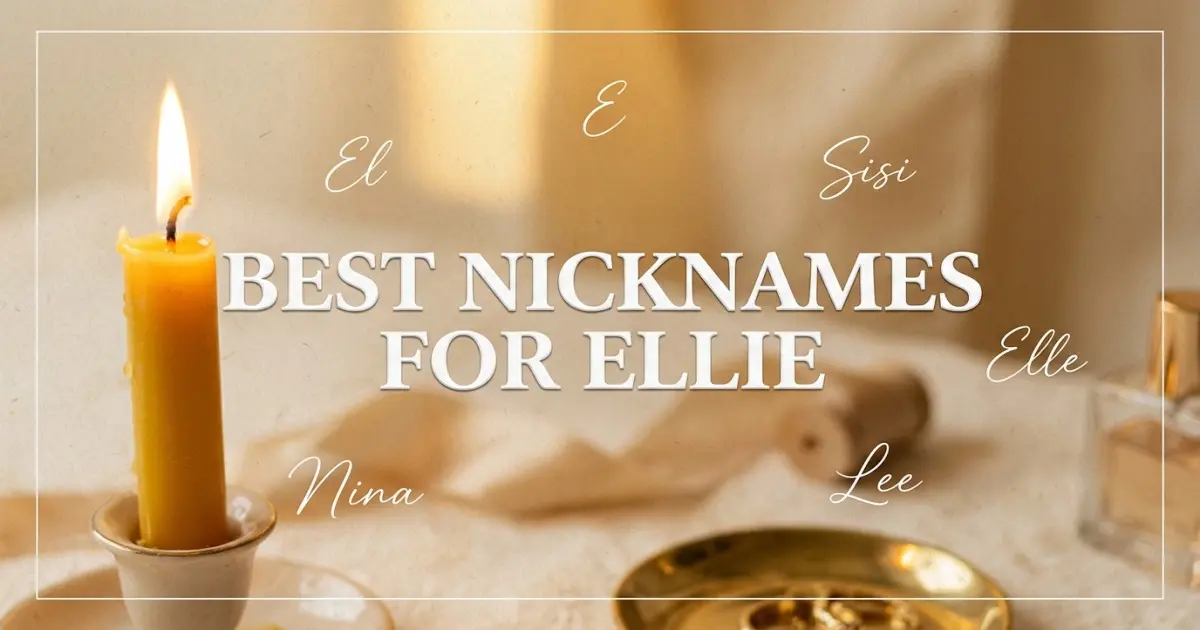
A nickname is often treated as the casual version of a name, but in real life it does more than shorten. It signals who gets to stand closer. Families use one form, school friends another, teammates a third, and a grown woman may choose a version of her name that fits the self she wants the world to meet. That is why nickname culture matters so much. It is not just about trimming syllables. It is about intimacy, permission, age, and style.
Ellie creates an especially interesting nickname question because it already sounds like the kind of name many others would become after shortening. It is warm, bright, and socially open from the first syllable. Historically, Ellie has often lived as a familiar form connected with names like Eleanor, Ella, and Ellen, but in contemporary use it also stands comfortably on its own. That changes the nickname logic. With Ellie, the real question is not how far the name can be reduced. It is how many shades of familiarity it can hold without losing itself. In other words, Ellie’s nickname life is less about cutting down and more about tuning the mood. If these shorter forms feel natural, it is usually because the full name is already doing something strong and clear, which you can see in Ellie meaning.
What the Nickname World Around Ellie Actually Reveals
| Group | Suggested Nicknames | Persona | Use Context |
|---|---|---|---|
| Classic close-to-the-name forms | Ell, Elle, El | Simple, socially easy, lightly polished | Friends, school, everyday quick address |
| Cute home nicknames | Ellie Bean, Ellie Bell, Ellie Bug, Ellie Boo | Affectionate, child-centered, family-soft | Home life, baby years, close relatives |
| Short and modern trims | E, Els, Ells | Casual, contemporary, slightly cool | Teen years, close friend groups, texting culture |
| Playful sound shifts | Li-Li, Elee, Elsie-style blends, Bells | Playful, sibling-made, private-language energy | Family jokes, childhood, inside-circle use |
| DIY identity forms | Elley, Elz, Lee, Lili | Self-shaped, personality-led, flexible | Peer culture, creative circles, evolving self-presentation |
Ellie Is Already a Nickname-Shaped Name
The first thing to understand about Ellie is that it already arrives with nickname energy built in. It is short, affectionate, and easy to repeat. That means Ellie behaves differently from longer names such as Eleanor, Eliana, or Elizabeth. Those names contain obvious structural cut points. Ellie does not need one. It begins in closeness. For many parents, that is the whole appeal. The child receives a name that sounds immediately loved.
But that same quality means the nickname ecosystem around Ellie is narrower and more nuanced. You are not likely to get dramatic shortenings that feel meaningfully different from the original. Instead, most Ellie nicknames operate through one of three mechanisms: trimming, repetition, or emotional decoration. That is a useful distinction because it keeps expectations realistic. Ellie will usually produce affectionate variants, not radically separate identities.
Research across modern name usage often suggests that shorter names are less often “shortened” than “reshaped.” Ellie is a good example. The name tends to shift tone rather than structure. A girl called Ellie may still be Ellie in school, Ellie in adulthood, and Ellie on official paperwork. The difference lies in who is allowed to say Ell, who uses Ellie Bean, and whether she eventually chooses a sleeker form like Elle for part of her life. The nickname question is not whether Ellie can survive abbreviation. It is whether it can flex socially. It can.
How Ellie Splits into Sound Zones Even Though It Is So Short
The opening and stressed center of Ellie are almost the same place
Because Ellie is only two syllables, the opening and the stressed center are tightly fused. The name begins with Ell-, and that first syllable carries the main weight: EL-ee. This is where the most natural trims come from. Ell, Elle, and El are all direct extractions from the stressed opening, and each sends a slightly different signal. Many short forms only become obvious once the opening sound is clear, which is why Ellie pronunciation guide belongs naturally here.
Ell feels the most straightforward. It is what a friend might say quickly in a hallway or what a sibling might use without ceremony. Elle is more stylized. It preserves the sound but changes the visual impression, making the nickname look sleeker and more editorial. El is the shortest and least embellished, though in practice it may also invite confusion with other El-names in a large social setting.
These are the strongest public nicknames for Ellie because they feel intuitive. They do not ask people to reorganize the name in an artificial way. They simply pull the first stressed unit to the front and leave it there.
The ending of Ellie is where softness lives
The -ee ending is the sound that makes Ellie feel bright and affectionate. It is also the part most likely to generate playful or family-private forms. Repetition nicknames such as Li-Li or stylized echoes like Lili tend to emerge from this ending rather than from the front. These are less universal and more personal. They usually appear in family speech, sibling speech, or babyhood rather than in public life.
This matters because the ending of Ellie carries most of the name’s softness. If a family wants to make the name even more cuddly, it is usually the ending they elaborate. If a teenager or adult wants the name to feel sharper, it is usually the ending they trim away.
Why Elle Is the Most Grown-Up Direction Ellie Can Take
If Ellie has one nickname that clearly changes its social temperature, it is Elle. The move from Ellie to Elle does not alter the name drastically, but it does change the atmosphere. Ellie feels bright, open, and familiar. Elle feels more tailored. It is the same sound world with some of the overt sweetness removed.
This is one reason Elle often becomes the nickname of choice in late adolescence or adulthood for some women named Ellie. The full name remains the same, but the social presentation shifts. Research on nickname use regularly suggests that people adapt name forms to match changing contexts—professional, romantic, peer-based, or self-styled. Ellie to Elle is an especially natural example of that process because the transition is small, believable, and acoustically close.
It also helps that Elle already has independent credibility as a modern name form. It does not sound invented on the spot. That means an Ellie who becomes Elle is not fighting the language. She is simply stepping into another register of it.
The caution is that not every Ellie will want or need this shift. For many people, Ellie itself remains fully adult and fully sufficient. But if parents are wondering whether the name offers a more polished lane later in life, the answer is yes. Elle is that lane.
Ellie at Home, Ellie at School, Ellie in Adult Life
Early-childhood Ellie tends to collect affectionate add-ons
In babyhood and early childhood, the most realistic Ellie nicknames are not shorter forms but add-on forms. Families naturally produce names like Ellie Bean, Ellie Bell, Ellie Bug, Ellie Boo, or other rhythmic extensions that matter more for affection than for identity. These are emotionally real even when they never leave the house. They reflect the fact that Ellie already feels like a home name.
School-age Ellie tends to stay close to itself
At school age, many girls called Ellie remain simply Ellie. That is one of the name’s clearest social traits: it is already so usable that the peer group does not need to do much work on it. Where names like Alexandra or Isabella often invite several competing short forms, Ellie is usually already in its finished social shape. Small trims like Ell or Els may appear, but the original form often survives untouched.
Teen and adult Ellie can choose polish or stay warm
Later on, two lanes usually open. One is continuity: she remains Ellie in every context because the name still feels natural, bright, and socially acceptable. The other is refinement: a more self-conscious version such as Elle, Ell, or occasionally E emerges in close friendships, digital spaces, or style-driven environments. Neither path is more authentic than the other. They simply reflect different ways of managing familiarity.
The Ellie Nicknames That Feel Most Plausible in Real Life
The strongest nickname choices for Ellie are the ones that sound like something a real family or real friend group would say repeatedly. That means the core list stays relatively tight: Ellie, Ell, Elle, El, Ells, and a handful of affectionate home forms such as Ellie Bean or Li-Li. Once you move too far beyond those, the nickname risks sounding less human and more generated.
This realism matters because Ellie is not a name that benefits from overengineering. Its charm lies in its naturalness. Families choosing Ellie usually do not want a nickname ecosystem that feels performative or over-curated. They want flexibility without distortion. That is exactly what the name offers.
There is, however, one practical caution. Because Ellie already sounds like a nickname to many ears, some parents hope a second-level nickname will create more distinction than it realistically will. In most cases, that will not happen. Ellie does not radically branch. It softens, trims, or stylizes. If a family wants a much wider range of nickname possibilities, they often prefer a longer formal name with Ellie reserved as the most intimate form.
But if the goal is warmth, brightness, and easy real-life use, Ellie’s limited but believable nickname range is not a weakness. It is part of the design. The name does not splinter because it does not need to.