
Nicknames for Edward: Natural Picks, Playful Twists, and More
Nicknames are not just shorter names. They are social permissions. They show who gets to step closer, who is allowed to turn a formal public identity into something warmer, quicker, teasing, softer, or more private. A full name may belong to attendance sheets, legal forms, business cards, and ceremonial moments. A nickname belongs to kitchens, sibling arguments, text threads, grandparents, teammates, and the handful of people who know the person behind the polished version. That is why nicknames matter so much in naming. They are where a name stops being only a choice and starts becoming a relationship.
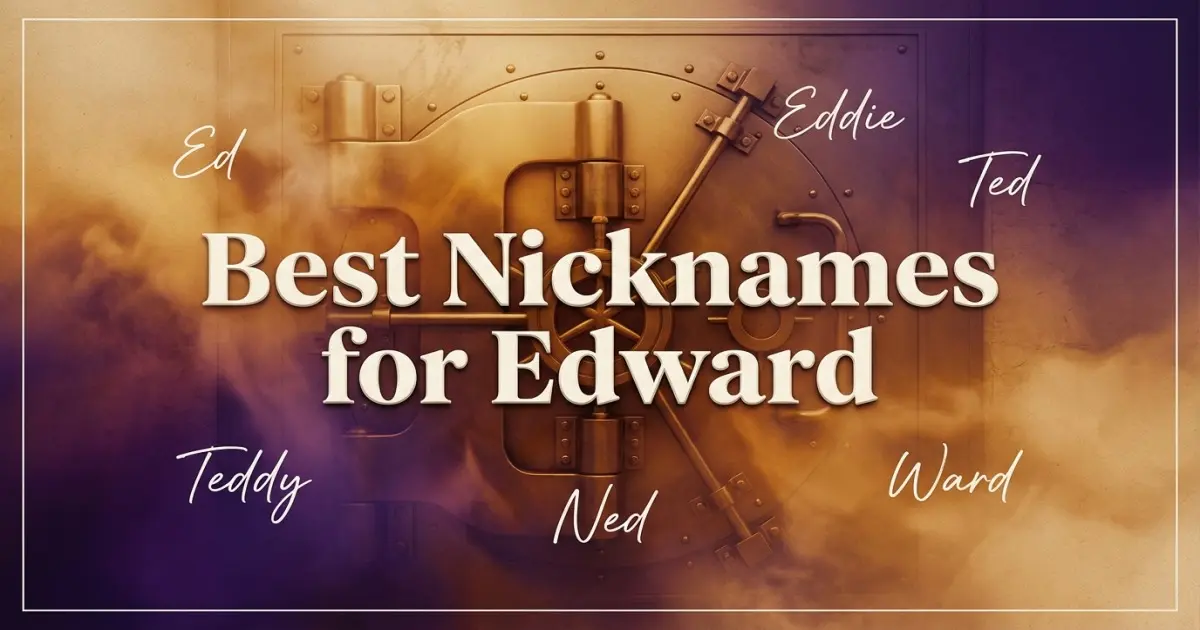
Edward is especially rich in this respect because the formal name is so dignified. In full, Edward sounds established, gentlemanly, and slightly ceremonial. But hidden inside it is one of the oldest and most varied nickname cultures in English. It can become Ed, Eddie, Ted, Teddy, Ned, or Neddy, and each of those choices changes the social atmosphere around the same person. That flexibility is part of what has kept Edward alive for so long. It gives parents a serious first name without trapping the child inside seriousness every hour of the day. Edward can stand upright in public and still open several smaller doors in private. Nicknames add personality at the surface, but the deeper weight of the name still sits in Edward meaning.
What Edward’s nickname landscape is really showing
Because Edward is formal in full but highly nickname-friendly in practice, its strongest short forms fall into several different emotional categories. Some stay close to the front of the spelling. Others are older inherited forms that sound almost like parallel names. Together, they make Edward unusually adaptable.
| Group | Suggested Nicknames | Persona | Use Context |
|---|---|---|---|
| Classic familiar forms | Ed, Eddie, Eddy | Warm, direct, dependable | Daily use, family life, school, broad public settings |
| Traditional heritage forms | Ned, Neddy, Neddie | Old-soul, affectionate, quietly distinctive | Family use, literary-style households, people drawn to older forms |
| Historic alternate forms | Ted, Teddy | Friendly, classic, socially easy | Childhood, public nickname use, everyday life, adulthood for Ted |
| Short modern cuts | E, Eds | Lean, casual, understated | Texting, group chats, close friends, quick shorthand |
| Cute affectionate forms | Eddie-Bear, Teddy-Bug, Neddy-Boo | Sweet, playful, child-centered | Toddler years, parents, grandparents, home use |
| DIY private forms | Eddo, Edsie, Teds | Bond-specific, intimate, playful | Partners, siblings, inside jokes, one-household nicknames |
Edward is a public name with private side doors
Some names create nicknames because they are too long or too formal to survive daily life unchanged. Edward is a little different. It does not have to be shortened, but it almost invites it. The full form sounds stately and complete, yet the name carries several deeply established smaller versions that have been living alongside it for generations. That gives Edward unusual social range.
Ed makes the name plainspoken and direct. Eddie warms it immediately and makes the formal structure feel more human. Ted shifts the name into something more relaxed and historically familiar. Teddy adds charm and softness. Ned gives Edward an old-world, literary turn that feels both classic and slightly surprising. These are not random inventions. They are social paths already built into the name.
Why Edward never loses itself, even when shortened
This is one of Edward’s greatest strengths. The full name is strong enough that the nicknames do not feel like replacements. They feel like registers. Edward in full is formal and complete. Ed is efficient. Eddie is affectionate. Ted is sociable. Ned is old-soul. The identity underneath remains stable.
That matters in real life. Parents often want a classic full name that can soften naturally around friends and family. Edward offers exactly that. It can stay dignified in official life while letting daily life become easier, warmer, or more playful.
Why Edward has more nickname depth than many formal classics
Not every traditional name opens so many believable routes. Some names shorten in only one obvious way. Edward is different because its nickname history is layered. The most familiar front-end cut gives you Ed and Eddie, but tradition also hands you Ted and Ned. That makes the name feel unusually alive. It is not just formal with one casual option. It contains several social personalities that can all feel authentic.
The sound zones inside Edward explain why the nickname field is so wide
Edward is only two syllables, but it has distinct internal zones. Those zones help explain why some nicknames feel inevitable while others feel inherited from older English naming habits rather than pulled directly from the spelling.
The opening of Edward gives the most immediate short forms
The clearest nickname zone is the front: Ed-. This is where Ed, Eddie, and Eddy come from, and these remain the most intuitive forms in modern use. Ed is brisk and adult. It sounds dependable, practical, and slightly reserved. Eddie softens everything. It is friendlier, more expressive, and far more affectionate in tone. Eddy lives in much the same sound space, though the spelling can feel slightly less traditional on the page.
These forms work because the first syllable of Edward is strong, compact, and highly recognizable. Shortening the name there feels natural. You still hear Edward immediately.
The stressed center gives Edward its warmth in Eddie and Teddy
The stress in Edward sits at the front, and that stressed opening is what allows warmer extensions like Eddie and Teddy to feel believable. The name begins firmly enough that playful endings do not strip away all its structure. This is why Edward can tolerate cute forms better than some equally formal names. The core remains visible. Many short forms only become obvious once the opening sound is clear, which is why how to pronounce Edward belongs naturally here.
Teddy is especially interesting here. It feels softer and more child-centered than Edward, but because the underlying formal name is so solid, Teddy never has to carry the full burden of adulthood by itself. It can remain a family and childhood nickname while Edward stands ready in more formal settings.
The ending of Edward is less productive, which keeps the nickname field selective
The final -ward zone is less useful for everyday nickname formation. A form like Ward exists in the wider naming world, but it is not the most natural default shortening for Edward in ordinary speech. That matters because it keeps the nickname landscape from becoming chaotic. Edward’s nicknames are rich, but they are not random. Most of the believable life happens in the front or in inherited traditional forms.
That selectivity is one reason the nickname set feels so coherent. Edward has range, but not sprawl.
Edward keeps old nickname traditions alive better than most names
One of the most distinctive things about Edward is that some of its best-known nicknames do not look obvious to modern eyes. Ned and Ted feel like names in their own right now, yet both belong historically to Edward’s world. That gives Edward a special kind of nickname depth: it is a formal name whose shorter forms preserve older English social habits.
Why Ted and Teddy feel friendlier than Edward without sounding unserious
Ted is one of the most successful alternatives because it preserves maturity while easing the full name’s formality. It sounds approachable, familiar, and well established. Teddy takes one step further into warmth and charm, making it especially natural in childhood or family speech. It can also survive into adulthood in the right personality, though often as a close-circle name rather than the default public form.
These forms work because they do not fight Edward’s character. They simply bring out its social ease.
Why Ned gives Edward a literary and quietly aristocratic turn
Ned is perhaps the most interesting nickname in Edward’s orbit because it feels both older and fresher than the more obvious Eddie. It has a literary, historical, almost storybook quality, yet it is still short and practical. For parents who want a nickname that feels rooted but slightly less expected, Ned can be a particularly compelling choice.
Neddy or Neddie then become the softer household variants of that path. These are less likely to be broad public names, but entirely believable in family speech.
Edward changes beautifully with age because the nicknames can change with him
One of Edward’s biggest advantages is that it does not lock the child into one social register. Childhood, adolescence, and adulthood can all sound different without requiring a complete identity switch.
Childhood Edward invites warmth and play
In early childhood, the most believable affectionate forms are Eddie, Teddy, Neddy, and family inventions like Eddie-Bear or Teddy-Bug. These forms bring out the softness the full name hides under its formal coat. They are not replacements for Edward. They are the family’s way of making a stately name feel small enough to cuddle.
This is where Edward is particularly strong: it can sound distinguished on the birth certificate and still completely lovable at home.
Adult Edward can narrow toward Ed, Ted, Ned, or remain fully Edward
As the bearer grows, the nickname often compresses. Ed is the most straightforward adult route. Ted stays genial and highly social. Ned feels distinctive, thoughtful, and slightly more old-fashioned in an appealing way. Some men remain fully Edward in public and use a nickname only with intimates. That flexibility is exactly what makes the name work so well long term.
Edward does not age out of itself. It simply changes register as life changes around it.
Why the best Edward nicknames still sound like Edward
The most satisfying thing about Edward’s nickname system is that the full name remains visible underneath almost every good option. Ed sounds like Edward made leaner. Eddie sounds like Edward made warmer. Ted sounds like Edward made more companionable. Ned sounds like Edward made more old-world and quietly witty. None of them feels arbitrary when used well. They feel like angles of the same architecture.
That is why Edward remains such a strong naming choice. It gives families a formal name that can carry history, dignity, and professional seriousness, while also leaving room for affection, humor, and easy daily speech. The name does not have to choose between polish and personality. It contains both.
So the best nickname for Edward is usually not the rarest one. It is the one that feels most naturally spoken by the relationship using it. The one that suits the child, the household, the future adult, and the actual rhythm of life. With Edward, realism is what makes the nickname convincing.
Common Questions About Popular Nicknames for Edward
What is the most natural nickname for Edward?
Ed and Eddie are the most natural modern nicknames because they come directly from the opening of the name and feel socially intuitive in everyday use.
Why are Ted and Ned nicknames for Edward?
They are traditional inherited forms from older English nickname culture. They may not look obvious from the spelling today, but they have long been accepted and remain believable, especially in classic naming contexts.
Which Edward nickname ages best?
Ed, Ted, and Ned usually age best because they sound mature and socially easy while still remaining clearly tied to Edward.
Is Teddy too childish if the full name is Edward?
Not necessarily. Teddy is especially natural in childhood and family life, and the formal name Edward provides enough seriousness that the softer nickname never has to carry the full public identity alone.
How do I know if an Edward nickname sounds forced?
If it feels clever on paper but unnatural at normal speaking speed, it is probably too forced. Edward works best with nicknames that either grow clearly from the opening sound or belong to its long traditional nickname history.