
Nicknames for Charles: Options That Work from Childhood to Adulthood
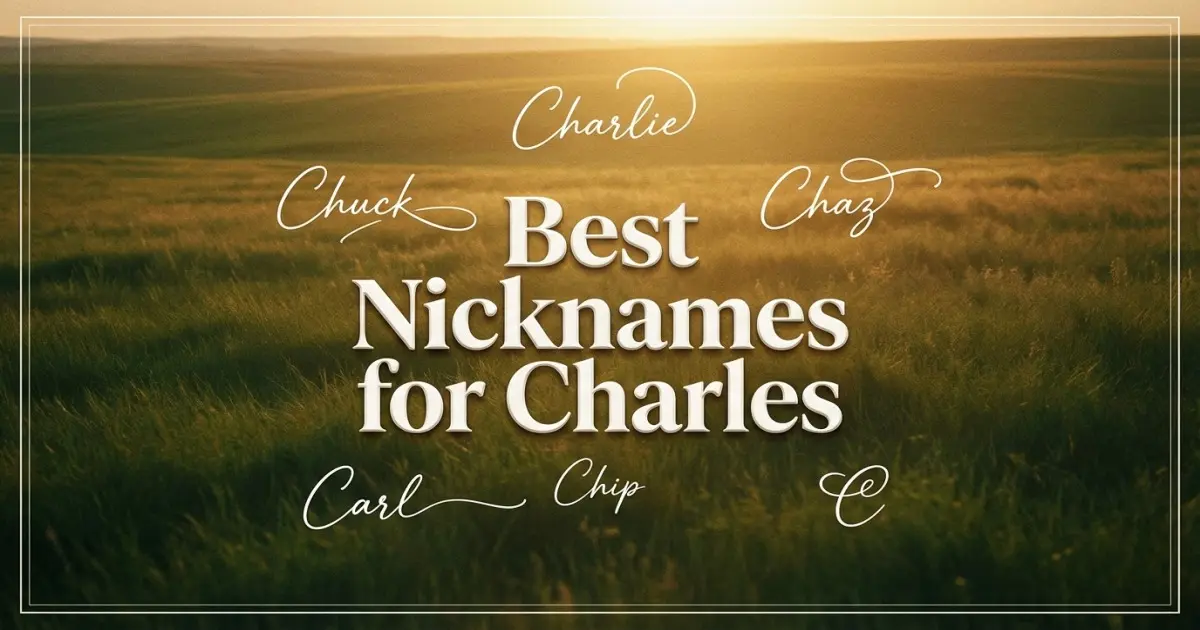
Nicknames are not just shorter alternatives. They are social instruments. They tell you who is speaking from inside the family, who is addressing the child in public, who is teasing, who is protecting, and who is gently reshaping a formal name into something warmer. A full name belongs to documents, classrooms, introductions, and ceremonies. A nickname belongs to relationship. It marks closeness. It changes the emotional temperature of a name without fully replacing it.
Charles is especially interesting because it reverses the usual pattern. Many long names shrink into quick everyday forms. Charles is already short, formal, and complete. It does not need trimming to become usable. Instead, its nickname life often moves in the other direction: outward into warmth. That is why Charles can become Charlie, Chuck, or Chaz so easily. The formal name is compact and self-contained; the nicknames add informality, affection, play, or modern edge. In other words, Charles does not ask, “How do I get shorter?” It asks, “How do I get closer?” Before judging which short form feels right, it helps to look again at the full identity of the name in Charles meaning.
What the nickname world of Charles really reveals
| Group | Suggested Nicknames | Persona | Use Context |
|---|---|---|---|
| Full-name default | Charles | Formal, grounded, dependable | School, work, introductions, official settings, adulthood |
| Classic warm forms | Charlie, Charley | Friendly, open, widely loved | Family life, school, everyday use across all ages |
| Old-school American forms | Chuck, Chucky | Blunt, familiar, slightly retro | Home use, sports, family tradition, playful or older-style circles |
| Short and stylized | Chas, Chaz, C | Cooler, brisker, more modern | Text culture, teen years, friend groups, arts or music circles |
| Family or suffix-driven | Chip, C.J. | Inherited, personal, context-shaped | Families with juniors, generational names, middle-name pairings |
| Playful home forms | Cha-Cha, Chuckie, Charlie-boy | Affectionate, teasing, intimate | Parents, siblings, grandparents, private family settings |
Why Charles often expands instead of shrinking
The first truth about Charles is that the full name is already compact. At one syllable, it has none of the practical pressure that pushes names like Alexander or Theodore toward reduction. Charles is quick to say, easy to recognize, and socially complete. That is why its nickname culture is so revealing. People do not usually shorten Charles because they must. They reshape it because they want to soften or personalize it.
This is why Charlie has become the most natural everyday alternative. It adds warmth and ease to a name that can otherwise sound formal or inherited. Charles is dignified. Charlie is personable. The movement from one to the other is not about efficiency; it is about mood. The same is true of Chuck, though in a different register. Chuck does not soften Charles so much as roughen and domesticates it, giving it a more mid-century, colloquial, and sturdy feel.
Why the full Charles still matters
The richness of Charles’s nickname life does not weaken the formal name. If anything, it strengthens it. A name this short and historically established gains flexibility by having warmer companions around it. A boy can be Charles on a school certificate, Charlie on the playground, and Chuck only in a certain family circle without any strain. That range is one of the reasons the name has lasted so well.
Why one-syllable formal names invite affectionate expansion
Research on naming habits suggests that shorter classic names often generate longer domestic forms because people want to humanize the formality rather than abbreviate it. Charles follows that pattern beautifully. The nickname is not a repair. It is an emotional extension.
The Charles sound zones: where the name actually bends
Because Charles is only one syllable, its nickname logic works differently from longer names. It still helps to think in sound zones, but here the zones produce additions and reshaped forms rather than simple cuts. The useful areas are the opening, the stressed core, and the ending.
The opening zone gives Charles its clearest modern shortcuts
The first sound of Charles is where forms like Chaz, Chas, and even C emerge. Chaz is one of the clearest examples of a modernized sound-based nickname. It pulls the bright opening off the formal name and turns it into something faster and cooler. Chas feels older and more tailored, closer to a written abbreviation or an old-fashioned gentleman’s shortening. C is the most contemporary and minimal, more likely to show up in text messages, among siblings, or in a very casual friend group.
These opening-based forms work because Charles begins with a strong, recognizable consonant sound. Even when shortened aggressively, the listener can still hear where the nickname came from.
The stressed center keeps Charles solid even when softened
The heart of Charles is the broad charl sound, and this is what allows Charlie to feel so natural. Charlie does not merely add a cute ending. It preserves the weight of the original name while adding approachability. That balance is why Charlie has remained one of the most successful diminutives in English. It can sound sweet on a toddler, easy on a teenager, and entirely normal on an adult. These nickname choices read more clearly once the spoken shape of the full name is in view, so see Charles pronunciation guide.
This same central zone also helps explain why Chuck works, even though it looks and sounds farther removed. Historically, nickname evolution does not always follow spelling logic neatly. What matters is that Chuck has long functioned as one of the established social shapes of Charles. In practical terms, it gives the name a different social costume: plainer, tougher, and more colloquial.
The ending zone in Charles is less productive, but still influential
The final -ls cluster makes Charles feel complete and formal, but it is not a particularly fertile ending for nicknames on its own. That is why the name’s nickname system tends to move outward into added endings rather than inward into clipped final sounds. Still, the firmness of that ending matters. It is what gives the full name its authority, and that authority is what makes softer forms like Charlie feel so satisfying by contrast.
Charles changes social mood more than it changes structure
One of the best things about Charles is that it can support different tones without losing identity. That means nickname choice is less about necessity and more about the kind of social impression you want around the child. Charles the formal name suggests steadiness and inheritance. Charlie suggests openness and warmth. Chuck suggests blunt familiarity. Chaz suggests edge. The underlying person remains the same, but the emotional framing changes quite a bit.
What fits Charles in early childhood
In babyhood and early family life, Charlie is by far the easiest and most universal option. It is affectionate without being flimsy and public-friendly without sounding overplanned. Chucky or playful family forms like Charlie-boy can also appear here, especially in homes that enjoy teasing warmth. These forms are intimate and do not need to last forever to be successful.
What fits Charles in school and peer life
Once school and peer culture become more important, the strongest public forms are usually Charles, Charlie, Chuck, and sometimes Chaz. Which one sticks often depends on the child’s own personality and the social world around him. Charlie is the broadest and easiest. Chuck tends to feel more all-American and traditional. Chaz is more selective and style-driven.
What still works later on
In adulthood, Charles and Charlie remain the most durable. Chuck also survives well, especially where family tradition or regional habits keep it natural. Chaz can work in creative or casual circles, but it is a stronger stylistic choice. Chip becomes especially plausible if Charles is inherited through a father or grandfather, or if the family uses suffixes and generational naming.
Charles supports old-school and modern nicknames at the same time
What makes Charles unusually flexible is that its nickname culture spans eras. Charlie feels timeless and universally readable. Chuck feels more mid-century and domestically American. Chaz feels modern and a little sharper. Chas feels old-fashioned in a written, clubby way. Few names can host that many tones without becoming messy.
That range also helps families choose a nickname that matches not just the child but the household. A more traditional family may instinctively land on Charles or Chuck. A warmer or more contemporary family may prefer Charlie. A teenager may choose Chaz later because it feels more specific to him. The name leaves room for all of that.
What to watch before you start calling Charles something else
- Do not force a nickname if Charles already feels natural and warm enough in your household.
- Choose knowingly between Charlie and Chuck, because they signal very different eras and personalities.
- Use Chip only when the family logic makes it feel earned, such as a junior or generational naming setup.
- Test stylized forms like Chaz aloud to be sure they sound like your child rather than a borrowed persona.
- Let peer groups have some influence later. With Charles, the lasting nickname often emerges from real use rather than early planning.
The strongest thing about Charles’s nickname life is that it offers intimacy without confusion. One boy may remain Charles in full almost everywhere. Another may be Charlie to the entire world. Another may be Chuck only to relatives and Charles at work later on. That flexibility suits the name perfectly. Charles starts as a compact formal classic, and its nicknames simply decide how much warmth, speed, or personality to add around that durable center.