
Nicknames for Catherine: Options That Feel Friendly, Casual, and Natural
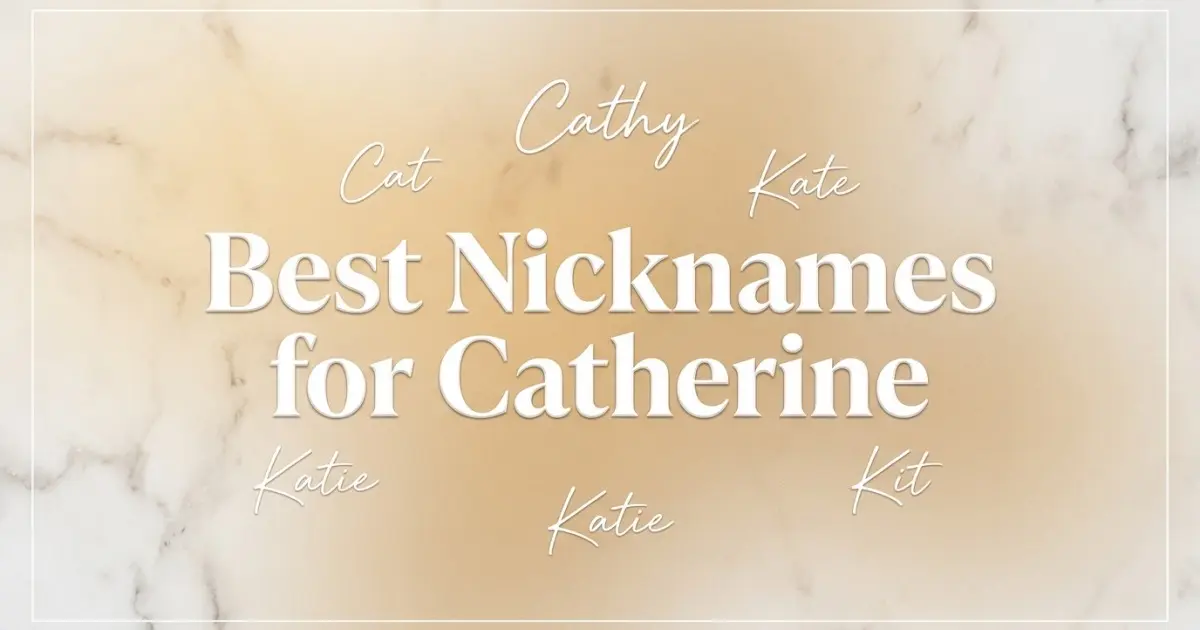
Nicknames are not only smaller versions of a name. They are social signals. They tell you who is close enough to soften the formal name, who prefers warmth over ceremony, who wants a brisker version for school or work, and when a child begins shaping her own public identity. A nickname can make a classic name feel younger, lighter, sharper, or more intimate. That is why nickname potential matters so much with long-lived names. It shows how the name behaves once it enters real family speech.
Catherine is one of the richest examples of this in English. The formal name is poised, historical, and unmistakably complete, yet it has produced a remarkable range of diminutives over time. Official data shows Catherine still feels established in modern U.S. use, and that familiarity keeps its nicknames believable rather than forced. What is striking, though, is that Catherine’s nickname world is not random. Some forms feel polished and public, some feel warm and generational, and some feel private or literary. The nickname choice does not just shorten Catherine. It changes the whole social temperature of the name. Before judging which short form feels right, it helps to look again at the full identity of the name in Catherine meaning.
What Catherine’s nickname world reveals about the full name
| Group | Suggested Nicknames | Persona | Use Context |
|---|---|---|---|
| Classic everyday forms | Kate, Katie, Katy | Friendly, polished, highly adaptable | School, work, everyday social life, names that age easily |
| Sharper casual forms | Kat, Cate, Cat | Brisk, modern, less ornamental | Friend groups, sporty environments, more relaxed or current styling |
| Warm family forms | Cathy, Kathy, Cathie, Kathie | Approachable, affectionate, familiar | Family circles, childhood use, households that prefer softer classic shortenings |
| Vintage and literary forms | Kit, Kitty, Kay | Distinctive, old-soul, quietly stylish | Families who like historical pet forms, selective public use, private affectionate use |
| Full-name loyalists | Catherine | Composed, complete, authoritative | Formal settings, professional life, families who want the classic intact |
Catherine’s opening sound does most of the nickname work
When people shorten Catherine in ordinary English speech, they usually work from the opening. That is where the name feels most immediately graspable: the hard C/K sound, the Cat/Kat cluster, and the clean first stress. This is why the most familiar everyday forms are Kate, Katie, Kat, Cate, and Cat. Even when the spellings differ, the nickname logic is the same. The beginning of Catherine is where public usability lives. These nickname choices read more clearly once the spoken shape of the full name is in view, so see how to pronounce Catherine.
Why Kate and Katie became Catherine’s social defaults
Kate is arguably the most balanced nickname Catherine can produce. It is short, adult, unmistakably connected to the formal name, and socially effortless. It works on a child, but it also sounds entirely comfortable in professional life. That is rare. Many diminutives are beloved in childhood and then quietly abandoned because they cannot stretch into adulthood without losing seriousness. Kate does stretch. It keeps Catherine’s clarity while simplifying the form.
Katie and Katy do something different. They bring more warmth, more brightness, and more youth. These are often the nicknames that arise first in childhood because they are easy for others to repeat and immediately affectionate. But they are not trapped there. Katie can still work beautifully in adult life, especially in informal or relational settings. The difference is tonal, not structural. Kate feels cleaner and more pared down. Katie feels sunnier and more familiar.
How Kat, Cate, and Cat change Catherine’s tone
Kat is brisker than Katie and less tailored than Kate. It often reads a little more contemporary, a little more casual, and sometimes a little more self-styled. Cate, by contrast, feels visually polished. The sound is the same as Kate, but the spelling can make the nickname appear slightly more literary or refined on the page. Cat is the least formal of the group and usually feels more nickname-like in a close friend or family context than in a résumé or official introduction.
These opening-based forms are the most intuitive because they feel natural even to people encountering Catherine for the first time. That matters. A believable nickname is not only one a family loves. It is one other people can understand without explanation.
Catherine also proves that some nicknames are inherited, not merely clipped from sound
One of the fascinating things about Catherine is that not all of its best-known short forms come from the most obvious sound cuts. Naming books have long recorded a large family of diminutives for Catherine, including not only Kate, Katie, Kathy, and Cathy, but also Kit, Kitty, and Kay. These are important because they show that nickname life is not purely mechanical. Sometimes a nickname survives because history keeps handing it forward, not because it is the most obvious syllable on the page.
Why Kit and Kitty still feel alive
Kit is one of Catherine’s most interesting nickname options because it sounds so crisp, modern, and unexpectedly spare, yet it is deeply historical. It often appeals to families who want a classic formal name with a compact, intelligent, slightly literary short form. Kit does not sound overtly cute. It sounds edited. That makes it especially strong for later childhood, adolescence, and adult life.
Kitty occupies a different register. It is warmer, more overtly affectionate, and more obviously old-fashioned. For some families, that vintage softness is exactly the appeal. For others, it may feel too tied to an earlier era for everyday public use. But even then, Kitty often remains useful as a private family form because it carries a kind of household brightness that the full name does not try to provide.
Why Cathy, Kathy, and Kay feel more generational
Cathy, Kathy, Cathie, and Kathie are perhaps the most obviously familiar mid-century family nicknames in the Catherine orbit. They are approachable and easy to say, but they also carry stronger generational shading than Kate or Kit. That does not make them unusable. It simply means they feel different in the current naming climate. Some families will love that warmth and familiarity. Others may find them more natural for relatives’ use than for the child’s main public identity.
Kay is another historically documented short form that now feels more selective than default. It works best for families who intentionally want something spare and vintage rather than something obviously contemporary. Like Kit, it is less about obvious phonetic logic than about inherited nickname culture.
Why Catherine moves so gracefully from childhood nicknames to adult identity
One of Catherine’s greatest strengths is that it supports age shifts without strain. The child can begin as Katie or Kitty, become Kate or Kit later, and still return to Catherine in full whenever the setting or her own preference asks for it. That flexibility is not incidental. It is one of the reasons classic names endure. They allow multiple versions of the same person to appear over time without feeling inconsistent.
How childhood usually pulls Catherine toward warmth
In early childhood, the more affectionate forms often rise first. Katie, Cathy, or a doubled pet form such as Cat-Cat may feel natural because they are easy to repeat, emotionally warm, and socially forgiving. Families and teachers alike often gravitate toward nicknames that sound instantly friendly, and Catherine has several of them.
What matters is that these forms do not have to define the whole life of the name. Catherine is built strongly enough that childhood warmth does not trap the adult version. A girl can be Katie in the kitchen and Catherine on official paperwork without the two names feeling disconnected.
How adulthood often narrows Catherine back to Kate, Kit, or Catherine
As children grow, many move toward nicknames that feel cleaner, more self-authored, or less openly diminutive. That is why Kate, Kit, or full Catherine often emerge more strongly later. They feel less performatively cute and more stylistically intentional. Research on naming behavior repeatedly suggests that names with broad nickname families often go through this kind of refinement. Catherine handles it unusually well because the formal name always remains accessible rather than stiff.
The best long-term approach, then, is not to demand one permanent answer too early. Catherine is strong precisely because it can hold several truthful versions of the same person.
Sometimes the best nickname for Catherine is still Catherine
Because Catherine is only two syllables and already so structurally balanced, there is a real case for leaving it alone. This is particularly true for families who chose the name for its classical poise, historical depth, or quiet authority. A nickname can add warmth, but it can also flatten some of the name’s formality and scale. In many cases, that is fine. In others, the full name is simply the best version.
This is why many people named Catherine live comfortably with multiple layers: Catherine in formal life, Kate among colleagues, Kit or Katie among intimates, and perhaps one family-specific pet form that never leaves the home. That is not confusion. It is range. Catherine is one of the rare names whose dignity does not collapse under nickname pressure. The full name remains strong even when the household language changes around it.
Short Forms FAQ for Catherine
What is the most natural nickname for Catherine?
Kate is often the most natural all-purpose nickname because it feels polished, familiar, and easy to carry from childhood into adulthood. Katie is the warmer everyday alternative.
Is Kit a believable nickname for Catherine?
Yes. Kit is a long-established historical short form of Catherine and often appeals to families who want something compact, intelligent, and slightly literary rather than obviously sweet.
Does Catherine need a nickname at all?
No. Catherine is already balanced, clear, and socially complete in full. Many families use the formal name comfortably while reserving nicknames for closer personal settings.
Which Catherine nicknames feel the most old-fashioned?
Kitty, Cathy, Kathy, and Kay often feel more generational today, though they can still be charming and very usable in family life. Their appeal depends largely on the style the family wants to project.