
Capri Name Meaning: The Meaning, History, and Style Behind It

Capri is the rare modern name that arrives carrying two very different kinds of inheritance at once. On one side, it is unmistakably a place-name: a Mediterranean island name, bright with cliffs, sea light, travel memory, and the kind of cultural atmosphere that makes a place feel larger than its map. On the other side, its core meaning is older and rougher than its polished surface suggests. “Island of goats” is not a decorative meaning. It is earthy, physical, ancient, and tied to terrain rather than fantasy. That tension is what makes Capri interesting. The name sounds sleek, but its roots are not fragile. It comes from landscape, animal life, and endurance before it becomes style.
That double identity explains much of Capri’s modern appeal. Parents do not hear only a postcard destination when they hear it. They hear a name that feels brisk, graphic, and vivid. Capri belongs to the modern family of place names that moved from geography into personal naming not by accident, but because place itself became a language of aspiration, memory, and mood. Yet Capri is stronger than many fashion-driven place names because the sound is disciplined and the meaning has texture. It does not merely suggest beauty. It suggests a hard-edged island where beauty had to live alongside stone, weather, and animal motion. That is a much richer story than glamour alone.
Capri's U.S. popularity rank over time, 1953–2024
Popularity statistics are based on official data from the Social Security Administration baby name records.
Capri: A Trendy and Luminous Italian Place-Name
Capri presents a chart pattern of a stable center and a scattered edge, where the girls’ side carries its primary visibility and momentum. Its rise in the modern era may be shaped by the broader taste for “vowel-rich place-names” that carry a sense of vacation-like charm and distinctive appeal .
The lighter lane for boys behaves more like experimentation than a broad shift in identity. Referring to the “island of goats,” its simple two-syllable rhythm provides a texture that feels both current and stylish.
Capri in clear light: the facts that shape the name
| Key Facts | Information | Quick Insight |
|---|---|---|
| Name | Capri | Short, graphic, and instantly visual, Capri feels like a name people can picture as quickly as they can say it. |
| Primary Gender Usage | Female | Its current center of gravity is feminine, though the form still retains a slight modern unisex edge. |
| Origin | Italian | The Italian setting gives the name cultural atmosphere, but its force comes from geography more than ornament. |
| Core Meaning | Island of goats | This is a grounded, physical meaning—less perfume than rock, movement, and terrain. |
| Pronunciation | kuh-PREE | The stress falls late, which gives the name lift, sleekness, and a little dramatic snap. |
| IPA | /kəˈpriː/ (US and UK) | The shared U.S. and U.K. form makes Capri unusually portable for a place-name with Mediterranean associations. |
| Syllables | 2 | Two syllables keep the name modern and wearable, never sprawling or overexplained. |
| U.S. girls’ rank (2024) | No. 572 | Official data shows Capri is visible but not saturated, familiar enough to register and uncommon enough to feel selective. |
| U.S. boys’ rank (2024) | No. 8401 | Its presence for boys is faint, but it confirms that the name still carries a small modern flexibility at the edges. |
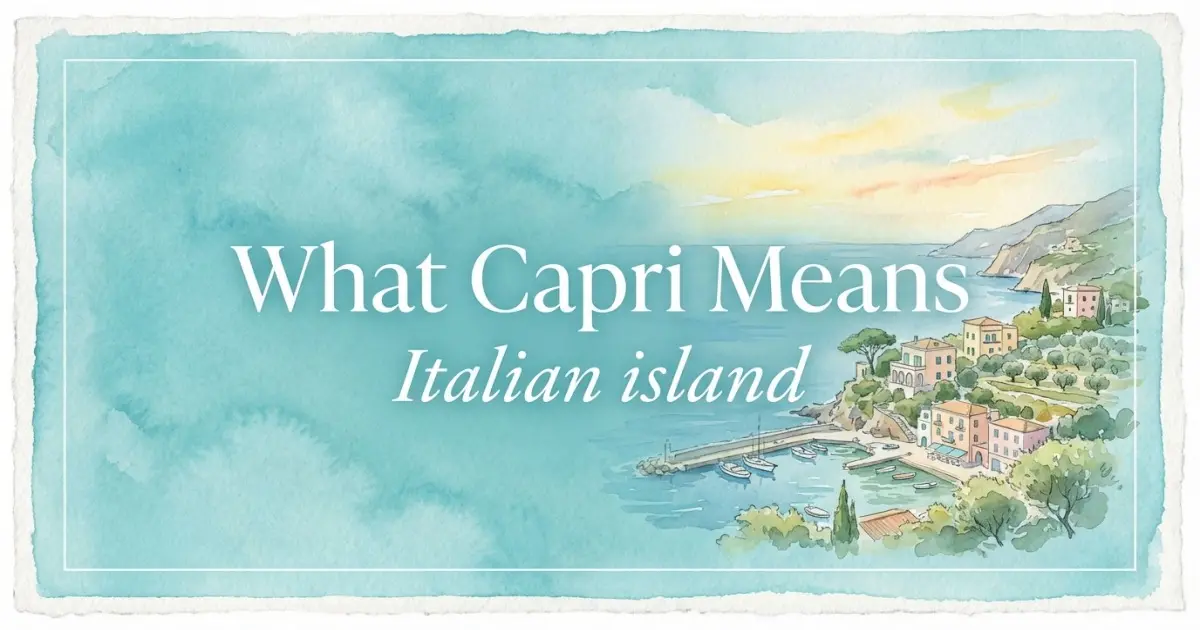
Capri turns a place into a personal identity
Some place names become first names because they sound noble. Others become names because they carry family memory. Capri enters the naming world through a different door: it feels edited. It has the compression of a modern given name even though it began elsewhere. That matters because many place names remain obviously geographic when placed on a child. Capri usually does not. It sounds immediately name-ready.
Capri belongs to the modern rise of destination names
Modern naming has made room for geography in ways earlier generations often did not. Parents began treating cities, islands, regions, and landscapes as reservoirs of feeling: memory, travel, belonging, aspiration, and style. Some of those names lean rustic, some urban, some romantic, some dramatic. Capri sits in a very particular corner of that tradition. It is neither rugged in the way of frontier place names nor aristocratic in the manner of certain old European city names. It feels coastal, polished, and sharply framed.
That is why Capri works more effectively than many other scenic names. It is not weighed down by too many syllables, and it does not sound like a borrowed vacation brochure. It comes in quickly, lands cleanly, and stops. The name behaves like something already pared down for modern use.
The island remains inside the name
With Capri, geography is not incidental. The island is part of the name’s emotional engine. Even people who know little of its history tend to hear sun, edge, water, and height in it. There is a cliff-like clarity to the word. That image gives the name presence. A child called Capri does not sound as though she was named after an abstraction. She sounds named after a place with shape.
That can be a major advantage. Abstract virtue names often depend on interpretation. Capri offers a scene before it offers a theory. It suggests horizon, stone, and movement. That visual immediacy helps explain why the name feels contemporary without sounding invented. It has an inherited image bank.
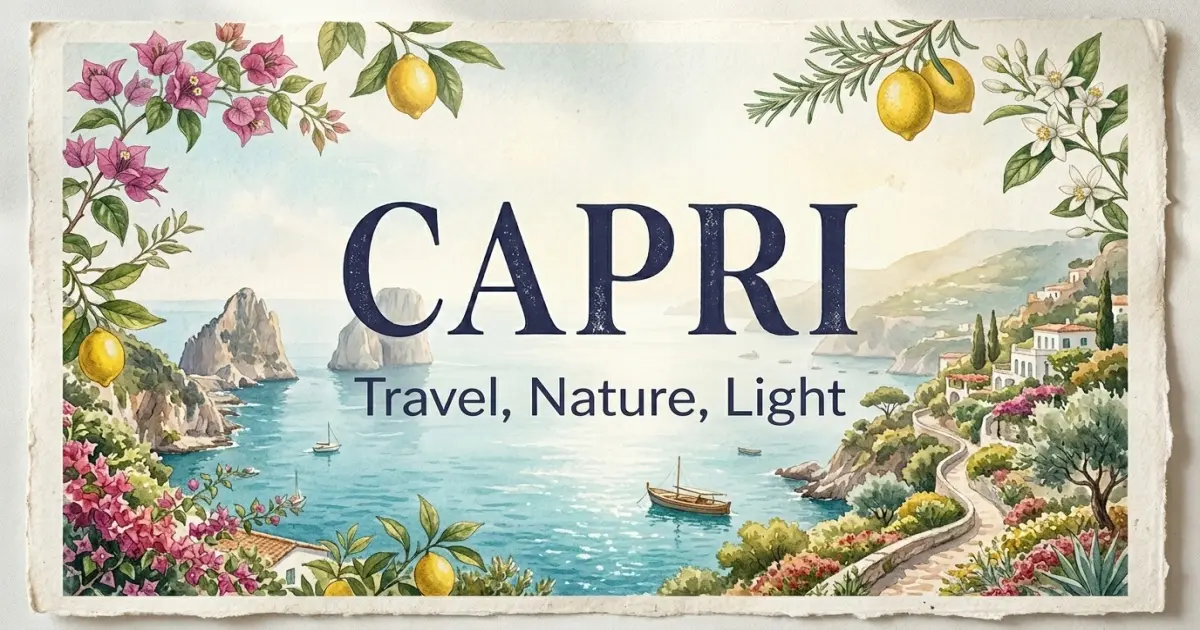
The meaning inside Capri is wilder than the sound first suggests
“Island of goats” is the interpretive key that saves Capri from becoming a merely glossy name. On first hearing, Capri can sound smooth, urbane, and almost fashion-house sleek. Its meaning complicates that impression in a good way. Goats are not decorative animals in naming symbolism. They are associated with agility, climbing, hardiness, instinct, and life on difficult ground. An island of goats is not a soft image. It is a place where survival requires balance.

Goat imagery gives Capri traction
In name meanings, animal roots often matter because they keep a beautiful sound from floating away into vagueness. Capri benefits from that greatly. The goat adds body. It introduces motion across steep surfaces, confidence on uneven edges, and a kind of unshowy resilience. This gives the name a more muscular subtext than many parents may realize at first.
That subtext is useful because Capri’s polished sound could otherwise be misread as purely glamorous. The meaning corrects that. Capri is not just a name for someone ornamental. It can suggest dexterity, nerve, and self-possession. The island is not only picturesque. It is habitable because something tough can live there.
Capri makes wildness look controlled
That may be the name’s deepest modern trick. Capri packages something ancient and physical inside something refined. It does not sound feral, but it is not rootless. It does not sound pastoral, but it remembers animal life. It does not sound heavy, but it comes from terrain. In editorial terms, Capri is a name that knows how to wear a sharp silhouette over a strong frame.
This is one reason it has more staying power than a purely fashion-led choice. Names last when they can hold more than one reading. Capri can. It is scenic and grounded, sleek and old, airy and animal. That layered identity gives the name interpretive depth without making it difficult to carry.
Capri sounds modern because the stress falls at the end
The pronunciation of Capri does a remarkable amount of stylistic work. The name is said kuh-PREE, with the emphasis on the second syllable. That late stress instantly changes the energy of the name. Instead of arriving with a broad, open first beat and then relaxing, Capri gathers speed and then lands with a clean, bright finish. This is part of why it feels stylish without becoming overworked.
The opening keeps Capri light
The first syllable, kuh, is almost understated. It does not demand attention. It clears space. That matters because names with strong first-syllable stress often feel more settled, domestic, or familiar. Capri’s weaker opening means the name leans forward. It is moving somewhere. The effect is contemporary and agile.
There is also no heavy liquid consonant or lingering fricative to slow the name down. The sounds are efficient. Capri is quick to say, quick to hear, and visually neat on the page. That economy contributes to its modernity more than trend alone ever could.
The final “PREE” is where Capri gets its shine
The stressed second syllable provides brightness and finish. That long ee vowel gives the name lift, while the strong pr cluster in the middle adds a little grip. Without that consonant blend, Capri might drift toward softness. With it, the name keeps tension. It snaps into place.
This is worth noticing because sound often determines whether a place name can become a convincing given name. Capri succeeds not simply because the island is well known, but because the phonetic design is elegant. The name sounds complete in two syllables. Nothing feels clipped, and nothing feels excessive.
That late-stress structure also helps Capri stand apart from more familiar feminine names in American English, many of which lean toward first-syllable emphasis. Capri therefore sounds fresh even when its spelling is simple. The novelty is partly rhythmic, not just cultural.
How Capri reads in contemporary naming culture
Official Social Security Administration (SSA) data shows Capri sits in a very interesting social position. At No. 572 for girls in 2024, it is clearly present but nowhere near overused. That placement matters because Capri is not the sort of name people want to feel mass-produced. Its appeal depends on precision. Parents choosing Capri are often selecting not just a sound, but a mood.
That mood is contemporary, but not flimsy. Capri feels more intentional than many short modern names because it is anchored to a real place and an older meaning. It also differs from many K-heavy or C-heavy trend names in one crucial way: it is not trying to imitate familiarity. It brings its own image system. That makes it feel more editorial and less algorithmic.
The faint appearance of Capri for boys in current U.S. data is also revealing. It does not make the name truly unisex, but it does suggest that its structure is not trapped inside one gendered script. Capri’s clipped form, geographic basis, and late stress give it some flexibility. In practice, though, its modern public identity remains overwhelmingly feminine. For parents considering similar names, this guide to Girl Names names is a useful next step: girls’ names with meanings.
Stylistically, Capri sits near other names that are place-based, image-rich, and somewhat fashion-aware, but it avoids becoming too airy because the consonants keep it grounded. It can feel sunnier than stricter minimalist names, but less sugary than many vowel-soft coastal choices. That balance is hard to achieve. Capri manages it because its ancient roughness still shows through the polish.
There is also a useful emotional distinction to make here. Capri does not sound nostalgic. Many revived names draw strength from antique familiarity. Capri does not need that route. Its strength is present-tense. It sounds like a modern parent looked outward, chose a name with contour, and wanted something memorable without theatrical excess.

Capri carries place, fashion, and freedom without collapsing into cliché
Any place name used as a first name risks cliché if the cultural image becomes too dominant. Capri avoids that better than most because it does not rely on one note alone. Yes, the name can evoke ease, travel, sunlight, and a kind of Italian elegance. But its older meaning and tight sound pattern keep it from dissolving into postcard language. It has grain.
Capri is scenic, but not sentimental
That distinction matters. Scenic names sometimes become over-softened in family use, as though beauty alone were enough to sustain them. Capri has more edge than that. The pr cluster sharpens it. The goat-linked meaning roughens it. The island setting gives it altitude and exposure. All of this keeps the name from turning syrupy.
That is why Capri can work on a child, teenager, and adult without requiring a major tonal adjustment. It does not sound childish in the first place. It sounds compact, visual, and capable of movement.
Capri feels aspirational in a disciplined way
Some aspirational names overstate what they want the child to become. Capri does not issue a moral command or a triumphal prediction. It offers atmosphere instead: taste, edge, movement, confidence, and a relationship to beauty that is concrete rather than dreamy. It says not “be perfect,” but “move well through striking terrain.” That is a more modern kind of aspiration.
Middle names that steady Capri or soften its edge
Because Capri already carries image and motion, middle names usually work best when they either calm it with something classic or deepen it with something more atmospheric and literary. If you want the full pairing logic behind that contrast, see middle names for Capri.
Nicknames that pull Capri closer to home
Capri is already short, but its nickname life can still move in different directions—brisk and cool in public, sweeter and more elastic in family use. To see how those different moods shorten in real life, explore nicknames for Capri.
Pronunciation that gives Capri its clean modern lift
The late-stress kuh-PREE shape is a major part of the name’s charm. Without that final rise, Capri would lose much of its sleekness and directional energy. If you want the full sound pattern behind that rhythm, read how to pronounce Capri.
What Capri finally says about Capri
Capri is a name that proves modernity does not have to mean thinness. It may sound contemporary, but its roots are not disposable. Inside it are island stone, animal agility, Italian atmosphere, and the elegant discipline of a name that knows exactly where its stress belongs. Capri does not need a great many syllables to make an impression. It works by compression. If you want to go deeper into this heritage, visit Italian-origin names.
That is finally the name’s strongest quality. Capri is not only beautiful; it is shaped. It takes a real place, an old meaning, and a modern appetite for vivid naming, then binds them into something sleek enough for the present and sturdy enough to last beyond it. If many fashionable names glitter only on the surface, Capri offers a rarer pleasure: a bright name with terrain underneath. That is why Capri lingers. It is not just scenic. It is alive with edge.