
How to Say Brielle Correctly: How the Name Is Usually Said
The moment a name becomes real is often not when it is printed on a shortlist, but when someone says it aloud in an ordinary room. A teacher pauses over attendance. A receptionist glances at a chart. A grandparent repeats the name once on the phone, wanting to get it right before the baby arrives. Brielle is exactly the kind of name that invites that tiny first hesitation. It looks modern, polished, and easy enough to guess, yet its elegance depends on one important detail: the stress lands at the end, not the beginning.
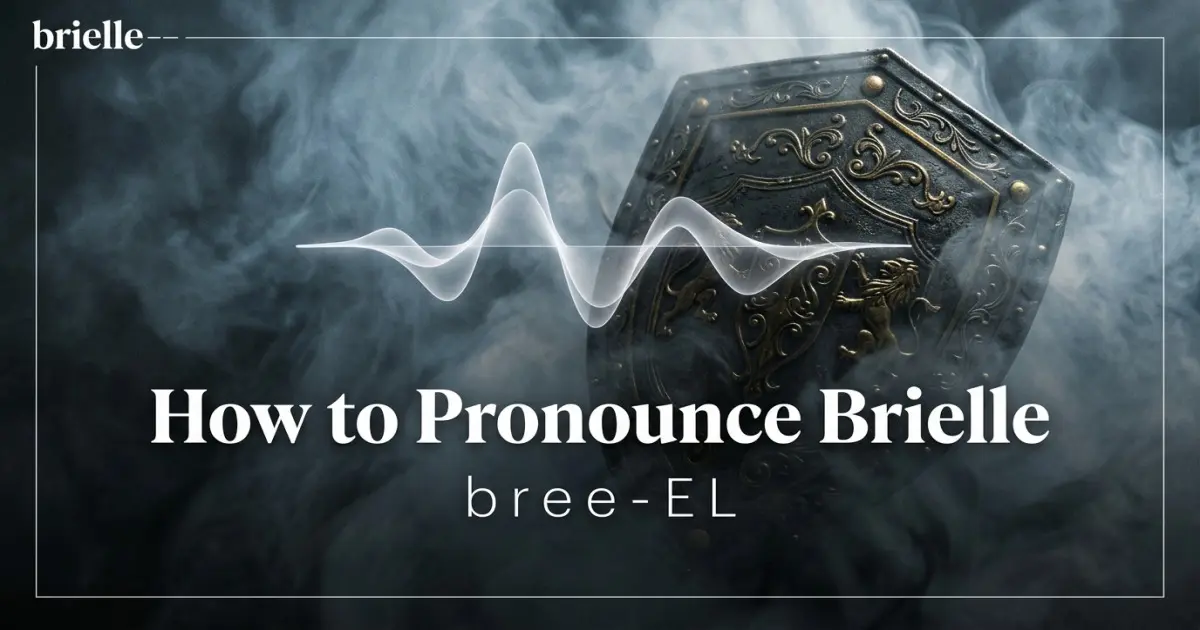
That is what makes Brielle sound finished instead of merely pretty. In everyday English, the name is commonly said bree-EL. The first syllable opens lightly and brightly, while the second syllable carries the real weight. Once the ear catches that pattern, the name becomes simple. Without it, Brielle can flatten into a softer, less precise sound. This is why pronunciation matters here. The name is not difficult, but its beauty lives in the exact place where the voice lands.
What people are really clarifying when they ask how Brielle is said
| Element | Phonetic Detail | Quick Tip |
|---|---|---|
| Everyday pronunciation | bree-EL | Let the second syllable take the stress. That final lift is what gives Brielle its polish. |
| IPA (US) | /briˈɛl/ | The first syllable uses a long ee sound, while the second syllable closes with a short, firm el. |
| IPA (UK) | /briˈɛl/ | The common British guide matches the American one, so the name stays very stable across accents. |
| Syllable count | 2 syllables | Think of Brielle as a clean two-step rhythm, not a drawn-out floral name. |
| Primary stress | Second syllable: EL | If you stress the first syllable too much, the name can lose the sleek finish that makes it distinctive. |
| Key sound feature | Bright opening plus firm ending | The contrast between the airy bree and the sharper EL is what makes the name memorable. |
| Main confusion risk | Flattening both syllables equally | Do not let it drift into a soft, sing-song blur. The second half should land clearly. |

Brielle works because the stress comes late
The two-part rhythm inside Brielle
The easiest way to pronounce Brielle correctly is to hear it as two separate but connected beats: bree and EL. The first syllable is open, bright, and easy. The second syllable is shorter, but it is also stronger. That late stress matters. It gives the name structure. Without it, Brielle can sound like a decorative ending attached to a familiar beginning. With it, the name becomes sharper, more elegant, and more self-contained. Pronunciation lands more fully when the name’s roots and history are already in view, so begin with Brielle meaning.
This is one of the reasons Brielle feels more refined than many other short modern names. A lot of compact names place their weight at the front and then fade away. Brielle does the opposite. It glides in and then lands. That makes it feel polished rather than merely soft.
Why the second syllable carries the style
In both major English pronunciation guides, the main stress falls on EL. That is the hinge of the whole name. If a speaker puts too much emphasis on bree, the name can begin to sound flatter and more casual than intended. If both syllables are treated as equally important, the result can feel overcareful and slightly artificial. Brielle sounds best when the first syllable introduces the name and the second syllable completes it with confidence.
That stress placement is also why the name ages so well. It keeps Brielle from sounding childish. The first syllable is bright enough for a baby name; the second syllable gives it enough firmness for an adult life.
Brielle sounds soft, but its consonants keep it from floating away
The opening cluster gives Brielle forward motion
Phonetically, Brielle begins with the consonant blend br, and that matters more than it may seem. Names that begin only with open vowels can sound airy in a way that risks vagueness. Brielle does not have that problem. The b gives the opening a gentle firmness, and the r adds motion. Together, they move the name forward before the bright ee opens it up. Once the sound pattern is clear, some shortenings stop feeling optional and start feeling natural, and the clearest map is in Brielle nicknames.
This is why Brielle feels smoother than harsh names, but not flimsy. The opening has grip. It gives the name traction before the more elegant ending arrives.
The ending uses a liquid consonant to finish cleanly
The final l in EL is a liquid consonant, which means it allows the sound to flow rather than stop sharply. That helps Brielle end with polish instead of force. There are no fricatives like f or sh creating hiss or roughness. Instead, the name closes smoothly, but with clear shape.
This balance is part of what makes the pronunciation satisfying. Brielle sounds feminine, but not fragile. The ending is soft enough to feel graceful and firm enough to feel finished.
Brielle stays remarkably stable in both American and British English
The IPA remains the same on both sides of the Atlantic
One practical advantage of Brielle is that the common American and British pronunciation guide is effectively identical: /briˈɛl/. That means the core rhythm and vowel pattern remain steady across major English accents. For parents, this is useful. It reduces the chance that the name will shift into noticeably different public versions depending on region.
Some names look elegant but become unpredictable once accents enter the picture. Brielle is not one of them. The name may pick up tiny differences in texture, but its structure stays intact.
What accent differences usually sound like in practice
In real conversation, accent differences with Brielle are usually subtle. Some speakers may make the first syllable slightly brighter or the final consonant slightly cleaner. But these are small adjustments in color, not changes in the name’s identity. The overall sound pattern remains stable because the stress and syllable structure are so clear.
That stability helps explain why the name feels easy in public use. Once someone hears Brielle properly once, they usually keep it.
Where people mispronounce Brielle, they usually over-soften it
Common mistake pattern 1: giving both syllables equal weight
The most common issue is not an entirely wrong pronunciation, but a flatter one. Some speakers say Brielle as though both syllables deserve the same emphasis. That weakens the name. Brielle sounds strongest when the first syllable stays lighter and the second syllable carries the finish.
Common mistake pattern 2: stressing the front too heavily
Another predictable shift is to put too much force on bree. When that happens, the name starts to lose the elegant curve that makes it distinctive. The opening should be bright, but not dominant. The ending is what gives Brielle its shape.
Common mistake pattern 3: making the ending too soft
Because the name looks sleek and feminine, some speakers may over-soften the final EL until it nearly disappears into the background. But Brielle needs that ending to remain audible. It is the anchor. Without it, the name starts to sound less finished and less memorable.
How to practice Brielle until it sounds natural in real speech
Say Brielle in full phrases, not in isolation
Names settle most naturally when spoken in real sentences. Try: “Brielle is here.” Or: “This is Brielle from my class.” Or: “Brielle will be joining us today.” In those phrases, the late stress becomes much easier to hear. The name glides in and lands where it should.
Build the name from the stressed syllable backward
If someone feels unsure, start with the anchor: EL. Then add the bright opening: bree-EL. This can help because the mistake with Brielle is often not the first syllable, but forgetting that the second syllable matters more.
Three practice lines that keep Brielle crisp
“Brielle is ready.”
“Please welcome Brielle.”
“Brielle called this morning.”
These are useful because they let the name move the way it actually lives in conversation, rather than as a careful pronunciation exercise.
Why Brielle sounds more elegant than difficult once the ear learns it
The beauty of Brielle is that its pronunciation is not complicated. It is simply precise. A bright first syllable, a stressed second syllable, and a clean ending give the name its whole effect. Once that pattern is heard, the pronunciation becomes very easy to remember.
That is why Brielle works so well in everyday life. It looks polished, but it does not make people work too hard. It sounds modern, but it is not unstable. It carries softness, but the late stress gives it enough structure to feel strong. Said properly, Brielle sounds exactly like what many parents hope a name will sound like in the world: graceful, clear, and quietly confident.