
Nicknames for Brielle: Simple Nicknames That Still Feel Distinctive
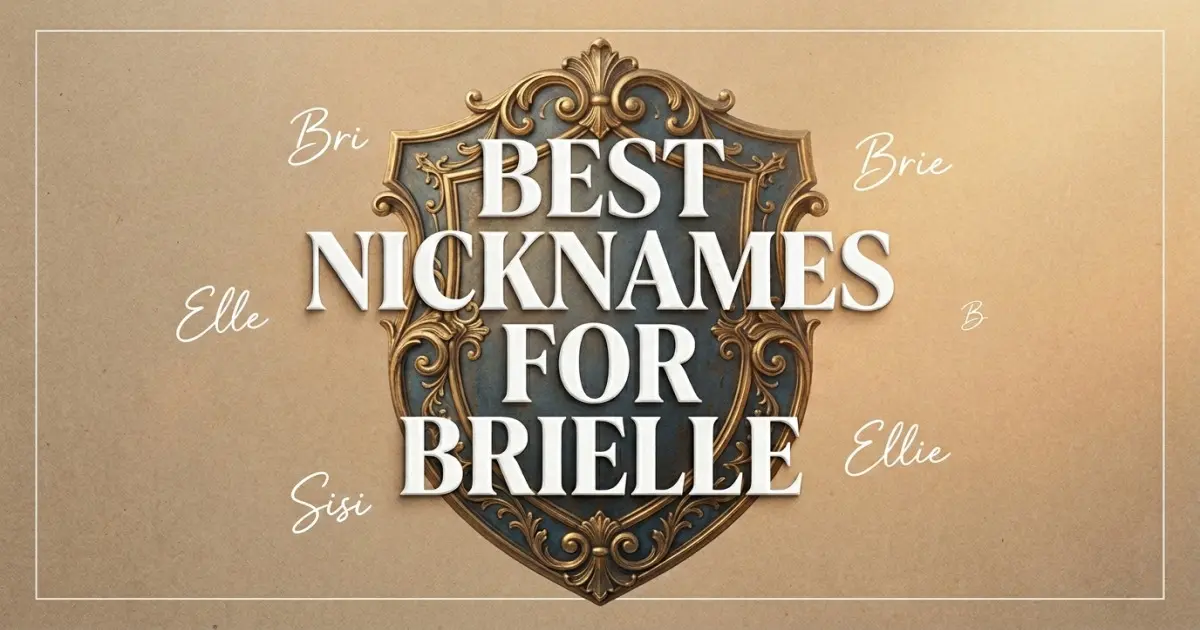
A nickname is almost never just a shorter name. It is a social signal. It tells you who is close enough to soften the sound, who prefers something brisker, and what kind of version of the person the speaker is calling forward. Parents usually choose one register, siblings another, classmates another, and the child herself may later decide that a different form feels more like her. That is why nicknames matter so much in real life. They are not only practical trims. They are little acts of relationship.
Brielle is especially interesting in this regard because it already feels compact, polished, and complete. At only two syllables, it does not need shortening in order to work. No teacher, friend, or employer is likely to find Brielle unwieldy. That changes the logic of its nicknames. With a longer name, a nickname often solves a practical problem. With Brielle, a nickname is more likely to express tone. It can make the name warmer, sportier, sleeker, cuter, or more private. In other words, Brielle’s short forms are not there because the full name is difficult. They are there because affection and personality almost always remake a name once life begins to use it. Nicknames add personality at the surface, but the deeper weight of the name still sits in Brielle meaning.
What Brielle’s nickname map really tells you
| Group | Suggested Nicknames | Persona | Use Context |
|---|---|---|---|
| Classic everyday forms | Bri, Bree, Brie | Friendly, natural, socially easy | School, relatives, casual family use, everyday introductions |
| Polished modern forms | Elle, Bri | Sleek, stylish, slightly older | Teen years, self-chosen use, social media, friend groups |
| Cute affectionate forms | Bri-Bri, Breezy, Ellie | Warm, playful, family-centered | Baby years, parents, grandparents, home life |
| Short casual forms | B, El | Brisk, teasing, low-fuss | Teammates, siblings, text culture, close-friend shorthand |
| DIY pet-name forms | Belle, Bee, Bree-Bee | Homemade, intimate, relationship-specific | Private family use, inside jokes, one-to-one affection |
Brielle is short enough to stay whole and flexible enough to shorten beautifully
One of the great practical advantages of Brielle is that the full form already behaves like an everyday name. It is not long, not cumbersome, and not overly formal. A child can be Brielle at school, on legal forms, in casual introductions, and later in professional life without ever sounding overdone. That means families are free to use nicknames because they enjoy them, not because they are cornered into finding one.
This matters more than parents sometimes expect. When a full name is already this usable, the nickname becomes almost purely emotional. Bri makes the name quicker and more practical. Bree keeps the same ease but softens it. Elle draws out the sleekness hiding in the back half. Bri-Bri or Breezy belong more clearly to the world of home. Even forms like Belle or Bee do not exist because Brielle is difficult. They exist because people who love a child almost always reshape her name into something more intimate.
That also means families do not need to overplan. Brielle is one of those names that can evolve naturally. A toddler may be Bri-Bri. A school-age child may become Bree. A teenager may decide she prefers Elle. An adult may keep Brielle intact because the full name already feels elegant and sufficient. The name has enough internal variety to support all of those paths without strain.
Brielle breaks into three nickname zones, and each one pulls the name in a different direction
The opening of Brielle gives you Bri, Bree, and Brie
The first nickname zone is the opening Bri- sound. This is the most obvious and most public-facing area for short forms. Bri is probably the easiest everyday nickname Brielle offers. It is clean, familiar, and highly plausible in school or sports settings. Bree is nearly identical in sound, but the spelling and visual softness make it feel a little lighter and more openly feminine. Brie works too, especially for families who want the spelling to mirror the long ee sound more directly, though some may avoid it if they dislike the culinary association.

These nicknames are especially believable because English speakers naturally shorten names from the front. They also keep the warmest, brightest part of Brielle audible. If teachers, cousins, or classmates shorten the name spontaneously, this is the zone where they will usually land.
The stressed center of Brielle makes the back half more powerful than it looks
What makes Brielle a little more interesting than some short names is that the stress falls on the second syllable: -EL. That means the name’s center of gravity lives later than many people first assume. The opening is bright, but the ending is what gives Brielle its shape. This is why the name never feels flimsy. It lands with a little firmness. Many short forms only become obvious once the opening sound is clear, which is why how to pronounce Brielle belongs naturally here.
That late stress is also why Elle is such a strong nickname. It does not just look stylish. It captures the syllable that carries the name’s weight. Compared with Bri or Bree, Elle sounds sleeker, slightly older, and more fashion-forward. It is often the form that feels most self-chosen rather than family-given. For a girl who wants her nickname to sound polished rather than cute, Elle can be the most convincing route.
The ending of Brielle creates the softer family forms
The final nickname zone grows out of the written and spoken ending. This is where forms like Elle, Ellie, and even Belle begin to make sense. Ellie is the softest of these and feels more child-centered than Elle. It is less likely to arise from strangers or teachers and more likely to come from parents or grandparents who naturally round a name into something sweeter. Belle is even more family-coded. It is not the most obvious phonetic shortening, but it is entirely believable because families often nickname through visual shape as much as through sound.
That is an important principle with Brielle. Because the name is already short, some of its most affectionate forms will not follow the most logical trimming rules. They will follow emotional logic instead. A home nickname only has to sound right inside a relationship. It does not have to be the most technically predictable form.
Brielle changes by age, and the right nickname often changes with her
Baby and toddler years favor repetition and sweetness
In early childhood, the nicknames that stick are often the ones adults can say warmly again and again. That is where Bri-Bri, Breezy, Ellie, and Bree-Bee begin to feel natural. These are not names that need to work in every public context. They are signs of closeness. Their softness, silliness, or repetition is part of their purpose. In this period, a nickname is often more like a family dialect than a formal secondary name.
School years reward clarity and low-friction forms
Once a child moves into broader peer life, the nicknames that last are usually the easiest ones for other people to hear and repeat. Bri and Bree are especially strong here because they are intuitive and socially smooth. Elle can work too, particularly if the child or family already prefers its sleeker tone, but it often feels slightly more intentional than the front-end nicknames.
This is also the stage when some girls named Brielle may simply stay Brielle. That is a very plausible outcome, and it is one of the name’s advantages. The full form is already compact and graceful enough to survive daily use unchanged.
Teen and adult years often narrow toward Bri, Elle, or full Brielle
As the child grows older, the more obviously cute forms often retreat into family-only use. Bri-Bri may survive with parents. Ellie may remain with one grandparent. But in the wider world, the more likely public options are Bri, Elle, or full Brielle. Bri sounds friendly and unfussy. Elle sounds clean and self-possessed. Brielle itself sounds polished and complete. That range is one of the reasons the name ages so well. It can move from sweetness to sleekness without losing itself.
Choosing between Bri, Bree, and Elle is really choosing Brielle’s social texture
If parents are trying to think ahead, it helps to treat Brielle’s nicknames as tone choices rather than technical outcomes. Bri sounds casual, adaptable, and easygoing. Bree is softer and more openly feminine. Elle is the most polished and the most style-conscious. Ellie feels younger and warmer. Belle and Bee are more intimate, more private, and more likely to belong to a specific relationship than to the wider world.
This is why there is no single “correct” nickname for Brielle. The right one depends on what kind of social signal a family wants the shorter form to send. If they want warmth and familiarity, Bri or Bree may feel best. If they want the sleek side of the name to come forward, Elle is stronger. If they want something almost entirely domestic, the pet-name forms may be the truest fit.
What still sounds unmistakably like Brielle, even after affection begins to reshape it
The strongest nicknames for Brielle are the ones that preserve the name’s brightness while revealing a slightly different emotional angle. Bri keeps the friendliness. Bree keeps the softness. Elle captures the polished ending and gives it independence. Ellie turns the same zone sweeter. Belle and Bee show what happens when affection starts nicknaming through association rather than pure phonetics.
That is what makes Brielle such a satisfying nickname name. It does not need to be shortened, yet it offers several believable ways in. A child can remain Brielle in every room and lose nothing. Or she can become Bri to friends, Elle later on, and Bree-Bee to the people who love her most privately. The nicknames do not replace the name. They simply reveal how many different ways closeness can sound around it.