
Nicknames for August: From Classic Favorites to Fresh Twists
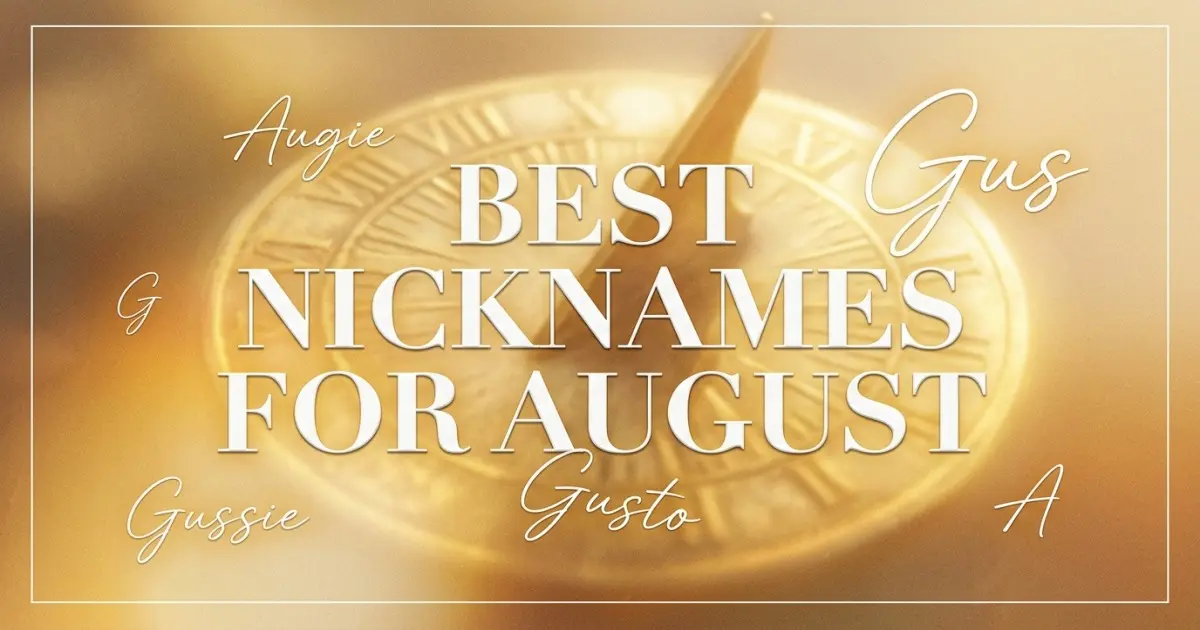
Nicknames are social evidence. They show who gets to soften a name, who wants to speed it up, who prefers the full version because it already feels complete, and who is close enough to reshape it into something only the family understands. That is why nicknames matter more than many parents first expect. They are not just cute extras. They are signals of intimacy, personality, and control. A child may be August on a class roster, Augie at home, and Gus only to a grandfather or best friend. Each form does slightly different emotional work.
August is especially interesting because it begins as such a poised full name. It already sounds finished, literary, and calm. That changes the nickname field around it. Some names need shortening in order to become livable. August does not. Instead, its nicknames are chosen for warmth, informality, or edge. That means the best August nicknames are usually not dramatic inventions. They are adjustments in distance. The full name remains elegant; the nickname reveals who is speaking and what kind of closeness they are claiming. Nicknames add personality at the surface, but the deeper weight of the name still sits in August meaning.
What the nickname world of August actually reveals
| Group | Suggested Nicknames | Persona | Use Context |
|---|---|---|---|
| Classic short forms | Gus, Augie, Augy | Warm, familiar, established | Family use, childhood, everyday affectionate speech |
| Modern clipped forms | A, Augs | Cool, minimal, peer-friendly | School, texting, sports, close-friend circles |
| Soft family forms | Auggie, Augie-bear, Gussy | Tender, playful, childhood-centered | Parents, grandparents, early years, private home life |
| Playful personality forms | Gus-Gus, Augster, Auggs | Funny, lively, informal | Siblings, inside jokes, teen years, affectionate teasing |
| Stay-full strategy | August | Composed, literary, complete | Public introductions, school, adulthood, all-purpose everyday use |
August’s opening sound does less nickname work than you might expect
Why the first syllable rarely stands alone
Many names generate their strongest nicknames from the stressed opening syllable. August is a little different. Its opening Aw- is clear and memorable, but it does not naturally become a nickname by itself in the way Ben comes from Benjamin or Sam from Samuel. The sound is too open, too unfinished on its own. That is why August usually produces nicknames from the fuller Aug- chunk or from the ending -gus instead. Many short forms only become obvious once the opening sound is clear, which is why August pronunciation guide belongs naturally here.
This matters because it explains why August often stays full in public life. The opening sound does not offer an obvious, strong single-syllable substitute that feels complete on its own. The name resists being reduced too aggressively. That resistance is part of its elegance.
A and Augs belong to modern peer culture
That said, contemporary nickname culture is more flexible than older naming systems. In fast-moving social spaces, especially among teenagers and close friends, a simple A can work as a casual initial-based form. It is not particularly intimate or old-fashioned. It is efficient. The same is true of Augs, which feels more specifically attached to August while still staying clipped and current.
Augs is especially plausible in texting, friend groups, or sports settings where slightly stylized short forms are common. It sounds modern and lightly ironic rather than tender. Parents should think of this as a peer nickname, not a nursery nickname. It suits a person who wants August to sound less literary and more immediate.
The heart of August is where Augie really lives
Augie is the natural warmth inside August
The strongest and most beloved nickname for August is almost certainly Augie. Naming books repeatedly connect August and Augustus to Augie, and that makes sense phonetically as well as socially. Augie preserves the recognizable beginning of the name while softening it with an affectionate ending. It is one of those nicknames that changes the emotional register immediately. August sounds composed and dignified. Augie sounds warm, young, and approachable.
This is why Augie works so well in childhood. It lets parents and relatives keep the beauty of the original name while giving daily speech something gentler to hold. A child can be introduced formally as August and then loved privately as Augie without any tension between the two forms. In fact, the contrast is one of the pleasures of the name. The full form carries stature; the nickname carries affection.
Augy and Auggie are tonal variations, not different identities
Some families prefer Augy or the spelling Auggie. These are less separate nicknames than tonal adjustments. Augy feels a little leaner and more phonetic. Auggie feels slightly more playful and child-centered on the page. In speech, though, they all belong to the same emotional zone: an informal, softened version of August that remains unmistakably attached to the full name.
That makes Augie one of the best kinds of nickname. It does not distort the name or drag it into a totally different style category. It simply reveals the tenderness already hidden inside it.
August’s ending is where the older nickname tradition takes over
Why Gus feels more established than trendy
The other major nickname route for August runs through the ending rather than the beginning: Gus. This is a long-standing and highly credible short form, helped by the larger family of names around Augustus and Augustine. Unlike Augie, which feels bright and affectionate, Gus feels sturdier and older. It sounds more grounded, more traditional, and in some settings more masculine in the old-fashioned sense.
That tonal difference makes Gus especially useful. It gives August a second possible identity, one that is less soft than Augie and less formal than August. A boy could be Augie in early childhood, move into Gus in adolescence or adulthood, and keep August as the full public name all along. Few names offer that kind of layered flexibility so naturally.
Gussy and Gus-Gus stay in the affectionate zone
Once Gus enters family life, it may produce softer forms of its own. Gussy and Gus-Gus are both believable, but they belong clearly to private affection rather than public identity. They are the kinds of names grandparents or siblings might use, or the kinds of forms that appear in moments of teasing, comfort, or childhood play. They are not generally the names a person carries into public adulthood unless the family culture is particularly exuberant.
That is not a weakness. It is simply how nickname layers often work. August is the formal center. Gus is the sturdy everyday alternative. Gussy or Gus-Gus are home-language extensions of that alternative.
Which version of August tends to survive each age best
In early childhood, Augie usually wins
For many families, the most natural childhood path is clear: August in formal settings, Augie at home. Augie feels small enough for a child without sounding flimsy. It also fits the sound expectations many parents have when they want a nickname that is warm but still clearly tied to the legal name.
Some children may also collect affectionate variants such as Auggie-bear or Gus-Gus, but these are usually domestic extras rather than serious long-term forms.
In school and adolescence, Augustus may split into social lanes
Once peers begin exerting naming pressure, the nickname field usually divides. Some children remain August because the full name already feels cool, literary, or distinctive. Others drift toward Gus because it sounds more grounded and less formal. A few may take on Augs or A in particularly modern or sporty circles. This is where the name’s versatility becomes most visible. It offers several believable public options without forcing any of them.
In adulthood, August often reclaims the center
Adult life tends to favor the full form again. August is one of those names that wears exceptionally well without shortening. It looks good in print, sounds composed in introductions, and carries enough warmth not to feel stiff. Even when a lifelong nickname survives, many adults named August still find the full name easy to keep in professional or formal life.
If a nickname remains, Gus often ages most naturally, followed by Augie in more affectionate circles. Both feel plausible. But August itself is usually strong enough not to need replacement.
When an August nickname starts trying too hard
The main risk with August nicknames is overdesign. Because August already has such a distinct atmosphere, not every playful invention improves it. A nickname that feels too clever, too stylized, or too detached from the real sound of the name can quickly start sounding like branding rather than speech. The most believable forms stay close to one of the name’s real sound zones: Aug- or -gus.
This is why the best options are also the simplest ones. Augie works because it softens naturally. Gus works because it has historical legs. Augs works because it reflects modern peer language. Everything else should be tested against one question: would real people say this repeatedly over years, in ordinary life, without embarrassment?
That question matters because August is a name whose full form is already one of its main gifts. Any nickname has to justify departing from it. The best ones do so by adding intimacy, not by chasing novelty. In the end, that is the nickname logic of August: a magnificent full name, a tender inner version, a sturdy old short form, and just enough modern flexibility to let the bearer choose which self he wants to show.
Nickname FAQ for August
Does August really need a nickname?
Not necessarily. August is already short, polished, and easy to use in public life, so many people keep the full form. Nicknames are more about warmth or style than about solving a practical problem.
What is the most natural nickname for August?
Augie is often the most natural affectionate nickname, while Gus is the strongest classic short form. They offer different moods rather than competing for the same role.
Which nickname for August ages best?
Gus often ages best as a long-term everyday nickname, while August itself remains one of the strongest public-facing forms. Augie tends to feel warmest in childhood and family life.
Are modern forms like Augs realistic for August?
Yes, especially in friend groups, texting, and contemporary peer culture. They are believable social nicknames, though usually less timeless than Augie or Gus.