
Nicknames for Arlo: Sweet Short Forms for Everyday Use
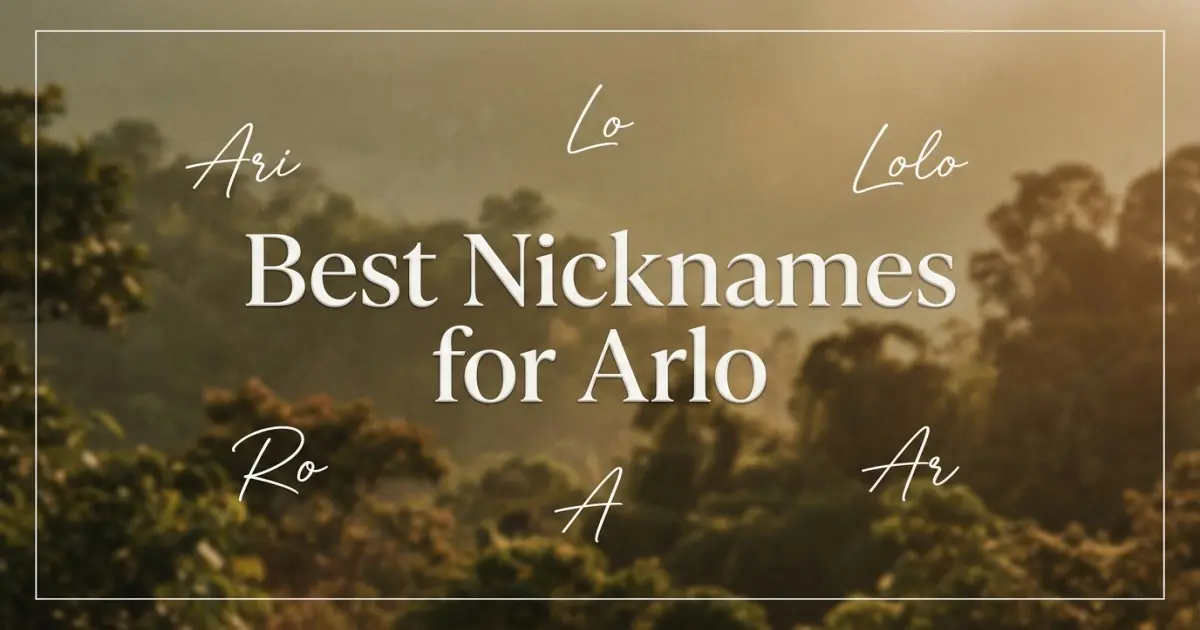
Nicknames are not just smaller names. They are social signals. They tell you who is speaking from the family circle, who is speaking from friendship, who is speaking from habit, and who is trying to pull a formal identity closer to daily life. A nickname can make someone sound younger, rougher, sweeter, cooler, or more private without changing the official name at all. That is why nickname culture matters so much to parents. It is one of the first places where a name stops being an idea and starts becoming a lived relationship.
Arlo is especially revealing in this respect because it already sounds intimate. It does not arrive with the distance of a long formal name that clearly needs shortening. It arrives warm, modern, and immediately usable. That changes the whole nickname logic. With Arlo, the question is rarely “How do we make this shorter?” The real question is “How do we make it softer, more playful, more private, or more distinct inside one particular bond?” That is why Arlo’s nickname world is smaller than Eleanor’s or Elizabeth’s, but also more telling. The best forms do not transform the name. They adjust the emotional distance around it. Before judging which short form feels right, it helps to look again at the full identity of the name in Arlo meaning.
What the nickname world of Arlo really shows
Because Arlo is already short and easy to carry, its nicknames usually come from tone, repetition, clipped initials, or affectionate add-ons rather than major structural change. The strongest options feel spoken, not engineered.
| Group | Suggested Nicknames | Persona | Use Context |
|---|---|---|---|
| Classic everyday forms | Arlo, Ar | Direct, easygoing, socially clear | Daily use, school, introductions, most public settings |
| Short modern cuts | A, Ar, Lo | Lean, casual, lightly cool | Texting, teen years, close friends, quick family shorthand |
| Cute affectionate forms | Lo-Lo, Arlie, Arlo-Bear | Sweet, playful, child-centered | Toddler years, parents, grandparents, home life |
| Buddy-style playful forms | Arls, Arlo-Man, Aro | Friendly, teasing, relaxed | Friend groups, siblings, sports teams, casual social circles |
| Soft home forms | Lo, Lolo, Arlo-Boy | Warm, familiar, gently protective | Family speech, bedtime language, everyday home use |
| DIY private forms | Arlo Bean, Lo-Bug, Arlo Roo | Bond-specific, invented, intimate | Parents, partners, one-household nicknames, inside jokes |
Arlo is already close to nickname territory, so the change is mostly emotional
Some names produce nicknames by shedding weight. Arlo does not really need that. It is already two syllables, already friendly, and already light enough to move comfortably through childhood and adulthood. That means most Arlo nicknames are not solving a practical problem. They are changing tone.
Ar feels brisk and close. Lo softens the name and makes it more domestic. Lo-Lo makes it unmistakably affectionate, especially in early childhood. A turns it into minimalist shorthand, which is plausible in texts, group chats, or quick friend speech. Arlie is not a formal derivative, but it is believable as one of those warmer family forms that grows out of saying the full name with more softness around it. The same is true of Arlo-Bear or Arlo-Boy. These are not replacements for the official name. They are relationship markers.
This is one reason Arlo works so well in real life. The full name never becomes unusable just because a nickname appears. The nickname is optional. It only emerges when intimacy asks for it. That flexibility is especially helpful in a name that already sits between stylish and grounded. Arlo can remain Arlo in public while becoming something smaller or sweeter at home.
The sound zones inside Arlo
Arlo is a short name, but it still has distinct nickname zones. Because the stress falls on the opening syllable, the front half of the name carries most of the identity, while the ending often carries the softest affection.
The opening of Arlo creates the cleanest shorthand
The strongest clipped forms come from the front. Ar and A both work because the name begins with a clear stressed sound. These forms feel compact, slightly modern, and socially efficient. They are the kinds of nicknames that show up in texts, among siblings, or in the speech of close friends who naturally shorten names without much ceremony.
Ar is especially plausible because it preserves the first strong beat of the name without distorting it. It sounds casual rather than cute. That makes it one of the better choices for later childhood, teenage use, or quiet everyday shorthand.
The stressed center keeps Arlo warm rather than clipped
In Arlo, the stressed center is really the first full syllable, Ar, and that is where much of the name’s confidence lives. It is open, broad, and easy to hold for a moment in speech. That is one reason affectionate expansions like Arlie or Arlo-Bear work better than they might in a sharper name. The name already has warmth in the mouth. It does not resist softening. Nicknames often grow from the stressed part of a name rather than from spelling alone, so the next useful step is how to pronounce Arlo.
This is also why Arlo can take a gentle family nickname without feeling flimsy. The front of the name stays strong enough to support the softness added around it. That balance is useful. It means the nickname can be sweeter without making the child’s name sound insubstantial.
The ending of Arlo gives the name its most intimate forms
The -lo ending is where the most affectionate home-style nicknames usually live. Lo is the cleanest example. It feels warm and immediate, the kind of thing a parent or sibling might say without even deciding to invent it. Lolo takes that one step further into repetition, which makes it especially natural in toddler years and private family speech.
The ending is also why Arlo sounds more nickname-friendly than some other modern boys’ names. That rounded final syllable invites play. It allows for repetition and softness without making the full name sound unstable. In Arlo, the ending humanizes the style.
Arlo changes with age more than with drastic nickname reinvention
Because the full name is already compact and socially easy, the nickname system around Arlo tends to evolve gently. What changes is not the identity of the name so much as the amount of warmth or compression around it.
Childhood Arlo usually invites softness and repetition
In early childhood, the most believable forms are usually the gentlest ones: Lo-Lo, Arlo-Bear, Arlo-Boy, Lolo, or another private household invention. These are names people say when they are soothing, teasing, or calling a child in from the yard. They do not need to sound sleek. They need to sound loved.
Teen and adult Arlo usually stays close to the full name
As boys grow, names often compress. With Arlo, that usually means either staying with Arlo itself or moving toward something leaner like Ar or A in the right social circle. Lo may still exist in close family use, but Arlo is one of those names that often remains its own strongest adult form. That is part of the appeal. Parents do not have to choose between a charming child name and a usable grown-up one.
Official data shows Arlo is now well established, and that public familiarity likely reinforces this pattern. When a short name already feels socially complete, people are less likely to force a constant nickname for adulthood.
Which Arlo nicknames actually feel believable in real life
Plausibility matters more than abundance. The strongest Arlo nicknames are not the ones that show the most creativity. They are the ones that sound as though real people would continue using them once the novelty wore off.
By that standard, the best set is fairly compact: Arlo, Ar, Lo, Lo-Lo, and perhaps A in private shorthand. Arlie can work, especially in childhood, because it sounds like a natural affectionate variation rather than a total rewrite. Arls is believable in a friend group, even if it is less universal. The more elaborate forms such as Arlo-Bear, Arlo Bean, or Lo-Bug are best understood as household nicknames, not public everyday alternatives.
The least successful options are usually the ones that sound too far removed from the actual sound of Arlo. This is not a name that needs clever transformation. Its charm comes from directness. The most convincing nicknames preserve that directness and simply change the relationship around it.
What Arlo sounds like when affection pulls it closer
Arlo has one of the most useful modern nickname patterns: enough flexibility to feel personal, but not so much that the full name disappears. That means the public identity stays stable while the private forms can still feel meaningful. Ar sounds quick and close. Lo sounds soft and home-based. Lo-Lo sounds unmistakably loved. Arlo itself, used without any trimming, can still sound intimate simply because the name is already so human in scale.
This is what makes Arlo particularly strong for families who want a name that can stay consistent across life stages. A child can be cuddled with a nickname and still return easily to the full name when needed. There is no hard reset waiting later.
So the best nickname for Arlo is usually the one that sounds most naturally spoken by the people closest to him. Not the cleverest version, and not the most decorative one. Just the one that feels as though it would actually be used tomorrow. With Arlo, that quiet naturalness is exactly where the nickname becomes real.
The Best Nickname Options for Arlo: FAQ
Does Arlo really need a nickname?
No. Arlo is already short, clear, and socially complete. Many families will simply use the full name most of the time and let nicknames appear only in more intimate settings.
What is the most natural nickname for Arlo?
Ar and Lo are often the most natural shortened forms, while Lo-Lo is one of the most believable affectionate family versions in early childhood.
Are cute forms like Lo-Lo or Arlo-Bear realistic?
Yes, especially in home life and the toddler years. Arlo’s warm sound makes affectionate expansions and repetition feel very plausible in family speech.
Which Arlo nickname ages best?
Arlo itself usually ages best, but Ar can also work well into later childhood and adulthood because it sounds clean and understated.
How do I know if an Arlo nickname sounds forced?
If it sounds more clever on paper than natural in ordinary conversation, it is probably too forced. Arlo works best with nicknames that grow directly out of its real sound and feel easy to say without explanation.