
Apollo Name Meaning: Origin, Vibe, and Timeless Appeal
Apollo is a name that arrives with light already inside it. Its meaning, “sun; strength,” gives the name a double force: radiance and power, brightness and endurance. The name does not feel small or hidden. It sounds like something lifted into view, a name with a horizon behind it and a long cultural shadow in front of it. Yet Apollo is not only grand. Its three-syllable rhythm softens the scale, turning a mythic name into something parents can actually say across a kitchen, a playground, or a classroom.
Pronounced uh-POL-oh, Apollo has Greek origin, three syllables, and a sound that rises toward the stressed middle before falling into a warm final oh. Official 2024 U.S. data places Apollo at rank 414 for boys, showing that the name has moved beyond rare mythological curiosity into active modern use. Apollo feels ancient and contemporary at once: a name of sunlight, strength, artful sound, and bold presence, made wearable by rhythm and softened by its open vowels.
Apollo's U.S. popularity rank over time, 1965–2024
Popularity statistics are based on official data from the Social Security Administration baby name records.
Apollo: A Majestic and Bold Mythical Powerhouse
Apollo reads as a name with one unmistakable center of gravity, reaching a record peak for boys in 2024. Its rapid rise in the modern landscape likely suggests a naming culture preference for “goddess/god style” names that carry a sense of ancient power and modern aspirational strength.
The lack of a secondary track reinforces its firm, traditional masculine identity. Meaning “strength” or referring to the sun god, its rhythmic three-syllable sound provide an elegant and durable texture that remains distinctive.
Apollo Holds Sunlight and Strength in One Mythic Frame
| Key Facts | Information | Quick Insight |
|---|---|---|
| Name | Apollo | The name feels expansive and luminous, with a mythic style that still works in modern speech. |
| Primary gender | Male | Current usage reads clearly masculine, supported by its boys’ ranking in official 2024 data. |
| Primary origin | Greek | The Greek origin gives Apollo a classical foundation and a strong cultural identity. |
| Primary meaning | Sun; strength | The meaning combines radiance with force, giving Apollo both brightness and backbone. |
| Pronunciation | uh-POL-oh | The stress on the middle syllable gives the name a lifted, dramatic rhythm without making it hard to say. |
| IPA | U.S. /əˈpɑːloʊ/; U.K. /əˈpɒləʊ/ | The U.S. and U.K. forms keep the same three-part structure while reflecting accent differences in the stressed vowel. |
| Syllable count | 3 | Three syllables give Apollo movement, ceremony, and a full-name presence that still feels smooth. |
| U.S. boys’ rank (2024) | No. 414 | Official data shows Apollo is actively used for boys, distinctive yet no longer extremely rare. |

The Meaning of Apollo Turns Light Into Character
Apollo means “sun; strength,” and that pairing gives the name unusual symbolic density. “Sun” brings images of brightness, warmth, visibility, vitality, and the power that makes growth possible. “Strength” brings steadiness, endurance, courage, and the ability to stand. Together, the meaning suggests not only brilliance, but resilient brilliance: light that has force behind it.
This is why Apollo feels different from softer light names. It is not only gentle, golden, or poetic. It has structure. The name suggests a kind of radiant authority, someone whose presence is felt not because it overwhelms the room, but because it carries energy. Apollo’s meaning gives parents a name that can feel uplifting without becoming delicate, strong without becoming blunt.
The sun meaning gives Apollo visibility
A name connected to the sun naturally carries a sense of being seen. Apollo does not sound hidden, muted, or private. It feels outward-facing. The sun image suggests warmth, confidence, and life-giving presence, which can make the name feel optimistic and bold.
That does not mean Apollo has to feel flashy. Its brightness can be interpreted as steadiness as much as spectacle. The sun rises every day; its strength is not only dramatic but dependable. This gives Apollo a mature kind of radiance.
The strength meaning keeps Apollo grounded
The second half of the meaning prevents Apollo from becoming only beautiful imagery. Strength gives the name weight. It suggests stamina, resilience, and an inner core. A child named Apollo carries a name that points not only to light, but to the capacity to hold that light with confidence.
This combination makes Apollo especially compelling. It is a name of glow and grit, of brilliance with endurance.

Apollo’s Greek Origin Gives the Name Classical Architecture
Apollo has Greek origin, and that origin matters because the name carries an immediate classical atmosphere. Greek names often feel sculptural in English: full of vowel movement, strong consonant centers, and associations with ancient story, art, philosophy, and mythic imagination. Apollo belongs firmly in that world. It sounds old without sounding dusty, elevated without becoming unusable. For more names connected to this tradition, see names linked to Greek history.
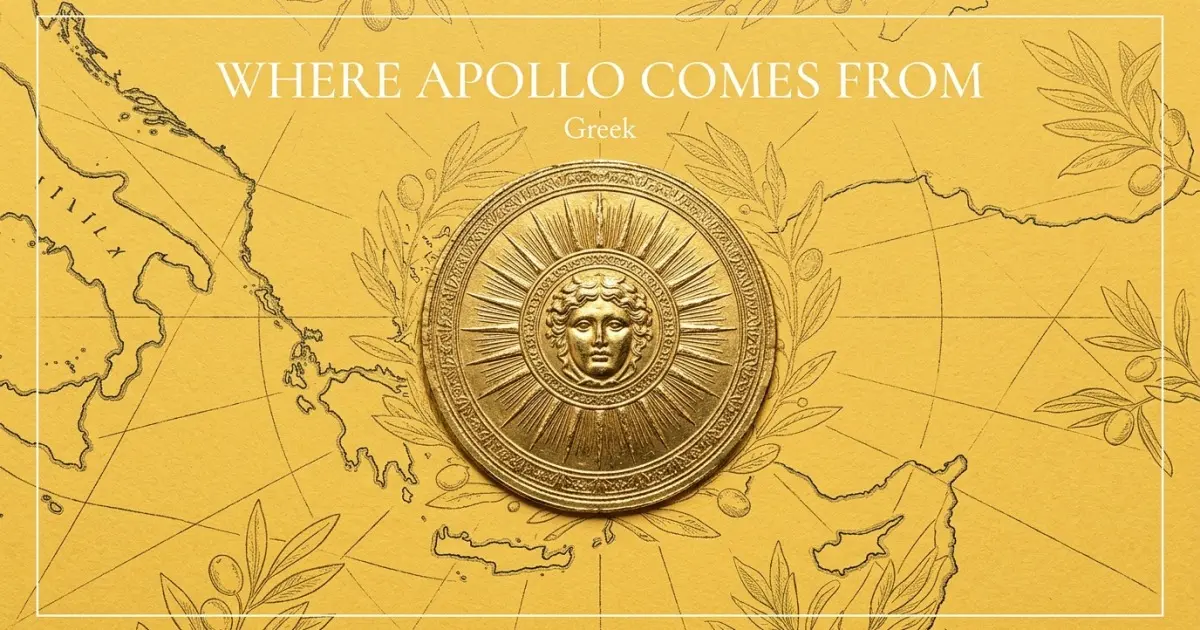
The name’s Greek character gives it a sense of cultural height. Apollo does not feel like a surname repurposed as a first name or a newly invented modern sound. It feels inherited from a deep imaginative tradition. That can make the name especially attractive to parents who want something bold, meaningful, and historically resonant.
A classical name with modern momentum
What makes Apollo interesting today is that it is not trapped in antiquity. Official 2024 data places it at rank 414 for boys, showing that parents are using it in contemporary life. That modern use changes the name’s social feeling. Apollo is still classical, but it is also wearable. If Apollo is close to what you want, you may also like popular boy names and meanings.
This balance is important. A name can be grand in origin and still practical in daily life if its sound is clear and its rhythm is natural. Apollo manages that balance better than many mythic names because the pronunciation is intuitive and melodic.
Apollo feels ceremonial without becoming stiff
Some classical names can feel heavy in ordinary settings. Apollo avoids that partly because of its open vowels. The first syllable is light, the middle syllable carries the strength, and the ending opens into oh. The sound feels expansive rather than rigid.
That makes Apollo feel less like a museum label and more like a living name with an ancient frame.
The Sound of Apollo Rises Like Its Meaning
Apollo is pronounced uh-POL-oh. The U.S. IPA is /əˈpɑːloʊ/, while the U.K. IPA is /əˈpɒləʊ/. Both forms show the same core pattern: three syllables, stress on the middle, and a final oh sound. The name begins softly, rises into the strong POL syllable, and then releases into the rounded ending.
This sound pattern supports the meaning. The name does not begin with maximum force. It gathers. The first syllable prepares the ear, the middle syllable carries impact, and the final syllable gives the name space. Apollo sounds like a name with lift. It moves upward and outward.
The middle stress gives Apollo dramatic balance
The stress pattern is central to Apollo’s character. uh-POL-oh places the force in the center, which gives the name a strong spine. If the stress were placed on the first syllable, the name would feel flatter. If it were placed at the end, it would feel theatrical. The middle stress gives Apollo both dignity and flow.
This makes the name satisfying to say. It has rhythm, but not clutter; drama, but not excess.
The open vowels make Apollo warmer than its scale suggests
Apollo’s grandeur is softened by its vowel sounds. The name contains no harsh final stop and no cramped ending. It closes with oh, which gives the name warmth and openness. That is one reason Apollo can feel big without feeling severe.
The sound helps humanize the name. It can carry mythic scale, but it still feels approachable in conversation.
Official 2024 Data Shows Apollo Has Entered Real Modern Use
Official Social Security Administration (SSA) data places Apollo at rank 414 for boys in 2024. That ranking gives the name a distinctive modern position. Apollo is not a hidden rarity, but it is also not one of the most saturated boys’ names. It has visibility without losing its sense of specialness.
This matters for a name with such a bold style. Parents may wonder whether Apollo is too much name to wear. The 2024 ranking suggests that many families are already answering that question in practice. Apollo is being used as a real first name, not only admired as a mythic or literary reference.
Rank 414 gives Apollo confidence without overexposure
A boys’ rank of 414 means Apollo is familiar enough to appear in modern naming conversation, but still distinctive enough to stand out. A child named Apollo may not be the only one with a bold classical name, but the name is unlikely to feel ordinary.
This gives Apollo a useful balance: memorable, but not isolated; striking, but not impossible.
Apollo’s rise in use reflects a taste for bolder names
Apollo fits a broader modern appetite for names with meaning, sound, and story. Parents are increasingly comfortable with names that carry mythic, celestial, or classical weight when the pronunciation is clear and the nickname options are usable.
Apollo benefits from all of those qualities. It has a grand meaning, a strong sound, and a friendly rhythm.
Apollo Belongs Beside Mythic, Solar, and Strong Names
Apollo sits near names such as Atlas, Orion, Leo, Cassian, Evander, Cyrus, Phoenix, Helios, Magnus, and August in broad style conversation. These names share different parts of Apollo’s appeal: classical presence, celestial imagery, strength, brightness, and a sense of scale. Apollo stands apart because it combines sun and strength in a name that is widely recognizable and smoothly pronounceable.
Compared with Atlas, Apollo feels more radiant and less burdened. Compared with Orion, it feels warmer and more human-centered. Compared with Leo, it feels larger and more mythic. Compared with Phoenix, it feels more classical and less symbolic-modern. Apollo has an unusually rich style position: ancient, bright, masculine, musical, and bold.
Apollo feels powerful without sounding hard
The name’s power comes from meaning and scale rather than harsh sound. Apollo does not rely on clipped consonants or a forceful ending. Its strength is more luminous than rugged.
This can appeal to parents who want a strong boy name that still feels artistic, warm, and expansive.
The social impression of Apollo is confident and creative
Apollo often gives the impression of brightness, confidence, and imagination. It does not sound plain or background. It sounds like a name with a point of view. At the same time, its clear pronunciation keeps it from feeling inaccessible.
The name suggests a child who may be seen as bold, expressive, and memorable before he ever defines the name for himself.
Apollo Opens Three Practical Naming Paths
Because Apollo has a big sound and a strong meaning, the supporting choices around it should be thoughtful. Middle names can ground the grandeur. Nicknames can make the name more intimate. Pronunciation guidance can help the rhythm stay natural and clear.
Middle names for Apollo can ground the sunlight
Apollo pairs well with middle names that add balance. Apollo James gives the name a crisp classic frame. Apollo Thomas feels steady and grounded. Apollo Gabriel adds spiritual warmth. Apollo Reid keeps the full name sleek and modern. Apollo Alexander is grand and formal, best with a shorter surname. If you want the full pairing logic behind that contrast, see Apollo middle names.
Nicknames for Apollo can soften the mythic scale
Apollo has several plausible nickname directions. Pollo is affectionate but informal. Polo feels stylish and light. Apo can work in close circles. Lo is minimal and modern. Some families may prefer Apollo in full because the name’s rhythm is already smooth and memorable. To see how those different moods shorten in real life, explore nicknames for Apollo.
Pronunciation of Apollo should keep the middle stress
Apollo is pronounced uh-POL-oh, with stress on the middle syllable. It should not become AP-uh-loh or uh-puh-LOH. The name’s elegance depends on the lifted center. If you want the full sound pattern behind that rhythm, read how to pronounce Apollo.
Why Apollo Feels Like a Name Made of Light and Strength
Apollo is powerful because it does not separate beauty from force. Its meaning, “sun; strength,” gives it both radiance and resilience. It is a name of brightness, but not fragility; grandeur, but not coldness. It suggests energy that can illuminate and endure.
The name’s Greek origin gives it classical depth. Its three-syllable pronunciation gives it musical movement. Its 2024 ranking shows that Apollo is actively used for boys, distinctive but increasingly wearable. It has the rare ability to sound ancient and fresh in the same breath.
In the end, Apollo is a name with a horizon. It rises in sound, shines in meaning, and carries a strength that feels more luminous than blunt. Apollo suggests a child named not only for brightness, but for the power to carry that brightness forward — a name of sunlit presence, creative force, and enduring light.