
Best Middle Names for Angus: Lovely Matches for a Smooth Full Name
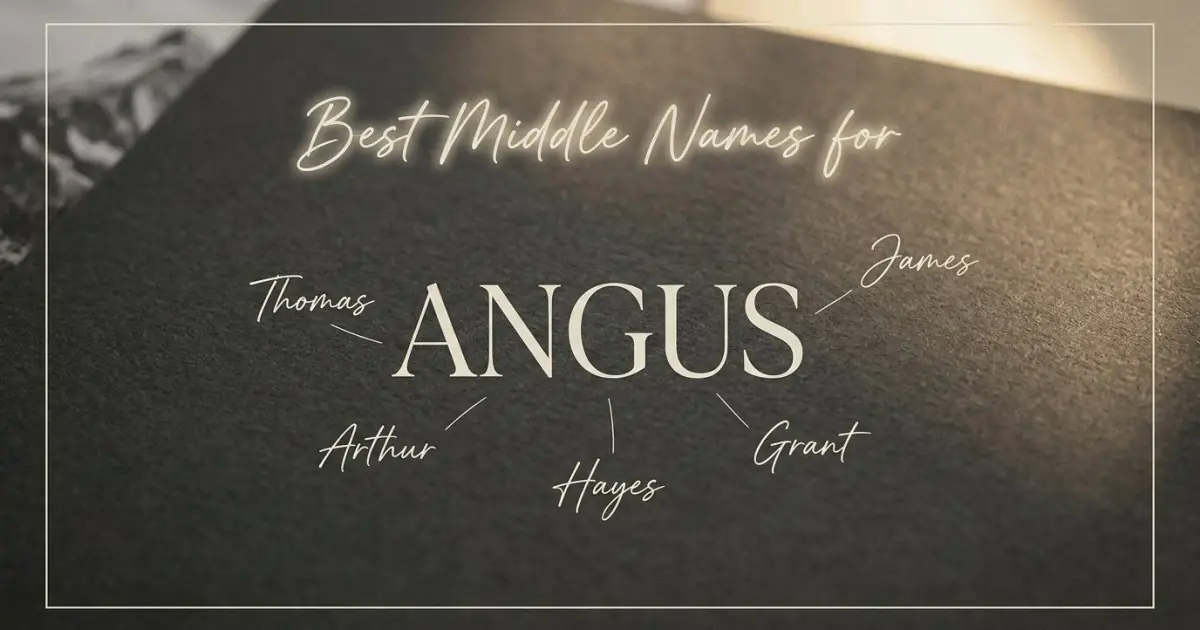
A middle name lives in an unusual social space. It is chosen with almost as much care as the first name, yet it may remain private for years, appearing mainly on birth certificates, school records, formal introductions, and the moments when a parent calls a child by his full name. That relative quiet gives the middle position a special freedom. It can preserve a family connection, introduce a contrasting style, or carry a meaning that would feel too weighty in everyday use.
With Angus, the middle name has an especially clear job. Angus is compact, firmly stressed, and rooted in Scottish tradition. Pronounced ANG-guss, it arrives with weight in the first syllable and closes quickly in the second. A successful middle name should not compete with that solidity. It should give the full name movement—either by lengthening the rhythm, softening the consonants, or extending Angus into a more formal register. To make sure the middle name does not pull against the first name’s roots, it helps to check the heritage and tone carried in Angus meaning.
The Middle Names That Reveal Different Sides of Angus
The same first name can feel scholarly, rugged, contemporary, or quietly romantic depending on what follows it. This matrix shows the main stylistic directions available to parents considering Angus.
| Style | Recommended Names | Why it works with Angus |
|---|---|---|
| Traditional and enduring | James, Edward, Henry, Thomas, William | Familiar middle names give uncommon Angus an immediately established frame. |
| Scottish and Celtic | Callum, Ewan, Fraser, Malcolm, Rhys | These pairings deepen the heritage character without repeating the exact rhythm of Angus. |
| Long and formal | Alexander, Benjamin, Nathaniel, Theodore, Sebastian | Three- and four-syllable middles create an elegant rise after the compact first name. |
| Soft and lyrical | Elliot, Julian, Oliver, Rowan, Elias | Vowels and flowing consonants soften Angus while preserving its grounded identity. |
| Short and strong | Blake, Dean, Grant, Reid, Jude | The result is concise and confident, especially when paired with a longer surname. |
| Modern but restrained | Everett, Miles, Nolan, Wesley, Bennett | These names update Angus without making the combination feel trend-dependent. |
| Family-honor friendly | John, George, David, Robert, Michael | Angus can carry a familiar family name in the middle while retaining its own distinct identity. |
How Angus Sets the Rhythm of the Full Name
Angus has two syllables, with the emphasis firmly on the first. Its rhythm can be represented as STRONG-soft: ANG-guss. Because the name begins with immediate stress and finishes on an unstressed syllable, the middle name should ideally create a fresh rhythmic movement rather than imitate the same pattern too closely.
Longer middles give Angus space to unfold
A three- or four-syllable middle name is often the easiest match. Combinations such as Angus Alexander, Angus Theodore, and Angus Nathaniel move from a compact opening into a broader, more ceremonial cadence. This structure is particularly useful when the surname is short.
Angus Theodore Grant, for example, has a satisfying progression from two syllables to three and then one. The middle name prevents the full combination from sounding clipped. Similarly, Angus Benjamin Shaw uses a longer center to connect two brief outer names.
Two-syllable middles need a different stress pattern
A second two-syllable name can work beautifully, but variation matters. Angus followed by another strongly front-stressed name may sound heavy if both names share similar consonants. Angus Malcolm has deliberate weight, while Angus Rowan feels more open because Rowan introduces softer sounds.
Two-syllable middles beginning with a vowel can also create an easy transition. Angus Elliot and Angus Owen allow the final sound of Angus to move directly into an open vowel, making the combination feel less segmented.
One-syllable middles create a decisive signature
Short middles such as James, Reid, Dean, and Jude give Angus a compact, memorable finish. This approach is strongest when the surname has at least two syllables. Angus Reid Montgomery has room to breathe, while three consecutive short names may feel too abrupt.
Middle Names That Give Angus Classical Reach
Angus is historically grounded, but it is uncommon in present-day American use. A familiar classical middle can act as a bridge between those two qualities. It reassures the ear without diluting the distinctiveness of the first name.
Established classics make Angus feel immediately complete
- Angus James — concise, balanced, and easy with many surnames.
- Angus Edward — formal without sounding overly elaborate.
- Angus Henry — warm, traditional, and slightly softer in rhythm.
- Angus Thomas — steady and understated, with clear consonant contrast.
- Angus William — substantial enough for a short surname and familiar enough to steady an unusual first.
These choices are particularly effective when parents love Angus but want the full name to remain broadly conventional. They also work well for honoring relatives because a traditional middle name can carry family continuity without forcing the child to share an everyday first name with another family member.
Long classics create a more distinguished cadence
- Angus Alexander
- Angus Benjamin
- Angus Frederick
- Angus Nathaniel
- Angus Sebastian
- Angus Theodore
These combinations sound especially strong in full. Angus provides the memorable opening; the longer middle adds polish and range. Angus Frederick feels heritage-rich, while Angus Sebastian creates a more cosmopolitan impression. Angus Theodore sits between the two, pairing old-name substance with contemporary familiarity.
Angus with Scottish and Celtic Echoes
A heritage-based middle can make Angus feel more culturally intentional. The key is to avoid making the full name sound like a collection of themed references. One clearly Scottish or Celtic middle is usually enough, especially when the surname already signals the family background.
Pairings that deepen the Scottish character
- Angus Callum — friendly and distinctly Scottish, with a softer second half.
- Angus Ewan — compact, open, and easy to say.
- Angus Fraser — surname-like and tailored.
- Angus Malcolm — substantial, historical, and strongly masculine.
- Angus Murray — relaxed but unmistakably heritage-conscious.
Angus Ewan is one of the smoothest options because the open vowel at the start of Ewan releases the dense consonant ending of Angus. Angus Malcolm is heavier and more formal, making it better suited to a lighter or shorter surname. Angus Fraser has a crisp, surname-style finish that can work particularly well in families drawn to traditional British naming patterns.
Celtic-adjacent choices broaden the sound
Names such as Rhys, Ronan, Declan, and Rowan retain a Celtic atmosphere while introducing a different regional or stylistic note. Angus Rhys is sharp and compact; Angus Ronan is more lyrical; Angus Rowan feels natural and contemporary without losing depth. Pairing is not just visual; it is rhythmic, and the next useful step is Angus pronunciation guide.
Softer Middle Names Open Angus Without Weakening It
Because Angus contains strong consonants and a firm opening stress, a more fluid middle name can make the complete combination feel warmer. Softness here does not mean fragility. It means adding vowels, liquid consonants, and a longer melodic line.
Vowel-rich middles create an easy transition
- Angus Elias
- Angus Elliot
- Angus Isaiah
- Angus Oliver
- Angus Owen
Angus Elliot feels literary and polished, while Angus Oliver is gentler and more familiar. Angus Elias creates a strong contrast between the grounded first name and the flowing middle. These combinations are useful when the surname is consonant-heavy, since the middle name provides a vocal bridge.
Names with L, R, and W sounds add warmth
- Angus Julian
- Angus Lionel
- Angus Rowan
- Angus Wesley
The softer internal sounds prevent the full name from becoming overly rugged. Angus Julian is refined and slightly romantic; Angus Wesley feels approachable; Angus Lionel introduces an old-world elegance that complements the historical character of Angus.
Modern Middle Names Can Keep Angus from Feeling Too Period-Specific
Angus does not need modernization, but a restrained contemporary middle can shift its social impression. The best choices are current without depending on novelty spelling or a sharply dated trend.
- Angus Bennett — tailored and quietly modern.
- Angus Everett — expansive, polished, and well balanced.
- Angus Miles — compact with a lighter, smoother sound.
- Angus Nolan — familiar and relaxed.
- Angus Reid — spare, confident, and surname-like.
- Angus Wesley — warm and accessible.
Angus Everett is particularly effective before a one-syllable surname. Angus Miles works better when the surname is longer, while Angus Bennett offers a balanced middle ground between traditional and contemporary style.
Where an Angus Combination Can Lose Its Balance
Most middle names can work when they carry personal meaning, but several sound patterns deserve a deliberate test before the birth certificate is completed.
Watch repeated hard G sounds
Because Angus already contains a prominent “ng-g” sequence, a middle beginning with hard G can create a crowded transition. Angus George is usable, especially as an honor name, but it sounds more compressed than Angus Edward or Angus James. The surname may either resolve or intensify that effect.
Avoid too many clipped names in succession
Angus Reid Clark is highly concise, but some families may find it too abrupt. A longer middle such as Angus Theodore Clark supplies more movement. Conversely, a long double-barreled surname may benefit from the economy of Angus Reid.
Check initials as a complete unit
Write down all initials, including those created by a double surname. Angus beginning with A can form common abbreviations or accidental words depending on the middle and family name. A combination that sounds excellent aloud may look distracting when reduced to three letters.
Test the boundary between names
Say the first and middle names at normal conversational speed. Listen for sounds that merge into an unintended word or cause one name to disappear into the next. Then repeat the test with the surname. The ideal combination should remain understandable without requiring an artificial pause after Angus.
Choosing the Angus Combination That Will Last
The strongest middle name for Angus is not necessarily the most fashionable or the most elaborate. It is the one that performs several roles at once: it improves the rhythm, fits the surname, carries the right emotional significance, and gives the child a useful alternative identity should he ever prefer his middle name.
For broad versatility, Angus James, Angus Theodore, Angus Elliot, Angus Callum, and Angus Bennett represent five distinct but durable directions. James is concise and traditional. Theodore adds formal scale. Elliot softens the sound. Callum strengthens the Scottish connection. Bennett places Angus in a more contemporary frame.
The final test should always be the full spoken name. Use it in an introduction, imagine it on a school list, and write it as it might appear on a professional document. Angus already supplies clarity and character. Its middle name should not try to outshine it; it should reveal the version of Angus that best belongs to the family choosing it.
Angus Middle Name FAQ
What syllable count works best after Angus?
Three-syllable middle names often create the most naturally varied rhythm after two-syllable Angus. Alexander, Theodore, Benjamin, and Elliot all give the full name additional movement. One- and two-syllable middles can also work, particularly when the surname provides enough length.
Does Angus need a Scottish middle name?
No. A Scottish middle such as Callum, Ewan, Fraser, or Malcolm can deepen the heritage connection, but a familiar classic or family honor name may create better balance. The full name should reflect the family rather than follow a strict cultural theme.
What middle names make Angus sound softer?
Elliot, Elias, Oliver, Julian, Rowan, and Wesley soften Angus through open vowels and flowing consonants. They preserve the first name’s strength while making the complete combination feel warmer and more lyrical.
How should parents test Angus with their surname?
Say the entire name aloud at a natural pace, write it in full, and check the initials. Listen for repeated consonants, accidental rhymes, and places where the middle name runs into the surname. Testing the name in both formal and everyday situations usually reveals whether the rhythm feels durable.