
Nicknames for Amy: Easy Picks That Fit Real Life
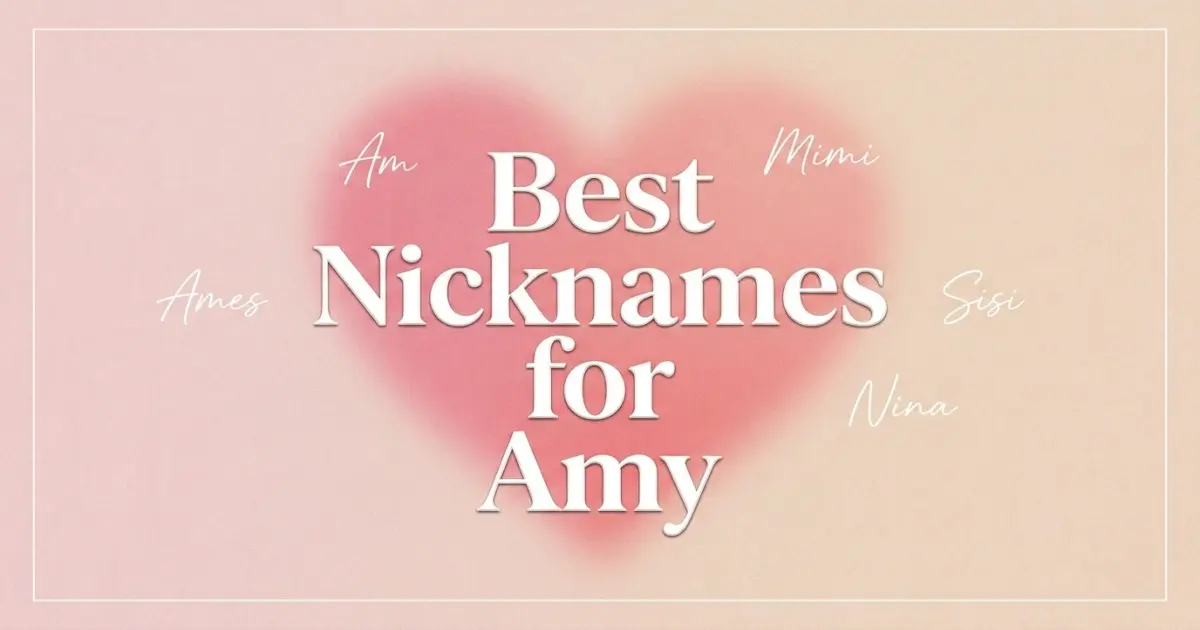
Nicknames are rarely just shorter names. They are signals of access. A full name belongs to the visible self: school rosters, office introductions, formal signatures, and the version of a person the wider world meets first. A nickname belongs to the people allowed closer. It tells you who has family permission, who has old-friend familiarity, who remembers the child underneath the adult, and who prefers affection over ceremony. That is why even very short names still develop nickname lives. The question is not always whether a name can be shortened. The question is what kind of intimacy the shortening creates.
Amy is a perfect example of this. It is already brief, already complete, and already emotionally warm. That changes everything. Unlike Katherine or Alexandra, Amy does not need a nickname for ease. It already is the easy form. Any nickname that appears around Amy therefore does different work. It is not solving length. It is shading personality. It can make Amy feel more playful, more private, more peer-group casual, or more family-soft. In practical terms, Amy does not have a giant nickname universe. It has a smaller, more revealing one, and that is exactly what makes it interesting. Nicknames add personality at the surface, but the deeper weight of the name still sits in Amy meaning.
What the nickname world of Amy is actually showing
| Group | Suggested Nicknames | Persona | Use Context |
|---|---|---|---|
| Full-form default | Amy | Warm, clear, complete | The most natural everyday choice, since the full name is already short, easy, and emotionally finished |
| Friendly whole-name shifts | Ames, Aims | Relaxed, witty, slightly modern | Most believable among peers, siblings, and close friends who naturally reshape short names |
| Soft spelling-led forms | Ami, Amie | Gentle, slightly sweeter, visually delicate | Useful in notes, texts, family use, or as affectionate alternate spellings rather than fully separate spoken identities |
| Playful family forms | Amesy, Amy-girl | Affectionate, domestic, lightly teasing | Best for home life, especially in childhood, rather than formal or public settings |
| Private-use nursery forms | Mimi, A, Aim | Intimate, spontaneous, very personal | Most plausible as family nicknames that grow out of baby speech, sibling speech, or close household habits |
Amy often stays Amy, and that is part of the name’s design
Before talking about shortened forms, it is worth stating the obvious: Amy is one of those names that often remains untouched. That is not a failure of nickname potential. It is a sign that the full name is already functioning exactly as it should. Two syllables, a bright opening, and a soft finish give Amy a sense of completion that many longer names have to work harder to achieve. It feels familiar, but not unfinished. It feels warm, but not informal to the point of flimsiness.
This matters because some names produce many nicknames only because the formal form is too long or too ceremonial for ordinary life. Amy has no such problem. A child can be Amy at home, Amy at school, Amy at work, and Amy in old age without the name ever sounding out of place. That social consistency is one of its strengths. Parents who choose Amy often do so because they want a name that does not need translation between life stages.
There is also a psychological point here. A name that stays intact across settings can feel unusually coherent. The person does not have to toggle between public formality and private softness to be fully herself. Amy already contains both. That is why many families find that even if they imagine a nickname in advance, the full name keeps winning in real use.
Amy does not break into many pieces, so whole-name nicknames do most of the work
The opening zone is too small to do much on its own
In longer names, the opening syllable often becomes the obvious nickname engine. With Amy, that is less true. The opening Ay- is bright and distinctive, but too slight on its own to generate many strong public nicknames. “A” can happen in private life, especially in texts or between siblings, but it is not usually the main social shorthand. This is a useful thing to understand: Amy is not a name with a rich cut-it-in-half logic. It is a name whose nickname life comes from reshaping the whole sound. Nicknames often grow from the stressed part of a name rather than from spelling alone, so the next useful step is how to pronounce Amy.
Ames and Aims are the most believable peer nicknames
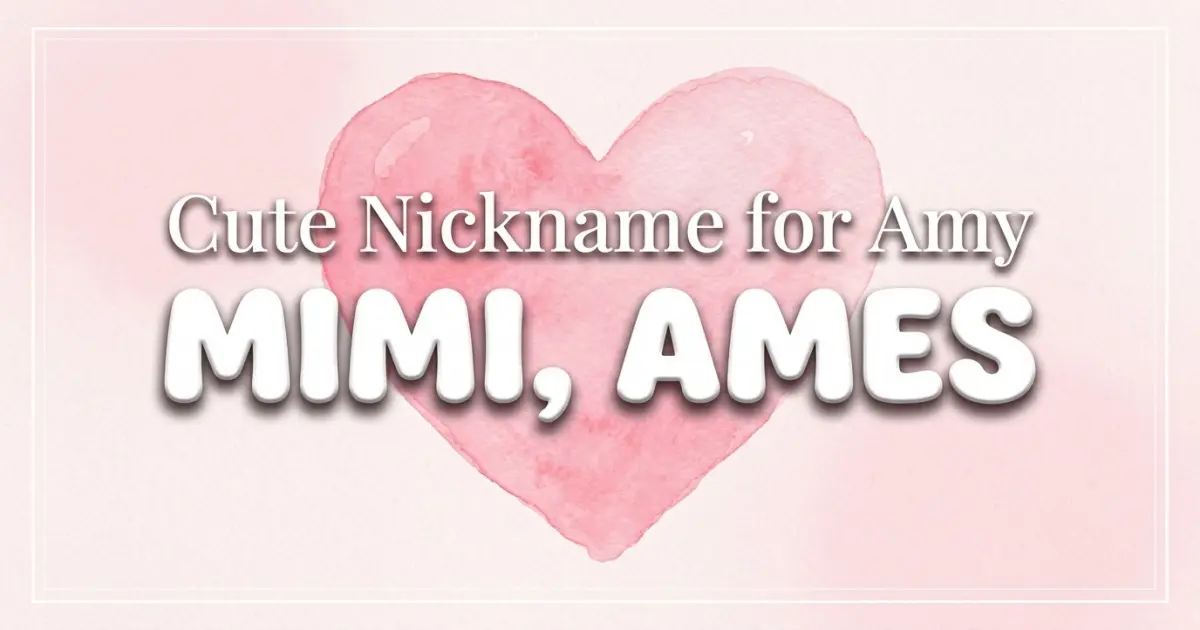
The strongest social nicknames for Amy are not slices but shifts. Ames and Aims both work because they feel like the kinds of playful, slightly sideways forms friends naturally create for short names. They preserve the core sound but tilt it into something more casual and slightly more contemporary. This is a common pattern in English nickname culture: a short, complete name gets nudged into a friend-form rather than drastically shortened.
Ames tends to look a little more substantial on the page. It can feel witty, almost surname-like in a soft way, and that is part of its appeal. Aims feels lighter and more obviously affectionate. In speech the two can overlap, but their visual personalities differ. Ames may suit the person who likes something a touch cooler. Aims may feel a little more teasing and close-friend in tone.
Neither one replaces Amy completely in most cases. That is important. They tend to live in a secondary social layer: school friends, teammates, siblings, cousins, or text messages. The full name remains strong. The nickname just creates another register around it.
The ending of Amy is where private affection usually appears
Ami and Amie are softer in appearance than in sound
Because Amy is already pronounced so simply, some of its “nickname” life happens visually rather than phonetically. Ami and Amie do not create dramatically new spoken identities. They create softer or more stylized written ones. That makes them useful in a very specific way. They can function as affectionate spellings in notes, messages, or private family use without requiring the person to carry a whole second public name.
This matters more than it first appears. For very short names, tiny changes in spelling or tone can do the emotional work that a whole extra syllable would do in longer names. Ami feels slightly more delicate. Amie feels a little more French-inflected or old-fashioned. Amy itself remains the spoken anchor, but these forms show how even a compact name can develop nuance around the edges.
Mimi, Aim, and other nursery forms belong to the inner circle
The ending -mee also makes a few highly intimate family forms plausible. Mimi is one of them, especially when it emerges through baby speech or repeated affection at home. Aim is another possibility in very close circles, though it usually works more as a private or playful usage than as a stable public nickname. These forms are not the main social versions of Amy, and they are not meant to be. Their job is different. They signal softness, childhood, or deep familiarity.
This is often how short names behave. They do not develop an elaborate public nickname ladder. Instead, they acquire a handful of private household names that may never leave the family. Amy is especially suited to this because the full name is already gentle enough to absorb that extra tenderness without sounding awkward.
Amy-girl and Amesy show how families personalize what is already small
Some of the most believable affectionate forms around Amy are not formal diminutives at all, but extensions. Amy-girl and Amesy are good examples. These are the sorts of names that arise naturally when a family wants to add warmth to a name that is already short. They are not polished social alternatives. They are living family language. That distinction matters. A nickname page should not confuse plausible public forms with the kinds of names people really use over cereal, in the car, or at bedtime.
Amy is especially good at this kind of layered use. The public name stays intact. The family finds tiny ways to wrap it in affection. That is one of the reasons the name stays so livable.
Amy usually changes tone more than it changes shape
Childhood keeps the door open to softer forms
In childhood, Amy may collect the most affectionate variations: Amy-girl, Mimi, Ami, or Amesy. These are often less about deliberate style and more about repetition, softness, and the rhythms of close family speech. The name is already easy for a child to learn and for adults to use, so the nicknames mostly exist to increase tenderness, not convenience.
Adolescence tends to prefer Ames or Aims
As children grow, the nickname pattern often tightens. If Amy gains a peer nickname, it is likely to be something like Ames or Aims rather than an entirely different identity. This makes sense. The full name is already short, so adolescent and adult shortening does not require large cuts. It only needs a small shift in vibe. That is exactly what these forms provide.
Adulthood often returns naturally to Amy
Many adults named Amy simply remain Amy in most settings. That is not because the name lacks personality, but because it never needed much adjustment in the first place. A college friend may keep saying Ames. A sibling may still say Mimi in rare private moments. But Amy itself is entirely capable of doing adult life without strain. That steadiness is one of the name’s great practical advantages.
What to avoid forcing with Amy nicknames
The main mistake with Amy is overdesign. Because the name is so short and so complete, elaborate nickname invention often feels less human than the name itself. Amy does not need the sort of aggressive creativity that might help a longer formal name feel more personal. Its best nickname life is light-touch. A small tilt, a softened spelling, a family repetition, a peer-made whole-name shift. That is enough.
The second caution is trying to manufacture a nickname simply because “every name should have one.” Amy may not need one at all. And if it does develop one, it will probably emerge naturally from real use rather than from advance planning. That is not a weakness. It is exactly how strong short names tend to behave.