
How to Pronounce Alina: A Simple Way to Get the Stress Right
Alina is the kind of name that often sounds easier than it looks the first time a stranger reads it. A teacher scans the attendance list, a nurse calls from a waiting room, a grandparent studies a birth announcement, and there is a quick internal question: does the stress fall at the front, as in many familiar A-names, or does the name open softly and brighten later? That tiny pause matters, because Alina’s beauty is tied to its rhythm. Once the name is heard aloud, most of the uncertainty disappears. It is not complicated. It is simply structured.
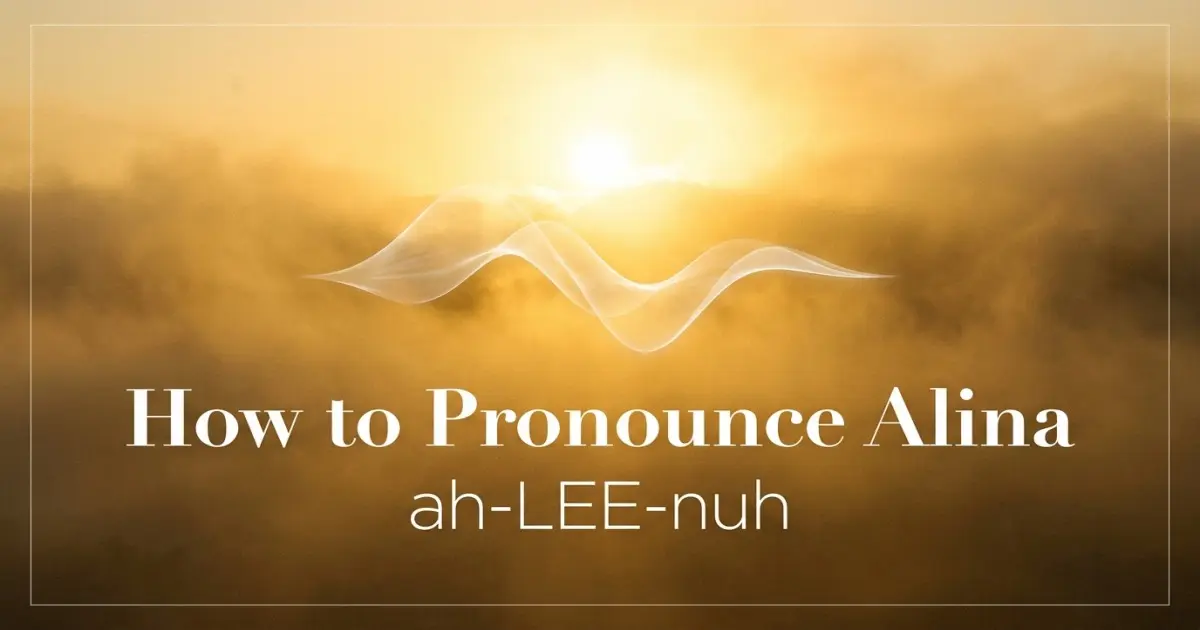
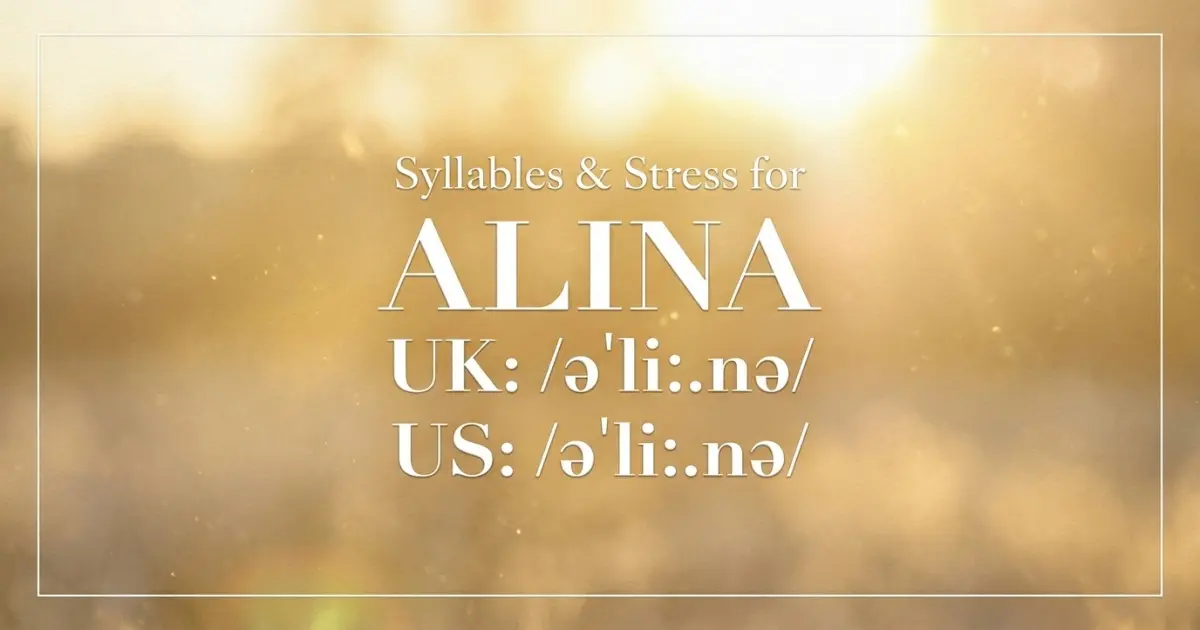
That structure is what gives the name so much of its elegance. Alina is pronounced uh-LEE-nuh, with the strongest emphasis on the middle syllable. Officially, the U.S. and U.K. IPA are the same here: /əˈliːnə/. In practical terms, that means the name stays surprisingly stable across major English accents. The opening syllable is light, the center carries the brightness, and the ending relaxes gently. This is one reason Alina travels so well. It looks refined, but it behaves kindly in ordinary speech.
How Alina is actually said when the name is allowed to move naturally
| Element | Phonetic Detail | Quick Tip |
|---|---|---|
| Standard pronunciation | uh-LEE-nuh | Keep the first syllable light and let the middle syllable carry the name. |
| IPA (US) | /əˈliːnə/ | The stress mark before the middle syllable shows that LEE is the sound that should stand out most. |
| IPA (UK) | /əˈliːnə/ | The matching IPA in both standards makes Alina unusually stable across English-speaking settings. |
| Syllable count | 3 syllables | Think of the rhythm as one soft opening, one bright center, and one gentle finish. |
| Stress pattern | Primary stress on the middle syllable | If you stress the first syllable too much, the name sounds flatter and less true to its usual form. |
| Opening sound | /ə/ schwa | The first syllable should sound light, like a quick “uh,” not a strong “AH.” |
| Core vowel | /iː/ long “ee” in LEE | This is the name’s brightest sound, so keep it clear and open. |
| Final syllable | /nə/ “nuh” | Let the ending settle softly rather than punch it too hard. |
Alina works because the center of the name carries the light
The middle syllable is where Alina becomes itself
Alina is a three-syllable name, but the three syllables do not share equal weight. The first syllable, /ə/, is a schwa: the most neutral vowel in English. It is meant to be light, almost like a doorway into the name rather than the place where the name truly stands. That is why a careful pronunciation begins with a small step rather than a dramatic entrance. The name does not start by announcing itself loudly. It gathers. The sound matters more once you know what the name is meant to carry, which is why the wider frame starts in Alina meaning.
Then comes the stressed center: LEE. This is the brightest part of the sound, and it does most of the work. In phonetic terms, the long /iː/ vowel gives Alina its sense of clarity and lift. It is the point where the name opens fully. That opening in the center is one reason Alina sounds graceful rather than blunt. The energy arrives after the first syllable, not before it.
Why the opening of Alina should stay light
The most common rhythm mistake with Alina is placing too much emphasis on the first syllable, turning it into something closer to AH-lee-nuh or AL-ee-nuh. People make this mistake because many familiar English names beginning with A do take stronger initial stress. Alina does not typically work that way in the pronunciation given here. Its elegance depends on restraint at the start.
That light opening matters for another reason too: it lets the name sound more fluid and more international. A heavily stressed opening can make Alina sound more segmented and less polished. When the first syllable stays soft, the name moves smoothly into its bright center and feels much more natural.
The final syllable gives Alina a gentle landing
After the central LEE, the last syllable, nuh, releases the line. It does not need to sound dramatic. Its function is to soften the end of the name without erasing the clarity of the middle. This is one reason Alina feels elegant rather than sharp. The name does not stop abruptly. It settles.
The consonant l in the middle is a liquid consonant, and that helps the name flow. Liquid consonants often make names sound smoother because they connect vowels without creating a harsh break. In Alina, that liquid quality is part of what keeps the name bright and noble rather than brittle.
Alina stays unusually steady across accents
The U.S. and U.K. forms are effectively the same
Some names with elegant or international spellings shift a great deal between American and British English. Alina does much less of that than many people expect. Here, both standards use the same IPA: /əˈliːnə/. That means the light opening, stressed middle, and soft ending remain constant. In real speech, of course, no two voices sound exactly alike, but the name’s essential rhythm stays stable.
This is a practical advantage. A name that keeps its shape from one English-speaking environment to another is easier to carry through school, travel, work, and daily introductions. Alina benefits from that kind of portability. It is refined, but not fragile.
What may change slightly in real life
Accent can still affect the texture of the vowels. Some speakers may make the first syllable a little more audible, while others reduce it even more. Some may let the final schwa sound slightly lighter or quicker. But these are small differences in color, not differences in identity. The name remains recognizably Alina as long as the middle stress stays in place.
That is the key point. People may shade the sound differently, but they are still moving through the same three-part rhythm. Alina is therefore much less pronunciation-sensitive than its elegant appearance might suggest.
Where people most often get Alina wrong
The biggest mistake is stressing the wrong syllable
The most common mispronunciation is putting the stress too early. A speaker may look at the name and say AH-lin-uh or AL-ee-nuh. Those versions may still be understandable in context, but they flatten the name’s internal design. Alina sounds most natural when the first syllable stays light and the emphasis lands on LEE.
That is why the pronunciation is worth learning properly. The difference is not merely technical. It changes the entire mood of the name. With the wrong stress, Alina can sound more ordinary or more abrupt. With the right stress, it sounds balanced and luminous.
Sound neighbors that can pull the ear off course
Alina lives near a cluster of names that can influence how people guess at it: Alena, Elena, Elina, Aline, and even names like Alayna or Elena in multilingual settings. Because so many of these names share similar vowels and endings, listeners may momentarily slide toward another familiar pattern. This is especially true when reading quickly. But the pronunciation given here gives Alina its own clear lane: light opening, bright middle, soft finish. When the stress sits in the center, the nickname logic often follows that same center of gravity, which is why Alina nicknames is the natural next step.
That distinct lane is also why hearing the name once usually solves the problem. Its structure is easy to remember once the stress has been modeled correctly.
Three practice lines for saying Alina naturally
The easiest way to settle a name in the mouth is to practice it in whole sentences rather than in isolation. Try these aloud:
Alina is here.
I spoke with Alina this morning.
Alina will join us later.
When you say them, let the first syllable remain light, bring the voice clearly to LEE, and then let the last syllable fall away gently. If the beginning starts sounding too strong, soften it. If the ending grows too heavy, relax it into a quieter finish.
Why Alina sounds easier in the mouth than it does in the mind
The final lesson of Alina is that the name is more cooperative than it first appears. On the page, it can look refined enough to make speakers hesitate. In speech, it is organized, intuitive, and stable. The first syllable opens quietly, the middle carries the brightness, and the ending softens the whole line. That is a very efficient design for a name that wants to sound elegant without sounding difficult.
In everyday life, that makes Alina a strong practical choice. It sounds distinctive without demanding constant correction, and it keeps the same overall shape across major English accents. That balance between polish and usability is one of its best features. Alina does not need to be over-explained. Once said correctly, it tends to feel natural almost immediately.