
Alina Name Meaning: Heritage, Meaning, and Elegant Appeal
Alina is a name that makes brightness sound disciplined. That distinction is more important than it first appears. Plenty of names mean light, beauty, or radiance, but not all of them carry those ideas with the same emotional posture. Some feel airy, decorative, or purely lyrical. Alina does something different. It takes the idea of brightness and gives it bearing. In the meanings provided here—“bright; noble”—the name does not merely suggest shine. It suggests shine with self-command, light joined to stature, visibility joined to dignity. That is why Alina often feels more composed than names with similarly luminous meanings. It does not drift. It stands.
That double quality helps explain the name’s modern appeal. Alina is clearly feminine, smooth to pronounce, and internationally legible, yet it avoids the softness that can make some bright names feel weightless. Official Social Security Administration (SSA) data shows the name at No. 135 for girls in the latest U.S. year provided here, which places it in a particularly favorable modern zone: familiar enough to feel easy, selective enough to feel intentional. That position suits Alina well. It is a name that works through refinement rather than spectacle. The glow is there, but so is the structure. In practical terms, that means Alina can sound graceful without becoming fragile, and elegant without sounding overdesigned.
Alina's U.S. popularity rank over time, 1892–2024
Popularity statistics are based on official data from the Social Security Administration baby name records.
Alina: A Lyrical and Luminous Multi-Cultural Classic
Alina reads as a name with one unmistakable center of gravity, where the girls’ side of the chart carries nearly all of its public visibility and momentum. Its rise in the modern era likely reflects a taste for vowel-rich names that offer a soft ending and an elegant, three-syllable rhythm .
The absence of crossover usage reinforces a clear and singular present-day identity. Meaning “bright” or “noble,” its melodic sound travels exceptionally well across different cultures and traditions.
What Alina quietly tells you before the deeper reading begins
| Key Facts | Information | Quick Insight |
|---|---|---|
| Name | Alina | Simple in outline but highly polished in effect, Alina feels both approachable and carefully chosen. |
| Primary gender usage | Female | The name reads clearly feminine, yet its sound structure keeps it from feeling overly delicate. |
| Primary origin | Greek | The Greek framing supports the name’s luminous quality and places it inside an older tradition of light-associated names. |
| Primary meaning | Bright; noble | This pairing is the key to the name’s atmosphere: radiance with poise, beauty with stature. |
| Pronunciation | uh-LEE-nuh | The stressed middle syllable gives the name lift and clarity, helping it sound fluid without going soft. |
| IPA (US / UK) | /əˈliːnə/ / /əˈliːnə/ | The same IPA in both major English standards makes Alina unusually stable across accents. |
| Syllable count | 3 | Three syllables give Alina enough room to feel lyrical, while still keeping the name highly usable in daily speech. |
| Latest U.S. year | 2024 | Alina is not a niche import admired from afar; it is actively present in current naming life. |
| U.S. girls’ rank (2024) | No. 135 | The name lives in a strong middle register: visible enough to be familiar, uncommon enough to keep its contour. |

Alina makes brightness feel like character, not decoration
Why “bright” matters more in Alina than in many luminous names
“Bright” is one of the oldest and most durable name ideas because it can describe many things at once. It can suggest light itself, but also intelligence, liveliness, quickness, beauty, and a way of being noticed without force. In lesser names, that kind of meaning can become vague. In Alina, it remains focused because the sound of the name supports it. The name is light, yes, but not diffuse. It has a steady center.
That is why Alina often feels more substantial than a simple gloss might imply. The brightness here is not only visual. It is temperamental. It suggests a person who appears clear, alert, and mentally awake to the world around her. The name feels less like an ornament and more like a quality of mind. This is one reason many families are drawn to it. They hear not only beauty, but brightness that can grow into competence and presence.
Why “noble” changes the whole emotional temperature
If “bright” gives Alina light, “noble” gives it posture. This second meaning is what prevents the name from becoming merely airy. Nobility in naming traditions is not only about rank or social hierarchy. It often points toward dignity, bearing, elevation of spirit, and a way of moving through the world with composure. That is exactly what Alina gains from the pairing. The light becomes steadier. The beauty becomes more disciplined.
This is a significant advantage in modern naming culture. Many names that sound radiant can drift toward prettiness alone. Alina does not. The noble thread keeps the name from flattening into sweetness. It creates a different impression: not just someone lovely to look at, but someone self-possessed enough to hold attention without chasing it. That is a deeper and more durable form of attractiveness.
Why the two meanings are better together than apart
Either meaning on its own would produce a different kind of name. “Bright” without “noble” might make Alina feel more openly delicate or decorative. “Noble” without “bright” might make it feel more formal and possibly heavier. Together, they create balance. Light is given shape. Dignity is given warmth. This is one of the reasons the name feels so well proportioned. Its semantic structure already contains the same harmony that listeners often hear in its sound.
That harmony matters because names that carry more than one emotional color tend to age better. They leave more room for the person who bears them. Alina can feel youthful, graceful, intelligent, poised, and quietly distinguished without any one of those qualities swallowing the rest. That is an unusually strong foundation for such a seemingly simple name.
Alina belongs to the family of light names, but it stands straighter than most
How the Greek framing shapes the name
The Greek origin assigned here matters because Greek-derived naming traditions have long supplied names connected to light, beauty, and clarity of presence. In the project naming references, Alina is also linked in some traditions to other bright-name families and to a Helen-related world of “sunbeam” or luminous meaning, while other books group it with “noble” or “bright, famous” associations. Those overlaps are useful, even when different books emphasize different branches of the name. They show that Alina has consistently been heard as a name of light, rank, or elevated presence rather than as a purely invented modern sound. For related names from the same origin family, see Greek-origin names.

That consistency is important. It means Alina’s appeal is not resting on a single trendy story. The name has been understood through multiple related traditions, but those traditions keep returning to the same emotional field: brightness, dignity, distinction. This is often the sign of a name with real staying power. Different cultures may emphasize different lineages, but the core impression remains stable.
Why Alina feels more refined than many international crossover names
Modern English-language naming culture is full of names that travel well across borders, but not all of them carry the same level of internal cohesion. Some sound beautiful in one language but flatten in another. Some rely on spelling novelty to feel current. Alina does neither. It is internationally legible, but the name still feels centered. That is one of its great strengths. It can appear in multiple cultural settings and still sound like itself.
Part of that comes from the vowel structure. The name opens quietly, then rises into its stressed middle syllable, and closes gently. This makes it feel elegant without sounding elaborate. Many cross-cultural names are attractive because they are easy. Alina is attractive because it is easy and finished. That distinction explains a great deal about its continued rise in public use.
Alina sounds like it is opening a window
The middle stress gives the name its lift
Phonetically, Alina is a very effective name. Pronounced uh-LEE-nuh, it begins quietly and places the stress on the middle syllable. That matters because it keeps the name from feeling flat. The first syllable is an entry, not a destination. The stressed LEE is the bright center, and the final -nuh softens the exit. The result is a name that sounds open and moving, yet never sloppy or overblown.
The identical U.S. and U.K. IPA forms, /əˈliːnə/, reinforce that point. Alina is not one of those names whose pronunciation changes drastically depending on accent. Its structure is stable, and that stability contributes to its broad appeal. A name that travels well is usually a name people trust more quickly. Alina benefits from that kind of trust.
Why the sound keeps the name from becoming too sweet
The main safeguard here is the name’s internal stress pattern. Because the force falls in the middle rather than at the beginning or the end, the sound has spine. The long ee vowel brightens the line, but it is framed by softer syllables on either side. This creates a measured kind of beauty. Alina is not sharp, but neither is it soft to the point of blur. It has enough definition to feel polished.
This is one reason the name ages well. On a child, Alina sounds fresh and clear. On an adult, it retains elegance without becoming girlish. The phonetic architecture does a great deal of work here. A name associated with brightness needs some structural restraint if it is going to remain usable across a full life. Alina has exactly that restraint.
Alina in the modern ear: visible, graceful, and not yet overhandled
What the current rank tells us
Official SSA data places Alina at No. 135 for girls in the latest U.S. year provided here. That is a revealing position. It suggests that the name is clearly in public circulation, but not yet so overused that it loses precision. In naming culture, this is often where a name feels strongest: recognizable enough to be easy, but still personal enough to sound deliberate. Alina sits in exactly that band. To see what else belongs in this group, browse baby girl names and meanings.
This matters because names associated with light and nobility can sometimes sound aspirational in a way that risks excess. Alina’s current popularity level helps counter that. It is modern, but not ubiquitous. Elegant, but not overexposed. Parents choosing it now are not reaching for a novelty, nor are they retreating into something archaic. They are choosing a name that feels contemporary without depending on trend performance.
Why Alina sounds more current than old, but more rooted than trendy
That balance is one of the most interesting things about the name. Alina does not sound antique, but it also does not sound newly coined. It has the smoothness of current taste, yet enough traditional resonance to feel anchored. This is a difficult balance to achieve. Many names sound either newly fashionable or deeply inherited. Alina manages to feel both current and rooted, which is one reason it has become attractive to families looking for grace without over-familiarity.
The name’s meaning profile helps here too. “Bright; noble” feels aspirational in a clean, human way. It is not a slogan. It is a pair of qualities that can still sound desirable in almost any era. That timelessness protects the name from quick exhaustion.
What people hear in Alina before they know what it means
Alina projects gentleness with structure
Socially, Alina tends to communicate grace, intelligence, and composure before it communicates sweetness alone. The name sounds warm, but not casual. Elegant, but not distant. This is part of why it feels so adaptable. It can belong comfortably in artistic, academic, professional, and family settings without sounding misplaced in any of them.
It also fits beautifully beside many other naming styles. Alina can live next to older European names, streamlined modern names, and more overtly romantic names without becoming incoherent. That flexibility comes from its internal balance. It has enough softness to be inviting and enough structure to be memorable. Many beautiful names have only one of those things. Alina has both.
Its style neighbors clarify what kind of beauty it carries
Compared with more ornate romantic names, Alina feels cleaner. Compared with short, sharp modern names, it feels warmer. Compared with airy light-name cousins, it feels more grounded. That combination is the core of its charm. The name is not trying to overpower the room. It is trying to illuminate it without losing form. In that sense, Alina’s meanings are not just dictionary facts. They accurately describe the social work the name performs.
Brightness gives it visibility. Nobility gives it restraint. Together, they make Alina sound not only beautiful, but reliable in its beauty. That is a much rarer achievement than surface prettiness alone.
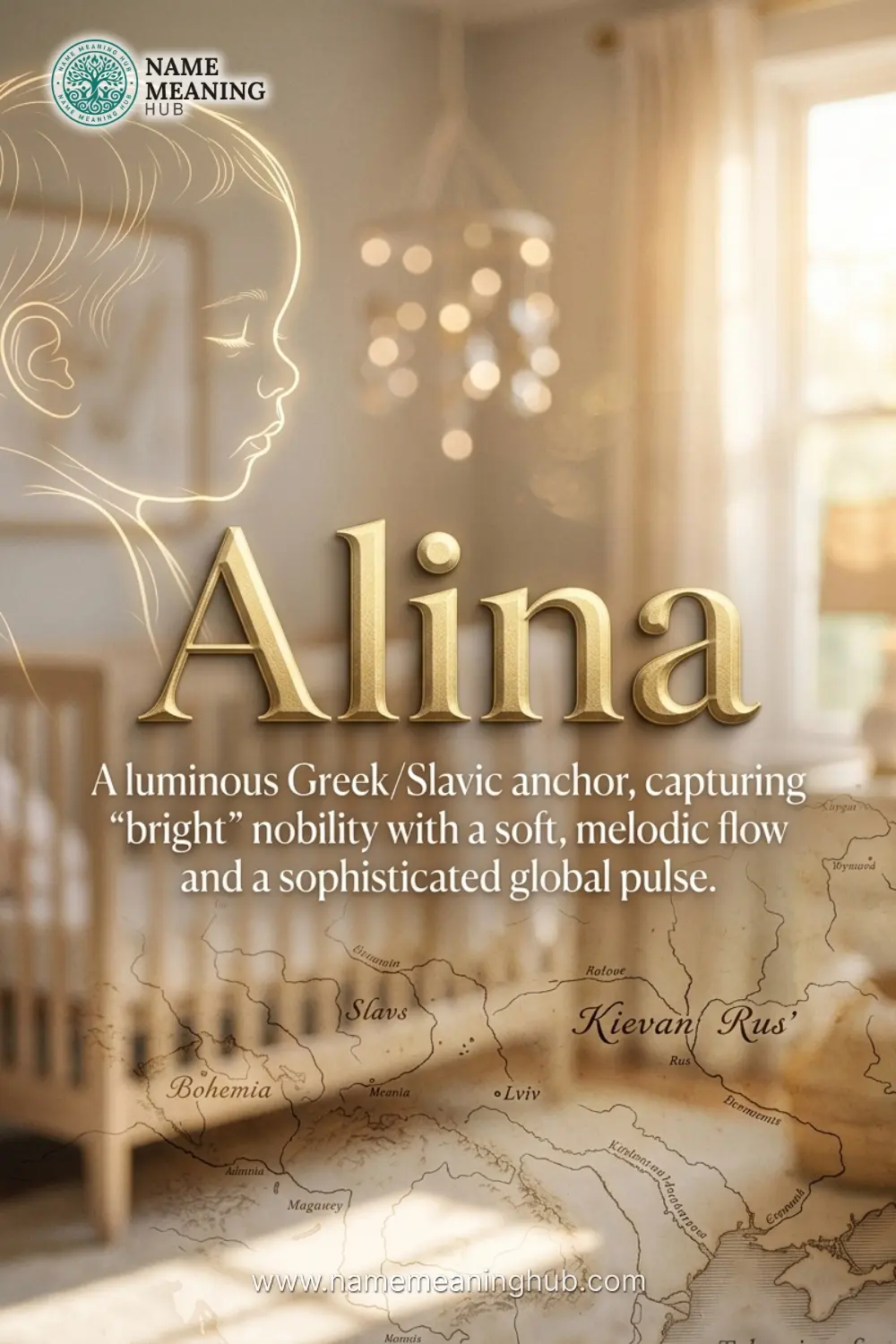
Three natural directions that open out of Alina
Alina and the middle-name question
Because Alina is already graceful and centrally stressed, middle names often do best when they either add crispness or deepen the line with something calm and classic. If you want the full pairing logic behind that contrast, see Alina middle names.
What nicknames Alina quietly invites
Alina has a flexible nickname world, from clipped forms like Ali and Lina to softer family diminutives that draw out different parts of the name’s sound. To see how those different moods shorten in real life, explore Alina nicknames.
Why pronunciation matters less than it looks as if it should
The name appears elegant on the page, but its stable IPA and intuitive stress pattern make it much easier to carry in real life than many equally polished names. If you want the full sound pattern behind that rhythm, read Alina pronunciation guide.
Why Alina keeps its light
Some names are attractive because they are soft. Others because they are strong. Alina succeeds because it refuses to choose between those two worlds. It makes brightness feel disciplined and nobility feel warm. Its Greek framing connects it to an older tradition of luminous names, its sound gives it ease and lift, and its modern rank confirms that it is fully alive in present naming culture without becoming commonplace. All of these layers point in the same direction.
That coherence is what makes Alina persuasive. The name does not rely on extravagance. It does not need explanation to feel elegant, and it does not need rarity to feel special. It is simply one of those names in which sound, meaning, and social impression line up almost perfectly. In the end, Alina offers something many families are quietly looking for: a name that shines, but knows how to stand still while doing it. That is why Alina remains so memorable. Its brightness has posture.