
Zev Pronunciation: Sound Breakdown for Confident Speech
The name Zev often becomes clear in the smallest public moment: a teacher reads it from a roster, a nurse calls it from a waiting-room screen, or a grandparent sees it written on a birth announcement and pauses for half a second. Three letters should feel simple, but the Z and final v give the name a compact intensity that can make people wonder whether there is more pronunciation hidden inside it. There is not. Zev is said in one clean beat: ZEV.
That directness is part of the name’s character. Zev is Hebrew in origin, means “wolf,” and has a pronunciation that matches its lean shape. It does not unfold over several syllables or rely on a nickname to become usable. The whole name begins with a voiced z, opens into a short central vowel in American pronunciation, and closes with a firm v. Say it once with care, and the name has already done what it came to do: arrive clearly, alertly, and without excess.
How Zev Is Actually Said: One Syllable, No Hidden Ending
Zev is pronounced ZEV. The name has one syllable, so the whole name receives the stress. There is no second beat, no silent extra vowel, and no drawn-out ending. The simplest pronunciation cue is to say it like the word rev with a z at the beginning.
| Element | Phonetic Detail | Quick Tip |
|---|---|---|
| Full pronunciation | ZEV | Say it in one short, clear syllable. |
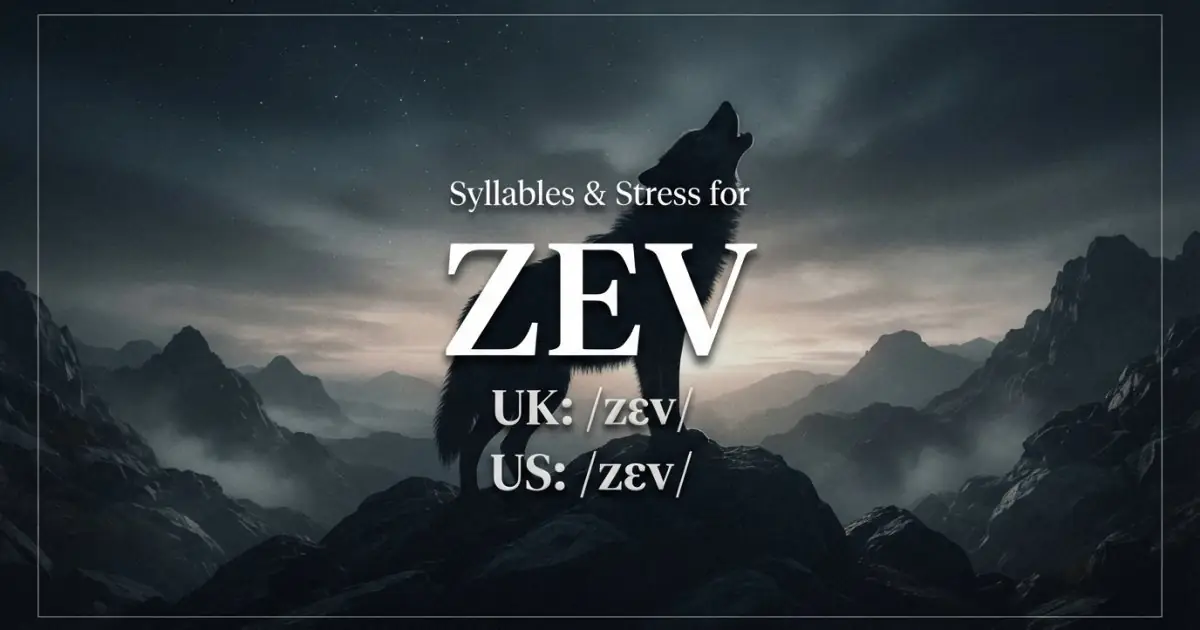
| U.S. IPA | /zɛv/ | The vowel is like the short e in bed or red. |
| U.K. IPA | /zev/ | The structure stays one syllable, with only a slight vowel-color difference. |
| Syllable count | 1 syllable | Do not add an extra sound after the final v. |
| Stress | Single stressed syllable | Because Zev is one syllable, the whole name is emphasized as one unit. |
| Ending sound | Final /v/ | Let the name close with a voiced v, not an f sound. |
The Sound Anatomy of Zev
Zev is short, but it is not flat. Its sound has a clear beginning, center, and ending. The opening z gives it energy. The vowel gives it warmth. The final v gives it a firm, vibrating close. These three pieces make Zev feel complete despite its size. Before focusing only on syllables and stress, it helps to step back into the fuller frame of Zev meaning.
The opening Z gives Zev its spark
Zev begins with /z/, the same sound heard at the start of zebra, zero, and zone. Linguistically, /z/ is a voiced fricative. A fricative is made by pushing air through a narrow space, and voiced means the vocal cords vibrate while the sound is made.
In plain terms, the beginning of Zev should buzz lightly. It is not an s sound. The difference matters: sev would sound thinner and incorrect, while Zev begins with that clear vocal vibration.
The center vowel keeps Zev crisp
In the U.S. pronunciation /zɛv/, the vowel is the short e sound heard in bed, red, and step. This gives Zev a crisp, grounded sound. It should not become zeev with a long ee vowel unless a family is intentionally using a different form.
The listed U.K. IPA form /zev/ keeps the same basic structure. Accent differences may make the vowel sound slightly different from speaker to speaker, but the name remains short and direct.
The final V gives Zev its weight
Zev ends with /v/, another voiced fricative. To feel the sound, say v and notice the vibration at the lips. The final consonant should be present but not exaggerated. It closes the name firmly, without adding a second syllable.
A common mistake is to soften the ending into f, especially in fast speech or in accents where final consonants may be less distinct. Zev should end with v, not f. That voiced ending is part of the name’s identity.
Zev Across American, British, and Everyday Accents
Zev is pronunciation-friendly because its structure is so simple. Across English-speaking accents, the main difference is vowel color. The name does not change syllable count, stress placement, or final consonant.
American pronunciation: short E and firm V
In American English, Zev is usually pronounced /zɛv/. The middle vowel sounds like the e in red. The name rhymes closely with rev. It should not rhyme with sleeve, and it should not become Zayv.
A useful American cue is: “Zev rhymes with rev.” That short comparison gives most speakers the correct vowel and the correct one-syllable rhythm immediately.
British pronunciation: same shape, slight vowel difference
In British English, the listed form is /zev/. The vowel may sound slightly different depending on accent, but Zev remains one syllable. The opening z and final v stay the same.
This makes Zev easy to carry across English-speaking settings. People may color the vowel according to their accent, but the name does not become a different word. The essential sound remains ZEV.
Everyday speech should not swallow the ending
Because Zev is so short, every sound matters. If the final v disappears, the name can become unclear. If the vowel is stretched, the name can drift away from its intended form. Careful everyday pronunciation keeps all three sounds audible: Z-E-V.
In introductions, the clearest explanation is simple: “Zev, pronounced ZEV, rhymes with rev.” That is usually enough.
Common Pronunciation Mistakes With Zev
Most mistakes with Zev come from trying to make the name longer or from misreading the vowel. Since the name is only three letters, people sometimes assume it may be a shortened form or that the pronunciation has a hidden twist. The intended pronunciation is much simpler.
Mistake 1: saying Zeev
One common mistake is pronouncing Zev as Zeev, with a long ee vowel. That changes the sound and makes the name feel like a different form. The intended pronunciation here is ZEV, with a short vowel in American speech.
A helpful correction is: “It’s Zev, like rev with a Z.” This keeps the correction friendly and gives a familiar sound anchor.
Mistake 2: saying Zayv
Another possible mistake is Zayv, with a long a sound. This may happen because some English names use e spellings in unexpected ways. Zev does not use that vowel. It should stay short and crisp: ZEV.
To practice the difference, say red, then rev, then Zev. The vowel should feel the same.
Mistake 3: ending with F instead of V
Zev should close with a voiced v, not an unvoiced f. The difference is small but meaningful. In v, the vocal cords vibrate; in f, they do not. Zev should end with that gentle vibration.
A simple practice trick is to touch the throat or lips when saying the final sound. If there is vibration, the v is present.
Sound Neighbors That Help Explain Zev
Sound neighbors are useful because Zev is short enough to explain with a single rhyme. The right comparison can prevent almost every pronunciation mistake. The way the name resolves at the end often decides which short forms feel natural in speech, and that becomes clearer in Zev nicknames.
The strongest rhyme cue
The clearest sound neighbor is rev. Zev rhymes with rev in American pronunciation. That comparison gives the correct short vowel and final v sound. It also makes the one-syllable structure obvious.
Other partial sound neighbors include dev as a tech abbreviation and the short ev sound in names like Evan’s first syllable. Still, rev is usually the cleanest cue because it matches both the vowel and ending.
Names near Zev in style, not pronunciation
Zev may remind people of names like Lev, Zeke, Zee, or Avi, but these are style neighbors more than exact pronunciation guides. Lev is especially close in shape because it is also short and ends in v. Zeke shares the energetic Z opening, but it has a different vowel and ending.
These comparisons can help describe Zev’s style, but for pronunciation, the best guide remains simple: ZEV, rhyming with rev.
Practice Lines for Saying Zev Naturally
Practice lines help because Zev is short enough that the name can be swallowed if spoken too quickly. These examples place it in realistic everyday contexts.
Everyday practice
- “This is Zev.”
- “Zev is pronounced ZEV.”
- “Zev rhymes with rev.”
- “We saved a seat for Zev.”
- “Zev will be joining the class today.”
Full-name practice
- “Zev Alexander has a longer formal rhythm.”
- “Zev Raphael sounds rooted and resonant.”
- “Zev Elias softens the full name.”
- “Zev Bennett keeps the name modern and polished.”
Correction practice
- “It’s Zev, with a short E.”
- “Zev rhymes with rev, not sleeve.”
- “The ending is V, not F.”
- “One syllable: ZEV.”
Why the Pronunciation of Zev Carries the Name’s Strength
Zev means “wolf,” and its pronunciation suits that meaning with unusual precision. It is alert, compact, and controlled. The voiced z starts the name with energy, the short vowel keeps it grounded, and the final v closes it with quiet force.
The name’s greatest practical advantage is that it is distinctive without being difficult. It may invite a quick spelling or vowel clarification, but once heard, it is easy to repeat. It has no hidden syllables, no complex stress pattern, and no silent letters. The whole name is carried in one clean sound.
For families considering Zev, pronunciation is part of the appeal. It gives the name its lean power. Say it plainly, let the final v land, and do not stretch it beyond what it is: ZEV.