
How to Pronounce Zariyah: Clear Pronunciation Help for Everyday Use
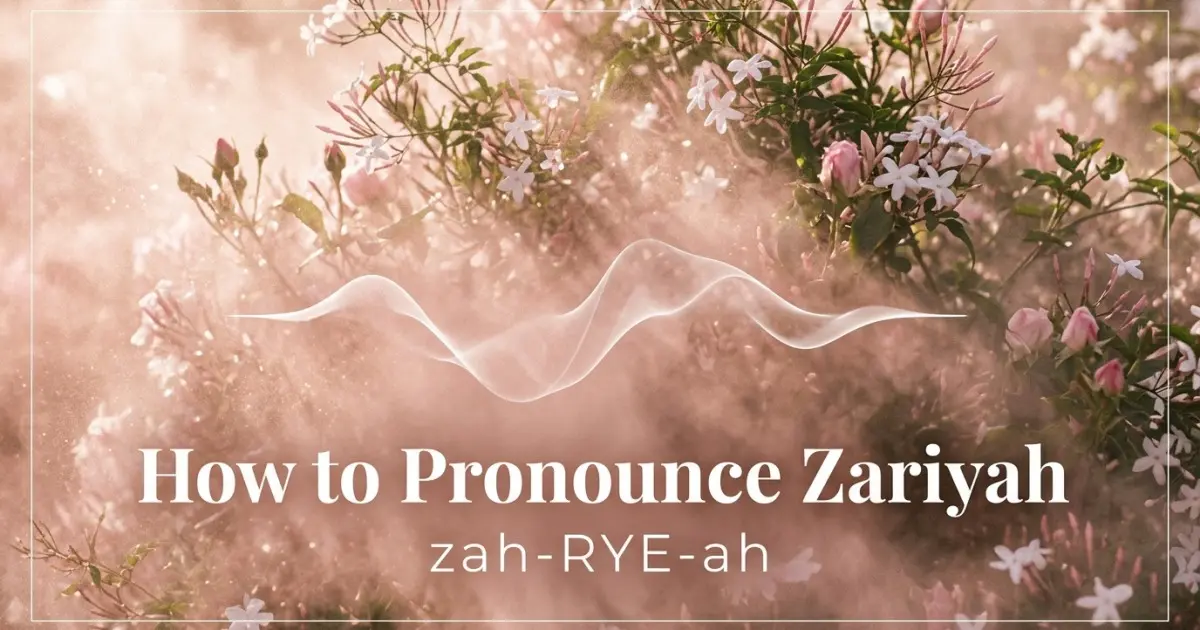
Zariyah is the kind of name that often creates a small but telling pause in public. A teacher reaches it on the attendance sheet. A receptionist sees it on a waiting-room screen. A barista glances at it on a cup and silently tests two or three possible rhythms before speaking. The hesitation usually comes from the spelling, not from the sound. On the page, Zariyah looks as though it might stretch longer, soften more, or carry a different stress than it actually does. Then someone says it aloud—zuh-RY-uh—and the name resolves immediately. What first looked intricate becomes clear, balanced, and surprisingly fluid.
That matters because Zariyah depends on sound to deliver its emotional effect. The meaning suggests blossom and radiance, so the pronunciation has to feel like something opening and brightening, not like something stiff or overworked. Spoken naturally, the name does exactly that. It begins gently, rises through a clear stressed middle, and then relaxes at the end. The result is one of the most attractive patterns a three-syllable name can have: soft entry, luminous center, graceful release.
How Zariyah is actually said when the voice takes over
| Element | Phonetic Detail | Quick Tip |
|---|---|---|
| Everyday pronunciation | zuh-RY-uh | Say it in three syllables, with the strongest stress clearly on the middle one. |
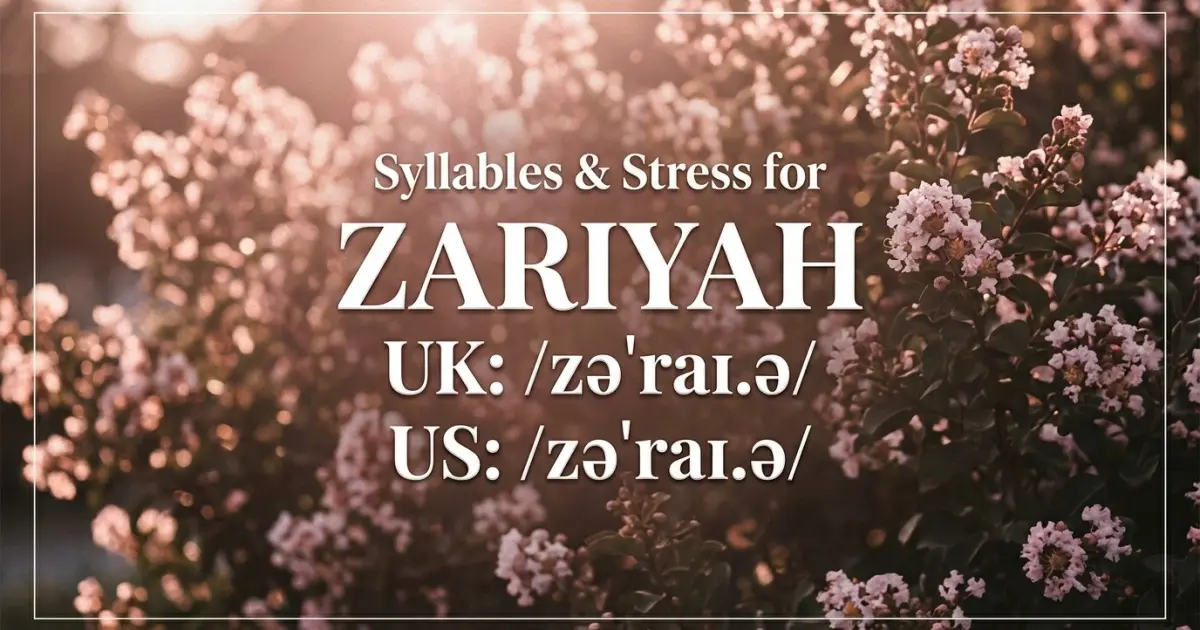
| IPA (US) | /zəˈraɪə/ | The opening is reduced and light, so do not hit the first syllable too hard. |
| IPA (UK) | /zəˈraɪə/ | The structure stays the same across accents, which makes the name more stable than it first appears. |
| Syllables | 3 | Think zuh + RY + uh, not two syllables and not a flattened first-stress version. |
| Stress pattern | Primary stress on the middle syllable | If the middle opens clearly, the entire name sounds more natural right away. |
| Opening consonant | Voiced fricative z | Start with a soft buzzing z, not a harsh or overly sharp attack. |
| Ending | Soft final -uh | Let the last syllable taper gently rather than stopping hard. |
Why Zariyah depends on the middle syllable more than the spelling suggests
The single most important fact about Zariyah is that the name lives in the middle. Many people seeing it for the first time are tempted to give the opening too much weight, partly because the spelling looks visually distinctive and partly because English readers often expect an unfamiliar name to announce itself at the front. But Zariyah works differently. The opening begins the line. The middle is where the name becomes itself. Before focusing only on syllables and stress, it helps to step back into the fuller frame of Zariyah meaning.
Why the opening of Zariyah should stay light
The first syllable, zuh, is intentionally modest in everyday pronunciation. The vowel is reduced, almost understated, which keeps the name from feeling overperformed. That matters because the initial z already gives the name brightness and quickness. If the speaker pushes too hard on the first syllable, the whole line can start to sound heavier and less graceful than it should.
Phonetically, the opening consonant is a voiced fricative. In practical terms, that simply means it begins with a smooth buzzing sound rather than a sharp stop. This gives Zariyah a softer entrance than names that begin with harder consonants. It glides in instead of striking.
Why the stressed center gives Zariyah its radiance
The middle syllable, RY, is where the name brightens. It carries the stress and opens into the diphthong /aɪ/, the same basic vowel movement heard in words like my and light. That opening movement is one reason the pronunciation feels so alive. The sound does not merely sit there. It unfolds. That is a perfect fit for a name associated with blossom and radiance.
This middle stress also gives the name its memorability. Without it, Zariyah could sound softer but less distinct. With it, the name gains a clear peak and a strong emotional center. The listener knows exactly where the name blooms.
Zariyah stays surprisingly stable across accents
The fact that the American and British IPA are identical is useful. It tells you that Zariyah is not one of those names whose identity shifts dramatically between major English accents. Speakers may color the vowels slightly differently in real life, but the structure remains the same: light first syllable, strong middle, soft finish. That stability makes the name easier to carry than many people might assume when they first see it written down.
What may vary a little in real speech
Some speakers may make the first syllable slightly fuller, while others reduce it more heavily. Some may keep the final -uh a touch clearer, while others let it soften into a very light release. But those are small accentual shades, not true changes to the architecture of the name. The ear still hears the same essential pattern.
This is one of Zariyah’s practical strengths. It looks distinctive, but once spoken, it behaves consistently. That helps the name move through classrooms, workspaces, and public introductions more easily than some other visually striking names do.
Why the ending of Zariyah should stay soft and brief
The last syllable matters because it finishes the line without competing with the middle. It should not be swallowed completely, but it also should not be made heavy. The ideal ending sounds like a gentle release. That softness is what allows the name to remain affectionate and human-sized, even while its center carries so much brightness.
If the final syllable becomes too prominent, the name can start to feel overcareful. If it disappears too much, the name loses some of its elegance. Zariyah sounds best when the ending is present but modest.
Where Zariyah most often gets mispronounced or overcorrected
Most errors with Zariyah come from overthinking. The spelling looks special enough that speakers sometimes assume the pronunciation must be more elaborate than it really is. In practice, the most common problems are surprisingly predictable.
The too-heavy opening mistake
One frequent issue is giving the first syllable too much emphasis, almost as if the name should begin with a bold announcement. That tends to flatten the beauty of the name because Zariyah is designed to rise into its center, not explode at the front. When the opening becomes too strong, the middle loses some of its bloom.
The flattened middle mistake
Another mistake is reducing the central RY too much, as though the name should stay soft all the way through. But the middle is where the name’s real shape lives. If that syllable is blurred or weakened, the pronunciation loses exactly what makes it memorable. The listener should hear a clear opening-out in the center.
The overcareful ending mistake
Some speakers also over-articulate the ending because they are trying to be respectful of the spelling. The intention is kind, but the result can make the name sound less natural. Zariyah does not need ceremony on every syllable. It needs balance. The last syllable should finish the name, not display itself.
How Zariyah becomes easier to hear beside nearby sound neighbors
One useful way to understand the sound of Zariyah is to compare it with names that live in a similar phonetic neighborhood. Compared with Zara, Zariyah is more expansive and more obviously musical because it carries an extra opening-and-release pattern. Compared with Mariah, it begins more softly and feels less dramatic at the front. Compared with names like Aria, it has more internal shape because the center is stronger and the opening consonant gives it more edge. These comparisons help reveal what Zariyah does especially well: it combines softness and structure in the same line. Once the sound pattern is clear, some shortenings stop feeling optional and start feeling natural, and the clearest map is in Zariyah nicknames.
The name is also helped by the fact that the stressed middle is so clear. That keeps it from disappearing into the larger crowd of modern flowing names. When pronounced correctly, Zariyah has its own contour.
How to practice Zariyah until it feels completely natural
The easiest way to settle Zariyah is not to repeat it like a puzzle word, but to place it inside normal speech. Once the name moves through actual sentences, the rhythm becomes much easier to feel.
Practice lines that let Zariyah settle into the mouth
- Zariyah is here.
- I just spoke with Zariyah.
- Zariyah will join us later.
- This belongs to Zariyah.
These phrases reinforce the same pattern each time: gentle opening, bright center, soft finish. After a few repetitions, the name usually sounds much less visually complex and much more naturally graceful than the spelling first suggested.
How to self-check the sound of Zariyah
Ask three quick questions. Is the first syllable light rather than forceful? Is the middle syllable clearly carrying the stress? Does the name taper gently at the end instead of stopping hard? If the answer is yes, the pronunciation is almost certainly where it should be.