
How to Pronounce Zariah: Quick Tips for Clearer Pronunciation
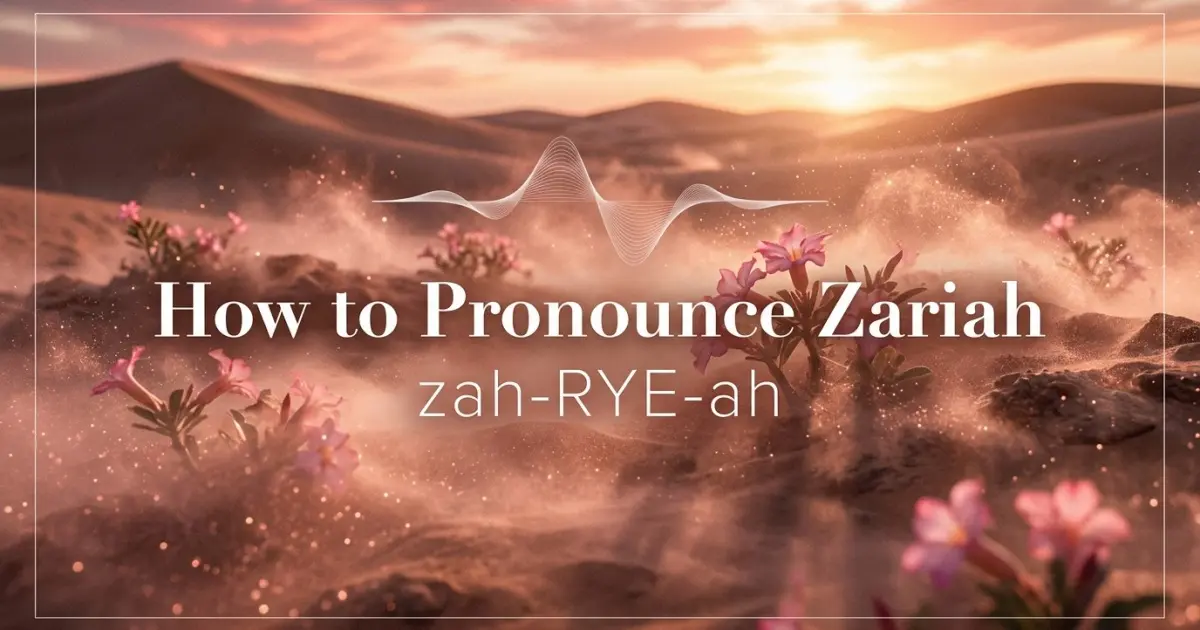
The real test of a name’s pronunciation usually happens in a small public moment. A teacher pauses at the attendance sheet. A nurse steps into the waiting room. A coach reads the roster for the first time. Zariah is the kind of name that can either glide through that moment or catch slightly, depending on whether the speaker sees its rhythm quickly enough. When it is said correctly, it sounds clean, bright, and effortless: zuh-RY-uh. When it is overthought, people may hesitate over the ending, flatten the middle, or drift toward a neighboring name they already know. That is why pronunciation matters so much here. Zariah is not hard, but it does have a definite shape, and that shape is part of its appeal.
That appeal comes from contrast. Zariah begins with a soft voiced fricative—the z sound—which gives the name a light buzz rather than a hard strike. Then it rises into its stressed middle syllable, RY, before softening again at the end. The result is a name that feels luminous in the mouth as well as on the page. Official pronunciation guidance supports a clear three-syllable reading in both U.S. and U.K. English, and that consistency is one reason the name carries so well. Once the stress is placed correctly, Zariah sounds exactly as it should: fluid, modern, and memorable.
What Zariah is actually asking you to say
| Element | Phonetic Detail | Quick Tip |
|---|---|---|
| Everyday pronunciation | zuh-RY-uh | Let the middle syllable carry the energy. That is where the name opens up. |
| IPA (US) | /zəˈraɪə/ | The first syllable is light, almost neutral, not heavily stressed. |
| IPA (UK) | /zəˈraɪə/ | The same core pattern works in U.K. English, which makes the name unusually stable across accents. |
| Syllable count | 3 syllables | Think in three clear beats, not two blurred ones. |
| Main stress | Second syllable: RY | If you stress the first or last syllable too much, the name loses its balance. |
| Opening sound | zuh | Start softly, like the beginning of “zebra,” but lighter and quicker. |
| Middle sound | RY | This is the brightest point in the name. It should sound open, not hurried. |
| Ending | uh | Finish gently. Do not force a heavy final vowel. |
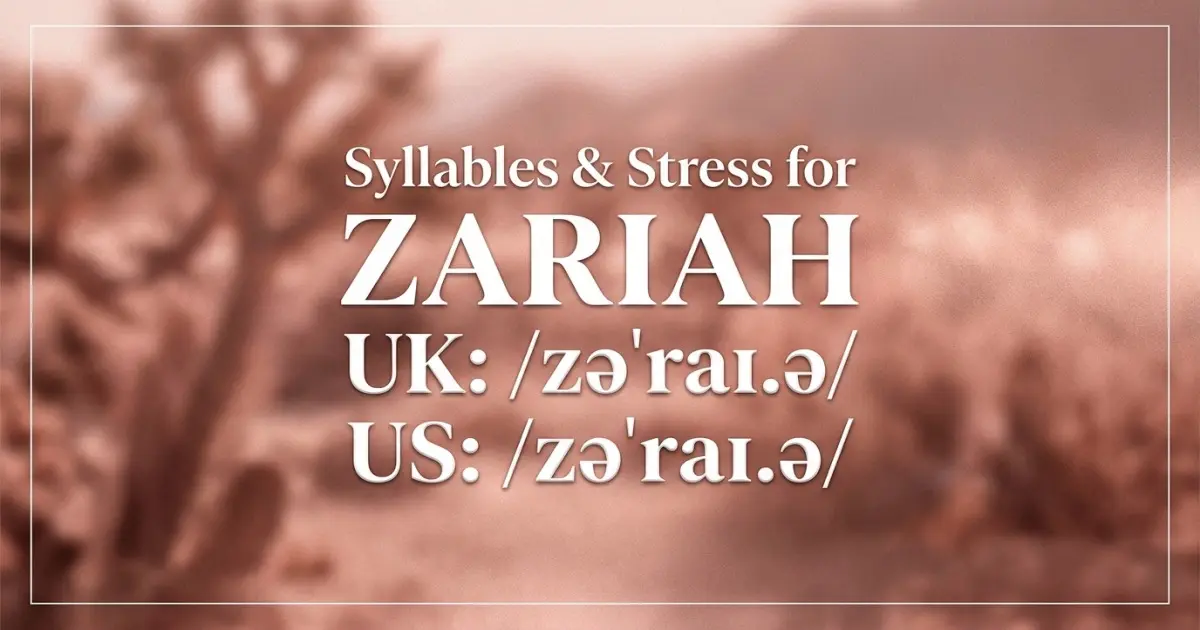
Zariah sounds graceful because the stress sits in the middle
The three-beat rhythm inside Zariah
Zariah works best when it is heard as three distinct syllables: zuh / RY / uh. That may sound simple, but many modern names are misread because speakers either collapse the weak syllables or try to give every part equal emphasis. Zariah should not be pronounced that way. Its beauty depends on a light opening, a bright central stress, and an easy finish. Pronunciation lands more fully when the name’s roots and history are already in view, so begin with Zariah meaning.
The first syllable, zuh, contains a reduced vowel, the sort of relaxed sound English often uses in unstressed positions. That is why the opening should feel quick and natural rather than over-enunciated. The z itself is a voiced fricative, which means the sound is made with a narrow passage of air and vocal cord vibration. In ordinary terms, it gives the name a soft electric beginning. It is not as blunt as a hard k or t. It hums into place.
Then comes the real center of the name: RY. This syllable carries the main stress, and it is what gives Zariah its lift. If the first syllable is a doorway, the second is the room itself. The diphthong in RY opens the sound outward, which is one reason the name feels bright and airy. The final uh then resolves the name softly. It should sound released, not clipped.
Why wrong stress changes the personality of Zariah
If someone says ZAR-ee-uh or zuh-ree-AH, the name starts to sound like something else. The musical line changes. Instead of rising in the center and floating out, it either becomes heavier at the front or too theatrical at the end. That is not a tiny technical difference. Stress affects personality. The correct version sounds modern and elegant. A misplaced stress can make the name feel awkward, overdone, or less distinctive.
The easiest memory rule is simple: Zariah blooms in the middle. Put the emphasis on RY, and the rest of the name tends to fall into place.
Zariah across accents stays steadier than many names in its style group
What remains the same in U.S. and U.K. English
One useful thing about Zariah is that the recommended IPA form is the same in both U.S. and U.K. English: /zəˈraɪə/. That shared transcription matters because many names that feel modern or internationally styled can shift dramatically between accents. Zariah largely does not. The opening remains light, the central stress remains strong, and the ending remains soft.
For families thinking long-term, this is a practical advantage. The name can travel. It does not depend on a highly local speech habit to sound correct. A listener may still bring slight differences in pace or vowel color, but the overall architecture of the name stays recognizable.
Where accent differences may lightly color Zariah
The most likely variations appear in how relaxed the first and final syllables become. Some speakers will say the opening zuh very lightly, almost as a quick lead-in to the stressed center. Others may articulate it more clearly. The same goes for the final uh: some speakers let it trail off more softly, while others shape it more distinctly. Neither choice is a problem as long as the main stress remains on RY.
In other words, accent may tint Zariah, but it should not rearrange it. The name’s identity lives in the middle stress and the three-beat pattern. Those are the features worth protecting.
Where Zariah is most likely to be mispronounced in everyday life
The pull of sound neighbors
Many pronunciation mistakes happen not because the name is difficult, but because the eye sees a familiar pattern and tries to substitute a better-known sound. Zariah sits near names like Zara, Zaria, and even Mariah in rhythm and styling. That means some speakers will instinctively lean toward one of those patterns instead of reading Zariah as its own shape. The way the name resolves at the end often decides which short forms feel natural in speech, and that becomes clearer in Zariah nicknames.
That is especially common with names ending in -iah, because English speakers encounter several different pronunciations in that visual family. Some people will expect a heavier ending. Others will want to spread the name into too many parts. Zariah resists both moves. It remains a simple three-syllable structure.
The mistake patterns people make most often
The first common mistake is giving the opening too much emphasis, producing something closer to ZAR-ee-uh. The second is stretching the ending and turning the final syllable into a performance. The third is smoothing the whole name so much that it loses the clear middle rise and sounds like a vague vowel cluster rather than a distinct name.
If you need to correct someone quickly, the easiest prompt is usually: “It’s zuh-RY-uh—the middle syllable is stressed.” That cue works because people tend to remember where the energy goes better than they remember abstract phonetic explanations.
Zariah becomes easy once you practice it in real sentences
Practice lines that sound like normal speech
The best way to settle a name into your mouth is to say it inside everyday language rather than as an isolated exercise. Try these lines aloud:
- Zariah is here.
- Can Zariah come with us?
- This is Zariah from my class.
- Zariah will call you back.
These kinds of lines train the rhythm naturally. They help you keep the middle stress without overperforming the other syllables.
A simple memory trick for Zariah
Think of the name as a small wave: light start, high middle, soft finish. Zuh lifts into RY and settles into uh. That image is useful because Zariah should feel smooth, not mechanical. Once the central rise is secure, the rest of the name sounds intuitive.
In the end, pronunciation is one of the reasons Zariah works so well. It looks luminous, and it also sounds luminous. The voiced fricative opening gives it a soft spark, the stressed middle gives it brightness, and the final syllable lets it land gently. That combination is why Zariah feels both modern and easy to say—a name with shape, but no strain.
Zariah Pronunciation FAQ
How do you pronounce Zariah in everyday English?
The most natural pronunciation is zuh-RY-uh. The middle syllable carries the main stress.
What is the correct IPA for Zariah?
The standard U.S. and U.K. IPA forms are both /zəˈraɪə/. That shared structure helps keep the pronunciation stable across both accents.
Which syllable is stressed in Zariah?
The stress falls on the second syllable: RY. That stress pattern is what gives the name its smooth, bright shape.
Why do people sometimes mispronounce Zariah?
Most mistakes come from drifting toward neighboring names or guessing the wrong stress pattern. Once people hear the correct version once—zuh-RY-uh—it is usually easy for them to repeat.