
How to Say Winona Correctly: Where the Emphasis Goes and How It Sounds
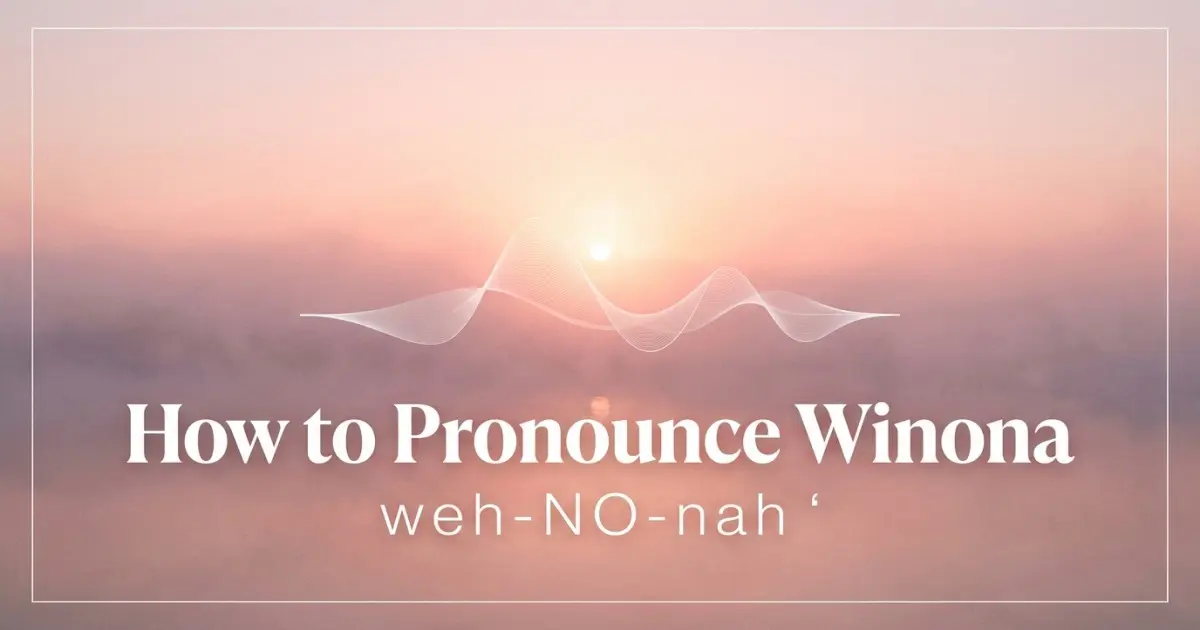
Winona is the kind of name that often reveals its character in a very ordinary moment: a teacher pausing over the class list on the first day of school, a receptionist glancing down and calling into a waiting room, a barista reading the order back across the counter. It looks lyrical enough that some people expect uncertainty. Then they hear it once—wi-NOH-nuh—and the pattern becomes clear. The name does not stumble. It opens lightly, gathers its weight in the middle, and settles into a soft ending. That middle stress is the whole secret.
This is why pronunciation matters so much with Winona. It is not a difficult name, but it is a shaped one. If the emphasis slips to the front, the name can sound flatter and less elegant. If all three syllables are given equal weight, it loses the poise that makes it memorable. Spoken naturally, though, Winona has one of the most satisfying rhythms in English naming: gentle at the edges, steady at the center, and easy to remember once heard aloud.
What Winona is really telling the ear when it is said correctly
| Element | Phonetic Detail | Quick Tip |
|---|---|---|
| Common Spoken Form | wi-NOH-nuh | Let the middle syllable carry the main energy. That is where the name becomes itself. |
| Syllable Count | 3 syllables | Do not flatten it into two beats. The first and last syllables are light, but they still matter. |
| Main Stress | Stress on the middle syllable: NOH | If the middle is not strongest, the name immediately sounds less natural. |
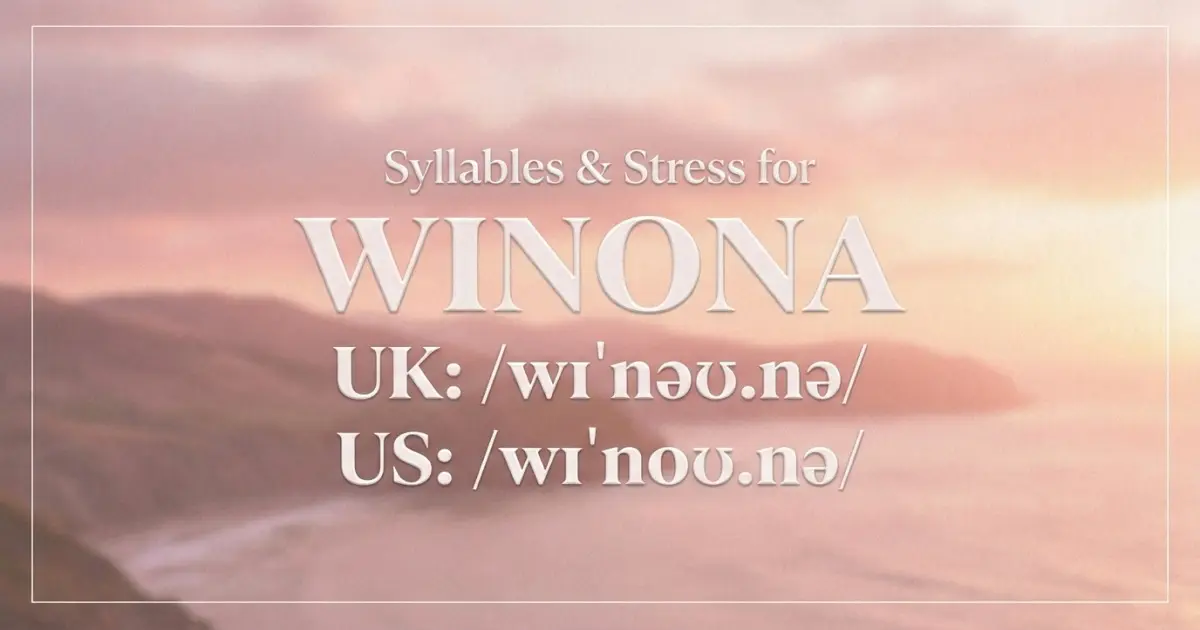
| US IPA | /waɪˈnoʊnə/ | In American English, the opening often sounds like “why,” followed by a broad, rounded middle. |
| UK IPA | /waɪˈnəʊnə/ | In British English, the middle vowel shifts slightly in color, but the rhythm remains the same. |
| Opening Sound | wi- /waɪ/ | Think of a light opening glide rather than a heavy, stressed first syllable. |
| Ending Sound | -nuh | Keep the last syllable soft and unstressed so the name finishes gently. |
| Closest Sound Neighbor | why + NOH + nuh | Breaking the name into three simple parts is the fastest way to say it cleanly. |
Winona works because the strength lives in the middle, not the front
The first syllable opens the name without claiming it
Winona begins with a glide, not a strike. The first syllable is light and quick, and in both American and British English it often begins with the w sound followed by the diphthong heard in “why.” This gives the name movement right from the start. It enters the mouth easily. That lightness is one reason Winona sounds graceful rather than stern. Pronunciation lands more fully when the name’s roots and history are already in view, so begin with Winona meaning.
But that first syllable is not meant to dominate. This is a common source of confusion with the name. Many English speakers instinctively expect names to be front-stressed, especially short or medium-length ones. Winona resists that pattern. The opening is a doorway, not the room itself. If the speaker tries to make the first syllable carry too much weight, the name loses its composure.
The middle syllable is where Winona settles into focus
The core of the name is NOH. This is the syllable that carries the main stress, and it is the reason Winona feels more grounded than its soft edges might suggest. Linguistically, the broad middle vowel gives the name space. Emotionally, it gives the name poise. The difference is immediate when you hear it aloud. wi-NOH-nuh sounds calm and self-possessed. A front-stressed version sounds thinner and less intentional.
This is a useful thing for parents to remember because stress often matters more than individual letters. Winona does not need exotic sounds to be distinctive. It needs the right syllable to carry the light. Once the stress lands in the middle, the rest of the pronunciation usually falls into place naturally.
The ending keeps Winona human and usable
The final -nuh is soft, relaxed, and unstressed. It is what keeps the name from sounding too ceremonial. Without that ending, Winona might feel more formal or more distant. With it, the name remains approachable. It resolves gently, which is part of why it works so well in everyday speech. Once the sound pattern is clear, some shortenings stop feeling optional and start feeling natural, and the clearest map is in Winona nicknames.
That soft ending also gives the name emotional balance. The first syllable opens, the second anchors, and the third releases. This three-part movement is what makes Winona so easy to remember after hearing it once.
Winona sounds slightly different across accents, but never loses itself
American and British Winona share the same architecture
The supplied IPA shows a small but important distinction. In American English, Winona is typically rendered as /waɪˈnoʊnə/. In British English, it is commonly rendered as /waɪˈnəʊnə/. The difference lies in the vowel quality of the middle syllable, not in the stress pattern or overall shape. In both accents, the middle syllable remains the strongest part of the name.
That matters because it means Winona is more stable than it may first appear. Some names drift noticeably between accents and develop competing spoken identities. Winona generally does not. It may sound slightly brighter or rounder depending on the speaker, but the name’s essential rhythm remains intact.
Accent changes the color of Winona, not the design
In many American accents, the middle can feel fuller and more resonant because the diphthong in NOH opens broadly. In many British accents, the vowel may sound a touch tighter or more compact. These are matters of color, not structure. The listener still hears the same three-syllable contour, the same light opening, and the same gentle finish.
This kind of stability is one of Winona’s practical advantages. It means the name can move comfortably across English-speaking settings without needing constant correction. That is a valuable quality in a name that already carries so much distinctiveness in its meaning and history.
How Winona gets misread when people trust the spelling more than the rhythm
The most common mistake is stressing the first syllable
The easiest way to throw Winona off balance is to place the stress on the opening syllable. English speakers do this with many unfamiliar or poetic-looking names because first-syllable stress is so common. But with Winona, that choice flattens the entire name. Instead of sounding poised, it begins to sound hurried or less musically shaped. The fix is simple: keep the opening light and let NOH carry the emphasis.
Once people hear the correct pattern, the mistake usually disappears. This is not a name that is hard to learn. It is only a name that needs its rhythm respected.
The other mistake is overpronouncing every syllable equally
The opposite problem can happen too. Some speakers, trying to be very careful, end up giving all three syllables equal force. That makes Winona sound stiff, as though it were being spelled aloud rather than spoken naturally. The middle syllable should be broader and stronger. The last should be lighter. The name wants asymmetry. That is what gives it elegance.
In plain terms, Winona should move. It should not march. The moment all three syllables become equally deliberate, the name loses some of its charm.
Winona sounds best when practiced in real sentences instead of isolation
Use Winona where it will actually live
The best test for a name is not a pronunciation list. It is ordinary speech. Try Winona in real sentences:
- “This is Winona.”
- “Have you met Winona yet?”
- “Winona will be here in a minute.”
- “I’m looking for Winona.”
- “Winona, can you come here please?”
These examples make the rhythm easier to feel. The first syllable enters lightly, the middle lands, and the last releases. In actual conversation, that pattern is what keeps Winona from sounding either too ornate or too vague. It gives the name its everyday grace.
A quick guide for first-time readers
If you are seeing the name for the first time, break it into three spoken chunks: why + NOH + nuh. Keep the first chunk light, the second strong, and the third soft. Do not overwork the vowels. Do not hammer the first syllable. Winona sounds best when it is allowed to flow naturally through its own stress pattern.
Phonetically, the name benefits from its balance of openness and softness. There are no crowded consonant clusters to make it feel harsh. At the same time, the broad stressed center prevents it from becoming breathy or insubstantial. This is why Winona can sound both gentle and self-possessed in the same breath.
Why Winona remains so usable once the rhythm is understood
Winona succeeds in pronunciation because it is graceful without being unstable. The opening invites the listener in. The middle gives the name its center of gravity. The ending makes it warm enough for daily life. Once people hear that pattern once, they usually retain it. The name is more intuitive in practice than it looks on paper.
That practical ease matters. A name can be beautiful, meaningful, and historically rich, but if it causes too much hesitation in real life, families often feel the friction. Winona avoids that. It asks only one thing of the speaker: respect the middle. Once that happens, the name does the rest of the work itself.