
Vienna Name Meaning: History, Emotion, and Enduring Style

Vienna is a place-name that behaves like a mood. Its formal meaning, “from the city of Vienna,” is geographic on paper, but the emotional experience of the name is far less administrative than that. Very few city names become personal names without bringing too much baggage with them. Some sound purely touristic, some feel too grand, and some never quite stop sounding like maps. Vienna is different. It moves out of geography and into atmosphere almost immediately. The name suggests elegance, order, culture, and a certain kind of cultivated stillness. It feels urban, but not harsh; refined, but not brittle. That transformation from place to temperament is what gives the name its fascination.
That is also why Vienna feels richer than many modern location names. It does not sound like it was chosen simply because parents liked to travel or because the city looked pretty on a list. It sounds inherited from a larger cultural imagination. The city behind the name has long carried associations with prestige, beauty, art, and old-world civility, and the given name borrows that whole emotional architecture in a single stroke. Yet Vienna also remains remarkably wearable. It has three balanced syllables, a clear stress pattern, and a softness that keeps the grandeur from becoming stiff. The result is a name that feels both elevated and livable. Vienna does not merely name a place. It names what happens when place becomes style.
Vienna's U.S. popularity rank over time, 1882–2024
Popularity statistics are based on official data from the Social Security Administration baby name records.
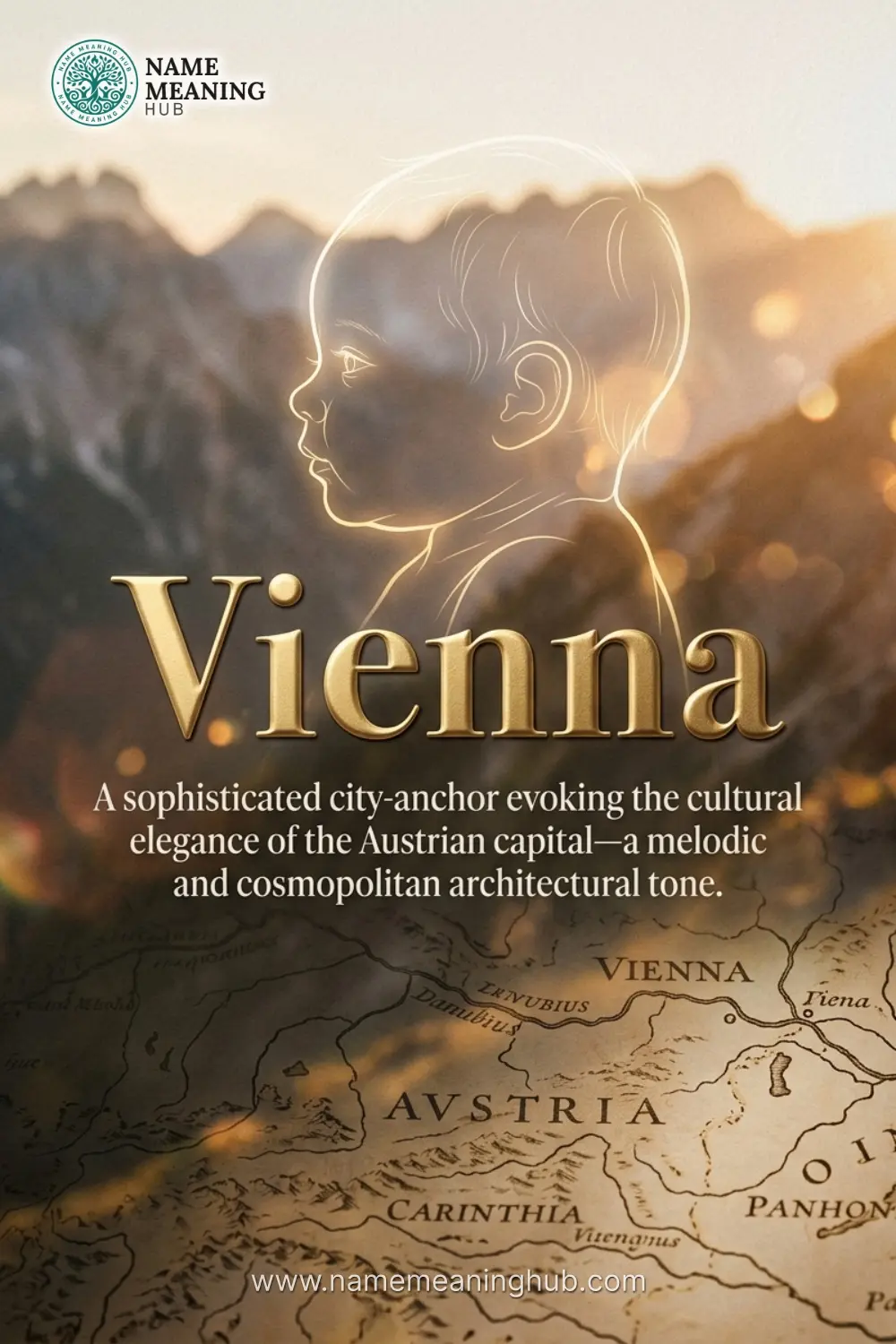
Vienna: A Sophisticated and Melodic Place-Name
Vienna reads as a name with one unmistakable center of gravity, where the girls’ side of the chart provide its overwhelmingly public visibility. Reaching a record peak in 2024, its rise often reflects a naming-culture interest in place-names that carry a professional and confident feel .
The lack of a secondary track reinforces its firm, traditional feminine identity. Referring to the Austrian capital, its melodic three-syllable sound provide a texture of refined charm that remains distinctive.
What Vienna Says Before the Story Even Begins
| Key Facts | Information | Quick Insight |
|---|---|---|
| Name | Vienna | It reads immediately as polished and cosmopolitan, even before its place-name origin is explained. |
| Primary gender use | Female | The current use is feminine, but the structure still carries the strength and clarity often found in place-derived names. |
| Primary origin | Latin | The Latin framing gives the name historical depth and keeps it from feeling like a purely modern invention. |
| Primary meaning | From the city of Vienna | This is a place meaning, but one that arrives charged with culture, refinement, and public imagination rather than simple location alone. |
| Pronunciation | vee-EN-uh | The centered stress gives the name movement and elegance without making it ornate. |
| IPA | US /viˈɛnə/; UK /viˈenə/ | The American and British forms are close enough that the name keeps a highly stable spoken identity. |
| Syllable count | 3 | Three syllables give Vienna enough room to sound graceful while still staying crisp in ordinary speech. |
| U.S. girls’ rank (2024) | No. 531 | Official data places Vienna in the recognizable-but-not-crowded zone, where it feels chosen rather than merely fashionable. |

Why Vienna Feels Like Culture Made Portable
Some names are beautiful because of what they mean. Others are beautiful because of what they evoke. Vienna belongs strongly to the second group. “From the city of Vienna” is, strictly speaking, a straightforward place-name meaning, but no one hears Vienna as a neutral line on a map. The name arrives wrapped in centuries of cultural suggestion. It feels formal without sounding stern, artistic without sounding bohemian, historic without sounding dusty. That is a difficult combination for any name to achieve, and Vienna does it almost instantly.
Part of the reason is that city names operate differently from flower names, gemstone names, or virtue names. A city name does not simply point to an object or ideal. It points to a whole human arrangement: architecture, memory, music, class, movement, public life, and reputation. When such a name succeeds as a given name, it usually does so because it compresses all that complexity into a socially elegant sound. Vienna succeeds because the compression works. The name takes the idea of a cultivated city and turns it into something intimate enough to be called across a room.
This is where Vienna feels especially modern. Many contemporary parents want names that sound worldly without feeling cold, and sophisticated without becoming inaccessible. Vienna offers exactly that balance. It has enough polish to feel distinctive, but enough softness to feel affectionate. It sounds like a name for a child who may grow into public confidence without being trapped inside a stage costume of grandeur. In other words, Vienna borrows prestige without becoming pretentious.
That ability to humanize grandeur is one of the name’s deepest strengths. The city behind it may be large in history and imagination, but the name itself remains surprisingly gentle. There is no bluntness in it. No heavy consonant wall. The cultural scale is large, but the personal tone is warm. That is why Vienna often feels so memorable. It suggests a world, but speaks like a person.

Vienna Began as a City Name and Then Learned to Behave Like a First Name
Historically, Vienna is one of those names whose meaning remains refreshingly transparent: it identifies someone as “from the city of Vienna.” One of the project name books treats Vienna directly as the capital city of Austria and notes that the name spread through Europe through the city’s power. That detail is useful because it explains why the name feels larger than a simple local place reference. Vienna did not remain a remote civic label. It became culturally legible across borders. Once a place acquires that kind of prestige, its name can begin to circulate as more than geography.

From map to name
That shift from location to given name is not trivial. Most place-names never become human names successfully because they remain too tied to logistics. They sound like train stations, not children. Vienna avoids that trap because the name already carries an aesthetic life beyond the map. It sounds musical, architectural, and slightly ceremonial, which allows it to move into first-name use more naturally than many other cities could.
This is also why Vienna feels more substantial than trendier destination names that are chosen mostly for novelty. It has historical and cultural density behind the syllables. Even when listeners do not consciously unpack that density, they can usually feel it. The name does not sound invented. It sounds transferred.
Why Latin framing matters
The Latin origin supplied in the fact pattern is important because it gives the name more historical continuity than a purely modern place-name choice would have. Latin-framed names often feel stable because they connect the name to older naming systems and older linguistic layers. That connection keeps Vienna from sounding like a fleeting travel-inspired fad. It places the name inside a longer European naming imagination, where city names, saint names, and cultural centers often moved together across time. To keep exploring names from the same background, see a wider list of Latin names.
The result is a name that can feel contemporary while still carrying an older foundation. That combination matters. A modern-sounding name becomes much more durable when it does not rely only on modernity to survive.
Vienna and the Special Problem of Place Names
Place names are always risky as given names because they can turn a child into scenery if they are not chosen carefully. A beautiful location does not automatically produce a beautiful personal name. The name has to do more than remind people of a destination. It has to become emotionally portable. That is the exact threshold Vienna crosses. It leaves the map behind quickly enough to become a social identity.
This is partly because Vienna sounds more like a human name than many other city names do. Compare it to names that remain stiffly geographical and the difference becomes obvious. Vienna has a feminine ending without becoming sugary. It has movement without excess flourish. It has cultural brightness without turning theatrical. That balance allows it to function as a first name rather than as a conversation starter alone.
It is also useful that Vienna does not depend on only one narrow image. A city name can fail when it reduces the person to one cliché: beach, luxury, neon, romance, trend. Vienna carries more varied associations. It suggests art, history, composure, beauty, and a kind of disciplined elegance. Because the image is broader, the name wears more easily. It gives the child more room to grow into it.
That room is what makes Vienna feel sophisticated rather than merely branded by place. A successful place-name should open possibilities, not narrow them. Vienna does.
How Vienna Sounds: Soft Entry, Strong Center, Elegant Release
Phonetically, Vienna is beautifully arranged. The name begins with a light, clean opening that moves quickly toward the stressed middle syllable: vee-EN-uh. That middle stress matters. It keeps the name from floating away into pure softness. The opening may be smooth, but the center gives the line definition. Then the final syllable releases the sound gently rather than abruptly. This is exactly the kind of architecture that helps a place-name become personal. It has grace, but it also has shape.
Why the middle syllable matters so much
The central EN is where the ear catches the name. Without that stress, Vienna could sound too airy, almost too delicate to hold its own cultural weight. But the stress gives the name a spine. It prevents the city associations from becoming diffuse and instead gathers them into one strong internal point. This is a major reason the name feels elegant rather than flimsy.
Why Vienna sounds more wearable than many glamorous names
Names with cosmopolitan or artistic associations sometimes become too lush in sound to work easily in everyday life. Vienna avoids that because its vowel pattern remains clear and its consonants are simple. There are no dense clusters to slow the name down and no extravagant ending to overstyle it. The sound remains accessible. That accessibility is crucial. A name can carry prestige only if people can still say it with ease.
Compared with neighboring names like Vivienne, Veronica, or Valencia, Vienna feels more transparent. It is less embellished than Vivienne, less weighty than Veronica, and less ornamental than Valencia. That transparency may be part of why it feels so fresh now. It suggests refinement without requiring dramatic performance.
Vienna in the Modern Imagination: Art, History, and Composure
Even when people do not consciously narrate it, Vienna often arrives with a cultural atmosphere around it. The city has long stood in public imagination as a place associated with old-world elegance, artistic seriousness, and refined public life. That atmosphere matters because it gives the name more emotional content than a purely scenic location name would possess. Vienna does not merely sound pretty. It sounds cultivated.
That sense of cultivation is one reason the name can feel especially appealing to parents who want something feminine without softness being the whole point. Vienna sounds beautiful, certainly, but its beauty is structured. It evokes concert halls and boulevards more readily than beaches or petals. The result is a femininity that feels composed rather than decorative. This gives the name an interesting maturity even in childhood. A little girl named Vienna can sound sweet, but she can also sound impressively self-contained.
There is also a subtle modern advantage here. In an era of naming where many choices are designed to feel breezy, rustic, or hyper-minimal, Vienna offers a more urban form of elegance. It does not feel homespun. It feels architectural. That distinction makes it particularly attractive for families who want grace without quaintness.
Vienna in the Charts: Recognizable, but Still Selective
Official Social Security Administration (SSA) data places Vienna at No. 531 for girls in 2024, and that rank captures the name’s current appeal very well. It is visible enough that most people will recognize it immediately, but not so overused that it has become flattened into background noise. This is often the ideal zone for a name with strong cultural associations. It can remain vivid because it is not yet exhausted. If you are weighing names with a similar gender profile, visit stylish girl names and meanings.
This matters especially for a name like Vienna, which depends partly on atmosphere. If the name became too common too quickly, some of its distinctiveness could evaporate. At its current level, it still feels like a choice made with intention. Parents choosing Vienna are not simply grabbing a default fashionable sound. They are selecting a particular kind of aesthetic identity: refined, worldly, and quietly dramatic.
The rank also suggests that the name has moved beyond novelty. It is not obscure enough to require constant explanation, and it is not widespread enough to feel generic. That middle space lets the name keep both its sophistication and its ease. Vienna sounds known, but not overhandled.
What Vienna Opens Into Next
Middle names that keep Vienna balanced rather than overstyled
Because Vienna already carries so much atmosphere and polish, the strongest middle names usually bring either clean classic structure or a quieter secondary elegance. The pairing decides whether the full name feels more literary, more modern, or more traditionally refined. If you want the full pairing logic behind that contrast, see Vienna middle names.
Nicknames that reveal Vienna’s more intimate side
Three-syllable names often produce natural shortenings in close family life, and Vienna is no exception. The best nicknames usually soften the grandeur and make the name more playful without disturbing its cultivated core. To see how those different moods shorten in real life, explore Vienna nicknames.
Pronunciation that gives Vienna its poise
vee-EN-uh is a large part of the name’s success. The middle stress prevents the sound from drifting into vagueness, while the gentle ending preserves the elegance that makes the name so distinctive. If you want the full sound pattern behind that rhythm, read Vienna pronunciation guide.
Why Vienna Still Feels Like a City Turned Into a Temperament
In the end, Vienna remains compelling because it does something difficult with unusual grace. It takes a place-name and makes it intimate. It borrows prestige without becoming cold. It carries city-scale cultural memory while still sounding affectionate in a nursery and natural in conversation. Its Latin framing gives it historical depth. Its place meaning gives it clarity. Its sound gives it movement and softness. And its current chart life allows it to feel recognizable without losing selectivity.
What remains is a name that feels less like travel and more like formation. Vienna suggests that a place can become part of a person not through tourism or novelty, but through atmosphere, posture, and cultivated feeling. It is a city made portable, but also a temperament made audible: composed, luminous, and quietly exact. That is why the name lingers. Vienna does not merely tell you where something comes from. It tells you what kind of grace a place can teach once it has been turned into a name.