
Best Middle Names for Victoria: Crisp, Classic, and Balanced Options
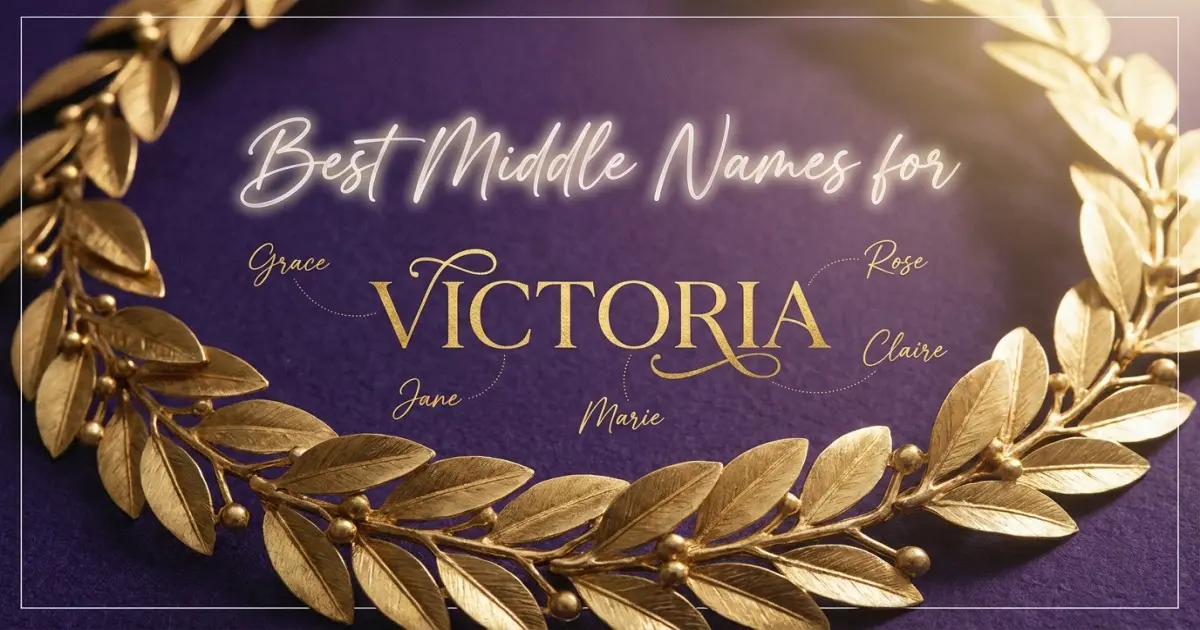
A middle name often carries the part of family intention that parents do not want to place under constant public light. The first name does the visible work. It is the name spoken at attendance, printed on certificates, called across a playground, and remembered after first introductions. The middle name does something quieter and, in many ways, more strategic. It holds tribute without burden, balances style against tradition, softens or sharpens rhythm, and gives a child a second register of identity that may matter more with age than it does in the nursery. In many families, the middle name is where affection becomes architecture.
That hidden role matters with Victoria. Official data shows the name remains a strong, familiar choice in the United States, and that familiarity gives it weight before the middle name even arrives. Victoria already sounds complete: four syllables, formal shape, a clear central stress, and a polished ending. Because the first name is so fully formed, the middle name behind it has unusual power. It can make Victoria feel sharper, softer, more aristocratic, more modern, more intimate, or more relaxed. With a name this stately, the middle name is not decorative. It is the element that decides whether the full name sounds grand, balanced, or overbuilt. To make sure the middle name does not pull against the first name’s roots, it helps to check the heritage and tone carried in Victoria meaning.
What different middle-name styles reveal about Victoria
| Style | Recommended Names | Why it works with Victoria |
|---|---|---|
| Classic and tailored | Jane, Claire, Ruth, Louise | These names steady Victoria’s length and formality, giving the full name a crisp, adult finish. |
| Soft and elegant | Elise, Noelle, Camille, Celeste | These preserve Victoria’s polish while adding warmth and a more lyrical flow. |
| Short modern contrast | Mae, June, Blake, Quinn | A compact middle keeps Victoria from sounding too ceremonial, especially with a longer surname. |
| Romantic and formal | Helene, Juliet, Simone, Vivienne | These deepen the sophistication of Victoria without sounding cluttered when chosen carefully. |
| Honor-name bridge | Rose, Anne, Marie, Grace | These names carry family meaning well and sit behind Victoria without competing with it. |

Why Victoria needs a middle name that controls the scale
Victoria already occupies space, so the middle name must earn every syllable
Victoria is not a blank canvas. It already sounds polished, historical, and socially established. That is part of its appeal, but it also means the middle name cannot be chosen casually. A short, neutral first name can absorb almost any middle and still recover its balance. Victoria does not work that way. Its four syllables, open ending, and formal profile mean the middle must either create useful contrast or extend the elegance with discipline.
This is why one-syllable middles often sound so strong behind Victoria. Victoria Jane, Victoria Claire, Victoria Ruth, and Victoria Grace all provide immediate structural relief. Victoria does the grander work. The middle comes in, cleanly and firmly, to keep the full name from floating away into excess. These combinations are particularly effective when the surname is long, hyphenated, or already rich in syllables.
That does not mean longer middles are wrong. It means they must justify themselves. A middle such as Elise or Noelle works because it is elegant without being heavy. A middle such as Camille works because it adds refinement while still bringing enough consonant clarity to keep the full line legible. The problem is never length alone. The problem is proportion.
Where Victoria benefits from contrast
The end of Victoria is soft and vowel-led, so middles with a clear consonant opening usually sound best after it. That is why Claire, Jane, Ruth, Louise, and Blake work so well. They reset the ear. They prevent the full name from becoming too airy. Vowel-opening middles can work, but they demand more care, especially if the surname also begins with a vowel. In quick speech, too many open transitions can make the name sound less defined than it looks on paper.
The practical rule is simple: Victoria already has scale. The middle name should either bring control or bring elegance with enough structure to keep the name from sounding ceremonial in everyday life.
Victoria with classic middles sounds established rather than heavy
Why old staples help a grand first name breathe
Classic middle names endure because they understand their social role. They do not demand the spotlight. They support the first name, absorb family meaning easily, and travel well across age groups. With Victoria, that quality becomes especially valuable. The first name already carries formality. A classic middle keeps that formality from tipping into stiffness.
Victoria Jane is one of the strongest examples because Jane trims the grandeur of Victoria without flattening it. Victoria Claire is equally strong, though slightly sharper and cooler in effect. Victoria Louise adds length, but the cadence stays controlled because Louise begins and ends with enough clarity. Victoria Grace softens the full name while still sounding polished. These are the combinations that tend to work in every scene: on a child, on a graduate, on a professional email, and on formal stationery.
There is also a psychological advantage to classic middles. Because Victoria can feel public-facing and stately, a familiar middle gives the full name a private stabilizer. It says the name can be impressive without becoming remote. That is often what families want from the middle-name position: not more grandeur, but more usability.
Honor names sit especially well behind Victoria
For families using the middle name as a place for tribute, Victoria is unusually cooperative. It carries Anne, Marie, Rose, and Grace with ease. Those names are simple enough not to fight with the first name, yet substantial enough to hold emotional meaning. Victoria Rose sounds softened but not sugary. Victoria Anne sounds restrained and classic. Victoria Marie feels broad and traditional. Victoria Grace brings a gentle moral clarity without becoming sentimental.
This matters because middle names often perform family diplomacy. They allow parents to honor someone important without handing the child an everyday name that feels borrowed. With Victoria, that diplomacy usually sounds elegant rather than negotiated.
Victoria can go soft or modern, but the pairing still needs discipline
Soft elegant middles that do not make Victoria overripe
Because Victoria already sounds formal, many parents are tempted to pair it with something equally romantic. That can be beautiful, but it is also where the name can start to feel overfurnished. The best soft middles behind Victoria are the ones that add warmth without simply repeating its grandeur. Victoria Elise, Victoria Noelle, Victoria Camille, and Victoria Celeste all do this well. They deepen the mood of the name, but they do not drown it.
Victoria Elise is especially effective because Elise is graceful but lean. Victoria Noelle feels festive and luminous, but still clear. Victoria Camille has more elegance and contour, though it works best when the surname is simple enough to absorb the extra richness. Victoria Celeste feels polished and slightly elevated, but not theatrical.
The danger lies in pairing Victoria with a middle that is too long, too breathy, or too similar in profile. Two highly formal, four-syllable names can produce a full name that feels better on paper than in life. A great combination should sound composed, not staged.
Short modern middles can make Victoria feel younger and cleaner
There is another route that works surprisingly well: contrast through modern compression. Victoria Mae, Victoria June, Victoria Blake, and Victoria Quinn all make the first name feel fresher. They keep its dignity, but they stop it from leaning too regal. This can be especially useful for parents who love the full weight of Victoria but want the complete name to feel current rather than ceremonious.
Victoria Mae softens the name without cluttering it. Victoria June is crisp and quietly stylish. Victoria Blake introduces more edge and modernity, which can be effective if the surname is traditional. Victoria Quinn gives the name a cool, contemporary finish, especially in families that prefer stronger contrast between first and middle.
These are excellent choices when the surname is long or formal. A short modern middle can keep the full name agile. It can also give the child more than one stylistic register to grow into: a stately full name in public, and a slightly more contemporary full combination on official documents and milestone occasions.
Where Victoria needs caution: initials, repeated grandeur, and surname drag
The first practical check is initials. Middle names spend much of their public life reduced to a single letter, so parents should always test the full initial set before deciding. With Victoria, the initial V is visually strong, which can be elegant, but it can also make awkward combinations more noticeable if the middle and surname letters do not cooperate. Pairing is not just visual; it is rhythmic, and the next useful step is how to pronounce Victoria.
The second caution is repeated grandeur. Because Victoria already sounds elevated, the middle should not push the full name too far into ceremonial territory unless that is fully intentional. This usually happens when parents pair Victoria with another highly formal, multi-syllabic, openly romantic name and then add a long surname. Any one part may be beautiful. Together, they can become exhausting.
The third issue is surname drag. A four-syllable first name leaves less room for indulgence in the middle if the surname is also long. That is why Victoria Jane Harrington-Mills often works better than something like Victoria Emilia Harrington-Mills. One is proportioned. The other risks sounding like every part wants equal spotlight. The middle name is often the only place parents can control pacing once the surname is fixed, so it makes sense to use that position strategically.
The best middle name for Victoria is the one that makes the full name livable
Victoria does not need help sounding impressive. It needs help sounding complete in real life. That is why the best middle names are usually the ones that give the name proportion. For some families that will mean classic restraint: Victoria Jane, Victoria Claire, Victoria Grace. For others it will mean softer elegance: Victoria Elise or Victoria Noelle. For still others it will mean a cleaner modern contrast: Victoria June or Victoria Quinn.
In the end, the right choice is usually the one that sounds inevitable once the surname is added. Say it as if you are calling a child downstairs. Say it as if you are introducing an adult in a formal room. Say it as if you are writing it on a diploma. If it works in all three scenes, the middle name is doing exactly what it should: turning Victoria from a strong first name into a fully balanced full name.