
Theo Pronunciation: Sound Breakdown for Confident Speech
The easiest way to understand Theo’s pronunciation is to imagine a teacher on the first day of school, scanning a class list and reaching that name without hesitation. Some names require cultural background, phonetic courage, or a second glance. Theo rarely does. It is one of those names that looks almost exactly like the way it is commonly said in English, and that everyday legibility is part of its appeal. Parents may choose it for style, history, or meaning, but in real life one of its quiet strengths is that most people say it correctly on the first try. That matters more than it sounds. A name that moves cleanly through a classroom, a waiting room, a sports roster, and a family gathering often feels easier to live in.
Official data shows Theo is now familiar enough in American life that its pronunciation has become broadly stable. Even so, there are still a few places where people hesitate: whether the first sound should be soft or hard, whether the middle should rhyme with “day” instead of “thee,” and whether the final syllable should be more English or more continental. Those are useful questions because Theo sits at the intersection of several naming worlds. It is Greek in origin, often heard as a shortened form of Theodore, and close in sound to names like Teo in other languages. So while the standard English pronunciation is straightforward, the details still deserve a careful look.
How Theo is usually said when people know the name well
The modern English form is compact, open, and light. Once you hear the rhythm, the name tends to stay fixed in the ear.
| Element | Phonetic Detail | Quick Tip |
|---|---|---|
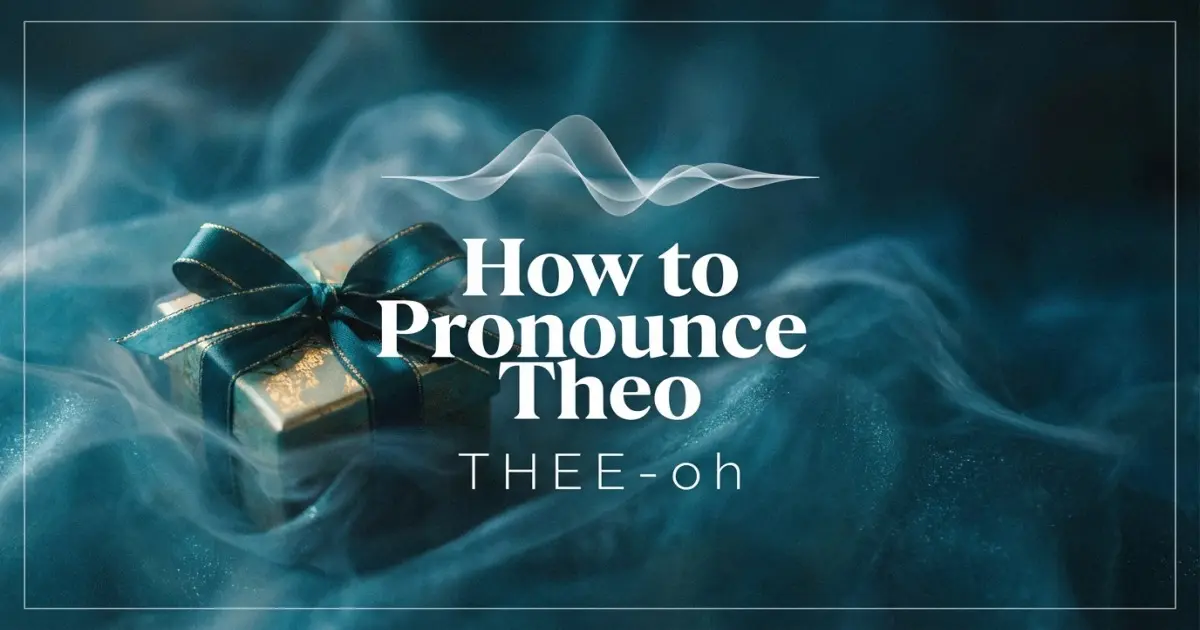
| Standard spoken form | THEE-oh | Say it in two clean beats, with the first syllable clearly stronger. |
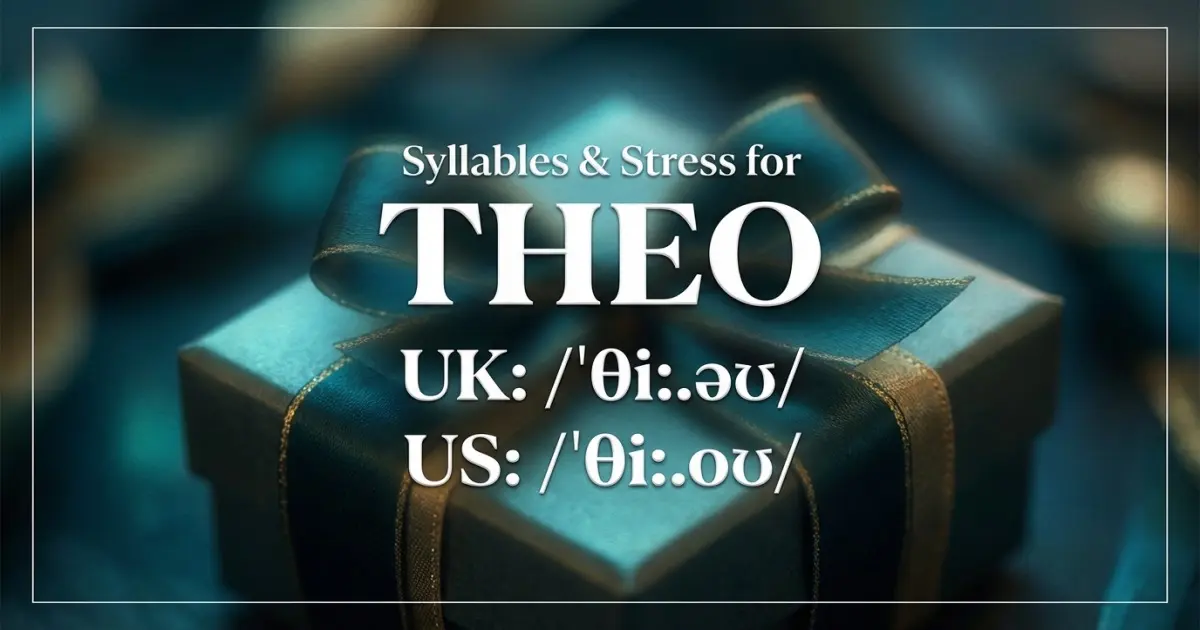
| US IPA | /ˈθiːoʊ/ | The first syllable sounds like “thee,” not “thay” or “tee.” |
| UK IPA | /ˈθiːəʊ/ | The second syllable is still an open “oh,” though the glide may sound slightly different in British speech. |
| Syllable count | 2 syllables | Keep it compact. Theo should not stretch into three syllables. |
| Stress pattern | First syllable stressed | The energy belongs on Thee, not on the final -oh. |
| Related-name caution | Different from Teo in some languages | If you want the common English Theo, stay with “THEE-oh,” not “TAY-oh.” |
Theo sounds easy because the mouth never has to fight it
Theo is one of those names whose simplicity is partly linguistic design. It begins with the English th sound, represented in IPA as /θ/, the same sound heard at the start of “think” or “theory.” That sound is softer and more breath-based than a hard t or d. Then the name opens into a long ee vowel. The result is a beginning that feels bright rather than abrupt. After that, the second syllable releases into oh, which keeps the name open and friendly instead of clipped. Before focusing only on syllables and stress, it helps to step back into the fuller frame of Theo meaning.
Why the first syllable gives Theo its identity
The first syllable is doing most of the work. It carries the stress, and it also carries the sound that makes Theo distinct from names like Leo, Teo, or Theo-related longer forms. If the opening is right, the whole name is almost always right. This is why the standard guide pronunciation THEE-oh is so useful. It captures both the correct stress and the right vowel shape in one move.
That opening also explains why Theo feels so bright in the ear. Long ee vowels often create a sense of lift in English names. They can make a name feel youthful, open, and clear. But because Theo begins with the softer th rather than a sharper consonant, it avoids sounding too brisk or clipped. It stays warm.
Why the ending keeps Theo from sounding too formal
The second syllable matters because it does not close tightly. Theo ends on an open oh sound rather than a stop consonant. That open ending is one reason the name feels modern and approachable, even though its roots are old. A name like Theodore can sound more formal because it keeps moving and lands with more weight. Theo is lighter. It begins clearly and then opens outward. The way the name resolves at the end often decides which short forms feel natural in speech, and that becomes clearer in Theo nicknames.
This is also why the name rarely sounds stiff in conversation. Even with a serious meaning behind it, the phonetic shape stays relaxed. Theo is one of those names that sounds as natural in a toddler’s voice as it does in an adult introduction.
Theo across accents stays remarkably recognizable
Theo travels well across English accents because its core structure barely changes. In both American and British English, the first syllable remains the same: THEE. The small difference lies mostly in the way the second syllable glides.
Theo in American English
In the United States, the common form is /ˈθiːoʊ/. The ending glides toward a rounded “oh,” much like the sound at the end of “go.” The overall impression is clean and forward-moving. Americans tend to make that final vowel fairly audible, which gives the name a tidy, bright finish.
Theo in British English
In the United Kingdom, the common form is /ˈθiːəʊ/. To most listeners, this difference is subtle rather than dramatic. The second syllable may begin from a slightly more central position before opening out, but the name is still recognizably Theo. It is not a different pronunciation so much as a different accent pathway to the same shape.
Where international confusion can creep in
The real pronunciation confusion often does not come from American versus British English. It comes from proximity to other language traditions. Naming references often distinguish Theo from Teo, noting that in places like Italy and Spain, Teo is commonly pronounced closer to TAY-oh. That is useful context because some English speakers who have seen both forms may assume they sound the same. In standard English usage, they do not. Theo is usually THEE-oh. If a family wants the English Theo, that is the pronunciation most people will expect and use.
Where Theo goes wrong in ordinary speech
Theo is not a difficult name, but it does have a few predictable error points. Most of them come from overcorrection, not total confusion.
When people harden the opening sound
The first mistake is replacing the English th with a hard t. That can happen when speakers come from language backgrounds that do not use the /θ/ sound regularly, or when they are moving too quickly and treat the spelling as more visually than phonetically obvious. In standard English, though, Theo begins with the soft voiceless th, not with “Tee.”
When people slide toward “TAY-oh”
This is probably the most common modern mix-up. Because Teo is a real related name in other languages and because English speakers sometimes generalize from foreign spellings they have seen, Theo can occasionally be misheard or misread as TAY-oh. But in ordinary American and British English, that is not the default. If the name is spelled Theo and meant in the current English way, THEE-oh is the clearest reading.
When the second syllable gets too much weight
Another smaller issue appears when speakers emphasize the last syllable too strongly, turning Theo into something more sing-song than it needs to be. Theo is front-stressed. The opening syllable leads; the ending follows lightly. If both syllables get equal force, the name can sound theatrical instead of natural.
The fix is simple: think of Theo as one clear stressed syllable followed by one open release. The first half identifies the name. The second half softens it.
Theo is easy to practice because the rhythm is so clean
The best way to learn a name’s pronunciation is to place it in ordinary speech. Isolated repetition can make even an easy name sound strange. Theo, however, settles very quickly when used in normal lines.
Practice lines that keep Theo sounding natural
Try these aloud:
- “This is Theo.”
- “Theo is ready.”
- “Can you help Theo with his coat?”
- “We named him Theo.”
If the name feels too airy when you say it, do not harden it. Just strengthen the first syllable slightly. If it feels too formal, lighten the second syllable and let the ending open naturally. The ideal version is clean, warm, and lightly musical: THEE-oh.
That is ultimately why Theo has become such a durable modern choice. It carries old meaning in a form that is easy to say, easy to hear, and hard to distort once learned. A name that is both distinctive and cooperative in speech almost always has an advantage. Theo has that advantage in full.