
Sylvie Name Meaning: Meaning, Heritage, and Gentle Strength
Sylvie is the kind of name that makes old material feel light in the hand. Its meaning, “from the forest,” belongs to one of the oldest and deepest landscapes in naming: woods, trees, shade, growth, and the sense that life has roots somewhere larger than the self. But Sylvie does not carry that inheritance in a heavy or mythic way. It takes the older woodland world and turns it into something intimate, polished, and breathable. That is the first thing to understand about the name. Sylvie is not wilderness shouted from a mountaintop. It is the forest brought close enough to become personal.
That helps explain why the name feels both classic and surprisingly fresh. Its French form softens what could have been an older, more formal woodland name into something bright and modern in the ear. Yet the underlying idea remains ancient: woods, forest, the life of trees, the sense of being connected to a living landscape rather than to abstraction alone. Research in naming traditions repeatedly links Sylvie to Sylvia and ultimately to Latin silva, “woods” or “forest,” while one reference also notes that Sylvia was already a familiar name in Roman times. In other words, Sylvie sounds airy, but it stands on very old ground.
Sylvie's U.S. popularity rank over time, 1909–2024
Popularity statistics are based on official data from the Social Security Administration baby name records.
Sylvie: A Chic and Vowel-Rich Vintage Revival
Sylvie reads as a name with one unmistakable center of gravity, with the girls’ side of the chart carrying most of its recent momentum and visibility. Its rise in the modern era likely suggests revival energy, as parents rediscover “nickname-style” variants that feel both artistic and approachable .
The lack of crossover into other lanes reinforces its firm feminine identity. Its soft, French sound helps it feel durable and stylish, fitting comfortably beside other vowel-rich modern names.
Sylvie in the facts that quietly define it
| Key Facts | Information | Quick Insight |
|---|---|---|
| Name | Sylvie | The spelling feels light and modern, but the name belongs to a much older woodland tradition. |
| Primary usage | Female | Its present-day identity is clearly feminine, though the forest-rooted meaning gives it a steadier center than many airy-sounding names. |
| Origin | French | The French form is what makes the name feel intimate and elegant rather than classically formal. |
| Meaning | From the forest | This meaning gives the name more than prettiness. It ties Sylvie to place, depth, and living continuity. |
| Pronunciation | SIL-vee | The clean two-syllable structure makes the name easy to carry, even though its roots are older and richer than they first appear. |
| IPA | US: /ˈsɪlvi/ · UK: /ˈsɪlvi/ | The broad sameness across accents helps Sylvie feel international without becoming unstable. |
| Syllables | 2 | Two syllables give Sylvie a quickness that keeps the woodland meaning from sounding rustic or heavy. |
| U.S. girls’ rank (2024) | No. 360 | Official data suggests a name that is clearly present in modern use, but still distinct enough to feel chosen rather than automatic. |

Sylvie begins in the woods, but not in the dark
Forest names can move in very different directions. Some feel rugged, wild, or overtly earthy. Others feel shadowed and mythic. Sylvie does something subtler. It carries the forest into the human world without losing its freshness. That is partly because the word behind it is so old and elemental. Woods and forests are not decorative images in naming history. They are places of shelter, danger, fertility, growth, silence, and memory. A name that means “from the forest” inherits all of that, even when its sound is graceful.
But Sylvie does not sound like a name trying to dramatize nature. It sounds edited. That is the power of its French shape. The woodland root remains, but the form has been refined into something lighter and more intimate. This matters because it changes the emotional register of the name. Sylvie suggests trees, but not rough bark. Shade, but not gloom. It gives the idea of nature without insisting on rusticity. For many modern parents, that balance is exactly the appeal.
The attached naming references support that interpretation strongly. One describes Sylvie as an English, French, and Danish form of Sylvia, all from Latin silva, “woods, forest.” Another calls Sylvie a diminutive form of Sylvia and notes that it is popular across the English-speaking world. Put together, those details show something important: Sylvie is not an invented woodland mood-piece. It is an established form with a real linguistic history and a long family line behind it. For related names from the same origin family, see names linked to French history.
That history gives the name more credibility than newer nature choices often have. Sylvie sounds light, but it is not slight. It feels modern because the form is trim and musical. It feels trustworthy because the root is old.

How Sylvie became the lighter face of Sylvia
The most useful way to understand Sylvie is to place it beside Sylvia. Sylvia is the older, more explicitly classical form; Sylvie is what happens when that classical form is softened, narrowed, and made more intimate. Naming books repeatedly make this relationship clear. Some list Sylvie as a form of Sylvia. Others define Sylvia as coming from Latin silva and then treat Sylvie as one of its natural descendants. That means Sylvie carries the whole woodland inheritance of Sylvia, but in a different social register.
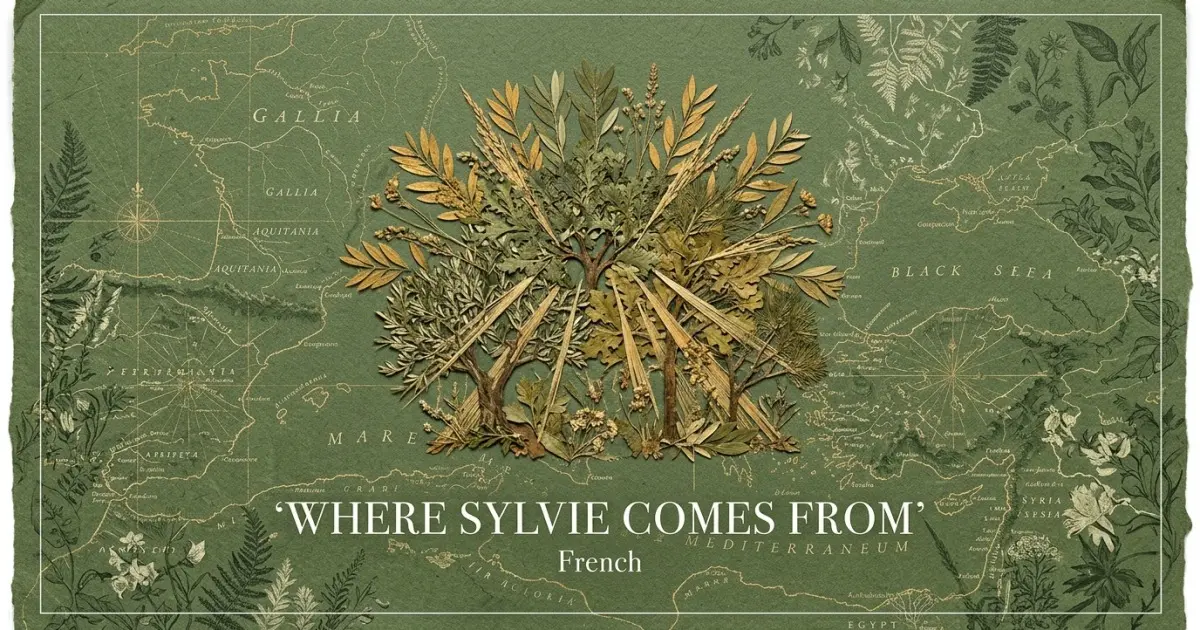
Sylvie keeps the meaning but changes the social mood
This shift in register matters a great deal. Sylvia has long had a slightly more formal literary aura. One reference even anchors it directly in Roman history by noting that Sylvia was the name of the mother of Romulus and Remus, the founders of Rome. That kind of historical association gives Sylvia public weight. Sylvie inherits the same root, but changes the sound-world. It feels less Roman and more conversational, less stately and more warm. The forest stays; the stiffness leaves.
That is why many parents who admire Sylvia still end up preferring Sylvie. They want the woods, the Latin lineage, the classical depth—but they want it in a form that sounds lively rather than ceremonious. Sylvie answers that desire elegantly. It is woodland history translated into a more intimate key.
Sylvie as a French answer to older botanical names
There is another important shift here as well. Sylvie belongs to a broader modern preference for names that sound natural but not raw. Willow, Hazel, Juniper, and other tree- or plant-based names announce their botanical identity more directly. Sylvie works by indirection. It does not say tree. It says forest. It does not name a species. It names an environment.
That difference gives the name more breadth. A tree name can feel highly visual. A forest name feels atmospheric. It suggests a world rather than a single object. Sylvie therefore has more room to move emotionally. It can sound poetic without becoming ornate, and natural without becoming literal.
Sylvie sounds bright because the forest has been refined into two syllables
Phonetically, Sylvie is one of those names whose efficiency helps its elegance. It is only two syllables long, which is remarkable when you consider how much history and imagery it contains. The first syllable, SIL, is crisp and easy. The second, -vee, opens the name lightly and gives it lift. Nothing in the sound is heavy. That is one of the reasons the woodland meaning never feels ponderous.
The structure is also clever. The opening consonant cluster is clear without being harsh. The name moves from the soft hiss of s into the liquid l, then lands in the bright closing vowel of -vee. This gives Sylvie a sense of quiet motion. It is a name that seems to glide, which suits its natural meaning beautifully.
Why Sylvie feels lighter than Sylvia
Compared with Sylvia, Sylvie sounds less architectural and more fluid. Sylvia has a fuller, more classical ending. Sylvie ends on a bright vowel and stops sooner. That makes it feel younger in energy, though not necessarily younger in quality. This is not childishness. It is agility. The forest root is still there, but the French form turns it into something more nimble.
The cross-accent stability helps Sylvie travel
The fact-packet pronunciation is the same in American and British English, and that practical consistency matters. Many names with French or continental polish change noticeably when they cross accents. Sylvie changes less. That makes it easy to carry internationally and helps explain why reference books describe it as present not just in French, but also in English and Danish settings. A name that holds its shape in different mouths often lasts longer in real life.
There is also a subtle distinction in how naming references hear it. One guide gives English SIL-vee and French or Danish SEEL-vee for related usage contexts, which shows that the name can take a small accent shift without losing itself. That flexibility suits Sylvie’s character. It is refined, but not fragile.
Sylvie is a woodland name with literary air
Nature names do not all carry the same cultural weight. Some are almost purely visual. Some are strongly mythic. Some arrive through literature. Sylvie has a touch of all three, but its literary air is especially worth noticing. It sounds like a name that belongs in prose rather than on a novelty birth announcement. That feeling is partly due to its relationship to Sylvia, a name with clear classical and literary history, and partly due to the way the French form itself has been circulated in poetry, novels, and refined European naming traditions.
One of the attached books even places Sylvie among explicitly French female names, which helps clarify the kind of atmosphere the name now carries in English-speaking contexts. It does not sound merely botanical. It sounds cultivated. Yet that cultivation is built on forest rather than perfume. That distinction matters. Sylvie feels polished, but it never completely loses the green shade behind it. If this is the kind of name you are drawn to, you can explore more in popular girl names and meanings.
This is one reason the name can appeal to parents who want something softer than Sylvia, but deeper than a more obviously fashionable nature choice. Sylvie offers atmosphere without vagueness. It sounds artistic, but its meaning is concrete. It sounds light, but its root is ancient. Those balances make it unusually versatile.
Why Sylvie feels current now without sounding newly made
Official Social Security Administration (SSA) data shows Sylvie ranked No. 360 for girls in the United States in 2024. That is a telling place for the name to stand. It is clearly established enough to be known, but not so common that it has become background noise. This is often the ideal position for names with a touch of elegance or distinctiveness. Too rare, and they can feel impractical. Too common, and they lose contour. Sylvie sits in the middle, which suits it.
The name also aligns with several modern preferences at once. Parents increasingly like nature-linked names, short feminine forms with European polish, and names that feel vintage-adjacent without becoming dusty. Sylvie checks all three boxes. It sounds fresh because it is brief and bright. It sounds grounded because it comes from an old Latin root. It sounds stylish because the French form gives it a little lift beyond straightforward English botanical names.
This helps explain why the name can feel newly visible while still seeming as though it has always existed. Sylvie is not trying to invent a niche. It is re-entering modern use through qualities that were already there: clarity, forest depth, and a light French finish.
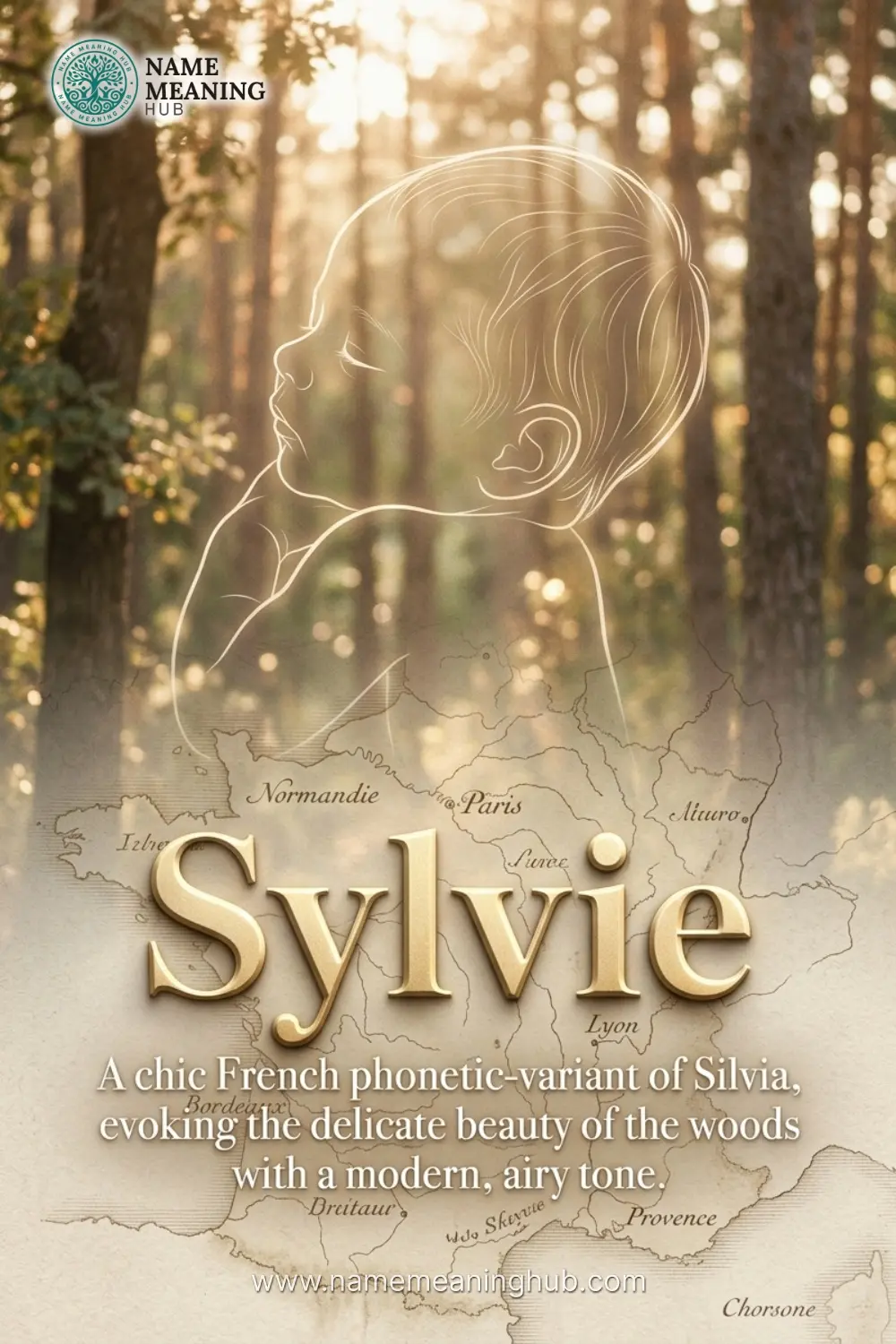
The next three questions parents usually ask after landing on Sylvie
What kind of middle names help Sylvie sound fuller without losing its quickness?
Because Sylvie is so compact, the middle name often does more shape-making than usual. Longer or steadier middle names can add depth, while very light middles can make the full combination feel too airy. If you want the full pairing logic behind that contrast, see Sylvie middle names.
Will Sylvie naturally shorten into nicknames, or does it usually stay whole?
Sylvie often stays whole because it is already brief and affectionate in sound, but it still leaves room for playful family shortenings and brighter clipped forms in intimate circles. To see how those different moods shorten in real life, explore Sylvie nicknames.
Is Sylvie easier to pronounce than many French-leaning names?
Yes. Its two-syllable structure and broad pronunciation stability make it much easier to carry in daily English-speaking life than many names with similar continental elegance. If you want the full sound pattern behind that rhythm, read Sylvie pronunciation guide.
Why Sylvie still sounds like the forest made intimate
What finally makes Sylvie memorable is not only that it means “from the forest.” It is the way the name changes the forest as it carries it. Sylvie does not sound vast, dark, or overwhelming. It sounds human-sized. It takes an old landscape and turns it into a personal atmosphere. That is a difficult thing for a name to do well. Many nature names remain either too literal or too stylized. Sylvie finds a middle path.
It also carries one of the most convincing kinds of elegance: the kind that is built on something alive. The woods behind Sylvie are not ornamental wallpaper. They are the root of the name’s sense of depth, shade, and continuity. The French form simply teaches that older material to move with more grace.
That is why Sylvie continues to feel both modern and enduring. It is brief, but not thin. Pretty, but not weightless. Natural, but not raw. In the end, Sylvie sounds like what its meaning promises: not the forest at a distance, but the forest drawn close enough to become part of a life.