
How to Pronounce Simon: An Easy Sound-by-Sound Breakdown
You can hear whether Simon has been truly understood in places where nobody has time to rehearse. A teacher at morning roll call. A receptionist calling a family forward. A barista reading the name from a cup without looking up twice. Simon usually passes that test well. It is familiar, compact, and visually clear. But that ease can be deceptive. Because the name looks so simple, people sometimes say it too casually, flattening the second syllable or over-hardening the first. The result is not a dramatic error, but it can drain the name of the calm intelligence that makes it appealing.
That is what makes Simon worth pronouncing carefully. It is not a difficult name, but it is a shaped one. The first syllable carries the light and energy. The second syllable relaxes the whole name before it lands. Said well, Simon feels bright, humane, and composed. Said too sharply, it can sound clipped. Said too lazily, it can sound blurred. The good news is that the correction is simple: once you hear the two-beat rhythm clearly, Simon becomes one of the easiest classic names to say naturally.
What Simon is actually asking your mouth to do
The name may be common, but its sound still depends on a few small details going right. Simon works best when the stress, the long opening vowel, and the softened second syllable all stay in proportion.
| Element | Phonetic Detail | Quick Tip |
|---|---|---|
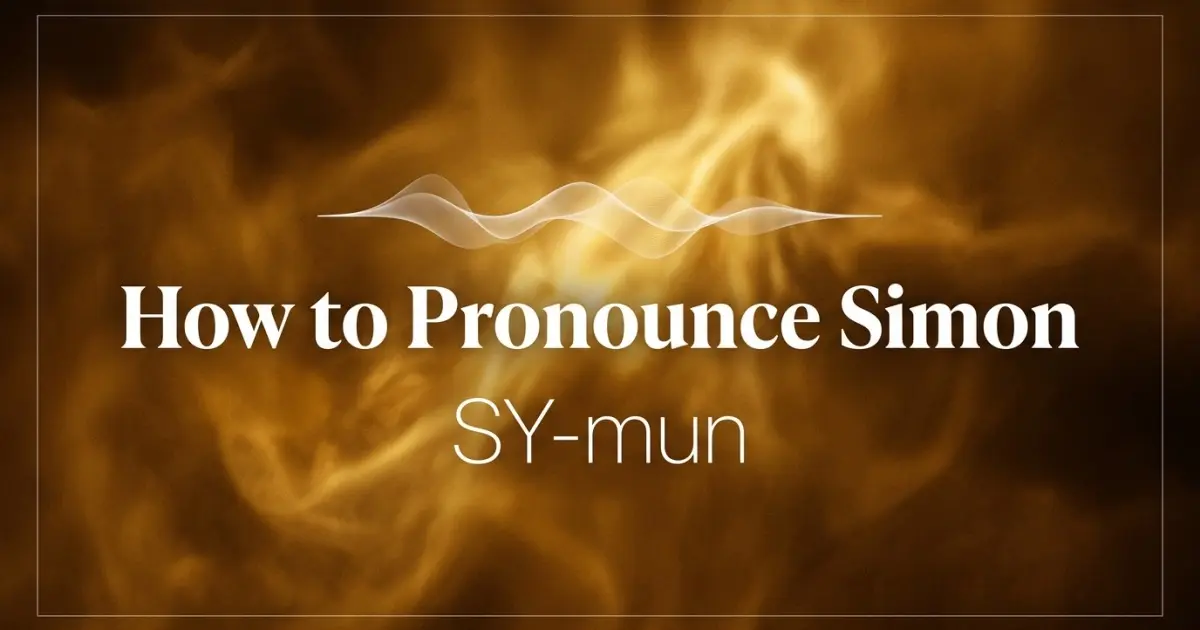
| Everyday pronunciation | SY-mun | Think of a bright first beat followed by a softer second one. |
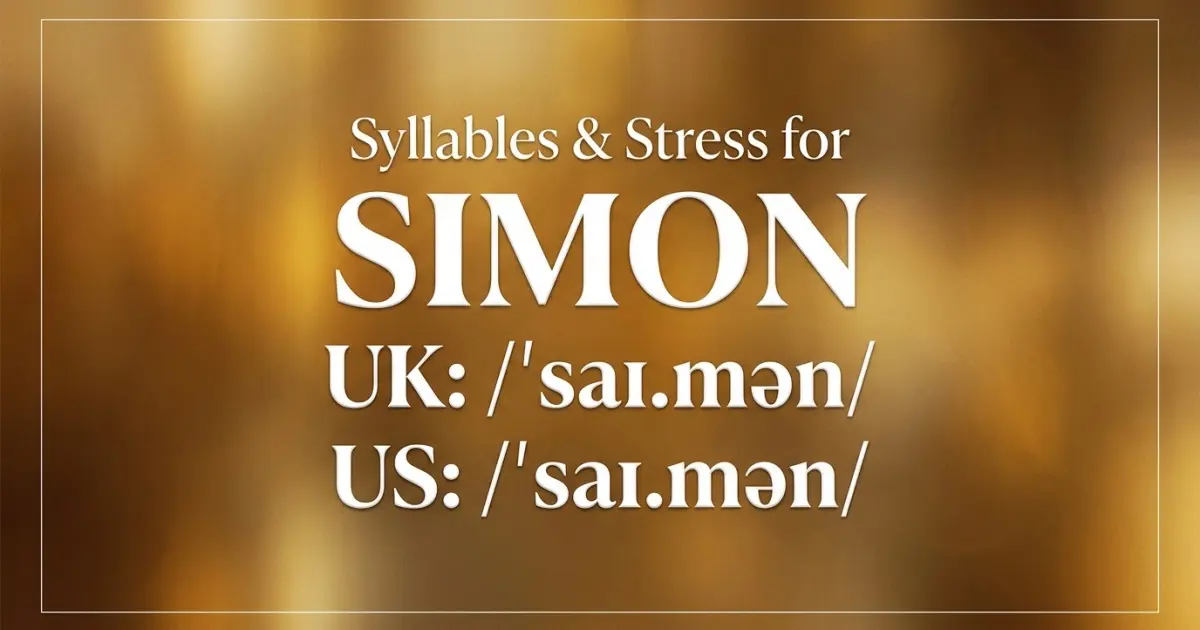
| Syllable count | 2 syllables | Keep the rhythm neat and balanced: SYE | mun. |
| Primary stress | First syllable | The opening syllable should carry the weight. The second should not compete with it. |
| U.S. IPA | /ˈsaɪmən/ | The first vowel is the same long sound heard in “sigh” or “my.” |
| U.K. IPA | /ˈsaɪmən/ | The British and American forms are effectively the same, which makes Simon very stable across accents. |
| Opening consonant | /s/ fricative | Start gently with a clear “s,” not an exaggerated hiss and not a “sh” sound. |
| Second vowel | Reduced schwa sound | The second syllable is usually lighter than people expect, closer to “mun” than a fully stressed “mon.” |
| Closest sound guide | Rhymes in part with “sigh,” then softens into “mun” | If the first half is bright and the second half relaxes, the name will sound natural. |
Simon sounds simple because the rhythm is doing most of the work
Some names depend on unusual consonants or rare vowels. Simon does not. Its elegance comes from timing. The first syllable carries the name forward, and the second syllable releases the pressure. That makes the pronunciation feel friendly and intelligent rather than stiff. Before focusing only on syllables and stress, it helps to step back into the fuller frame of Simon meaning.
Why the first syllable of Simon must stay bright
The first syllable is built around the diphthong /aɪ/, the long vowel heard in words like “my,” “high,” and “sigh.” That bright sound is what gives Simon its lift. If the opening is pronounced too flatly, the name loses much of its clarity and warmth. It is the difference between a name that feels awake and one that feels half-mumbled.
This is also why Simon does not sound heavy even though it is ancient and biblical. The bright opening keeps the name buoyant. It prevents tradition from turning into solemnity.
Why the second half of Simon should not be over-enunciated
The second syllable in Simon is usually reduced. In accessible terms, that means the vowel weakens slightly in natural speech. Linguists often call this sound a schwa. It is the relaxed vowel you hear in countless English second syllables. That reduction is not sloppy. It is exactly what makes the name sound native and effortless.
If someone says the second syllable too forcefully, almost like “SY-mon” with equal weight on both parts, the name starts to feel more rigid than it should. Simon works best when the second syllable finishes the name quietly instead of trying to rival the first.
Where Simon usually goes wrong in real life
Because Simon looks so familiar, mistakes are rarely dramatic. They are usually small distortions of stress or softness. But with a short name, even a small distortion changes the effect quickly.
When Simon gets turned into “SEE-mon” or “sih-MON”
These are the two most common directional mistakes. The first happens when the long opening vowel is replaced by a short “ee” sound. The second happens when the stress drifts too far toward the second syllable. In both cases, the result no longer sounds like the English form of Simon. It either becomes another language’s rhythm or simply sounds misread.
The fix is straightforward: return the first syllable to “sigh” and let the stress stay there. The rest of the name will usually correct itself.
When Simon becomes too hard at the end
Another subtle problem is over-hardening the second syllable. Some speakers try to pronounce every letter with equal visibility, which can make Simon sound clipped or stern. But the second syllable is meant to relax. The consonants there should not feel punched out. They should feel easy.
This is one reason Simon often sounds kinder than names of similar length. The ending does not snap shut. It settles.
Accent notes: why Simon travels so easily
Simon benefits from having nearly identical standard U.S. and U.K. pronunciation. That is a major practical advantage. Many older names split across accents or shift more dramatically in vowel quality. Simon stays remarkably stable. Some speakers will make the final schwa slightly narrower or broader, but the overall identity of the name remains unchanged.
That stability is part of the name’s long survival. It is easy to carry across countries, classrooms, and generations because the sound does not require constant correction.
Simon sits near other names, but it still keeps its own voice
One reason Simon feels comfortable in English is that it belongs to a recognizable sound neighborhood. It sits near names like Cyrus, Silas, and even softer surnames with a similar opening hiss and bright vowel. But Simon remains distinct because of its softened finish. That second syllable is what separates it from sharper one-syllable names and from two-syllable names with harder endings.
Why Simon sounds gentler than many other two-syllable boys’ names
Phonetically, Simon begins with a fricative and moves into a bright vowel, then ends in a relaxed syllable. There is no hard consonant cluster in the middle, no abrupt stop at the end, and no liquid consonant dragging the name into something more ornate. The structure is clean. That is why Simon sounds thoughtful almost before you know what it means.
Sound neighbors can confuse the ear, but not for long
In noisy settings, Simon may occasionally be misheard as another familiar S-name. That is normal for any compact classic. But because Simon’s rhythm is so stable, the correction is usually immediate. Once the listener hears the bright first syllable and the softened ending, the identity of the name becomes unmistakable. Because the strongest energy lands early, the shorter forms often grow from the opening of the name, and that pattern is easier to see in nicknames for Simon.
How to practice Simon so it sounds natural, not rehearsed
The best way to lock in the pronunciation is to use Simon in real phrases. Names do not live in isolation. They live in questions, greetings, and quick everyday speech.
Practice lines for Simon in ordinary life
- “Simon is here.”
- “Did Simon call already?”
- “Simon, your table is ready.”
- “We’re waiting for Simon.”
- “Simon starts on Monday.”
These short lines help you hear the two-beat pattern at normal speed. If the second syllable suddenly becomes too strong or the first loses brightness, it will be obvious in a sentence long before it is obvious in isolation.
A quick memory trick for Simon
The easiest guide is this: start with “sigh,” then finish softly with “mun.” That is usually all a speaker needs. Simon is not a name that requires phonetic gymnastics. It simply asks for proportion.
That is the real beauty of Simon as a spoken name. It is common enough to feel easy, but shaped enough to reward care. One bright opening, one gentle landing, and the whole name does what it has always done so well: sound calm, clear, and fully heard.