
How to Pronounce Seraphina: Clear Pronunciation Help for Everyday Use
The real pronunciation test for a name rarely happens in a quiet study of phonetics. It happens in public. A teacher pauses over the attendance sheet. A receptionist looks up from a waiting-room clipboard. A relative who has only seen the name in a text message takes a breath and makes a guess. Seraphina is exactly the kind of name that creates that moment: long enough to invite hesitation, familiar-looking enough that people think they can solve it, elegant enough that a wrong stress can instantly flatten the whole effect. The good news is that Seraphina is much easier to say than it first appears. The better news is that once someone hears it correctly, they usually remember it.
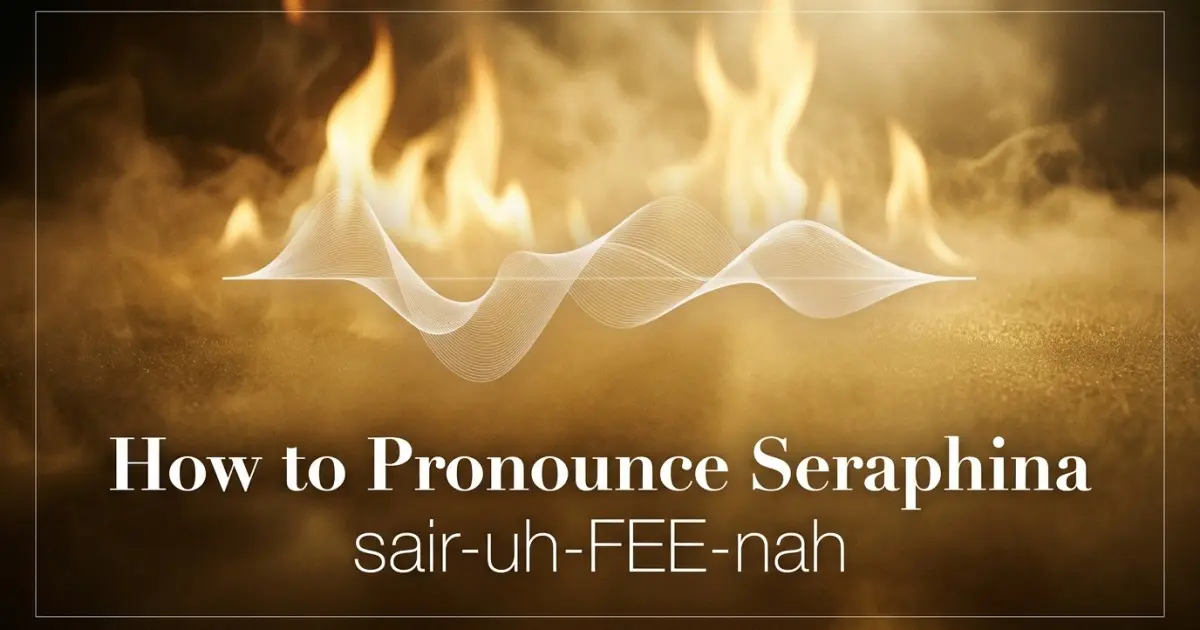
That is because the name has a strong internal architecture. Official pronunciation guidance gives it as sair-uh-FEE-nuh, with four syllables and the main stress falling cleanly on the third. That central stress does most of the work. It turns a potentially fussy-looking spelling into a name with lift and direction. Without that stress, Seraphina can sound vague or overlong. With it, the name comes into focus immediately. This is why pronunciation matters here more than usual: Seraphina is not difficult because it is exotic or unstable, but because its beauty depends on the right emphasis.
Where Seraphina actually lands in the mouth
| Element | Phonetic Detail | Quick Tip |
|---|---|---|
| Everyday pronunciation | sair-uh-FEE-nuh | Say it in four clear beats and let the third one shine. |
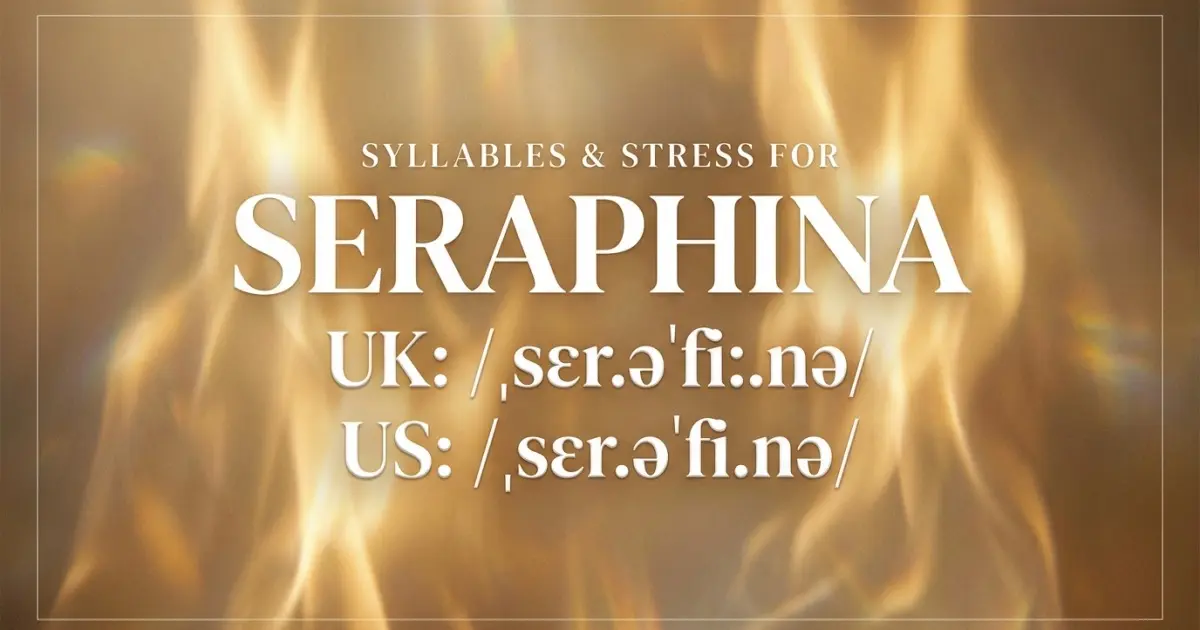
| US IPA | /ˌsɛrəˈfiːnə/ | In American English, the opening often leans toward “SEHR” or “sair.” |
| UK IPA | /ˌserəˈfiːnə/ | In British English, the first syllable may sound slightly tighter, but the stress pattern stays the same. |
| Syllable count | 4 syllables | Break it as Se-ra-PHI-na or sair-uh-FEE-nuh to keep it steady. |
| Main stress | Third syllable: FEE | If you remember only one thing, remember where the stress goes. |
| Key consonant sound | The ph is pronounced as f | Do not overthink the spelling; this part is straightforward English. |
| Ending | -na as in “nuh” | Keep the ending light so the name does not sound heavy or overacted. |
Seraphina works because the stress does the heavy lifting
The easiest way to understand Seraphina is to hear it as a four-part line moving toward one bright center. The first two syllables are relatively light. The third syllable carries the main emphasis. The last syllable releases the name gently. In practical terms, that means the name should not be spoken as four equal chunks. It needs shape. Before focusing only on syllables and stress, it helps to step back into the fuller frame of Seraphina meaning.
Why the third syllable matters so much
In sair-uh-FEE-nuh, the stressed FEE gives the name its identity. This is the point where the voice lifts and sharpens. Without that emphasis, Seraphina can drift into something flat like SEH-ra-fi-na, which makes the name sound longer and duller than it really is. With the correct stress, the name becomes musical and easy to remember.
This is also why Seraphina feels more manageable than other four-syllable names that lack a clear center. The stress creates a hinge. Speakers do not need to push every syllable equally. They only need to travel cleanly toward the bright middle and then let the ending fall away.
The sounds inside Seraphina are softer than the spelling looks
Part of the hesitation people feel comes from the spelling itself. The ph can make the name look classical or intimidating, but in speech it is just the ordinary f sound, a fricative made by letting air pass between the lip and the teeth. Nothing fancy is required. The r in the second syllable is a liquid consonant, which helps the name keep flowing rather than sounding choppy. That combination is one reason Seraphina feels graceful in the mouth. It moves through soft consonants toward one crisp bright point.
The best way to say it naturally is to avoid overpronouncing the early syllables. Do not turn the first half into a performance. Let it move. The name should gather itself before it opens on FEE.
How Seraphina shifts across American and British ears
The American and British forms of Seraphina are close relatives, not rivals. The main structure stays stable across both accents: four syllables, stress on the third, and the same light ending. The difference is mostly in the opening vowel.
The US and UK versions are more alike than different
In the US form, written as /ˌsɛrəˈfiːnə/, many speakers will hear the first syllable somewhere between SEHR and sair. In the UK form, /ˌserəˈfiːnə/, the opening can sound slightly narrower and more clipped. But in ordinary conversation these differences are minor. They do not change the identity of the name. What matters far more is that both versions preserve the stress on FEE.
This is useful for families who move between accents or have relatives in different English-speaking regions. Seraphina travels well because its center remains fixed even when the edge vowels shift slightly. A name that can survive accent movement without becoming unrecognizable has a practical advantage.
Why accent differences rarely cause real confusion
Many long names suffer because accent changes move the stress or reshape the ending too much. Seraphina avoids that problem. Even when the first syllable sounds a little different, the listener still hears the same core pattern. That is why someone may say it with a slightly more American sair or a slightly more British ser and still be entirely correct in everyday terms.
If your family uses one pronunciation consistently, that will usually become the child’s established version. The name is flexible at the edges, but not unstable at the center.
Where Seraphina gets misread on paper
Most mistakes with Seraphina are visual before they are auditory. People see a long feminine name, a classical spelling, and the familiar-looking beginning Sera-, then they make a rushed guess. The most common errors usually come from one of three patterns: wrong stress, overpronounced spelling, or confusion with related names.
The most common mistake is stressing the wrong syllable
The error to watch most closely is a flat or misplaced stress, such as SEH-ra-fee-na with too much weight at the beginning, or a hesitant version that treats all syllables equally. These versions are not usually offensive, but they do make the name sound less elegant and less coherent. A quick correction is simple: “It’s sair-uh-FEE-nuh.” Once people hear the stress, they usually self-correct immediately.
The second mistake is letting the spelling bully the voice
Because the name contains ph, some speakers become self-conscious and overarticulate the middle. Others look at the whole spelling and start drifting toward related forms such as Serafina or Seraphine. Those names are real neighbors, but they are not the same pronunciation. Seraphina should still land on the bright FEE followed by the soft final nuh. Do not let the extra letters tempt you into extra drama.
Sound neighbors can help, but only up to a point
If someone needs help, you can compare the rhythm loosely to names like Josefina or Angelina in the sense that the stress lands later rather than earlier. But Seraphina is best learned directly, not by forcing it into another name’s template. Its sound pattern is memorable enough to stand alone. When the stress sits in the center, the nickname logic often follows that same center of gravity, which is why Seraphina nicknames is the natural next step.
Practicing Seraphina until it feels natural
The best pronunciation practice is short, real, and repeated. Say the name once by itself, once in a warm sentence, and once in a formal sentence. That mimics actual life better than abstract drilling. For example: “Seraphina, dinner’s ready.” “This is Seraphina.” “Seraphina will be joining us today.” If the name feels smooth in all three, you have it.
Another helpful trick is to tap the rhythm lightly with your fingers: sair – uh – FEE – nuh. The tap on the third beat reminds the body where the name turns bright. This is especially useful for relatives who keep slipping into the wrong stress because they are reading rather than remembering.
In the end, Seraphina is not a hard name. It is a shaped name. That is the difference. It asks for attention once, not constant rescue forever. When spoken correctly, it sounds exactly the way it should: luminous, fluid, and centered by that clear third-syllable lift. Learn where the stress belongs, keep the ending light, and Seraphina stops being a spelling puzzle and becomes what it really is in speech—a name that opens beautifully once the voice finds its path.