
Said Pronunciation: Speaking Tips for a Smoother Pronunciation
The first pronunciation test for Said often happens before anyone hears the name spoken. A teacher sees four familiar letters on a roster. A receptionist reads them from a form. A relative opens a birth announcement and momentarily thinks of the ordinary English word “said.” Then the name is spoken correctly—sah-EED—and the whole identity changes. What looked flat on the page becomes bright, lifted, and unmistakably personal.
That shift matters. Said is an Arabic boy’s name meaning “happy; fortunate,” and its pronunciation carries that warmth. It has two syllables, with the stress on the second: the first syllable begins gently, then the name rises into a clear EED. In English-speaking settings, the most important pronunciation lesson is simple: Said is not pronounced like the English verb. It is sah-EED, with the final syllable carrying the light.
Said Becomes Clear When the Second Syllable Takes the Lead
| Element | Phonetic Detail | Quick Tip |
|---|---|---|
| Full pronunciation | sah-EED | Do not say it like the English word “said”; let the name rise into EED. |
| Syllable count | 2 syllables | Break it as sah + EED. |
| Stress pattern | Second syllable stressed | The strongest beat is the final syllable, not the first. |
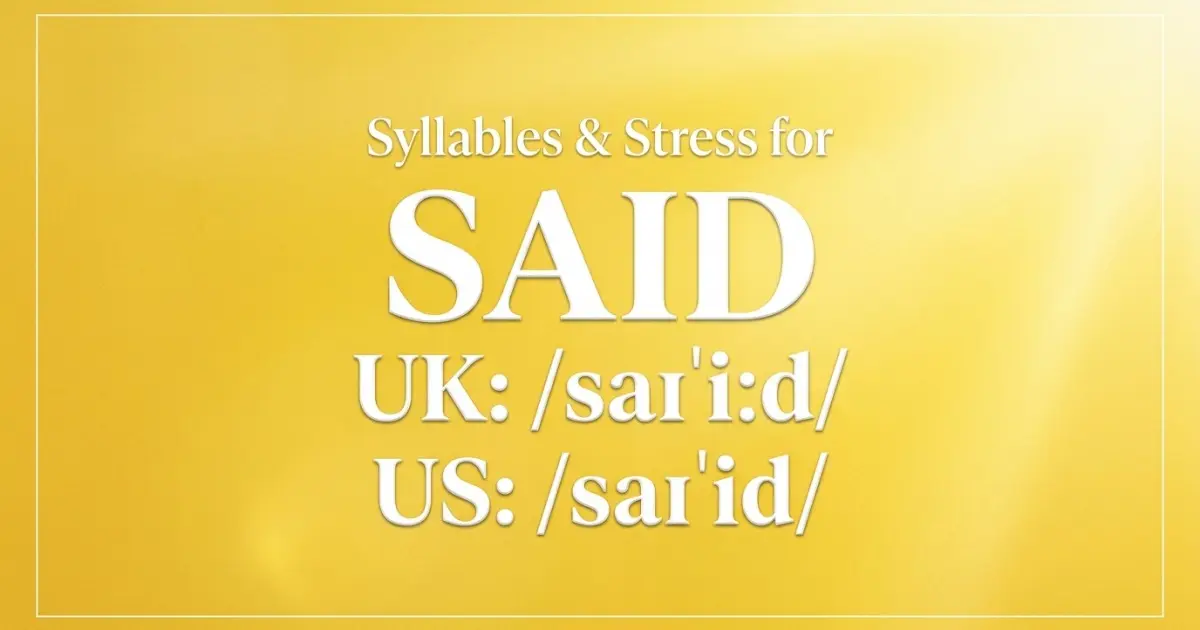
| U.S. IPA | /sɑːˈiːd/ | The first syllable is broad and open, followed by a clear long ee sound. |
| U.K. IPA | /saɪˈiːd/ | The first syllable may sound slightly more glide-like before the stressed EED. |
| Opening sound | sah | Keep it light; it prepares the name rather than carrying the main stress. |
| Ending sound | EED | Rhymes with “seed” and “need,” with a clear final d. |
| Main caution | Not “sed” | The spelling may look familiar in English, but the name has a different sound. |
Why Said Is Pronounced sah-EED, Not “Sed”
The most common issue with Said is visual expectation. English speakers already know the word said, pronounced like sed. Because the name uses the same letters, some readers may automatically choose the English-word pronunciation before realizing they are looking at a personal name. The correction is not complicated, but it is important: Said as a name is pronounced sah-EED. The sound matters more once you know what the name is meant to carry, which is why the wider frame starts in Said meaning.
The spelling is familiar, but the rhythm is different
The English word “said” is one syllable. The name Said has two. That alone changes the entire sound. Instead of landing quickly and flatly, the name begins softly and rises into the final syllable. The rhythm is sah-EED, not SED.
This distinction is central to honoring the name. Once someone hears the two-syllable form, Said becomes easy to say. It does not contain difficult consonant clusters or unfamiliar mouth positions for English speakers. The challenge is not sound difficulty; it is overcoming the first visual guess.
The final EED gives Said its brightness
The stressed ending EED is the heart of the name. It uses the long ee vowel, as in seed, need, and lead when lead means to guide. The final d closes the name cleanly, keeping it masculine, concise, and clear.
That bright final syllable also suits Said’s meaning, “happy; fortunate.” The name does not sound heavy when pronounced correctly. It has lift, warmth, and a sense of arrival.
Said in U.S. and U.K. English Keeps the Same Essential Shape
The U.S. IPA for Said is /sɑːˈiːd/, while the U.K. IPA is /saɪˈiːd/. These forms show a slight difference in the opening vowel, but the main structure is the same: two syllables, final stress, and a long ee sound in the second syllable.
The U.S. pronunciation opens with a broad “sah”
In American English guidance, Said is best taught as sah-EED. The first syllable uses an open ah-like vowel, then the name rises into the stressed EED. This makes the sound smooth and easy to repeat.
The opening s is a voiceless fricative, which simply means the sound is made with breath rather than vocal vibration. It starts the name cleanly. The rest of the name then opens into the long vowel before closing with d.
The U.K. pronunciation may give the first syllable a slightly different color
The U.K. IPA, /saɪˈiːd/, suggests that some speakers may give the first syllable a slightly more glide-like sound before the final stressed syllable. Even then, the name does not become the English word “said.” It remains two syllables, with the strongest emphasis on EED.
For practical use, the easiest spoken guide remains sah-EED. Accent may color the opening, but the final syllable should stay clear, long, and stressed.
Common Said Pronunciation Mistakes Are Usually Reading Mistakes
Most mistakes with Said happen because people read too quickly. The name is short, so the eye may process it before the ear has a chance to correct it. Fortunately, the correct pronunciation is simple enough to teach in one sentence.
Mistake one: saying it like the English word “said”
The most likely mistake is sed. This is understandable in English, but it is not the name’s pronunciation. Said should have two syllables: sah-EED. A helpful correction is, “It’s Said, pronounced sah-EED.”
That correction preserves the name’s cultural identity and meaning. It also helps listeners remember that the spelling may be familiar, but the name has its own sound.
Mistake two: stressing the first syllable
Another possible mistake is saying something like SAH-eed, with the first syllable too strong. Said should rise toward the end. The stress belongs on EED. If the first syllable becomes too heavy, the name loses its graceful lift.
The simplest fix is to repeat the rhythm slowly: sah-EED. Light first, strong second.
Mistake three: softening the final d too much
The final d should be present. It does not need to be exaggerated, but it should close the name clearly. Without it, Said may sound unfinished or blur into a softer vowel ending. The correct form ends with a clean d: sah-EED.
Sound Neighbors Help Explain Said Without Replacing It
Said can be explained through sound neighbors, but it should not be collapsed into them. The ending sounds like the eed in seed and need. The full rhythm may remind English speakers of names that rise on the second syllable, but Said remains shorter and cleaner than many of those comparisons. Once the sound pattern is clear, some shortenings stop feeling optional and start feeling natural, and the clearest map is in nicknames for Said.
Said and Saeed are close in sound
Some readers may be familiar with the spelling Saeed, which makes the long ee sound more visually obvious. Said, as written here, keeps a more compact form while still being pronounced sah-EED. The pronunciation guide matters because the spelling alone may not signal the sound clearly to English readers.
Parents can use that comparison only if helpful. For most situations, a simpler cue works better: “sah-EED, like the ending of seed.”
Said and Zaid look similar but move differently
Zaid and Said may look related to English speakers because both are short Arabic-origin names ending in -aid. But Said’s pronunciation here is two syllables, sah-EED, while Zaid is commonly heard as one syllable in English contexts. The difference is rhythm: Said rises; Zaid lands quickly.
This makes Said feel warmer and more lifted in speech, especially when the final syllable is pronounced clearly.
Practice Lines for Saying Said Naturally
The best way to make Said feel natural is to place it in ordinary sentences. Say the name with a light first syllable and a clear final stress every time: sah-EED.
Everyday practice
- Said, your backpack is by the door.
- Good morning, Said.
- This is my son, Said.
- Said has practice after school.
- We saved a seat for Said.
Formal practice
- Said Alexander Rahman, please come forward.
- The award goes to Said Omar Hassan.
- Please welcome Said to the stage.
- Said submitted the final presentation today.
In each line, the name should not collapse into the English word “said.” Keep the two beats visible in speech: sah + EED.
Common Questions About Pronouncing Said
How do you pronounce Said?
Said is pronounced sah-EED. It has two syllables, with the stress on the second syllable.
Is Said pronounced like the English word “said”?
No. As a name, Said is pronounced sah-EED, not like the English verb “said.”
What is the IPA pronunciation of Said?
The U.S. IPA is /sɑːˈiːd/, and the U.K. IPA is /saɪˈiːd/.
How many syllables are in Said?
Said has two syllables: sah + EED.
What is the most common pronunciation mistake with Said?
The most common mistake is reading Said like the English word “said.” The correct name pronunciation is sah-EED, with the second syllable stressed.