
Nicknames for Rylee: Simple Nicknames That Still Feel Distinctive
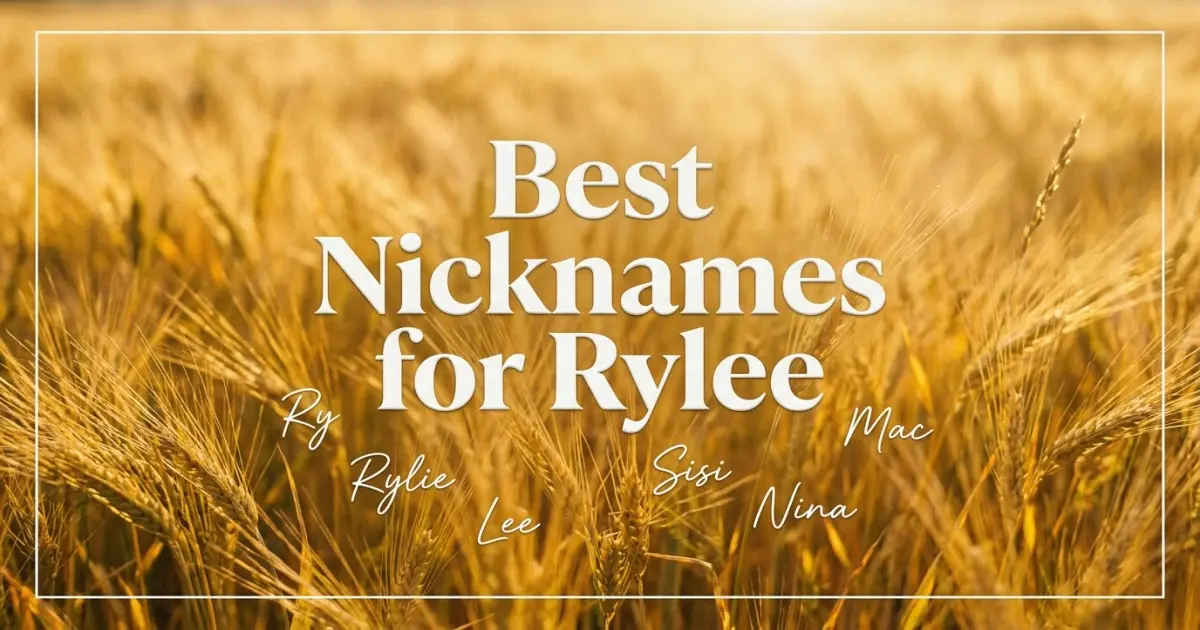
A nickname is usually the first evidence that a name has begun to live inside real relationships. It marks a shift from official identity to social identity: what parents say in the kitchen, what friends text at speed, what teammates shout across a field, what a person chooses for themselves when they want the name to feel sharper, softer, cooler, or more private. That is why nickname culture matters. It is not only about shortening a name. It is about deciding which version of a person gets invited into intimacy.
Rylee is especially interesting on that front because the full name is already short, bright, and easy to say. It does not demand abbreviation for convenience. Any nickname that grows out of Rylee therefore feels more personal than practical. Some people named Rylee will stay Rylee all their lives because the name already sounds complete. Others will move quickly toward Ry, Rye, or Lee, depending on which part of the sound they want to highlight. That is the strength of the name: it is compact enough to remain whole, but flexible enough to open into different social selves. If these shorter forms feel natural, it is usually because the full name is already doing something strong and clear, which you can see in Rylee meaning.
What the nickname landscape of Rylee reveals right away
| Group | Suggested Nicknames | Persona | Use Context |
|---|---|---|---|
| Classic short forms | Ry, Rye, Lee | Direct, easy, natural | Friends, school, team settings, everyday speech |
| Cute family forms | Ry-Ry, Lee-Lee, Ryles | Warm, affectionate, youthful | Parents, siblings, grandparents, early childhood |
| Cooler modern edits | Rye, Ry, R | Lean, self-aware, contemporary | Teen years, text culture, close friend circles |
| Playful social forms | Ryles, Rye-Rye, Rylee-Bee | Funny, casual, personality-led | Inside jokes, sports, friend groups, family play |
| Ending-based options | Lee, Lees, Lee-Lee | Softer, gentler, more selective | Close friends, family, occasional affectionate use |
| DIY and situational forms | R.J., Ry B., Rylee Rose, R | Customized, context-specific, identity-shaping | Multiple Rylees in one group, initials, paired middle names |
Rylee hides three nickname zones in plain hearing
The reason Rylee produces believable nicknames is that the name has more than one usable sound pocket. Not every two-syllable name does. Some are too fused to cut naturally. Rylee, by contrast, divides cleanly into a bright opening, a stressed center, and a soft ending. That makes the nickname options feel organic rather than forced. People are not inventing shapes that were never there. They are simply leaning on different parts of the sound.
The opening of Rylee gives the shortest, strongest nicknames
The front of the name is where the most durable nickname energy lives. Ry and Rye are the most obvious examples, and both work because they preserve the name’s strongest beat. They keep the rise of the first syllable and turn it into something quick, memorable, and highly usable. Ry feels stripped down and modern. Rye adds a little more visual personality because the spelling looks more like a word and less like an initial sound.
These opening-based nicknames usually appear when speed matters or when someone wants a cleaner, cooler social identity. They work in classrooms, on sports teams, in text threads, and in any environment where people naturally shorten names without much ceremony. They also age well. A child can be Ry on the playground and still be Ry at twenty-five without the nickname feeling trapped in one stage of life.
The stressed center of Rylee explains why Ry feels so authentic
Rylee carries its stress on the first syllable, and that matters. The part people hear most strongly is Ry. That is why Ry does not sound like an arbitrary clipping. It sounds like the emotional center of the name. In nickname terms, that is important. The nicknames that last are usually the ones that feel as if they were hiding in the original all along. Many short forms only become obvious once the opening sound is clear, which is why Rylee pronunciation guide belongs naturally here.
This also helps explain why some potential short forms never really catch on. A nickname that ignores the stressed center often feels less intuitive. Rylee invites people toward its opening because that is where the name announces itself most clearly. Research on familiar English nickname formation often points to this same pattern: speakers tend to shorten toward what is most sonically prominent, not what is merely available on paper.
The ending of Rylee opens a softer second route
The back half of the name gives a quieter nickname lane. Lee is the cleanest version of that route. It is plausible, easy to say, and familiar enough in English that it never sounds strange. But it creates a different effect from Ry. Where Ry feels brisk and contemporary, Lee feels gentler and slightly more selective. It is less likely to be the default public nickname, but very believable inside a family or close friendship circle.
From the same ending come warmer forms like Lee-Lee or Lees. These are more intimate and more context-bound. They are the kinds of names that arise because someone close wants to soften the name, not because the person named Rylee needs a more efficient public label.
Rylee is one of those names that can stay whole without sounding formal
This is a major advantage. Some names almost demand a nickname because the full version is too long, too serious, or too ceremonial for daily use. Rylee does not have that problem. It is already two syllables, already easy to pronounce, and already conversational. That means the full name can be the everyday name without feeling stiff. In fact, many people named Rylee may never feel the need to leave the full version at all.
That flexibility changes the meaning of the nickname. Because Rylee does not need one, any nickname that appears feels chosen rather than required. That makes the social tone more revealing. If someone calls a Rylee by the full name, it can signal ease and normal familiarity. If they use Ry, it often suggests closeness, speed, or a cooler register. If they use Lee or Lee-Lee, it usually suggests affection or family softness. The nickname does not replace the first name. It marks the relationship.
This also gives Rylee a practical advantage across age. A toddler can be Ry-Ry at home, Rylee at preschool, and later Ry among friends. Nothing about that progression feels awkward. The name is stable enough to absorb those changes without losing its identity.
Rylee shifts tone depending on which nickname life chooses
Rylee as Rylee
Used in full, Rylee feels bright, open, and complete. It reads approachable without being flimsy and modern without sounding overdesigned. This is often the best choice for parents who picked the name because they love its exact rhythm and do not want it trimmed further. It is also the most neutral option socially, which can be useful for a name that already carries a contemporary energy.
Rylee as Ry or Rye
Ry is the strongest short-form identity for Rylee. It is concise, easy, and socially flexible. Rye does almost the same thing but with a slightly more styled visual feel. Either version tends to sound cooler, more self-directed, and a little less overtly sweet than the full name. This is often the form that appears in adolescence, college, sports, or creative circles where a tighter identity feels useful.
The difference between Ry and Rye is subtle but real. Ry feels almost purely functional and modern. Rye feels more chosen. One is shorthand. The other can feel like a small signature.
Rylee as Lee or Lee-Lee
Lee is softer and less expected. It highlights the gentler half of the name and works best when the speaker wants warmth more than edge. Lee-Lee, by contrast, is unmistakably affectionate. It is the kind of nickname that belongs in family life, not because it is childish in a bad way, but because duplication in English nicknames usually signals tenderness, early closeness, or long-standing habit.
These ending-based nicknames are less likely to become the person’s main public identity, but they are fully realistic. They sound like names that emerge from use, not from planning.
The playful side of Rylee only works when it sounds lived-in
Playful nicknames are real, but they have to feel human. The strongest ones grow out of personality, timing, or relationship rather than out of a parent trying too hard to manufacture charm. Rylee is good at this because the name is easy to bend. Ryles is a strong example. It sounds like something teammates or siblings might land on naturally. Rye-Rye is more youthful, but very plausible in early family life. Rylee-Bee works when the speaker wants a sweeter, singsong family form.
The important distinction is permanence. Not all playful nicknames are meant to last forever. Some belong to childhood. Some belong to a specific group. Some disappear once the joke or phase ends. That is normal. Nickname culture is full of temporary names that were still completely real while they lasted.
DIY nickname formation for Rylee
Rylee also lends itself to situational nicknames. If there are multiple children with the same name in one class, the name often gets paired with an initial, a middle name, or a surname fragment: Ry B., R.J., or Rylee Rose. These are not always nicknames in the intimate sense, but they are socially important identity tools. They show how the name gets adapted in actual use rather than in theory.
Single-letter forms like R also belong here. In speech, they may be rare. In texting, social media, or close-friend shorthand, they are entirely plausible. That is part of modern nickname life too. Some names now have a digital short form that never fully crosses into spoken life.
The best nickname for Rylee depends less on logic than on closeness
That is the final truth of the name. Rylee offers good nickname material, but it does not force a single obvious outcome. The best short form depends on who is speaking, at what stage of life, and with what emotional tone. A parent may say Ry-Ry. A best friend may say Ry. A sibling may say Ryles. A grandparent may prefer the full Rylee. The same person can carry all of those at once without contradiction.
That is why Rylee works so well socially. The name is whole enough to remain itself, yet open enough to let relationships carve small versions out of it. The strongest nicknames are not the most inventive ones. They are the ones that feel earned. With Rylee, that usually means staying close to the sounds already there: Ry, Rye, Lee, Ryles. The name does not need dramatic alteration to become intimate.
In the end, Rylee offers exactly what many parents hope for: a full name that stands easily on its own, plus a nickname life that feels natural, affectionate, and flexible rather than forced. The nicknames do not improve Rylee. They simply show which part of Rylee a particular relationship has come to love best.