
Ruby Name Meaning: Heritage, Meaning, and Elegant Appeal

Ruby is one of the rare names that feels both intimate and luminous at the same time. It is short, familiar, and easy to call across a room, yet it carries the density of an object people have prized for centuries. That contrast is the real key to the name. Ruby does not behave like a decorative flourish. It behaves like concentrated value. Its meaning, “red gemstone,” gives it a material quality many names never acquire. It is not only an idea. It is a thing of color, depth, and hardness. That is why the name often feels more substantial than its two syllables suggest. Ruby sounds small, but it does not sound slight.
This is also what has kept Ruby alive in modern naming. Official data shows it remains strongly used for girls in the United States, and that continued success makes sense. Ruby offers vividness without confusion. It is recognizably feminine without being fragile, bright without being flimsy, and old enough to carry history without sounding dusty. A child called Ruby enters the world with a name that already has texture: red light, polished stone, something precious made durable. Many names promise beauty. Ruby suggests beauty under pressure, beauty that survives handling, beauty made solid enough to keep.
Ruby's U.S. popularity rank over time, 1880–2024
Popularity statistics are based on official data from the Social Security Administration baby name records.
Ruby: A Vibrant Gemstone with a Broad Home Base
Ruby functions as a name with one dominant home base on the girls’ side plus a smaller second track for boys. This pattern may suggest that its short, punchy sound and gemstone association allow the name to travel without becoming fully shared.
The lighter lane for boys has meaningful continuity but remains secondary to its strong feminine identity. Meaning “red gemstone,” the name offers a layer of vibrant, visual charm that feels both current and classic.
Ruby in one bright frame
| Key Facts | Information | Quick Insight |
|---|---|---|
| Name | Ruby | It feels immediate and familiar in speech, but carries more intensity and color than most short names. |
| Primary origin | Latin | The name reaches English through an older language of color and material value, which gives it depth beyond fashion. |
| Primary meaning | red gemstone | The meaning makes the name feel concrete and vivid rather than abstract or ornamental. |
| Pronunciation | ROO-bee | The sound is rounded and friendly, which helps the name balance richness with everyday ease. |
| Syllable count | 2 | Its brevity gives the name clarity and charm, while the meaning supplies the weight that short names sometimes lack. |
| Primary gender usage | Female | Ruby is firmly established as a girls’ name in current use, though it remains faintly traceable elsewhere at the margins. |
| U.S. standing (2024) | No. 63 for girls and No. 5386 for boys | Ruby is not a niche revival. It is an active, mainstream girls’ choice, while its use for boys is now rare. |

Ruby is a gemstone name, but not a fragile one
Why “red gemstone” gives Ruby more gravity than many image-based names
Names drawn from nature often fall into recognizable emotional categories. Some feel airy, some floral, some seasonal, some gentle to the point of softness. Ruby belongs to nature by way of the earth rather than the garden. That difference matters. A gemstone is not simply beautiful. It is formed, cut, held, judged, traded, inherited, and kept. In symbolic terms, that gives Ruby a harder edge than many pretty names. Its meaning does not float. It glows from the inside out.
This is why Ruby often feels more grounded than people expect. The red gemstone at its center carries obvious visual drama, but the name itself does not become dramatic in a theatrical sense. Instead, it suggests intensity that has been shaped into something wearable. That is a powerful naming effect. Ruby does not sound like a passing mood. It sounds like value condensed into a form small enough to belong to daily life.
There is also a useful emotional distinction here. Names tied to precious things can easily become overly ornate, as though the bearer is being asked to embody luxury before she has a chance to become herself. Ruby avoids that trap. The name is vivid, yes, but it is also plainspoken. It has warmth in the mouth. That combination keeps it from sounding showy. The image behind the name is opulent; the spoken name is companionable. Few gemstone names manage that balance so naturally.
Ruby’s redness matters, but the name is about more than color
The color red is part of Ruby’s force, and it would be artificial to pretend otherwise. Red is the color of heat, urgency, blood, appetite, signal, warning, celebration, and vitality. Yet the name Ruby is not simply “red” in a broad emotional sense. It is red made specific. It is not a wash of color, but a stone with depth and internal fire. That distinction keeps the name from feeling vague or symbolic in a flimsy way.
Historically, gemstone names often carry a double charge: beauty and endurance. Ruby belongs to that pattern. It evokes something admired for its brightness, but also something that survives time, pressure, and inheritance. That is why the name can feel both spirited and stable. Parents who choose Ruby are often choosing a bright name, but not a soft-focus one. They are choosing a name with color, but also with resistance.
That resistance is part of the name’s charm in a modern context. A contemporary child named Ruby may grow up around many names that aim for sweetness, whimsy, or polished trendiness. Ruby has enough sparkle to hold its own among them, but it also has a core of mineral seriousness. It does not need embellishment to feel vivid.

How Ruby moved from Latin color into everyday naming
From a Latin root of redness to a distinctly English given name
Ruby’s linguistic path helps explain why the name feels so concise and legible. It is rooted in Latin, with an older association to redness, and enters English as the name of the gemstone itself. That movement matters because it gives Ruby a layered identity. It is not just a fashionable sound attached to a modern image. It comes through the language of color and then settles into the language of objects people know, name, and value.
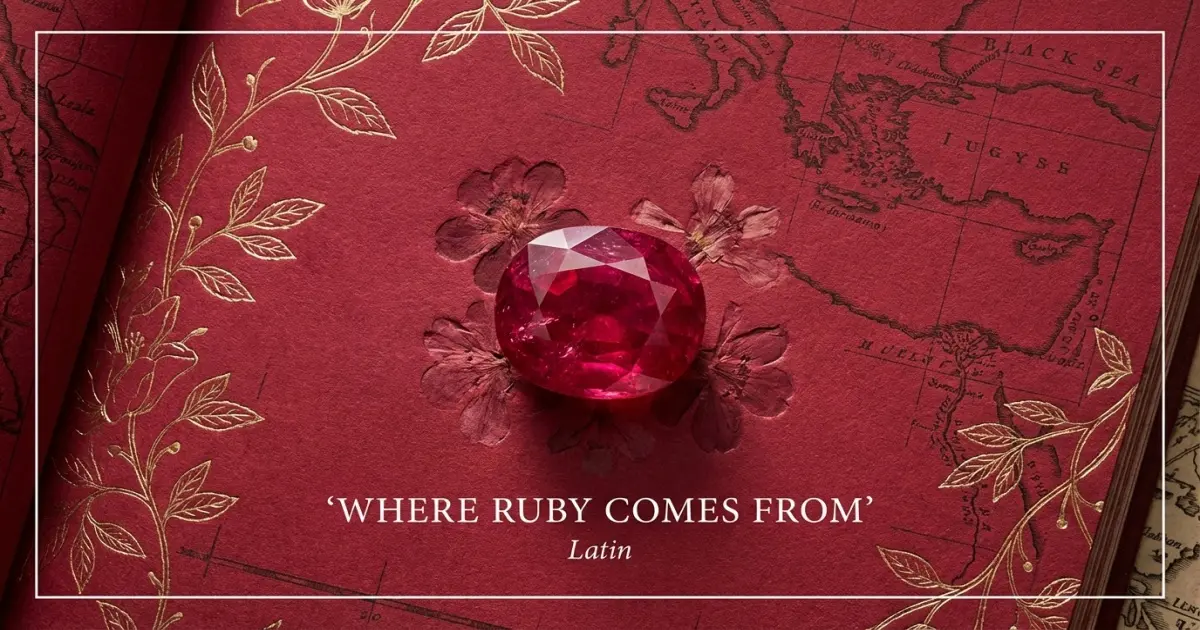
In practice, that means Ruby feels both ancient and ordinary in the best sense. The root is old; the spoken name is easy. There is no gap between the history of the word and the practicality of the name. People understand it immediately, which is one reason the name has remained so usable. A name built from an older root can sometimes feel formalized or distant in modern speech. Ruby does not. It arrives already naturalized.
This also helps explain why Ruby has travelled so well across English-speaking naming culture. It does not depend on specialist knowledge to make sense. The meaning is accessible, the image is strong, and the pronunciation is almost effortless. That combination gives the name cultural portability. It can sound literary, vintage, rustic, urban, glamorous, or family-centered depending on context, without ever becoming unreadable.
Ruby’s history is part vintage, part return, and part constant memory
One naming guide describes Ruby as common in the late nineteenth century and again in the mid-twentieth century, while also noting its modern return in English-speaking regions. That timeline is useful because it helps define Ruby’s status more precisely. This is not a novelty name that suddenly appeared because gemstone names became fashionable. Nor is it a relic surviving only through nostalgia. Ruby has moved through multiple eras of actual use.
That history matters because it changes how the name feels in the present. A name with only one popularity spike can become trapped inside that one generation’s image. Ruby is freer than that. It has Victorian richness, twentieth-century familiarity, and contemporary brightness all at once. Parents can hear it as antique or current depending on what they bring to it, which is a major strength. The name belongs to several rooms of history without being imprisoned by any of them. To keep exploring names from the same background, see explore Latin names.
Another small but telling detail enriches the name’s image: Ruby is also associated with July as a birthstone. Even when parents are not choosing it for a birth-month connection, that association strengthens the name’s heat and seasonality. It places Ruby in the emotional weather of midsummer: bright, ripe, saturated, alive. Yet because the stone itself is durable, the name keeps its structure even when the imagery around it becomes lush. Ruby never melts into mere prettiness. It keeps its edges.
Ruby sounds polished because its music is warm, rounded, and quick
The vowels make Ruby feel intimate before the meaning even arrives
Part of Ruby’s appeal is phonetic. The opening Roo is soft and rounded, and that matters more than it may seem. Names beginning with a hard attack can sound brisk, sharp, or formal. Ruby begins differently. The initial r gives the name movement rather than bluntness, and the long oo vowel creates a feeling of openness and warmth. By the time the second syllable arrives, the name has already established itself as affectionate and easy to say.
That ease is one reason Ruby can carry a richer meaning without sounding weighty. The gemstone image behind the name might suggest high polish, but the sound of Ruby remains domestic and human. It is easy to imagine in a nursery, a classroom, a family kitchen, or an adult introduction. Many richly symbolic names struggle to remain conversational. Ruby does not. Its sound protects it from becoming too stately.
The second syllable helps as well. -bee is light, clear, and unstressed compared with the opening. That gives the name a natural taper, which is pleasing to English ears. Ruby feels finished without sounding abrupt. It is bright, but not brittle; musical, but not ornate.
Why Ruby sounds more enduring than some equally vivid names
Short, image-heavy names often run the risk of sounding overly cute in adulthood. Ruby largely escapes that problem because its sound is not childish even when its image is bright. The name is not loaded with diminutive endings or fragile consonants. It has enough roundness to be gentle and enough firmness to hold its shape. That is why Ruby ages unusually well.
There is also a useful contrast between sound and meaning here. A gemstone can suggest brilliance, cost, and display. Ruby the name sounds much more grounded. This contrast actually helps the name. It gives the bearer a vivid symbolic background without forcing an overly glamorous social performance. The full effect is one of contained richness. Ruby does not announce itself loudly. It shines at close range.
That phonetic modesty is one reason Ruby continues to attract modern parents. It gives them a color-saturated name that still feels easy to live with. In naming, that is a rare combination.
Ruby stays current by being vivid, not trendy
Ruby belongs to the revival of old bright names, but it is stronger than a passing wave
Official Social Security Administration (SSA) data places Ruby at No. 63 for girls in the United States in 2024, which makes one thing clear: Ruby is not merely admired from a distance. It is actively being chosen. That matters because some revived vintage names feel more talked about than used. Ruby is different. It has crossed from aesthetic appeal into real-life adoption at a strong level.
Its current standing also shows how effectively the name balances old and new. Ruby can sit near other revived classics, but it still keeps a sharper visual identity than many of them. It is easier to picture than a great number of traditional names, and yet less fashion-dependent than many newer ones. That gives it a kind of naming resilience. Even when styles shift, Ruby retains its core appeal: color, clarity, and history in a compact form.
The girls’ ranking also reveals something else. Ruby now belongs comfortably inside mainstream usage without becoming overexposed to the point of losing its character. It is familiar enough to feel approachable, but still vivid enough to feel like a deliberate choice. That is often the ideal zone for a name: recognized, but not anonymous.
Ruby’s rarity for boys clarifies how gendered its modern image has become
Ruby’s presence for boys in current American data is faint, with a ranking far outside mainstream use. That does not erase the broader historical life of jewel and color vocabulary across naming, but it does clarify the present moment. Ruby now reads overwhelmingly as a girls’ name in everyday American practice. Its modern social image is settled. For a broader shortlist in the same group, visit more names for girls.
That settled image contributes to the name’s ease. Parents choosing Ruby are not usually negotiating ambiguity. They are choosing brightness, femininity, and strength within a name that people already know how to hear. In practical terms, that allows the more interesting layers of the name to surface. Instead of spending social energy explaining it, the bearer gets to live inside it.
And what she lives inside is unusually rich: a name that feels at once vintage, vivid, and durable. That helps explain why Ruby remains so persuasive in the present tense.
Three directions Ruby naturally opens next
Middle names for Ruby can either sharpen the jewel-tone or soften it
Because Ruby is short and visually intense, the middle name plays an unusually important balancing role. A crisp classic middle can steady Ruby, while a longer literary middle can deepen its vintage richness. If you want the full pairing logic behind that contrast, see Ruby middle names.
Nicknames for Ruby show how much warmth the name already carries
Ruby does not depend on shortening to feel intimate, but it still invites affectionate variation in close circles. That makes its nickname life less about necessity and more about relationship. To see how those different moods shorten in real life, explore Ruby nicknames.
Pronunciation helps Ruby sound companionable instead of ornate
ROO-bee is rounded, bright, and very easy to say. That ease is one reason a name with such rich imagery can still feel at home in ordinary conversation. For the detailed stress pattern, accent notes, and IPA, see Ruby pronunciation guide.
Why Ruby still feels like light made solid
Ruby endures because it compresses several things parents often want but do not often find together. It is vivid without being gaudy. Precious without being pretentious. Feminine without being frail. Historical without sounding antique. Short without sounding underbuilt. Names that achieve all of those balances at once are rare.
There is something particularly satisfying about the way Ruby joins substance and radiance. The stone behind the name is valued for color, but also for hardness and permanence. That double image keeps the name from collapsing into sweetness alone. Ruby suggests a person who can be warm and bright without becoming insubstantial, expressive without becoming theatrical, memorable without trying too hard to be different.
That may be the deepest reason the name continues to feel alive. Ruby is not simply pretty. It is concentrated. It offers a form of beauty with weight behind it, a brightness that has survived pressure, a small spoken shape holding a surprisingly old and durable idea of worth. In the end, that is what makes Ruby more than a gemstone borrowed for the nursery. It is a name that sounds as if value could glow, and keep glowing, in ordinary human life.