
How to Pronounce Rowyn: How to Say It Clearly and Naturally
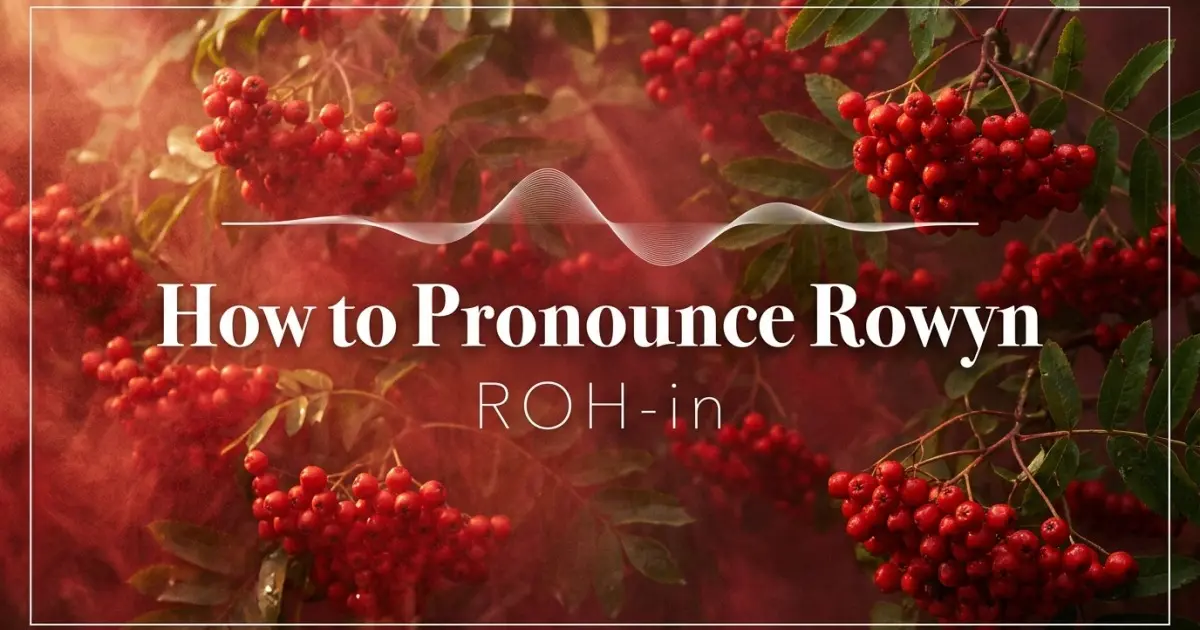
The pronunciation test for Rowyn usually happens before anyone has time to explain the spelling. A teacher pauses over the attendance sheet. A nurse reads the name from a clipboard. A parent at the park hears it once and tries to repeat it back. That is where names prove whether they are merely stylish on paper or actually workable in the mouth. Rowyn passes that test better than many people expect. The spelling looks updated and potentially complicated, but the sound is much calmer than the letters suggest. Once heard correctly, it usually settles quickly.
That matters because Rowyn sits in a modern naming category that often creates hesitation: familiar sound, distinctive spelling. The eye sees the y and may wonder whether the ending should sound like win, in, or something closer to the older Rowan. Official pronunciation guidance resolves that uncertainty cleanly: ROH-un. In other words, the first syllable carries the shape, and the second falls away lightly. The name is not hard. It is simply one of those names whose spelling invites a second guess until the voice shows the listener where to go.
Where Rowyn actually lands when spoken aloud
| Element | Phonetic Detail | Quick Tip |
|---|---|---|
| Everyday pronunciation | ROH-un | Say it in two beats and keep the second one light. |
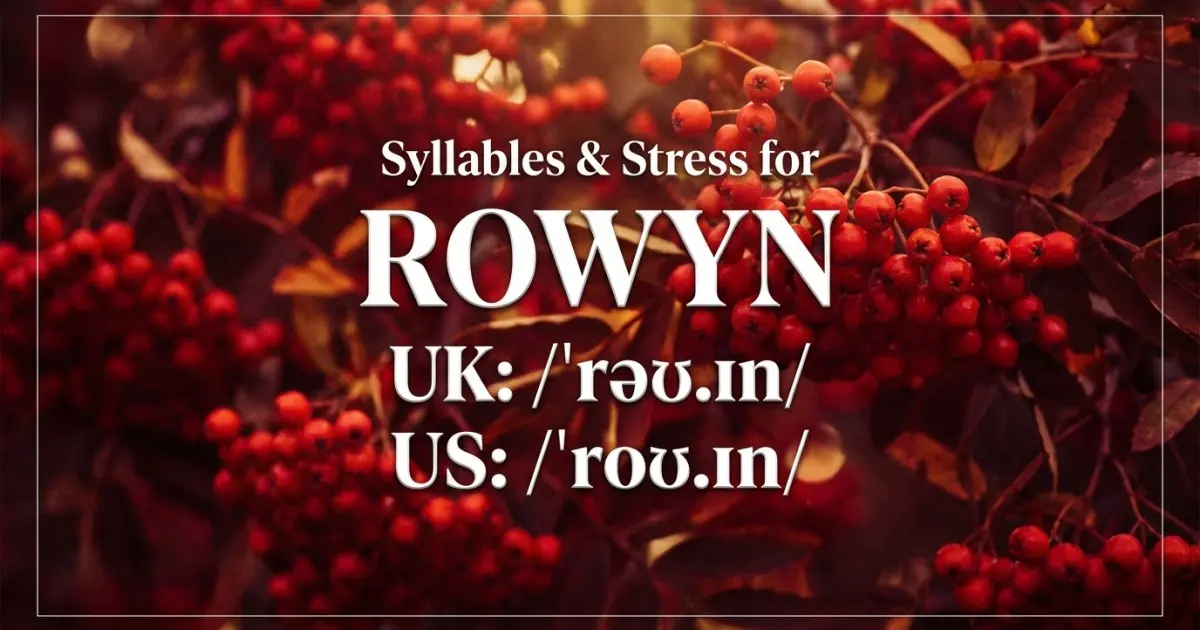
| US IPA | /ˈroʊən/ | The opening sounds like “roh,” not “row” as in rowing faster, and not “rah.” |
| UK IPA | /ˈrəʊən/ | British speech keeps the same overall pattern, with only a slight vowel shading difference. |
| Syllable count | 2 syllables | Think of it as ROH + un, not as a stretched three-part form. |
| Main stress | First syllable: ROH | The first syllable carries the identity of the name, so do not flatten both parts equally. |
| Second syllable | Reduced vowel + n sound | The ending is softer than the spelling suggests; it is closer to “uhn” than “win.” |
| Spelling trap | The y does not create a “win” ending | Read the y as style on the page, not as a cue to change the spoken form. |
Rowyn works because the first syllable carries almost all the weight
The easiest way to understand Rowyn is to hear it as a name with one strong anchor and one soft release. The anchor is the opening ROH. The release is the second syllable, which is unstressed and reduced. That stress pattern is what keeps the name from sounding busy. Even though the spelling is visually distinctive, the rhythm is very simple. Before focusing only on syllables and stress, it helps to step back into the fuller frame of Rowyn meaning.
Why the opening “ROH” matters so much in Rowyn
The first syllable gives Rowyn its entire silhouette. It begins with the liquid consonant r, then moves into the long rounded vowel heard in roh. Liquid consonants like r and l help names flow rather than snap, which is one reason Rowyn feels smooth and modern. The opening is strong, but not sharp. It has enough presence to make the name memorable without making it sound heavy.
This is also why listeners usually remember the name after one hearing. Stress on the first syllable is one of the most familiar patterns in English naming. Even when the spelling looks unexpected, the ear quickly organizes the name once the first beat is clear.
The second syllable in Rowyn is quieter than the spelling makes it look
The second syllable is where many readers get nervous. On paper, -wyn can tempt people toward a full pronounced win ending. But the IPA and the fact packet point elsewhere. The ending is reduced. In accessible terms, that means the vowel relaxes into a softer uh sound rather than staying crisp and fully formed. So instead of ROH-win, the name lands closer to ROH-un.
That reduced vowel is important because it keeps the name airy. If the second syllable were pressed too hard, Rowyn would sound more mechanical and less graceful. The quiet ending is part of what gives the name its ease.
Rowyn looks more unusual than it sounds
This is one of the most useful practical truths about the name. The spelling does much more visual work than the pronunciation does. That means the main pronunciation challenge is not difficult speech. It is expectation management. People see the letters and assume there must be a trick. In reality, the spoken form is close to other familiar two-syllable names with a strong first beat and a softened ending.
That is good news for parents who want distinctiveness without repeated correction. Rowyn may invite a brief pause on paper, but it rarely creates lasting confusion once someone hears it. The sound pattern is straightforward enough that it tends to stick.
How Rowyn shifts between American and British speech
Official pronunciation guidance gives the American form as /ˈroʊən/ and the British form as /ˈrəʊən/. These are closely related, and in ordinary conversation the difference is slight. Both begin with the same basic rounded opening and both preserve the same two-syllable rhythm. The main shift is the normal transatlantic shading of the first vowel, not a change in the identity of the name.
What stays fixed in both accents
The most important constants are easy to hear: the first syllable takes the stress, the second syllable is reduced, and the overall line remains ROH-un. That means Rowyn travels well across English-speaking settings. It does not need a separate British reading and American reading in the way some names do.
What may sound slightly different from one speaker to another
Some British speakers may clip the opening a little more narrowly. Some American speakers may let the oh sound broaden slightly. But these are minor accent textures, not competing pronunciations. The name remains recognizably itself. For families, that kind of stability is a real advantage. It keeps the name portable.
Where Rowyn gets misread on the page
The common mistakes with Rowyn are easy to predict. They almost all come from the spelling rather than the underlying sound structure. This is typical of names whose letters have been modernized while the spoken form remains close to an older pattern.
The most common mistake is saying “ROH-win”
Because the ending is written -wyn, many people instinctively say win. That is the most common wrong turn. It is understandable, but it changes the feel of the name. ROH-win sounds more clipped and more literal. ROH-un sounds smoother and more natural.
A quick correction usually works: “It’s ROH-un.” Once people hear the reduced second syllable, they tend to adjust immediately.
The second mistake is flattening the name into one heavy block
Sometimes speakers do not put enough emphasis on the opening syllable and end up saying something closer to an even, flat two-part line. That makes the name sound less elegant than it should. Rowyn needs the first syllable to lead. The second syllable should trail lightly behind it.
Sound neighbors help, but only carefully
People may compare Rowyn to Rowan, Roan, or names ending in -wyn or -win. That comparison can help them locate the sound family, but it can also mislead if they rely on spelling instead of stress. The safest route is always the direct one: ROH-un, with the y acting as a visual style choice rather than a spoken instruction. Once the sound pattern is clear, some shortenings stop feeling optional and start feeling natural, and the clearest map is in nicknames for Rowyn.
How to practice Rowyn until it feels effortless
The easiest way to practice Rowyn is to use it in short real-life lines instead of overanalyzing the letters. Try: “Rowyn, dinner’s ready.” “This is Rowyn.” “Rowyn will be with us today.” Saying the name in natural sentences teaches the body its rhythm more effectively than isolated drilling does.
A quick rhythm trick for Rowyn
Tap the name once strongly and once lightly: ROH – un. That small physical cue helps speakers hear that the name is front-weighted, not evenly balanced. It also reminds them not to overpronounce the ending.
What to remember when introducing Rowyn to new people
There is no need for a long explanation. A simple, calm correction is enough: “Rowyn—ROH-un.” The more naturally the name is said, the easier it becomes for other people to follow. That is the final lesson of Rowyn’s pronunciation. The name looks modern and slightly stylized, but the sound itself is not fussy. It is compact, smooth, and quietly intuitive once the voice shows the listener where the second syllable relaxes.