
Rosie Pronunciation: A Confidence-First Guide to Saying It
The most honest pronunciation test for a name does not happen in a language guide. It happens at a classroom door, in a pediatric waiting room, at a dance recital check-in table, or on the first day a coach reads a roster aloud. Rosie usually performs well in those moments. Most English speakers recognize it instantly, not only because it is familiar as a given name, but because it sits close to the everyday word rose. In practical life, that means Rosie is one of those names that is often said correctly on the first try, and that matters more than parents sometimes realize. Ease of pronunciation affects how often a name must be repeated, how often it is misheard, and how naturally it fits into daily speech.
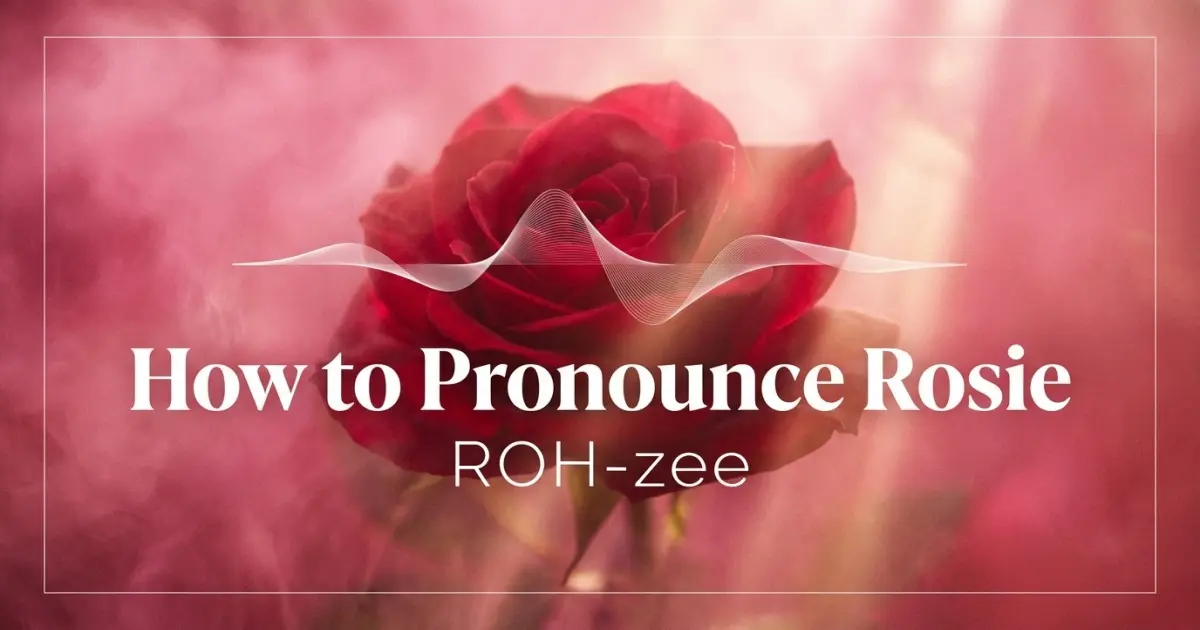
Rosie also benefits from a sound pattern that feels emotionally readable to English-speaking ears. Official data shows it remains visible enough in American life to feel established, which helps stabilize the way people say it. It is short, phonetic, and rhythmically simple. There are no silent letters to trip over, no hidden stress shifts, and no unusual consonant clusters. The standard form is ROH-zee: two syllables, with the first clearly stressed. That does not mean every accent shapes it in exactly the same way. American and British English handle the opening vowel a little differently, and fast speech can soften the edges. But Rosie is fundamentally a high-clarity name. It is easy to hear, easy to repeat, and easy to remember.
What Rosie is really doing when people say it out loud
Rosie sounds simple because each part of the name does a very clear job. The opening creates recognition, the middle carries the stress, and the ending keeps the tone light and friendly.
| Element | Phonetic Detail | Quick Tip |
|---|---|---|
| Standard spoken form | ROH-zee | Say it in two beats, with the first one stronger. |
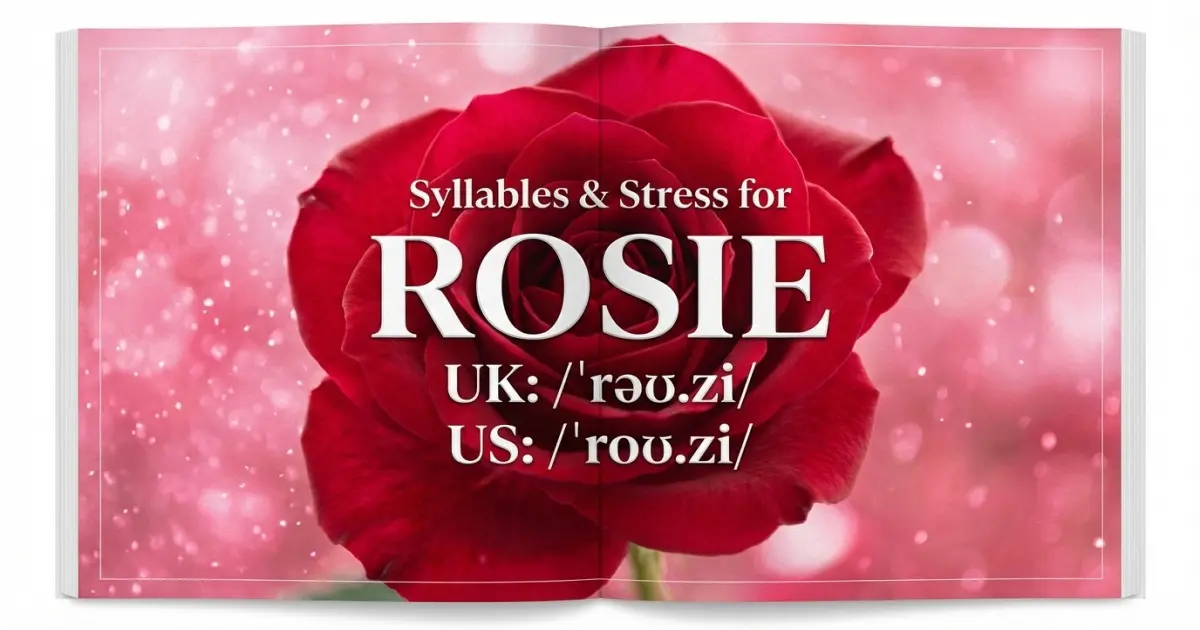
| US IPA | /ˈroʊzi/ | The opening rhymes loosely with “go,” not with “raw.” |
| UK IPA | /ˈrəʊzi/ | The first syllable still carries the stress, but the vowel may sound slightly more centered before it opens. |
| Syllable count | 2 syllables | Keep it compact. Rosie should not stretch into three beats. |
| Stress pattern | First syllable stressed | Put the emphasis on Ro, not on -sie. |
| Ending sound | Light zee ending | The final consonant is a soft buzzing z, not a sharp s. |
Rosie in the mouth: why the name lands so cleanly
Rosie is a good example of a name whose friendliness is built directly into its sound pattern. It begins with r, a liquid consonant, which gives the name movement rather than hardness. Then comes the long o vowel in the stressed first syllable. That vowel opens the name outward and gives it warmth. The second syllable, -zie, ends with a voiced fricative sound, the z, which keeps the name lively and bright rather than clipped. The overall effect is soft but not vague. Pronunciation lands more fully when the name’s roots and history are already in view, so begin with Rosie meaning.
Why the first syllable carries Rosie’s identity
The first syllable is where Rosie announces itself. In both American and British pronunciation, that opening Ro- takes the stress. If the first syllable is clear, the name is almost impossible to lose. That is why speakers tend to get Rosie right even without thinking about it consciously. The name gives them a stable front edge.
This opening also explains why Rosie feels different from names like Rosa or Rosalie. Rosa has a more even, flatter shape. Rosalie extends into a longer melodic line. Rosie, by contrast, starts confidently and then softens. It is the first beat that makes it feel so direct and familiar.
Why the second syllable keeps Rosie light
The second syllable matters because it stops Rosie from feeling heavy. If the name ended at Rose, the impression would be more formal, more still, and slightly more restrained. Add -ie, and the whole tone changes. The final -zee makes Rosie feel affectionate, social, and easy to say in repeated daily use. In phonetic terms, that voiced fricative gives the ending energy without making it sharp.
This is one reason Rosie works so well in conversation. It has enough shape to sound complete, but enough softness to remain approachable. The ending does not thud. It hums.
Where Rosie shifts slightly across accents, and where it stays stable
Rosie is a stable name across English accents. The overall rhythm rarely changes. What shifts, when it does shift, is mainly the opening vowel quality.
Rosie in American English
In the United States, the usual pronunciation is /ˈroʊzi/. The opening vowel often sounds like the one heard in many American pronunciations of “go” and “no.” It is rounded, open, and easy to hear. Because American English tends to make diphthongs quite audible, the first syllable can sound especially clear in slow or careful speech.
Rosie in British English
In the United Kingdom, the common form is /ˈrəʊzi/. To many listeners, that difference is subtle rather than dramatic. The name is still plainly Rosie. The main change is that the starting point of the vowel may feel a little more central before gliding outward. The structure stays the same: two syllables, first-syllable stress, light ending.
That matters because some names genuinely split into different spoken identities across accents. Rosie does not. It bends gently, but it remains itself.
What speakers most often get wrong with Rosie
When the final consonant turns into an s sound
The most common slip is small, not catastrophic. Some speakers may let the ending become too sharp, almost like ROH-see rather than ROH-zee. In real conversation, the difference can be slight, but it changes the texture. Rosie normally carries a voiced z sound in the middle of the second syllable, which is what makes it feel warm and flowing rather than crisp and thin.
When Rosie gets over-enunciated
Another issue appears when people try too hard to say the name carefully. They may widen the first vowel too much or hit both syllables with nearly equal force. That creates an artificial effect, as though the name were being spelled aloud rather than naturally spoken. Rosie works best when the first syllable leads and the second follows lightly.
When Rosie is confused with nearby names
Its closest sound neighbors are Rose, Rosa, and Rosie as a pet form for longer names such as Rosalie or Rosemary. In everyday life, those confusions are usually brief. Once the full name is spoken in context, Rosie stands apart because of its bright final syllable. Rose stops. Rosa opens differently. Rosalie keeps going. Rosie resolves quickly and warmly.
Parents should also expect that some very young children may temporarily simplify the r or blur the z into softer speech. That is a normal developmental pattern in early language, not a sign that Rosie is difficult to pronounce.
How to keep Rosie clear in daily speech
The best way to practice Rosie is not to isolate it as if it were a test word. Put it into natural sentences. A name lives most truthfully inside ordinary speech, and Rosie is especially responsive to that. Because it is compact and familiar, it sounds best when spoken at conversational speed.
Practice lines that make Rosie sound natural
Try these aloud: The way the name resolves at the end often decides which short forms feel natural in speech, and that becomes clearer in nicknames for Rosie.
- “This is Rosie.”
- “Rosie is ready now.”
- “Can you help Rosie with her bag?”
- “We named her Rosie.”
If the name starts to sound too soft in your mouth, the fix is not to make the whole thing harder. It is usually enough to strengthen the first syllable slightly and let the second stay light. Think ROH-zee, not flat roh-ZEE and not clipped Rose-ee. The correct version feels compact, warm, and effortless.
That is ultimately why Rosie works so well in spoken English. It has the recognizability of a familiar sound cluster, the charm of a diminutive ending, and the clarity of a name that rarely needs to be explained twice. It is easy to say without feeling plain, and distinctive without sounding difficult. In everyday life, that balance is exactly what many parents are hoping for.