
How to Pronounce Rocco: A Simple Pronunciation Guide
Imagine a name being called across a preschool room, printed on a soccer roster, or read aloud at a pediatric appointment: “Rocco.” It looks compact, confident, and easy, but the sound still needs its full shape. The name is not ROCK-oo, and it is not meant to end with a flat, swallowed final vowel. Spoken clearly, Rocco has two strong, simple beats: ROK-oh. The first syllable lands firmly; the second opens the name with warmth.
That two-beat rhythm is one of Rocco’s strongest everyday advantages. The name is Italian in origin, means “rest,” and is pronounced ROK-oh, with stress on the first syllable. Official data shows Rocco ranked No. 500 for boys in the United States in 2024, giving it real familiarity without making it overused. The pronunciation rule is direct: start with a short, firm ROK, then let the final -o stay open and light.
Rocco Is Said With a Firm “ROK” Opening and a Warm Final “O”
| Element | Phonetic Detail | Quick Tip |
|---|---|---|
| Everyday pronunciation | ROK-oh | Say it in two beats, with the first syllable stronger than the second. |
| Syllable count | 2 syllables | Break it into ROK + oh, not Rock-oo or Ro-COH. |
| Stress pattern | First-syllable stress | The opening ROK should carry the main emphasis. |
| U.S. IPA | /ˈrɑːkoʊ/ | The first syllable is strong and broad in many American accents. |
| U.K. IPA | /ˈrɒkəʊ/ | The vowel changes by accent, but the two-syllable shape remains the same. |
| Opening sound | ROK | Think of “rock,” but keep the name smoother and less clipped. |
| Ending sound | oh | Let the final vowel stay open, not swallowed or overextended. |
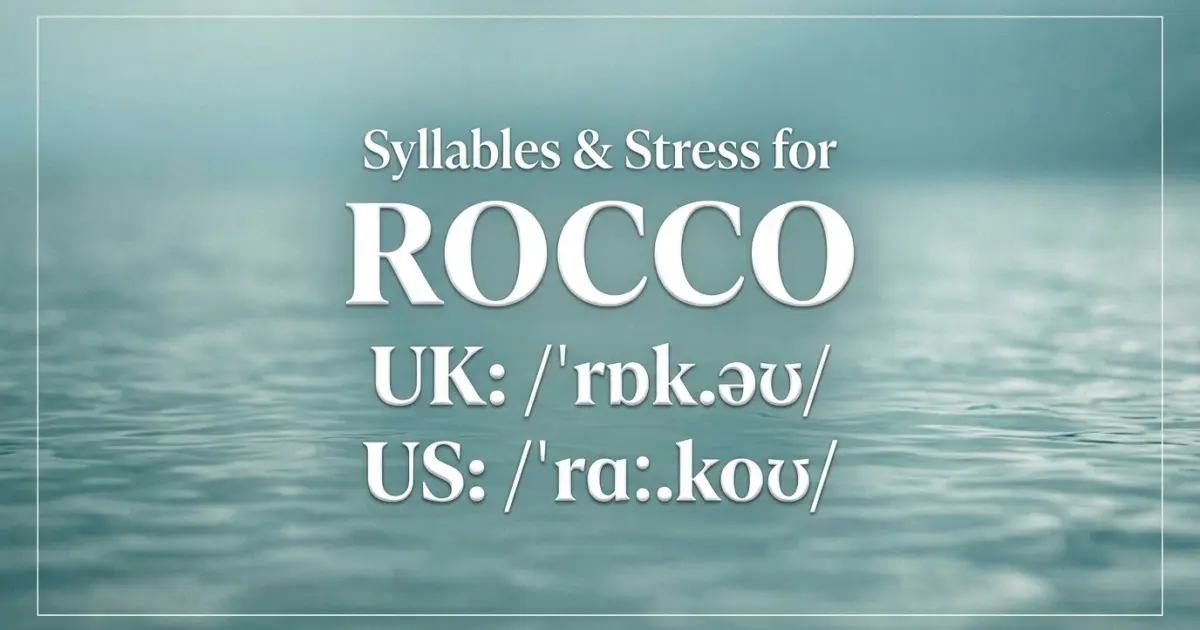
The Two Syllables of Rocco Should Feel Strong, Then Open
Rocco has two syllables: ROK and oh. The first syllable carries the stress, so it should be the clearest and strongest part of the name. The second syllable should be lighter, but still fully audible. The best pronunciation feels compact without feeling chopped: ROK-oh. Before focusing only on syllables and stress, it helps to step back into the fuller frame of Rocco meaning.
The name’s Italian shape matters here. The final -o is not decoration on the page; it is part of the sound. It gives Rocco its warmth, rhythm, and open finish. Without that second syllable, the name becomes too abrupt. With it, Rocco feels bold but approachable.
The first syllable should land like “rock”
The opening syllable sounds close to rock. It should be short, firm, and easy to hear. This is where Rocco gets much of its strength. The r gives the name movement, while the compact k sound gives it a clean landing.
In American English, the vowel may sound broader, as reflected in /ˈrɑːkoʊ/. In British English, the vowel is closer to /ɒ/, as reflected in /ˈrɒkəʊ/. Those differences are accent-based. The name still begins with a clear ROK sound in ordinary pronunciation guidance.
The final “oh” should be heard without becoming heavy
The second syllable should sound like a light oh. It should not become “oo,” and it should not vanish. Rocco is not ROCK. It is ROK-oh. That final vowel gives the name its Italian warmth and keeps the strong opening from feeling too blunt.
Rocco Sounds Slightly Different Across U.S. and U.K. English
The U.S. IPA pronunciation of Rocco is /ˈrɑːkoʊ/, while the U.K. IPA pronunciation is /ˈrɒkəʊ/. The main differences are the first vowel and the final vowel glide. American speakers may make the first vowel broader and the final -o more like oh. British speakers may use a shorter first vowel and a different final glide.
These are accent differences, not different names. In both U.S. and U.K. pronunciation, Rocco has two syllables and stress on the first. The name should stay ROK-oh: firm at the beginning, open at the end.
American pronunciation gives Rocco a broad first vowel
In American English, Rocco often sounds like RAHK-oh or ROK-oh depending on regional accent. The important point is not to move the stress to the second syllable. The first syllable remains the anchor.
British pronunciation keeps the first syllable shorter
In British English, the first vowel may sound shorter and rounder, closer to the vowel in rock. The final syllable may glide differently, but the name still has the same practical structure: ROK-oh, with first-syllable stress.
Common Rocco Pronunciation Mistakes Usually Come From the Final “O”
Rocco is straightforward, but a few mistakes can happen when people overthink the spelling. Some may say ROCK-oo, making the final vowel too high. Others may say ro-COH, incorrectly stressing the second syllable. Some may flatten the ending until the name sounds like Rock. The correction is simple: two syllables, first-syllable stress, open final vowel.
Mistake one: saying ROCK-oo
The ending of Rocco should not sound like “oo.” The final vowel is closer to oh. A simple correction is: “It’s ROK-oh, not ROCK-oo.”
Mistake two: stressing the second syllable
Rocco should not become ro-COH. The first syllable is stronger. The correct rhythm is ROK-oh, with the second syllable lighter and more relaxed.
Mistake three: dropping the final vowel
Because the first syllable resembles the word rock, some speakers may compress the name too much. Rocco should not sound like Rock. The final -o needs to be heard, especially in introductions and formal speech.
Mistake four: overextending the ending
The final vowel should be open, but not dramatic. Rocco is not ROK-ohhhh. It should sound natural and balanced: strong first beat, lighter second beat.
Rocco Has Sound Neighbors, but Its Italian Ending Sets It Apart
Rocco sits near names such as Marco, Nico, Enzo, Luca, Bruno, and Leo in style, especially because of its Italian sound and final -o. It also sits near word-like nicknames such as Rocky because of the strong rock sound at the beginning. That combination gives Rocco a distinct personality: compact and rugged, but still warm and open. Once the sound pattern is clear, some shortenings stop feeling optional and start feeling natural, and the clearest map is in nicknames for Rocco.
The meaning “rest” adds an interesting layer to the sound. Rocco may sound energetic, but its meaning is calm. Pronouncing the final -o clearly helps preserve that balance. The name should feel strong without becoming harsh, stylish without becoming fussy, and easy without losing its Italian shape.
Practice Rocco in everyday lines
“This is Rocco.”
“Rocco will be joining us today.”
“Can you give this to Rocco?”
“Rocco, your appointment is ready.”
“Congratulations, Rocco.”
Practice Rocco with full-name rhythm
Rocco James gives the name a crisp classic finish.
Rocco Jude keeps the full name short and warm.
Rocco Matteo continues the Italian rhythm.
Rocco Gabriel adds softness and dignity.
Rocco Alexander creates a longer, more formal cadence.
How to Pronounce Rocco: FAQ
How do you pronounce Rocco?
Rocco is pronounced ROK-oh, with two syllables and stress on the first syllable.
How many syllables are in Rocco?
Rocco has two syllables: ROK and oh. The first syllable is stronger, and the second syllable is lighter.
What is the IPA pronunciation of Rocco?
The U.S. IPA pronunciation is /ˈrɑːkoʊ/. The U.K. IPA pronunciation is /ˈrɒkəʊ/.
What pronunciation mistakes happen with Rocco?
The most common mistakes are saying ROCK-oo, stressing the second syllable, dropping the final -o, or overextending the ending. The standard pronunciation is ROK-oh.