
Nicknames for Raymond: Short Nicknames That Sound Instantly Natural
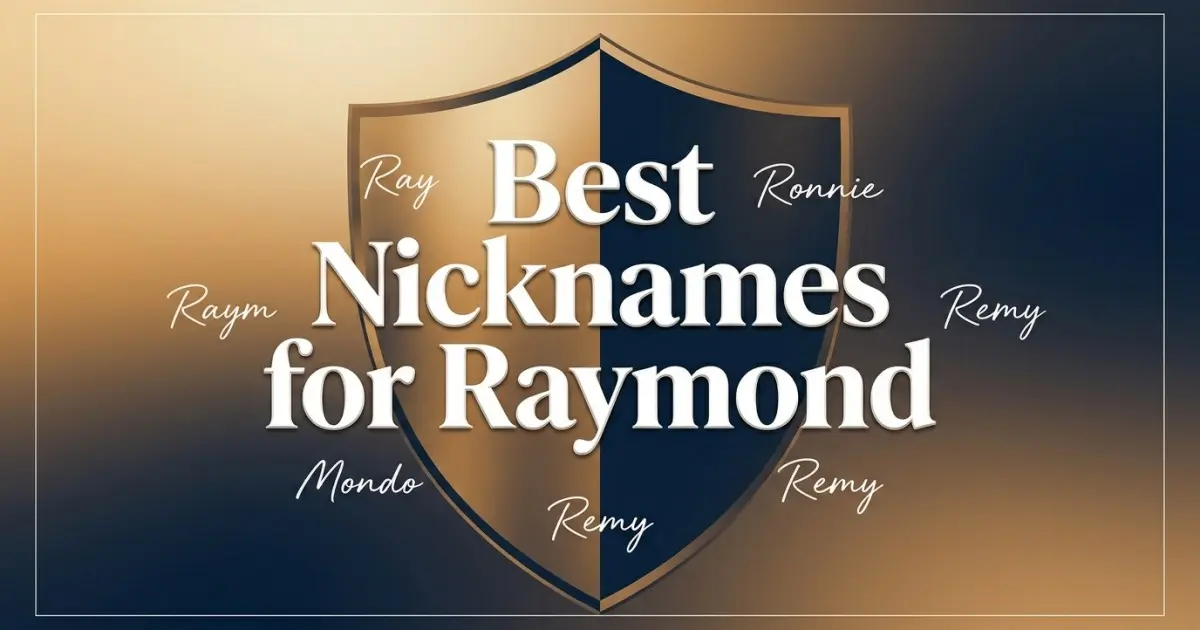
A nickname is rarely just a shorter sound. It is a social decision about distance, affection, authority, and belonging. The full name is what the world records, but the nickname is often what a family, a friend group, a teammate, or a partner chooses once the person becomes emotionally real to them. That is why nickname culture can tell you a great deal about a name’s true flexibility. Some names almost demand shortening. Others resist it. Raymond sits in an interesting middle ground: it is complete enough to stand easily on its own, yet open enough to produce a small but believable circle of nickname lives around it.
That circle is not chaotic. It is shaped by the sound of the name itself. Raymond begins with a bright, stressed Ray, and English nickname habits almost always favor the clear, accented opening of a name. So the strongest nickname for Raymond is also the most obvious one: Ray. From there, the field widens a little into affectionate repetition, buddy-style extensions, and a few family-made forms that emerge less from rule than from use. The important thing is that Raymond does not need fifteen nicknames to prove its warmth. Its nickname system is smaller, cleaner, and more socially believable than that. Before judging which short form feels right, it helps to look again at the full identity of the name in Raymond meaning.
What Raymond’s nickname world reveals about the name itself
| Group | Suggested Nicknames | Persona | Use Context |
|---|---|---|---|
| Classic everyday | Ray | Steady, approachable, quietly masculine | Works at every age, from school roll call to adult professional life |
| Affectionate family forms | Ray-Ray, Raymie | Warm, playful, intimate | Best for early childhood, family use, or close inner-circle affection |
| Casual social forms | Raymo, Mondo | Relaxed, sporty, a little teasing | More likely among friends, teammates, siblings, or text-message culture |
| Initial-based options | R.J., R.D., R.M. | Cooler, more detached, context-shaped | Useful when the middle name or surname creates a natural set of initials |
| Keep-it-full choice | Raymond | Grounded, composed, quietly formal | Often preferred by parents who like the full moral weight and clarity of the name |
Raymond begins with Ray, and that is where most real nicknames live
The opening of Raymond does most of the nickname work. This is not accidental. In English, short forms usually grow out of the stressed syllable, and Raymond places its stress immediately and clearly on Ray. That gives parents and communities a nickname that feels natural rather than engineered. Ray is brief, familiar, easy to hear, and easy to repeat. It softens Raymond slightly, but it does not strip away its dignity. That balance is the reason Ray has lasted so well.
Ray also has an unusual social advantage: it can move easily between life stages. On a little boy, it sounds warm and uncomplicated. On a teenager, it feels relaxed and socially fluent. On an adult, it remains fully credible in professional space. Many nicknames lose power as a child grows. Ray does not. It is one of those rare shortenings that behaves almost like a name in its own right while still clearly belonging to the original form.
Why Ray is the default, not the backup
Some parents treat the nickname as a fallback plan, but with Raymond, Ray is often part of the appeal from the beginning. The full name gives weight and continuity. The nickname gives air, immediacy, and informality. Together they form a strong classic pairing. A child can be introduced as Raymond and still be called Ray at home from the first week onward without the two forms sounding disconnected.
What kind of boy Ray usually suggests
Ray tends to signal accessibility more than edge. It sounds like someone known rather than staged, someone who can move comfortably between family warmth and public competence. That is one reason the nickname works so well with the meaning attached to Raymond. The full name holds the moral structure; the short form makes that structure livable in everyday speech.
The stressed heart of Raymond prefers clean shortening over cute invention
Because Raymond is only two syllables long, the name does not offer a great many organic break points. That is actually a strength. It keeps the nickname field disciplined. When a name is overfull of possible pet forms, families can end up with options that feel scattered or inconsistent. Raymond largely avoids that. The stressed core points back again and again to Ray, and that makes the name socially stable. Nicknames often grow from the stressed part of a name rather than from spelling alone, so the next useful step is how to pronounce Raymond.
This is also why some possible inventions should be treated carefully. Not every sound you can technically pull out of Raymond feels human in real use. The best nicknames are the ones people would actually say across a kitchen table, from the sidelines of a game, or in a quick text. Raymond does not naturally want to become something highly ornamental. It wants clarity. That means Ray, then affectionate extensions of Ray, and then a limited set of playful social versions built from the full shape of the name.
For parents, that clarity can be reassuring. It means the name is less likely to spin into a nickname they dislike but could easily have predicted. If you choose Raymond, the most likely everyday short form is visible from the first glance. That kind of predictability is valuable. It lets families decide early whether they love both Raymond and Ray or whether they prefer to keep the full form intact.
Raymond’s ending is where the playful and private nicknames appear
If the opening gives Raymond its classic nickname, the ending gives it its more social, situational ones. These are not usually the first forms a parent plans. They are the kinds of names that appear in sibling chatter, on a sports team, or inside a friend group that likes giving nearly everyone a slightly altered version of their name. Raymo is probably the clearest example. It keeps the beginning intact but adds the rounded tail of the full name, making it feel more casual, more contemporary, and a little more performative than Ray.
Mondo is even more specific. It is not a universal nickname for Raymond, and it should not be presented as the default. But it is plausible as a lived nickname because the -mond ending offers a strong sound hook, and English-speaking groups often build playful nicknames from the back half of a name when the result feels punchy enough. Mondo sounds more like a teasing or teammate-style name than a nursery nickname. That is exactly why it can work in the right social context.
Which ending-based forms feel believable
Raymo is the easiest ending-led form to imagine because it still sounds connected to the original opening. Mondo is more playful and more situational. Both belong in the category of nicknames that arise socially rather than ceremonially. Parents do not usually choose them in advance; they emerge if the child’s personality or peer environment makes them stick.
Which ones are better left out
Forms that pull too hard away from Raymond’s actual sound, or that feel borrowed from unrelated names, usually weaken the name rather than enriching it. Raymond is strong precisely because it is clear. A nickname that obscures that clarity too much will feel less like a natural evolution and more like a workaround.
Raymond changes nickname as the child changes audience
One of the most useful things about Raymond is that it allows different social circles to use different levels of familiarity without strain. Parents might prefer Raymond in formal settings, grandparents may default to Ray, siblings might create Ray-Ray in early childhood, and peers may eventually settle on Ray or Raymo depending on personality. This layered adaptability is exactly what makes nickname culture worth thinking about. A good nickname system gives the child options rather than traps.
Ray-Ray is a good example of a form that is age-specific but still realistic. It works best in toddler years, among close family, or as a deliberately affectionate home-only name. It is cheerful and plausible because repeated first-syllable nicknames are common in family speech. Raymie works similarly, though with a softer, more intimate tone. It feels more private than Ray-Ray, and usually more tied to the people who knew the child very early.
Then there are initials. If Raymond is paired with a middle and surname that naturally create a strong set, forms such as R.J. or R.D. can become surprisingly useful in adolescence or team settings. These are not really organic nickname children in the same way as Ray, but they are socially credible. They can give a Raymond another register to inhabit, especially if he wants a slightly cooler or more detached public identity for a season of life.
Sometimes the strongest nickname for Raymond is no nickname at all
Not every good name needs shortening in daily use. Raymond can absolutely remain Raymond, especially in families that are drawn to the full name’s composure and moral shape. In some cases, keeping the full form actually becomes the identity signal. It suggests steadiness, seriousness, and a preference for names that do not need to be cut down to become warm. Because Raymond is only two syllables, saying the full name never feels burdensome in the way that some longer classics can.
This matters because parents sometimes feel pressure to produce a whole menu of nickname possibilities before they choose a name. Raymond does not require that performance. It offers one major classic short form, a handful of affectionate or playful extensions, and the dignified option of staying whole. That is enough. In fact, for many families, it is ideal. The name gives flexibility without chaos, familiarity without overexposure, and affection without forcing cuteness into places where it does not belong.