
How to Pronounce Raphael: How to Say It Clearly and Naturally
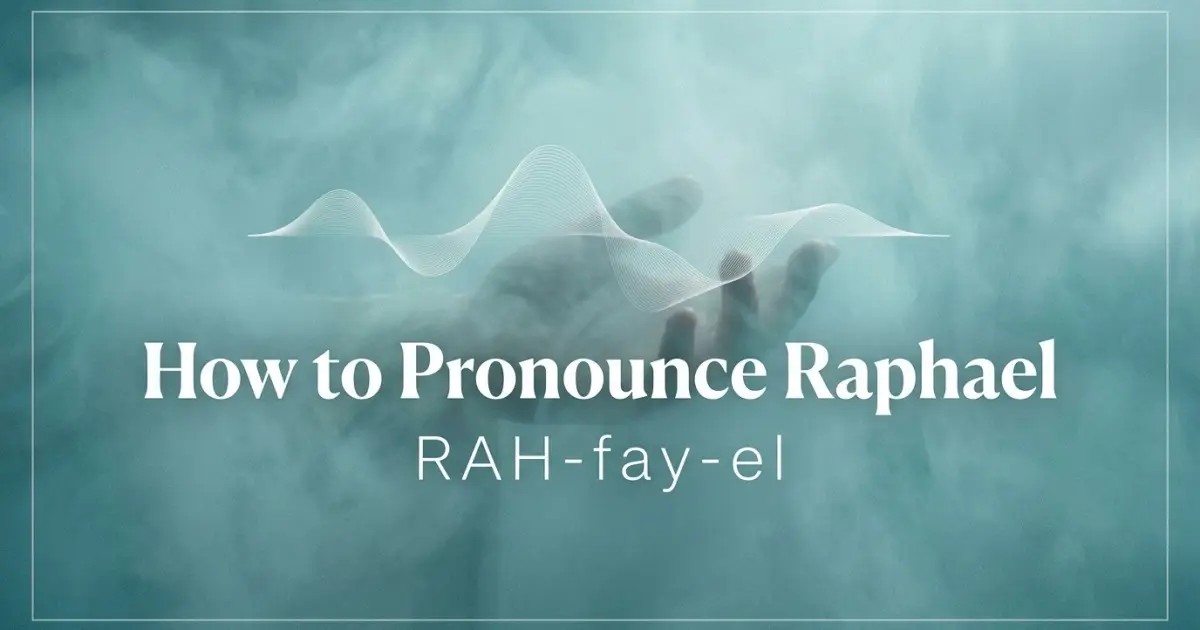
Imagine a museum docent introducing a Renaissance painting, a teacher reading a class roster, or a nurse calling a newborn’s name in a waiting room: Raphael is familiar enough to be recognized, but elegant enough that people sometimes hesitate before saying it. The clearest pronunciation is RAF-ee-el. The name begins firmly, softens in the middle, and ends with a gentle el sound. It should not be rushed into two syllables, and it should not be stretched into something overly dramatic.
That balance matters because Raphael means “God has healed,” and the pronunciation carries the same quiet restoration as the meaning. It is not a harsh name, but it is not fragile either. Said well, Raphael has three clean beats: RAF, ee, and el. The first syllable gives the name strength, while the final syllable gives it grace. The result is a name that sounds sacred, artistic, and human all at once.
How Raphael Is Actually Said When Its Graceful Rhythm Is Clear
| Element | Phonetic Detail | Quick Tip |
|---|---|---|
| Standard pronunciation | RAF-ee-el | Say the name in three light parts, with the strongest beat on RAF. |
| Syllables | 3 syllables | Break it into RAF + ee + el. |
| Stress pattern | First syllable stressed | The name should begin with strength: RAF-ee-el, not raf-ee-EL. |
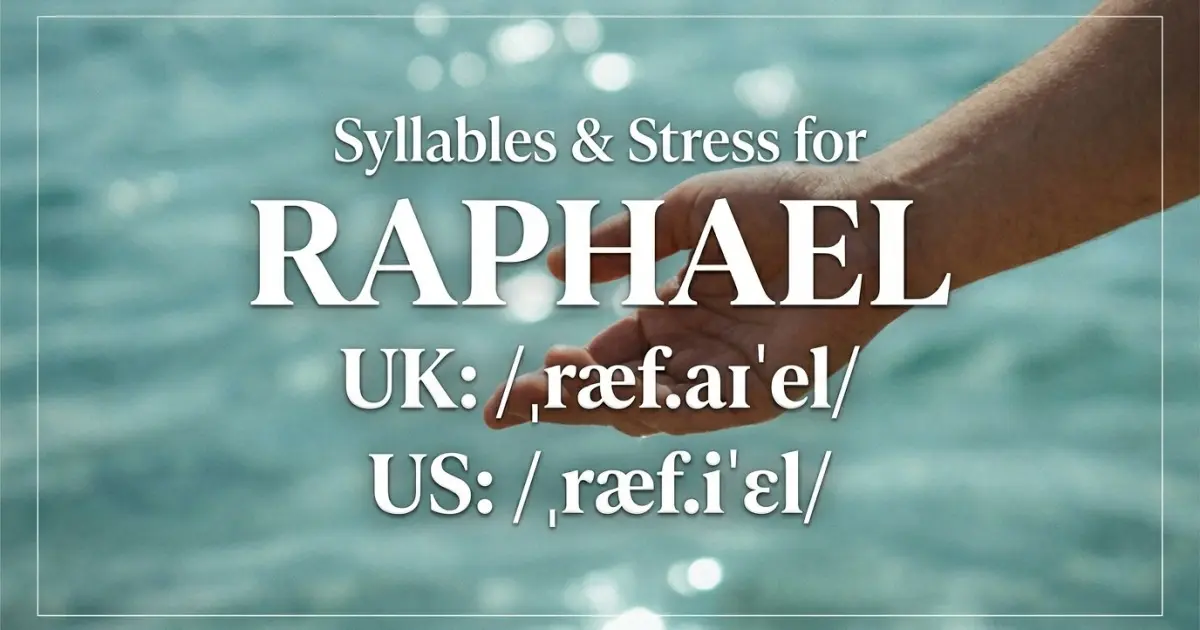
| U.S. IPA | /ˈræfɪəl/ | The American form keeps the first syllable clear and lets the ending stay soft. |
| U.K. IPA | /ˈræfɪəl/ | The U.K. form matches the U.S. form, so Raphael stays stable across major English accents. |
| Opening sound | RAF | Begin like raft without the final t: short a, clear f. |
| Middle sound | ee | Keep the middle light; it should help the name flow, not become the strongest syllable. |
| Ending sound | el | Finish gently, like the ending of Gabriel or Nathaniel. |
Raphael Has Three Syllables, but the First One Grounds the Name
Raphael is easiest to pronounce when it is treated as a three-syllable name: RAF-ee-el. The first syllable carries the stress, which means it should be the clearest and strongest part. The middle and final syllables should remain audible, but lighter. This gives Raphael a graceful falling rhythm: firm at the beginning, gentle by the end. The sound matters more once you know what the name is meant to carry, which is why the wider frame starts in Raphael meaning.
The name can lose its elegance if it is compressed too quickly. If someone says it like RAF-yel, the middle syllable disappears. If someone over-stresses the ending as raf-ee-EL, the name becomes more dramatic than the standard English pronunciation. The clearest everyday form is balanced and smooth: RAF-ee-el.
The opening RAF gives Raphael strength
The opening syllable begins with r, a liquid consonant that gives the name a smooth but mature entrance. The vowel is the short a sound, as in cat, map, or rapid. The syllable ends with f, a voiceless fricative made by steady airflow. In plain terms, that f gives Raphael definition without making the name feel hard. Because the strongest energy lands early, the shorter forms often grow from the opening of the name, and that pattern is easier to see in Raphael nicknames.
This opening matters because Raphael’s meaning is gentle and restorative. The first syllable gives the name a firm frame, so the healing meaning does not sound overly delicate. Raphael begins with presence before it moves into softness.
The middle ee keeps Raphael moving
The second syllable, ee, should be light and quick. It is not the main stress, but it helps the name flow from RAF into el. Without this middle sound, Raphael can become too compressed. With it, the name keeps its elegant three-part rhythm.
This middle syllable is one reason Raphael sounds lyrical rather than blunt. It gives the name a small bridge between strength and softness. The pronunciation should feel continuous, not choppy: RAF-ee-el.
The final el gives Raphael its soft landing
The final syllable, el, should be gentle and clear. It is not a heavy ending. It should not sound like a separate shouted syllable. Instead, it gives Raphael a graceful close, similar in feeling to the endings of names such as Gabriel, Daniel, Nathaniel, and Samuel.
This el ending helps preserve the name’s sacred and classical tone. It lets Raphael finish with warmth instead of force.
The U.S. and U.K. Pronunciations of Raphael Stay Closely Aligned
Raphael is stable across major English accents. The U.S. and U.K. IPA forms are both /ˈræfɪəl/, which means the standard pronunciation remains RAF-ee-el in both contexts. Small accent differences may affect vowel color, but the structure stays the same: first-syllable stress, three syllables, and a soft ending.
This stability is useful because Raphael has an international and classical feel. Some names change significantly depending on region, but Raphael’s English pronunciation is relatively consistent. Parents can teach one clear version and expect it to travel well across most English-speaking settings.
American Raphael is usually direct and warm
In American English, Raphael typically begins with a clear RAF, moves quickly through the middle ee, and finishes with a soft el. The final syllable may be lightly reduced in fast speech, but it should still be present. A careful American pronunciation keeps all three parts audible.
The best rhythm is strong-light-light: RAF leads, while ee-el follows gracefully.
British Raphael keeps the same essential shape
In British English, Raphael follows the same core pattern. The first syllable remains stressed, the short a remains central to the opening, and the final el stays gentle. Some speakers may make the ending feel slightly more clipped, but the name should still have three syllables.
The main point in both accents is not to overcomplicate the name. Raphael is elegant, but the pronunciation is straightforward.
Common Raphael Pronunciation Mistakes Usually Come from Overthinking the Spelling
Raphael has a classical spelling, and that can make some readers pause. The ph is simple: it sounds like f. The rest of the name works best when each syllable is allowed to appear clearly.
Do not pronounce the PH as P-H
The ph in Raphael is pronounced f. The name should not sound like RAP-hee-el with a separate p and h. The opening is RAF.
Do not reduce Raphael to two syllables
Raphael should not be rushed into RAF-yel. In careful pronunciation, it has three syllables: RAF-ee-el. Casual speech may soften the middle, but the full name is clearest when all three parts remain present.
Do not stress the final syllable too heavily
The name is not usually pronounced raf-ee-EL in standard English. The stress belongs at the beginning. Keep the final syllable gentle rather than dramatic.
Do not turn the first vowel into a long A
Raphael should not begin like RAY. The opening vowel is the short a in rapid or map. Say RAF, not RAYF.
Raphael Shares Sound Space with Gabriel, Nathaniel, and Rafael
Raphael belongs to a family of names with lyrical, sacred, and classical sound patterns. It shares the soft -el ending with names such as Gabriel, Daniel, Nathaniel, and Samuel. These names often feel meaningful and melodic because they combine consonant structure with open vowels and gentle endings.
Raphael is also closely related in sound to Rafael, though spelling and pronunciation style can vary by language and family preference. In this English pronunciation guide, Raphael is RAF-ee-el. The spelling with ph gives the name a classical visual form, while the spoken sound remains smooth and approachable.
Why Raphael sounds strong without losing softness
Raphael balances firmness and grace through its sound. The opening RAF gives it structure. The middle ee gives it movement. The ending el gives it softness. This is why the name can feel masculine, artistic, spiritual, and gentle at the same time.
That balance supports the meaning “God has healed.” The name sounds like restoration with a backbone: tender, but not fragile.
Practice Raphael Until the Three Beats Feel Natural
The easiest way to practice Raphael is to slow it into three parts, then reconnect them smoothly. Start with RAF, add ee, then finish with el. The name should flow, not break apart.
Simple practice lines for Raphael
- Raphael.
- This is Raphael.
- Raphael is here.
- We named him Raphael.
- Raphael James has a graceful rhythm.
- Please welcome Raphael.
Slow-to-natural pronunciation practice
Begin slowly: RAF + ee + el. Then connect the syllables: RAF-ee-el. Finally, place the name in a full sentence: Raphael will be joining us today.
The goal is not to make the pronunciation ornate. Keep the opening clear, the middle light, and the ending gentle. Once that rhythm is learned, Raphael becomes easy to say: firm at the start, graceful at the finish.
Pronouncing Raphael: Common Questions
How do you pronounce Raphael?
Raphael is pronounced RAF-ee-el. It has three syllables, with the stress on the first syllable.
What is the IPA pronunciation of Raphael?
The U.S. and U.K. IPA pronunciation of Raphael is /ˈræfɪəl/.
How many syllables are in Raphael?
Raphael has three syllables: RAF, ee, and el.
Is the PH in Raphael pronounced like F?
Yes. The ph in Raphael is pronounced like f. The name begins RAF, not RAP-h.