
How to Pronounce Rafael: A Simple Pronunciation Guide
The moment Rafael’s pronunciation matters most is usually not in a naming book but in a live room: a teacher pausing at a class roster, a nurse calling from a doorway, a coach reading a lineup, a colleague saying a name for the first time before a handshake. Rafael is one of those names that can sound either richly effortless or slightly uncertain depending on whether the stress lands in the right place. When it is said well, the name opens softly and rises with confidence. It feels warm, cultured, and fully formed.
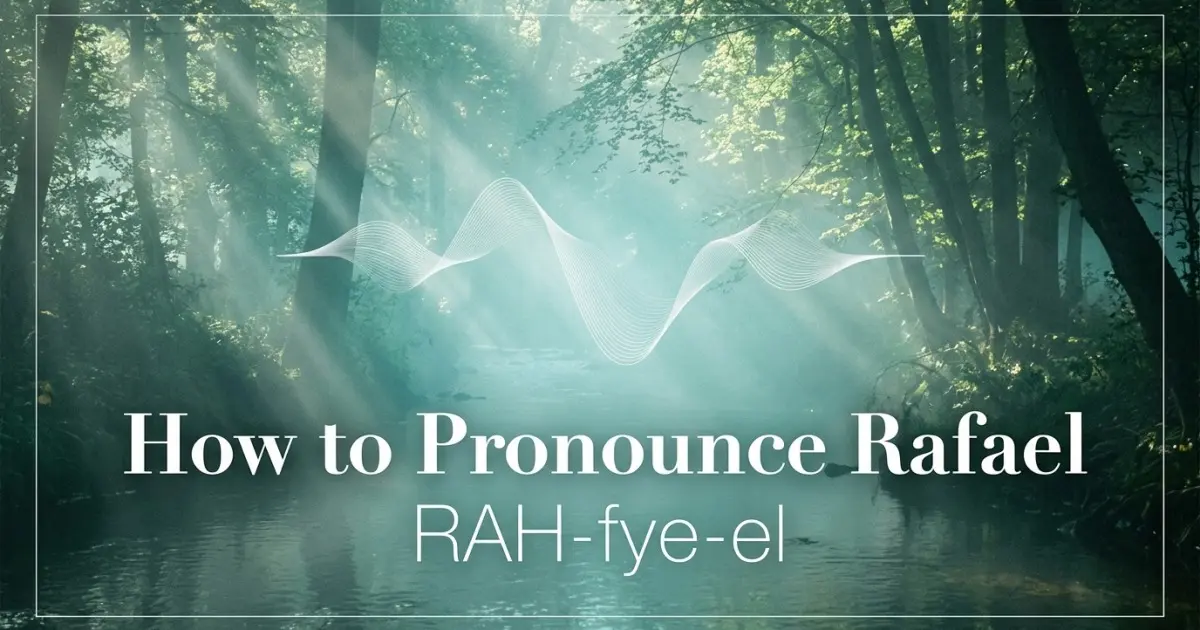
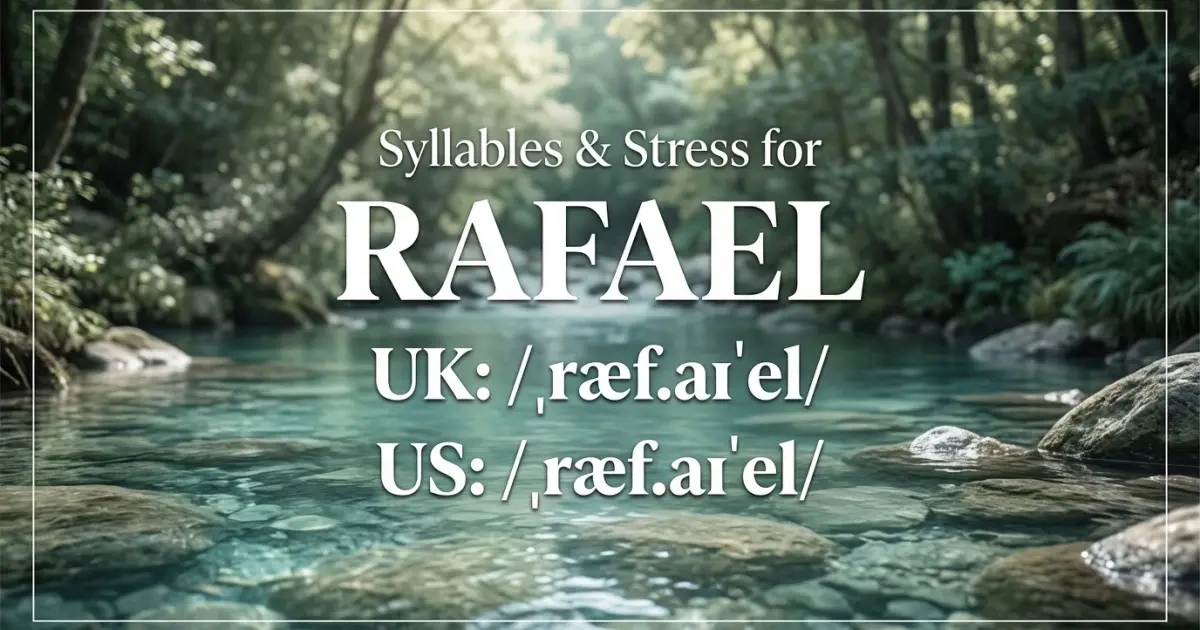
That is why pronunciation matters so much here. Rafael is not a flat three-syllable name where each beat carries equal weight. It moves toward its ending. The everyday guide is rah-fay-EL. The U.S. IPA is /ˌræfiˈɛl/, and the U.K. IPA is /ˌræfeɪˈel/. In both forms, the most important fact is the same: the final syllable carries the main stress. That final lift gives Rafael much of its grace. If the stress is misplaced, the name loses some of its brightness. If the stress is right, the whole name suddenly sounds natural.
What Rafael is actually doing when it is spoken aloud
| Element | Phonetic Detail | Quick Tip |
|---|---|---|
| Everyday pronunciation | rah-fay-EL | Let the first two syllables lead into the name, but keep the strongest stress for the last one. |
| U.S. IPA | /ˌræfiˈɛl/ | The first syllable is lighter than the last, and the final -el should sound clearly stressed. |
| U.K. IPA | /ˌræfeɪˈel/ | British pronunciation often gives the middle syllable a slightly clearer fay glide, but the final stress remains essential. |
| Syllable count | 3 syllables | Do not compress Rafael into two beats. All three syllables should be audible. |
| Primary stress | Stress on the final syllable | The name should rise at the end, not flatten out in the middle. |
| Opening sound | A soft r-led start | Begin smoothly. Rafael should sound open, not abrupt. |
| Middle movement | -fay- or a lighter transitional middle, depending on accent | Keep the middle clear enough to bridge the first and last syllables without stealing the stress. |
| Ending | -EL with clear emphasis | Let the name finish upward and cleanly rather than fading away. |
Rafael rises at the end, and that final stress is the whole secret
The most important thing to know about Rafael is that it is a name of arrival. It does not place its full weight at the beginning. It moves toward the last syllable. That is what gives the pronunciation its elegance. In everyday terms, this means the name should sound like rah-fay-EL, with the final syllable carrying the strongest beat. Pronunciation lands more fully when the name’s roots and history are already in view, so begin with Rafael meaning.
Why the last syllable matters so much
In English, many names are front-stressed. That makes Rafael stand out. Instead of opening with the strongest impact, it saves its fullest emphasis for the end. This creates a different emotional effect. The name feels as though it is unfolding rather than simply striking. That unfolding quality is a large part of why Rafael sounds cultured and warm.
If the last syllable is weakened, the name can sound flatter and less intentional. A pronunciation that drifts toward RAH-fee-ul with no clear lift at the end loses some of the name’s architecture. Rafael works because the end matters. It is not just the finish. It is the point where the name becomes itself.
How the unstressed syllables should behave
The first two syllables are important, but they should not fight the final one. The opening rah should be clear and open. The middle fay should move the name forward. But neither should sound as strong as -EL. This is where many speakers go wrong: they make the first or middle syllable too heavy and the whole shape becomes unbalanced.
The best way to hear the pattern is to think of Rafael as a gentle rise. The first syllable opens the name, the middle guides it, and the final syllable lands it.
Rafael keeps its structure across accents, even when the details shift
The U.S. and U.K. IPA forms are close, but not identical. The difference lies mostly in the middle vowel movement. In American English, the name may sound a little more compact through the center. In British English, the middle may sound more clearly like fay. But in both accents, the final stress remains the defining feature.
What changes a little in American and British English
The U.S. form /ˌræfiˈɛl/ often moves quickly through the middle, especially in connected speech. The U.K. form /ˌræfeɪˈel/ may keep the middle syllable slightly more distinct. These are real differences, but they do not change the identity of the name. Rafael still remains a three-syllable name with a strong final beat.
This is useful because it means Rafael is flexible without becoming unstable. The name can adapt to different English-speaking accents and still sound recognizably itself. That makes it a strong international choice. It travels well.
Why the sound still feels unified
The name stays coherent because its broader pattern is stronger than its fine accent differences. The opening liquid consonant, the warm central f movement, and the final stressed -el all work together to create one recognizable line. Even when individual speakers color the vowels differently, listeners still hear Rafael clearly.
That is one of the quiet strengths of the name. It sounds elegant, but it is not fragile. It tolerates natural accent variation without losing its shape.
Where Rafael gets mispronounced, and how to keep it natural
Most errors with Rafael come from one of three habits: stressing the wrong syllable, flattening the name into equal beats, or over-Anglicizing the middle so much that the ending loses its role.
Mistake pattern one: stressing the first syllable
This is the clearest error. If Rafael is said more like RAH-fay-el with the first syllable treated as dominant, the name starts to sound less natural. It is not enough just to say all the syllables correctly. The emphasis has to travel to the end. That is what gives the pronunciation its characteristic shape.
Mistake pattern two: making all three syllables equally strong
Another common problem is over-articulation. A speaker may try so hard to be careful that the name becomes stiff, with every syllable sounding equally weighted. Rafael is not supposed to feel chopped into three separate blocks. It should feel connected. The first two syllables are steps toward the last, not separate peaks.
Mistake pattern three: reducing the ending too much
Sometimes speakers keep the first and middle syllables clear, but then let the final -el fade too quickly. That weakens the name. Rafael needs an audible finish. The ending should not be swallowed or blurred. It should sound clean, lifted, and present.
Rafael becomes easiest when practiced inside real speech
One of the best ways to learn Rafael is to say it inside ordinary sentences. Names often sound more natural when heard in real speech rather than isolated repetition. Rafael especially benefits from this because its rising final stress becomes more obvious in a sentence than in a single exaggerated drill.
Useful sound neighbors
If you need a quick sound anchor, think of Rafael as sharing some of the final lift found in names like Gabriel or Ariel, though with its own distinct opening and middle. That comparison is not exact, but it helps place the stress where it belongs: near the end, not at the start. The way the name resolves at the end often decides which short forms feel natural in speech, and that becomes clearer in Rafael nicknames.
Practice Rafael in full lines
Try these aloud:
“Rafael, your table is ready.”
“Please welcome Rafael.”
“I’m here to meet Rafael.”
“Rafael will call you back this afternoon.”
In each sentence, the pattern stays the same. Open gently, move through the middle, and let the final syllable carry the name home. Once that rhythm settles into the ear, Rafael becomes much easier to say confidently.